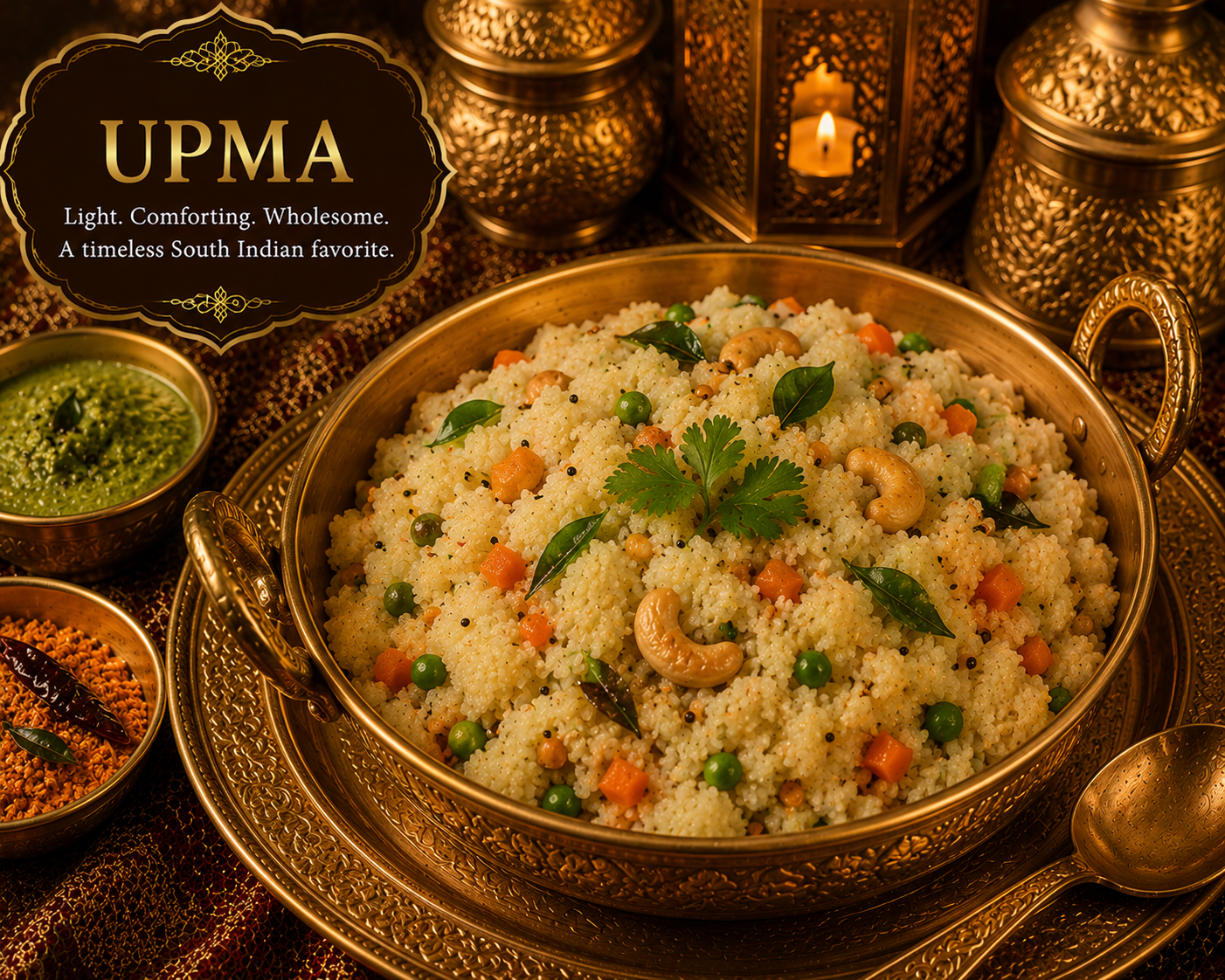
Upma Recipe | Authentic South Indian Rava Upma
Learn how to make soft, fluffy, and flavorful South Indian Upma with roasted semolina (rava), aromatic spices, curry leaves, vegetables, and traditional tempering. This classic breakfast recipe is quick, nutritious, and perfect for busy mornings. Ready in under 30 minutes, Upma pairs beautifully with coconut chutney, pickle, or a hot cup of chai.
Recipe Overview
Recipe Summary
Prep Time
10 Min
Cook Time
15 Min
Total Time
25 Min
Difficulty
Easy
Yield
4 Servings
Calories
260 kcal
About This Recipe
Upma is one of South India’s most popular breakfast dishes, loved for its simplicity, comforting texture, and delicious flavor. Made with roasted semolina, aromatic tempering, and vegetables, it is a wholesome meal that can be prepared quickly with pantry staples.
Traditionally served with coconut chutney, pickle, or banana, Upma is enjoyed throughout India as a nutritious breakfast and evening snack. Its versatility allows you to customize it with vegetables, nuts, and spices according to your preference.
This recipe creates soft, fluffy, restaurant-style Upma that is perfectly seasoned, non-sticky, and packed with authentic South Indian flavors.
Why You’ll Love This Upma Recipe
- Quick and easy breakfast recipe.
- Ready in less than 30 minutes.
- Soft, fluffy, and non-sticky texture.
- Made with simple pantry ingredients.
- Highly customizable with vegetables.
- Nutritious and filling meal.
- Perfect for busy mornings.
- Authentic South Indian flavor.
- Budget-friendly family recipe.
- Detailed beginner-friendly instructions.
What Makes This Upma Special?
The secret to perfect Upma lies in properly roasting the semolina, maintaining the correct water-to-rava ratio, and using a fragrant South Indian tempering. These simple techniques ensure a fluffy texture and rich flavor in every spoonful.
Main Ingredients
Vegetables
For Tempering
Flavor Enhancers
Equipment Needed
Ingredient Substitutions
- Semolina (rava) can be replaced with millet rava for a healthier version.
- Oil can be replaced with ghee for richer flavor.
- Cashews may be replaced with peanuts.
- Green peas can be substituted with sweet corn.
- Carrots can be replaced with beans or capsicum.
- Fresh ginger paste can replace chopped ginger.
- Lemon juice can be replaced with a small amount of tamarind water.
- Urad dal can be omitted if unavailable.
- Fresh coriander can be replaced with curry leaves.
- Vegetables can be adjusted according to seasonal availability.
Step-by-Step Instructions
Roast the Semolina
Heat a dry pan over medium heat.
Add semolina and roast until aromatic.
Stir continuously to prevent burning.
👨🍳 Chef Tip: Proper roasting is the secret to fluffy, non-sticky Upma.
Transfer and Set Aside
Remove the roasted semolina from the pan.
Transfer it to a bowl and keep aside.
👨🍳 Chef Tip: Roasted semolina continues cooking from residual heat, so remove it promptly.
Prepare the Tempering
Heat oil in the same pan.
Add mustard seeds and allow them to crackle.
👨🍳 Chef Tip: Properly crackled mustard seeds create authentic South Indian flavor.
Toast the Lentils and Cashews
Add urad dal, chana dal, and cashews.
Cook until lightly golden.
👨🍳 Chef Tip: Golden lentils add crunch and enhance texture.
Add Aromatics
Add curry leaves, chopped ginger, and green chilies.
Sauté until fragrant.
👨🍳 Chef Tip: Fresh curry leaves release their aroma when fried in hot oil.
Cook the Onions
Add chopped onions and sauté until translucent.
Do not brown them excessively.
👨🍳 Chef Tip: Soft onions create a pleasant sweetness in Upma.
Add the Vegetables
Add carrots and green peas.
Cook for 2–3 minutes until slightly tender.
👨🍳 Chef Tip: Finely chopped vegetables cook quickly and evenly.
Add Water and Salt
Pour in the measured water and add salt.
Bring the mixture to a gentle boil.
👨🍳 Chef Tip: Accurate water measurement ensures perfect texture.
Add the Roasted Semolina
Reduce the heat to low.
Slowly add the roasted semolina while stirring continuously.
👨🍳 Chef Tip: Constant stirring prevents lumps from forming.
Cook Until Absorbed
Continue stirring gently.
Allow the semolina to absorb all the water.
👨🍳 Chef Tip: Cook on low heat for a soft and fluffy consistency.
Finish with Lemon Juice
Turn off the heat.
Add lemon juice and mix gently.
👨🍳 Chef Tip: Lemon juice brightens the flavor and balances richness.
Garnish and Serve
Garnish with fresh coriander leaves.
Serve hot with coconut chutney or pickle.
👨🍳 Chef Tip: Serve immediately while Upma is soft and fluffy.
👨🍳 Perfect Upma Secrets
- Always roast semolina before cooking.
- Measure water accurately.
- Add semolina slowly while stirring.
- Use fresh curry leaves.
- Cook on low heat after adding semolina.
- Do not skip the tempering.
- Use fresh lemon juice.
- Avoid overcooking the vegetables.
- Serve immediately after preparation.
- Use good-quality semolina for best results.
💧 Perfect Water-to-Rava Ratio Guide
For soft restaurant-style Upma, use approximately 2½ cups of water for every 1 cup of roasted semolina.
✨ Fluffy Upma Secrets
Perfect Upma should be soft, fluffy, and grainy rather than sticky. Roasting the semolina properly and adding it gradually into boiling water while stirring continuously prevents lumps and creates a beautiful texture.
Allow the Upma to rest for 2 minutes after cooking for even better texture.
🌿 Traditional South Indian Tempering Technique
The signature flavor of Upma comes from the tempering. Mustard seeds, urad dal, chana dal, curry leaves, ginger, green chilies, and cashews are fried in hot oil before the vegetables and water are added.
This process releases aromatic oils and creates the authentic taste found in South Indian homes and restaurants.
❌ Common Mistakes to Avoid
- Skipping the roasting step.
- Adding semolina too quickly.
- Using incorrect water ratios.
- Cooking on high heat.
- Not stirring while adding semolina.
- Overcooking the vegetables.
- Using stale semolina.
- Adding too much salt.
- Skipping lemon juice.
- Letting Upma sit too long before serving.
Popular Upma Variations
- 🥬 Vegetable Upma
- 🥜 Masala Upma
- 🌾 Millet Upma
- 🍅 Tomato Upma
- 🥥 Coconut Upma
- 🌽 Corn Upma
- 🌿 Lemon Upma
- 🫘 Moong Dal Upma
- 🌶️ Spicy Karnataka Style Upma
- 🥕 Mixed Vegetable Rava Upma
🍽️ Serving Suggestions
Serve hot Upma with coconut chutney, tomato chutney, pickle, sambar, or a side of fresh banana. It also pairs wonderfully with a hot cup of South Indian filter coffee or masala chai for a complete breakfast experience.
🧊 Storage & Reheating Guide
🧊 Refrigerator
Store leftover Upma in an airtight container for up to 2 days.
❄️ Freezer
Freezing is not recommended as the texture may become grainy after thawing.
🔥 Reheating
Add a few tablespoons of water and reheat gently on the stovetop or microwave.
Make Ahead Tips
- Roast semolina and store it in advance.
- Chop vegetables the night before.
- Prepare tempering ingredients ahead of time.
- Measure ingredients before cooking.
- Keep roasted cashews ready for garnish.
- Prepare coconut chutney in advance.
- Store roasted rava in an airtight container.
- Use pre-cooked vegetables for faster preparation.
🥗 Nutrition Information (Approx. Per Serving)
Nutritional values are approximate and may vary depending on ingredients used.
Calories
Protein
Carbohydrates
Fat
Fiber
Sodium
❤️ Health Highlights
- Provides sustained energy for the day.
- Contains essential carbohydrates.
- Includes vegetables rich in vitamins.
- Can be customized for higher nutrition.
- Easy to digest and light on the stomach.
- Offers a balanced breakfast option.
- Contains healthy fats from nuts.
- Suitable for both adults and children.
💡 Did You Know?
Upma has been a staple breakfast dish in South Indian households for generations. While semolina Upma is the most popular version today, traditional variations are also made using rice, millet, broken wheat, and other grains depending on the region.
Frequently Asked Questions
Why does my Upma become sticky?
Sticky Upma usually results from excess water or insufficient roasting of semolina.
Can I make Upma without vegetables?
Yes, traditional plain Upma is commonly prepared without vegetables.
Which semolina is best for Upma?
Medium-grain roasted semolina (Bombay Rava) works best for authentic texture.
Can I use ghee instead of oil?
Absolutely. Ghee adds richness and enhances the overall flavor.
How do I prevent lumps in Upma?
Add the semolina gradually while stirring continuously.
Can I prepare Upma for lunch boxes?
Yes, Upma stays soft for several hours and is great for lunch boxes.
Is Upma healthy?
Yes, especially when prepared with vegetables and moderate oil.
Can I make Upma vegan?
Yes, simply use oil instead of ghee and avoid dairy-based accompaniments.
What can I serve with Upma?
Coconut chutney, sambar, pickle, curd, or banana are popular accompaniments.
Can I use roasted packaged rava?
Yes, but lightly roasting it again improves aroma and texture.
Related Recipes You May Like
Why This Upma Recipe Works
This recipe uses the ideal water-to-rava ratio, properly roasted semolina, traditional South Indian tempering, and fresh vegetables to create a fluffy, flavorful, and authentic Upma. Every step is designed to ensure consistent results, even for beginners.
🌟 Expert Serving Tip
Just before serving, drizzle a teaspoon of ghee over the hot Upma and garnish with freshly roasted cashews. This simple finishing touch adds incredible aroma and restaurant-style flavor.
Chef’s Final Note
Upma proves that simple ingredients can create an incredibly satisfying meal. Focus on roasting the semolina properly, maintaining the correct water ratio, and using fresh tempering ingredients. With these techniques, you’ll enjoy soft, fluffy, authentic South Indian Upma every time.
⭐ Rate This Recipe
If you enjoyed this Upma recipe, share it with family and friends and save it for your next breakfast. Homemade Upma is quick, comforting, and always satisfying.