Dosa Recipe | Crispy South Indian Dosa
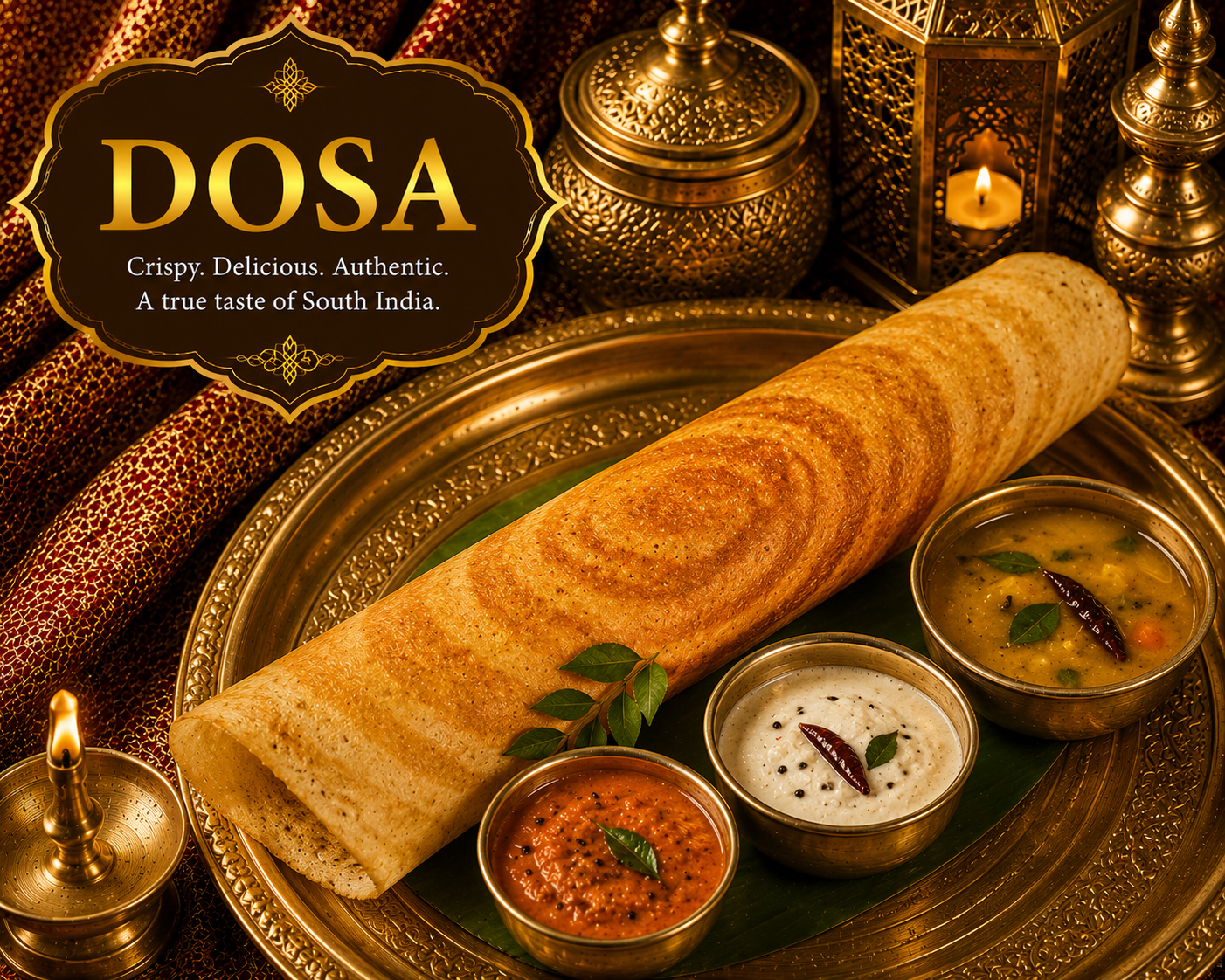
Learn how to make perfectly crispy, golden South Indian Dosa at home using a traditional fermented rice and urad dal batter. This authentic recipe produces light, thin, and delicious dosas with a crisp texture and classic flavor. Serve them with coconut chutney, sambar, tomato chutney, or potato masala for a wholesome breakfast, lunch, or dinner.
Recipe Overview
Recipe Summary
Prep Time
10 Hr
Cook Time
30 Min
Total Time
10 Hr 30 Min
Difficulty
Medium
Yield
12 Dosas
Calories
165 kcal
About This Recipe
Dosa is one of India’s most loved traditional dishes, originating from South India. Made from naturally fermented rice and urad dal batter, dosa is famous for its crisp texture, golden color, and delicious flavor. It is light, nutritious, and enjoyed across the world as a healthy breakfast or meal.
The secret to perfect dosa lies in properly fermenting the batter and cooking it on a well-heated tawa. The result is a paper-thin, crispy crepe that pairs beautifully with coconut chutney, vegetable sambar, tomato chutney, mint chutney, or spicy potato masala.
This authentic South Indian recipe follows traditional preparation methods to help you make restaurant-style crispy dosa at home with simple ingredients.
Why You’ll Love This Dosa Recipe
- Authentic South Indian flavor.
- Perfectly crispy and golden.
- Naturally fermented batter.
- Healthy and protein-rich breakfast.
- Easy to customize with fillings.
- Made using simple pantry ingredients.
- Pairs well with chutney and sambar.
- Restaurant-style results at home.
- Suitable for breakfast, lunch, or dinner.
- Easy step-by-step instructions.
What Makes This Dosa Special?
The authentic taste of dosa comes from naturally fermented batter made with rice, urad dal, and fenugreek seeds. Fermentation develops its characteristic tangy flavor while creating a light, airy texture. Cooking the batter on a properly heated cast iron or non-stick tawa produces the signature golden, crispy finish.
Whether enjoyed plain or filled with flavorful potato masala, dosa remains one of the healthiest and most iconic dishes of South Indian cuisine.
Main Ingredients
For Grinding
For Cooking
For Potato Masala (Optional)
For Serving
Equipment Needed
Ingredient Substitutions
- Idli rice can be replaced with regular short-grain rice.
- Urad dal may be substituted with split black gram without skin.
- Fenugreek seeds can be omitted if unavailable, though they improve fermentation.
- Ghee may be replaced with oil for a vegan version.
- Cast iron tawa can be replaced with a good-quality non-stick pan.
- Potato masala filling is optional for plain dosa.
- Coconut chutney may be substituted with tomato or peanut chutney.
- Sambar can be replaced with vegetable kurma for serving.
- Rice flour may be added to the batter for extra crispiness.
- Salt should always be added after fermentation in colder climates for better rise.
Step-by-Step Instructions
Wash the Rice and Dal
Wash the rice, urad dal, and fenugreek seeds separately until the water runs clear.
Remove all excess starch before soaking.
👨🍳 Chef Tip: Proper washing produces a cleaner batter and improves fermentation.
Soak the Ingredients
Soak the rice separately and soak the urad dal with fenugreek seeds for 4–6 hours.
Drain the water before grinding.
👨🍳 Chef Tip: Adequate soaking ensures smooth grinding and fluffy batter.
Grind the Urad Dal
Grind the soaked urad dal until light, fluffy, and smooth.
Add water gradually while grinding.
👨🍳 Chef Tip: A fluffy dal batter creates soft yet crispy dosas.
Grind the Rice
Grind the soaked rice into a slightly grainy batter.
Do not make it completely smooth.
👨🍳 Chef Tip: Slight graininess gives dosa its signature crisp texture.
Mix the Batter
Combine both batters in a large bowl.
Mix thoroughly using clean hands or a spatula.
👨🍳 Chef Tip: Mixing with your hands helps introduce natural bacteria that aid fermentation.
Ferment the Batter
Cover the bowl and keep it in a warm place for 8–12 hours.
Allow the batter to double in volume.
👨🍳 Chef Tip: Proper fermentation develops the authentic dosa flavor.
Add Salt
Once fermented, gently mix the batter and add salt.
Avoid overmixing.
👨🍳 Chef Tip: Gentle mixing preserves the airy texture of the batter.
Heat the Tawa
Heat a cast iron or non-stick dosa tawa over medium heat.
Lightly grease the surface if needed.
👨🍳 Chef Tip: A properly heated tawa is essential for evenly cooked crispy dosas.
Spread the Batter
Pour one ladle of batter in the center of the tawa.
Spread it outward in a circular motion to form a thin dosa.
👨🍳 Chef Tip: Spread quickly while the batter is still wet.
Cook Until Crispy
Drizzle ghee or oil around the edges.
Cook until the dosa turns golden and crisp.
👨🍳 Chef Tip: Avoid flipping thin crispy dosas unless necessary.
Add Filling (Optional)
Place potato masala in the center for Masala Dosa.
Fold the dosa over the filling.
👨🍳 Chef Tip: Warm filling enhances both flavor and texture.
Serve Immediately
Transfer the hot dosa to a serving plate.
Serve with coconut chutney and hot sambar.
👨🍳 Chef Tip: Dosas taste best when served fresh off the tawa.
👨🍳 Crispy Dosa Secrets
- Use good-quality idli rice.
- Grind the batter until smooth and airy.
- Allow complete fermentation.
- Use a well-seasoned cast iron tawa.
- Maintain medium heat while cooking.
- Spread the batter quickly and evenly.
- Use minimal oil for crispiness.
- Do not overcrowd the tawa.
- Serve immediately after cooking.
- Always pair with fresh chutney and hot sambar.
🔥 Perfect Dosa Cooking Guide
The ideal dosa should be evenly golden, thin, and crispy with beautifully browned edges while remaining light and airy.
🥞 Authentic South Indian Flavor Secrets
Traditional dosa gets its signature flavor from natural fermentation rather than added yeast. The balanced ratio of rice and urad dal produces a crispy texture while maintaining softness inside. Cooking on a properly seasoned cast iron tawa further enhances both flavor and aroma.
Fresh coconut chutney, aromatic sambar, and homemade potato masala complete the authentic South Indian dining experience.
🌾 Traditional Cooking Tips
Experienced South Indian cooks lightly sprinkle water over the hot tawa before preparing each dosa. This cools the surface slightly, allowing the batter to spread evenly and produce paper-thin, crispy dosas with beautiful golden color.
Never rush the fermentation process, as it is the key to achieving authentic taste, aroma, and texture.
❌ Common Mistakes to Avoid
- Using unfermented batter.
- Grinding the rice too finely.
- Adding too much water to the batter.
- Using an improperly heated tawa.
- Spreading the batter too slowly.
- Adding excessive oil.
- Cooking on very high heat.
- Overmixing fermented batter.
- Using stale batter.
- Serving after the dosa loses its crispness.
Popular Dosa Variations
- 🥔 Masala Dosa
- 🧈 Ghee Roast Dosa
- 🧀 Cheese Dosa
- 🌶️ Mysore Masala Dosa
- 🧅 Onion Dosa
- 🥬 Rava Dosa
- 🌾 Set Dosa
- 🌱 Millet Dosa
- 🥕 Vegetable Dosa
- 🫘 Pesarattu (Green Moong Dosa)
🍽️ Serving Suggestions
Serve hot and crispy dosa with freshly prepared coconut chutney, vegetable sambar, tomato chutney, mint chutney, or peanut chutney. Masala dosa tastes wonderful with potato masala filling, while plain dosa pairs beautifully with a bowl of hot sambar and filter coffee for a complete South Indian breakfast.
🧊 Storage & Reheating Guide
🧊 Refrigerator
Store fermented dosa batter in an airtight container for up to 4 days.
❄️ Freezer
Freeze dosa batter in freezer-safe containers for up to 2 months.
🔥 Reheating
Freshly cooked dosas are best enjoyed immediately. Refrigerated batter should be brought to room temperature before making new dosas.
Make Ahead Tips
- Soak rice and dal the night before.
- Grind the batter one day in advance.
- Allow proper overnight fermentation.
- Prepare chutneys ahead of time.
- Cook potato masala in advance.
- Store batter in airtight containers.
- Grease the tawa lightly before cooking.
- Mix the batter gently before each dosa.
🥗 Nutrition Information (Approx. Per Plain Dosa)
Nutritional values are approximate and may vary depending on ingredients used.
Calories
Protein
Carbohydrates
Fat
Fiber
Sodium
❤️ Health Highlights
- Good source of plant-based protein.
- Naturally fermented for improved digestibility.
- Provides sustained energy.
- Low in saturated fat.
- Made with wholesome grains and lentils.
- Suitable for vegetarian diets.
- Contains beneficial probiotics after fermentation.
- Pairs well with nutritious chutneys and sambar.
💡 Did You Know?
Dosa is believed to have originated in South India over a thousand years ago. Today, it is enjoyed around the world in countless variations, from the classic Plain Dosa to the famous Mysore Masala Dosa and Paper Dosa. It remains one of India’s most popular breakfast dishes due to its delicious flavor and nutritional value.
Frequently Asked Questions
Why didn’t my dosa become crispy?
The batter may be too thick, under-fermented, or the tawa may not have been heated properly.
Can I use regular rice instead of idli rice?
Yes. Short-grain rice works well, although idli rice produces the most authentic texture.
How long should the batter ferment?
Typically 8–12 hours, depending on the surrounding temperature.
Can I make dosa without a cast iron tawa?
Yes. A good-quality non-stick pan also produces excellent results.
Can I freeze dosa batter?
Yes. Store it in airtight freezer-safe containers for up to two months.
Why is my batter not fermenting?
Cold weather may slow fermentation. Keep the batter in a warm place or inside an oven with the light turned on.
Can I make dosa without fenugreek seeds?
Yes. Fenugreek improves fermentation but is not absolutely essential.
Can dosa batter be refrigerated?
Yes. Fermented batter stays fresh in the refrigerator for about 4 days.
Which chutney goes best with dosa?
Fresh coconut chutney is the traditional choice, although tomato, peanut, and mint chutneys are also excellent.
What is the difference between Plain Dosa and Masala Dosa?
Masala Dosa is filled with a mildly spiced potato mixture, while Plain Dosa is served without any filling.
Related Recipes You May Like
Why This Dosa Recipe Works
This recipe uses the traditional ratio of rice, urad dal, and fenugreek seeds to create naturally fermented batter with authentic South Indian flavor. Proper fermentation, the correct batter consistency, and cooking on a well-heated tawa ensure perfectly thin, crispy, and golden dosas every time.
🌟 Expert Serving Tip
Serve each dosa immediately after cooking while it’s still hot and crispy. Pair it with freshly made coconut chutney, hot vegetable sambar, and a cup of authentic South Indian filter coffee for the ultimate restaurant-style experience.
Chef’s Final Note
The secret to perfect dosa is patience. Allow the batter to ferment naturally, maintain the proper tawa temperature, and spread the batter quickly into thin circles. These simple techniques will reward you with beautifully crisp, golden dosas that taste just like those served in traditional South Indian restaurants.
⭐ Rate This Recipe
If you enjoyed this Crispy South Indian Dosa Recipe, save it for later, share it with your friends and family, and enjoy making authentic homemade dosas whenever you crave a delicious South Indian meal.