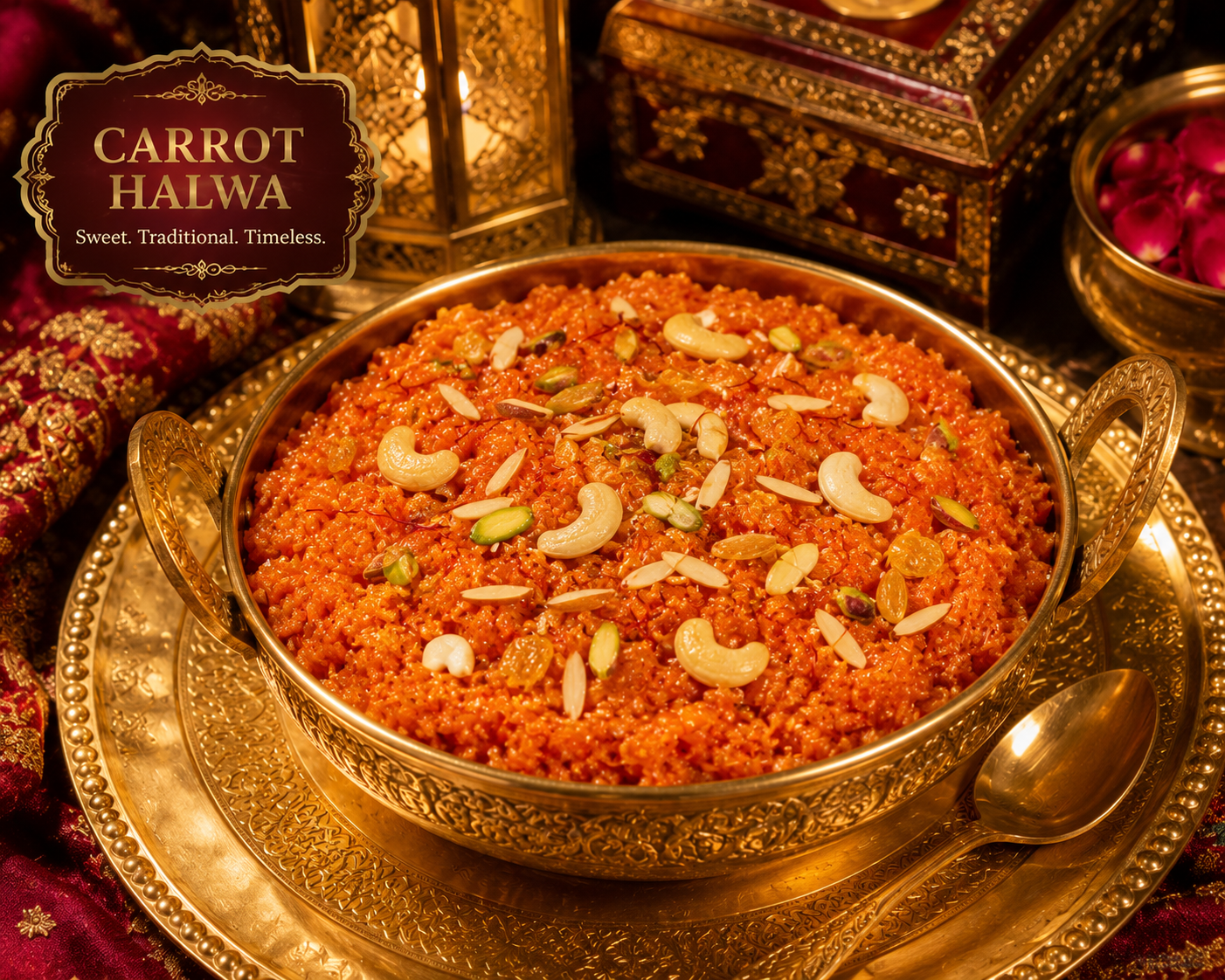
Carrot Halwa Recipe | Rich, Creamy & Traditional Gajar Ka Halwa
Learn how to make rich, creamy, and melt-in-your-mouth Carrot Halwa (Gajar Ka Halwa) with this authentic Indian dessert recipe. Made with fresh carrots, full-fat milk, ghee, sugar, and crunchy nuts, this classic sweet is a favorite during winters, festivals, and celebrations. Follow this detailed recipe to create restaurant-style Gajar Ka Halwa with perfect texture, natural sweetness, and irresistible aroma.
Recipe Overview
Recipe Summary
Prep Time
20 Min
Cook Time
50 Min
Total Time
70 Min
Difficulty
Easy
Yield
8 Servings
Calories
320 kcal
About This Recipe
Carrot Halwa, also known as Gajar Ka Halwa, is one of India’s most beloved desserts. Traditionally prepared during winter when fresh red carrots are abundant, this rich sweet dish combines grated carrots, milk, sugar, and ghee into a luxurious dessert that is both comforting and indulgent.
The slow-cooking process allows the carrots to absorb the richness of milk while developing a deep, caramelized flavor. Finished with aromatic cardamom and crunchy nuts, the result is a dessert that’s creamy, fragrant, and packed with flavor.
This authentic recipe uses traditional cooking techniques that help achieve the perfect balance of sweetness, texture, and richness. Whether served warm or chilled, this homemade Carrot Halwa tastes just like the one served in premium Indian restaurants and festive gatherings.
Why You’ll Love This Carrot Halwa Recipe
- Rich, creamy, and naturally flavorful.
- Authentic North Indian dessert recipe.
- Perfect for winter and festive occasions.
- Made with simple pantry ingredients.
- Loaded with nuts and aromatic cardamom.
- Can be served warm or chilled.
- Restaurant-style taste at home.
- Easy-to-follow beginner-friendly recipe.
- Great make-ahead dessert option.
- Includes professional chef tips for perfect results.
What Makes This Carrot Halwa Special?
Unlike quick versions that use condensed milk or shortcuts, this traditional recipe slowly cooks fresh carrots in full-fat milk until the flavors naturally develop. The gradual reduction creates a deep, rich taste and luxurious texture that cannot be achieved through shortcuts. Combined with ghee-roasted nuts and cardamom, every bite delivers authentic homemade goodness.
For the Carrot Halwa
For Garnishing
Optional Premium Additions
Ingredient Substitutions
- Red Delhi carrots provide the most authentic flavor, but regular carrots work well too.
- Jaggery can replace sugar for a deeper caramel-like sweetness.
- Evaporated milk can be used instead of full-fat milk.
- Khoya can replace part of the milk for a richer texture.
- Almonds, walnuts, or pecans can replace cashews.
- Vegan butter or coconut oil can replace ghee.
- Coconut sugar can replace white sugar.
- Condensed milk can be used for extra richness.
- Saffron can replace cardamom for a royal flavor.
- Raisins can be omitted if you prefer less sweetness.
Step-by-Step Instructions
Wash and Prepare the Carrots
Wash the carrots thoroughly, peel them, and grate using the medium side of a grater.
Freshly grated carrots provide the best texture and flavor for traditional Gajar Ka Halwa.
👨🍳 Chef Tip: Avoid using very fine grating as it can make the halwa mushy after cooking.
Heat the Milk
Pour full-fat milk into a large heavy-bottomed pan and bring it to a gentle simmer.
Using a wide pan helps the milk reduce faster and more evenly.
👨🍳 Chef Tip: Full-fat milk creates a richer and creamier halwa than low-fat varieties.
Add the Grated Carrots
Add the grated carrots to the simmering milk and mix thoroughly.
The carrots should be completely submerged in the milk for even cooking.
👨🍳 Chef Tip: Stir immediately after adding the carrots to prevent clumping.
Slow Cook the Mixture
Cook on medium heat while stirring frequently until the milk starts reducing significantly.
This stage allows the carrots to absorb the flavor and richness of the milk.
👨🍳 Chef Tip: Patience during this step creates the authentic sweet-shop taste.
Continue Reducing the Milk
Keep stirring regularly as the milk thickens and reduces.
The carrots should become soft and tender while the milk gradually evaporates.
👨🍳 Chef Tip: Scrape the sides of the pan occasionally and mix the milk solids back into the halwa.
Add Sugar
Once most of the milk has evaporated, add the sugar and mix thoroughly.
The sugar will release moisture and loosen the mixture temporarily.
👨🍳 Chef Tip: Never add sugar too early, as it slows down the carrot cooking process.
Cook Until Thick Again
Continue cooking until the excess moisture released by the sugar evaporates.
The halwa should start becoming thicker and more concentrated in flavor.
👨🍳 Chef Tip: Stir continuously during this stage to prevent sticking and scorching.
Add Ghee
Add the ghee and mix well into the halwa.
The ghee enhances aroma, richness, and gives the halwa its signature glossy appearance.
👨🍳 Chef Tip: Add ghee gradually for better absorption and flavor development.
Roast the Halwa
Cook for another 8–10 minutes while stirring continuously.
The halwa should begin leaving the sides of the pan and develop a deeper flavor.
👨🍳 Chef Tip: This roasting stage is what separates ordinary halwa from premium sweet-shop quality.
Add Cardamom and Optional Khoya
Mix in cardamom powder and crumbled khoya if using.
These ingredients add richness, aroma, and authentic festive flavor.
👨🍳 Chef Tip: Add khoya only during the final stage to preserve its creamy texture.
Roast the Nuts
In a small pan, heat a little ghee and lightly roast cashews, almonds, pistachios, and raisins.
Roasting enhances their flavor and adds a pleasant crunch.
👨🍳 Chef Tip: Remove raisins as soon as they puff to prevent burning.
Garnish and Serve
Mix most of the roasted nuts into the halwa and reserve some for garnishing.
Serve warm with additional nuts, saffron strands, or rose petals.
👨🍳 Chef Tip: Let the halwa rest for 5 minutes before serving so the flavors settle beautifully.
👨🍳 Pro Chef Secrets for Rich & Creamy Gajar Ka Halwa
- Use fresh seasonal red carrots whenever possible.
- Always use full-fat milk for authentic richness.
- Cook slowly rather than rushing the process.
- Add sugar only after the carrots become tender.
- Use a heavy-bottomed pan to prevent burning.
- Roast the halwa in ghee during the final stage.
- Add khoya for sweet-shop style richness.
- Mix milk solids from the pan sides back into the halwa.
- Use freshly ground cardamom for better aroma.
- Serve warm for the best flavor experience.
❌ Common Mistakes to Avoid
- Using watery or old carrots.
- Adding sugar too early.
- Cooking on very high heat.
- Not stirring frequently.
- Using low-fat milk.
- Skipping the final ghee roasting stage.
- Burning the milk at the bottom.
- Adding too much sugar.
- Overcooking until completely dry.
- Skipping the cardamom and nut garnish.
Popular Carrot Halwa Variations
- 🥛 Traditional Gajar Ka Halwa
- ✨ Saffron Carrot Halwa
- 🥥 Coconut Carrot Halwa
- 🍯 Jaggery Carrot Halwa
- 🧀 Khoya Gajar Halwa
- 🥜 Dry Fruit Loaded Halwa
- 🥭 Mango Carrot Halwa
- 🍫 Chocolate Carrot Halwa
- 🌱 Vegan Carrot Halwa
- 🔥 Instant Pressure Cooker Carrot Halwa
🍽️ Serving Suggestions
Serve Carrot Halwa warm for the most authentic experience. Garnish generously with roasted almonds, pistachios, cashews, and saffron strands. For a luxurious dessert, pair it with vanilla ice cream, rabri, kulfi, or a drizzle of condensed milk. During winter, enjoy it fresh from the stove with a glass of warm milk.
🧊 Storage & Reheating
🧊 Refrigerator
Store in an airtight container for up to 5 days. The flavor often improves after a day of resting.
❄️ Freezer
Freeze portions in airtight containers for up to 2 months. Thaw overnight before reheating.
♨️ Reheating
Reheat on the stovetop or microwave with a splash of milk to restore creaminess.
Make Ahead Tips
- Grate the carrots a day before cooking.
- Prepare and roast the nuts in advance.
- Cook the halwa a day ahead for deeper flavor.
- Store garnishes separately until serving.
- Freeze extra portions for future celebrations.
- Reheat gently before serving.
- Add fresh nuts after reheating for maximum crunch.
- Prepare large batches during carrot season.
🥗 Nutrition Information (Approx. Per Serving)
These values are approximate and may vary depending on ingredients, sugar levels, and serving size.
Calories
Protein
Carbohydrates
Fat
Fiber
Sugar
❤️ Health Highlights
- Rich in beta-carotene from fresh carrots.
- Provides calcium from milk and dairy ingredients.
- Contains beneficial fats from nuts and ghee.
- Offers dietary fiber for digestive health.
- Homemade versions allow ingredient control.
- Contains antioxidants from carrots and nuts.
- Can be adapted with reduced sugar if desired.
- Provides energy and nourishment during winter.
💡 Did You Know?
Gajar Ka Halwa originated in the Indian subcontinent during the Mughal era and became especially popular in North India. Traditionally made during winter using sweet red carrots, it remains one of the most loved festive desserts served at weddings, family gatherings, and celebrations throughout India.
Frequently Asked Questions
Which carrots are best for Gajar Ka Halwa?
Fresh red Delhi carrots are traditionally preferred because they are naturally sweet and flavorful.
Can I make Carrot Halwa without khoya?
Yes. Traditional halwa can be made using only milk, carrots, sugar, and ghee.
Why is my halwa watery?
The milk may not have reduced enough, or the sugar was added before sufficient evaporation occurred.
Can I use jaggery instead of sugar?
Yes. Add jaggery after the milk has reduced completely to prevent curdling.
How long does Gajar Ka Halwa last?
It can be refrigerated for up to 5 days when stored properly.
Can I freeze Carrot Halwa?
Yes. Freeze in airtight containers for up to 2 months.
Can I prepare it in a pressure cooker?
Yes, but the traditional slow-cooked version develops superior flavor and texture.
Why should sugar be added later?
Sugar releases moisture and can slow the carrot cooking process if added too early.
Can I serve Gajar Ka Halwa cold?
Absolutely. Many people enjoy it chilled, especially during warmer months.
What pairs best with Carrot Halwa?
Vanilla ice cream, rabri, kulfi, and roasted nuts pair exceptionally well with this dessert.
Related Recipes You May Like
Why This Carrot Halwa Recipe Works
This recipe follows the traditional slow-cooking method that allows the carrots to absorb the richness of milk while naturally developing sweetness and depth of flavor. The gradual reduction process, proper sugar timing, final ghee roasting, and aromatic cardamom create a luxurious texture and authentic sweet-shop taste that shortcuts simply cannot match.
🌟 Expert Serving Tip
For restaurant-style presentation, serve warm Gajar Ka Halwa in small dessert bowls, garnish with saffron strands, chopped pistachios, and a scoop of vanilla ice cream. The contrast between warm halwa and cold ice cream creates an unforgettable dessert experience.
Chef’s Final Note
The secret to extraordinary Carrot Halwa is patience. Allow the milk to reduce naturally, avoid rushing the cooking process, and roast the halwa properly in ghee during the final stage. These simple techniques transform ordinary ingredients into a rich, aromatic, and unforgettable Indian dessert worthy of any festive celebration.