Puri Recipe | Crispy, Puffy & Traditional Indian Poori
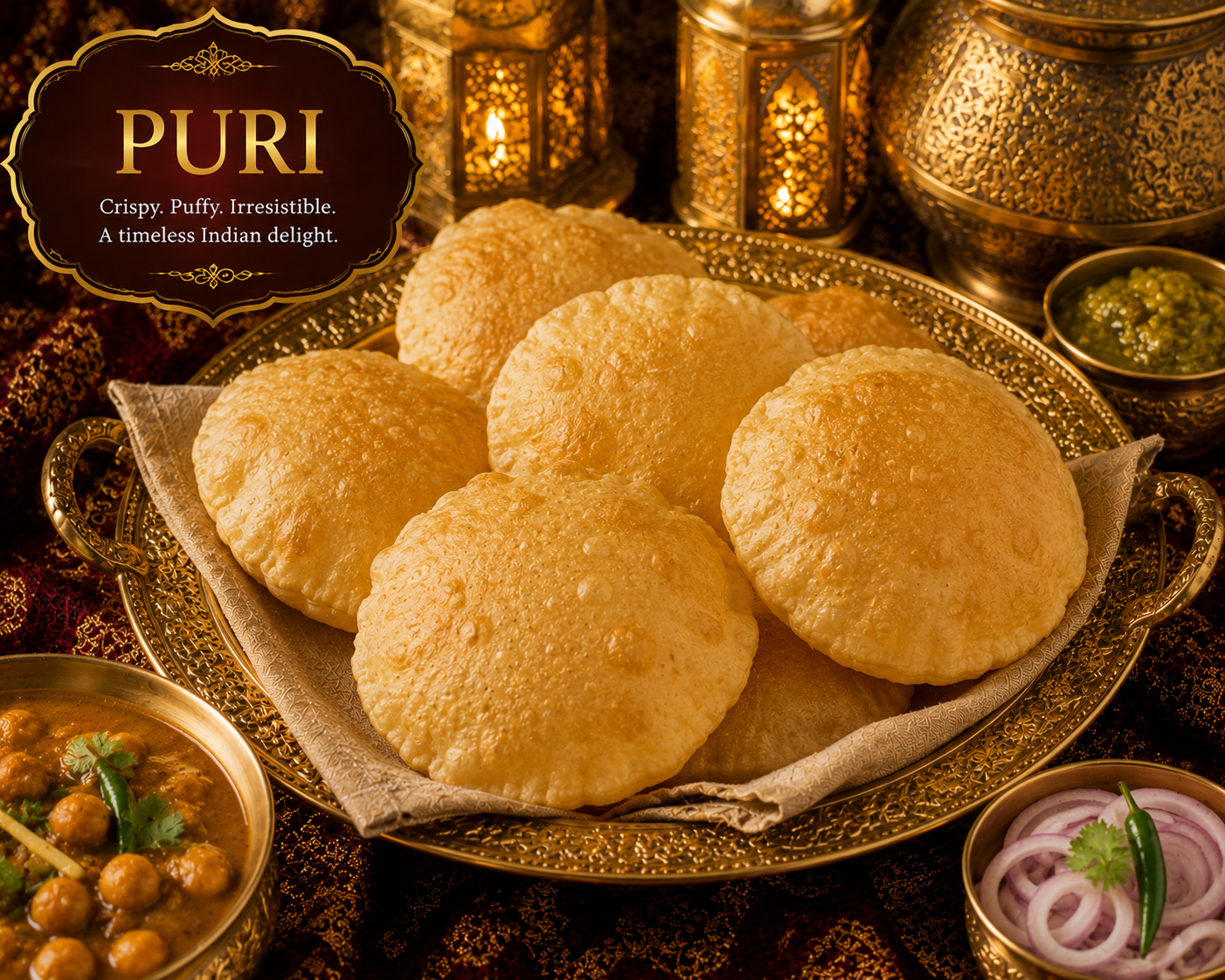
Learn how to make perfectly crispy, golden, and puffed Puri at home with this detailed step-by-step recipe. Puri, also known as Poori, is one of India’s most beloved deep-fried breads. Made with whole wheat flour, simple pantry ingredients, and a few professional techniques, these beautifully puffed Puris pair perfectly with Aloo Sabzi, Chole, Halwa, Saag, and festive meals. This recipe includes authentic tips to ensure every Puri turns golden, light, and perfectly puffed.
Recipe Overview
Recipe Summary
Prep Time
20 Min
Rest Time
15 Min
Cook Time
10 Min
Difficulty
Easy
Yield
20 Puris
Calories
95 kcal
About This Recipe
Puri is a classic Indian unleavened bread that has been enjoyed across the country for centuries. Made from whole wheat flour and deep-fried until golden and puffed, Puri is an essential part of festive meals, temple offerings, wedding feasts, and weekend breakfasts.
The secret to perfectly puffed Puris lies in preparing a firm dough, rolling evenly, and frying at the correct oil temperature. When done properly, each Puri inflates beautifully, creating a light interior with a slightly crisp exterior.
This authentic recipe includes traditional techniques, detailed instructions, and professional chef tips to help you make restaurant-quality Puris that stay puffed, golden, and delicious every time.
Why You’ll Love This Puri Recipe
- Perfectly puffed every time.
- Crispy outside and soft inside.
- Made with simple pantry ingredients.
- Authentic traditional flavor.
- Perfect for breakfast and festive meals.
- Pairs beautifully with many Indian dishes.
- Easy to prepare.
- Kid-friendly and family-approved.
- Restaurant-style results at home.
- Includes professional frying techniques.
What Makes This Puri Special?
Unlike many recipes that produce oily or flat Puris, this traditional method focuses on proper dough consistency, uniform rolling, and precise frying temperatures. These techniques ensure beautifully puffed Puris with a golden color, crisp exterior, and soft interior every single time.
For the Puri Dough
For Frying
Optional Flavor Additions
Equipment Needed
Ingredient Substitutions
- Whole wheat flour can be partially replaced with all-purpose flour for softer Puris.
- Ajwain can be replaced with cumin seeds.
- Ghee can replace oil in the dough for extra flavor.
- Warm water can be used for slightly softer Puris.
- Kasuri Methi can be omitted if unavailable.
- Black pepper can replace red chili powder.
- Semolina (Rava) can be added for extra crispness.
- Mustard oil can be used for a stronger traditional flavor.
- Whole wheat flour can be mixed with multigrain flour.
- Turmeric can be added for golden Masala Puri.
Step-by-Step Instructions
Prepare the Dry Ingredients
Add whole wheat flour, salt, and any optional spices such as ajwain or red chili powder to a large mixing bowl.
Mix thoroughly so the seasonings are evenly distributed.
👨🍳 Chef Tip: Mixing the dry ingredients first ensures consistent flavor in every Puri.
Add Oil to the Flour
Add one tablespoon of oil and rub it into the flour using your fingertips.
Continue until the mixture resembles coarse crumbs.
👨🍳 Chef Tip: This step helps create a lighter texture and improves crispness.
Make a Firm Dough
Gradually add water while mixing and kneading.
Form a firm and smooth dough that is tighter than chapati dough.
👨🍳 Chef Tip: Soft dough absorbs excess oil and prevents proper puffing.
Knead Until Smooth
Knead the dough for 5–7 minutes until smooth and uniform.
Avoid adding extra water during kneading.
👨🍳 Chef Tip: Proper kneading develops enough structure for perfectly puffed Puris.
Rest the Dough
Cover the dough with a damp cloth and allow it to rest for 15 minutes.
This helps relax the gluten and improves rolling.
👨🍳 Chef Tip: Short resting improves texture without making the dough overly soft.
Divide into Portions
Divide the dough into equal-sized portions and roll them into smooth balls.
Keep them covered to prevent drying.
👨🍳 Chef Tip: Equal dough balls help all Puris cook uniformly.
Roll the Puris
Roll each dough ball into a small circle approximately 4–5 inches wide.
Ensure the thickness remains even throughout.
👨🍳 Chef Tip: Uneven rolling is one of the main reasons Puris fail to puff properly.
Heat the Oil Properly
Heat oil in a deep kadai over medium-high heat.
The oil should be hot enough that a small dough piece rises immediately.
👨🍳 Chef Tip: Oil that is too cool produces greasy Puris, while overly hot oil burns them.
Add the Puri Carefully
Slide one rolled Puri gently into the hot oil.
Allow it to rise toward the surface naturally.
👨🍳 Chef Tip: Avoid overcrowding the kadai for better puffing and even cooking.
Help the Puri Puff
Lightly press the center of the Puri with a slotted spoon.
This encourages steam to expand inside and inflate the Puri.
👨🍳 Chef Tip: Gentle pressing is the professional trick for achieving fully puffed Puris.
Flip and Fry
Once puffed, flip the Puri and fry the other side until golden.
Cook only until lightly golden and crisp.
👨🍳 Chef Tip: Over-frying can make Puris hard instead of light and crisp.
Drain and Serve
Remove the Puri using a slotted spoon and drain excess oil.
Serve immediately while hot and puffed.
👨🍳 Chef Tip: Freshly fried Puris have the best texture and flavor.
👨🍳 Perfect Puffy Puri Secrets
- Use a firm dough.
- Roll Puris evenly.
- Do not use excess dry flour while rolling.
- Maintain medium-high oil temperature.
- Fry one or two Puris at a time.
- Press gently to encourage puffing.
- Use fresh whole wheat flour.
- Allow short dough resting time.
- Keep rolled Puris covered.
- Serve immediately after frying.
🔥 Oil Temperature Guide
The ideal frying temperature is approximately 180–190°C (355–375°F). If you do not have a thermometer, drop a tiny piece of dough into the oil. It should rise immediately without browning too quickly.
❌ Common Mistakes to Avoid
- Making the dough too soft.
- Adding too much water.
- Rolling Puris unevenly.
- Using cold oil.
- Overcrowding the frying pan.
- Using stale flour.
- Resting the dough too long.
- Over-frying the Puris.
- Using excessive dry flour while rolling.
- Serving long after frying.
Popular Puri Variations
- 🌿 Ajwain Puri
- 🌶️ Masala Puri
- 🥬 Palak Puri
- 🧄 Garlic Puri
- 🌽 Bedmi Puri
- 🥔 Aloo Puri
- 🟡 Methi Puri
- 🌱 Multigrain Puri
- 🧈 Ghee Fried Puri
- 👑 Festive Temple Style Puri
🍽️ Serving Suggestions
Serve hot and freshly fried Puris with Aloo Sabzi, Chole, Kala Chana, Sarson Ka Saag, Shrikhand, Suji Halwa, or Kheer. For festive occasions, pair them with a complete Indian thali featuring pickle, papad, and seasonal vegetables.
🧊 Storage & Reheating Guide
🧊 Refrigerator
Store cooled Puris in an airtight container for up to 2 days.
❄️ Freezer
Freeze cooked Puris in freezer-safe bags for up to 1 month.
🔥 Reheating
Reheat in an oven, air fryer, or hot tawa until warm and slightly crisp.
Make Ahead Tips
- Prepare the dough a few hours in advance.
- Keep dough covered to prevent drying.
- Roll Puris and separate them with parchment paper.
- Prepare accompaniments before frying.
- Use fresh oil for the best flavor.
- Fry just before serving.
- Keep cooked Puris in an insulated casserole for short periods.
- Ideal for festivals and family gatherings.
🥗 Nutrition Information (Approx. Per Puri)
These values are approximate and may vary depending on size and frying conditions.
Calories
Protein
Carbohydrates
Fat
Fiber
Sodium
❤️ Health Highlights
- Provides quick energy from carbohydrates.
- Made with whole wheat flour.
- Contains dietary fiber.
- Can be paired with protein-rich curries.
- Suitable for festive and occasional meals.
- Homemade Puris contain fewer additives.
- Can be customized with healthy ingredients.
- Best enjoyed as part of a balanced diet.
💡 Did You Know?
Puri has been part of Indian cuisine for centuries and is commonly prepared during festivals, religious celebrations, weddings, and special family gatherings. Different regions of India have their own versions, ranging from spicy Bedmi Puri in North India to soft temple-style Puris served with traditional prasadam meals.
Frequently Asked Questions
Why didn’t my Puris puff up?
The dough may have been too soft, unevenly rolled, or fried in oil that was not hot enough.
Why are my Puris oily?
Oil that is too cool causes Puris to absorb excess oil during frying.
Can I make Puris with all-purpose flour?
Yes, but traditional Puris are made with whole wheat flour for better flavor and texture.
How do I keep Puris puffed longer?
Serve immediately after frying and avoid stacking them while very hot.
Can I add spices to the dough?
Absolutely. Ajwain, chili powder, kasuri methi, and cumin are popular additions.
Can Puris be made ahead?
Yes, but they taste best when freshly fried and served immediately.
What oil is best for frying Puris?
Neutral oils with a high smoke point work best for even frying.
Can I freeze cooked Puris?
Yes, freeze them after cooling completely and reheat before serving.
What is the ideal thickness for rolling Puris?
Medium thickness is ideal; very thin Puris become crispy while thick ones may not puff properly.
Which dishes pair best with Puri?
Aloo Sabzi, Chole, Kala Chana, Halwa, Shrikhand, and festive thalis are classic pairings.
Related Recipes You May Like
Why This Puri Recipe Works
This recipe uses a firm dough, controlled resting time, uniform rolling, and proper frying temperature to consistently produce perfectly puffed Puris. These traditional techniques ensure a crisp exterior, soft interior, beautiful golden color, and authentic homemade flavor every time.
🌟 Expert Serving Tip
For the ultimate Indian breakfast or festive meal, serve Puris immediately after frying with hot Aloo Sabzi, a small bowl of pickle, fresh yogurt, and a sweet dish such as Halwa or Shrikhand. The contrast of flavors creates a classic and memorable dining experience.
Chef’s Final Note
Perfect Puris are all about mastering a few simple techniques. Keep the dough firm, roll evenly, maintain the right oil temperature, and fry confidently. Once you understand these fundamentals, you’ll be able to create beautifully puffed, golden Puris that look and taste just like those served at traditional Indian celebrations.