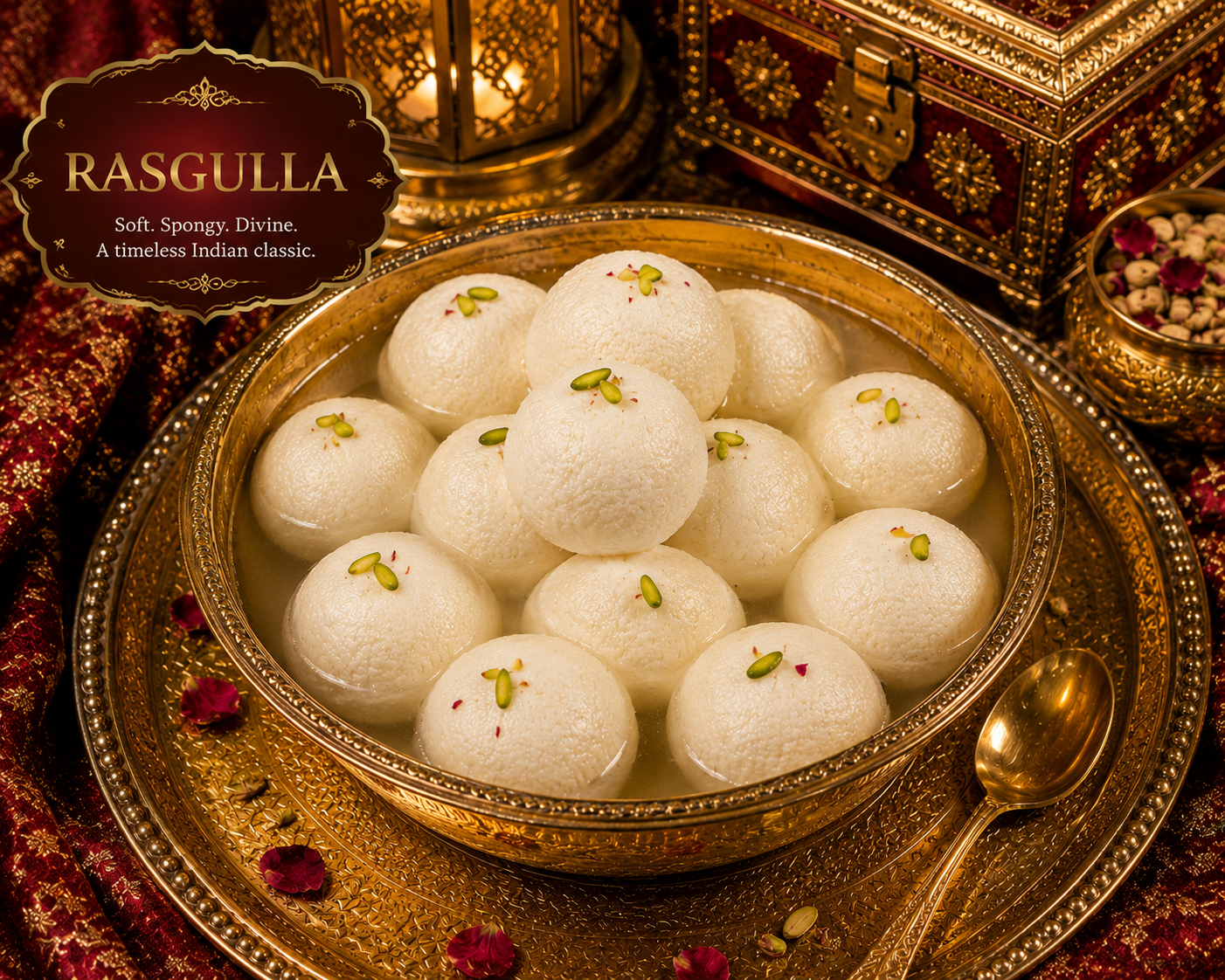
Rasgulla Recipe | Soft, Spongy & Juicy Bengali Rasgulla
Learn how to make authentic Bengali Rasgulla at home with this detailed step-by-step recipe. These soft, spongy, and juicy cottage cheese balls are cooked in light sugar syrup until perfectly fluffy and melt-in-the-mouth. Whether you’re preparing sweets for festivals, celebrations, family gatherings, or simply craving a classic Indian dessert, this foolproof recipe will help you achieve sweet-shop style Rasgullas every time.
Recipe Overview
Recipe Summary
Prep Time
25 Min
Cook Time
35 Min
Rest Time
30 Min
Difficulty
Medium
Yield
16 Rasgullas
Calories
125 kcal
About This Recipe
Rasgulla is one of the most iconic Bengali sweets, known for its delicate texture, light sweetness, and irresistible juiciness. Made from freshly prepared chenna (Indian cottage cheese), Rasgullas are cooked in light sugar syrup where they expand beautifully and develop their signature spongy texture.
Originating in Eastern India, particularly Bengal and Odisha, Rasgulla has become one of the most loved Indian desserts worldwide. Its simple ingredient list combined with precise techniques creates a dessert that feels both elegant and comforting.
This recipe follows traditional sweet-shop methods, covering everything from making perfect chenna to achieving the right kneading consistency, cooking temperature, and syrup balance. Follow these detailed instructions and you’ll create soft, springy Rasgullas that rival professional sweet makers.
Why You’ll Love This Rasgulla Recipe
- Authentic Bengali sweet-shop style results.
- Soft, juicy, and perfectly spongy texture.
- Made with simple pantry ingredients.
- Perfect for festivals and celebrations.
- Detailed beginner-friendly instructions.
- Light and refreshing dessert.
- Naturally gluten-free recipe.
- Excellent make-ahead sweet.
- Traditional homemade flavor.
- Includes professional chef secrets.
What Makes This Rasgulla Special?
The secret to exceptional Rasgulla lies in the quality of the chenna and proper cooking technique. Fresh homemade chenna, gentle kneading, crack-free shaping, and cooking in actively boiling syrup create perfectly soft Rasgullas that absorb syrup beautifully while maintaining their light and airy texture.
For the Chenna (Paneer)
For the Sugar Syrup
For Garnishing (Optional)
Ingredient Substitutions
- White vinegar can replace lemon juice for curdling the milk.
- Lime juice can be used instead of lemon juice.
- Organic cane sugar can replace regular sugar.
- Rose water can be replaced with kewra water.
- Cardamom powder can replace whole cardamom pods.
- Saffron is optional but adds a premium aroma.
- Store-bought chenna is not recommended but may be used if fresh.
- Brown sugar may be used but will alter the color.
- Pistachios can be replaced with almonds or cashews.
- A few drops of vanilla essence can create a fusion variation.
Step-by-Step Instructions
Boil the Milk
Pour the full-fat milk into a heavy-bottomed pot and bring it to a gentle boil over medium heat.
Stir occasionally to prevent milk solids from sticking to the bottom.
👨🍳 Chef Tip: Full-fat milk produces softer and more elastic Rasgullas than toned milk.
Curdle the Milk
Mix lemon juice with water and slowly add it to the boiling milk while stirring gently.
Continue until the milk separates completely into whey and chenna.
👨🍳 Chef Tip: Stop adding acid immediately once curdling occurs to avoid a sour taste.
Strain and Wash the Chenna
Pour the curdled mixture into a muslin-lined strainer.
Rinse thoroughly under cold running water to remove the lemon flavor and stop further cooking.
👨🍳 Chef Tip: Proper washing gives Rasgullas their clean and delicate flavor.
Drain Excess Whey
Tie the muslin cloth and hang it for 30–40 minutes.
The chenna should remain moist and soft, not completely dry.
👨🍳 Chef Tip: Over-drained chenna often leads to hard Rasgullas.
Knead the Chenna
Transfer the chenna to a clean plate and knead gently using your palm.
Continue until it becomes smooth, soft, and slightly greasy.
👨🍳 Chef Tip: Proper kneading is the single most important step for achieving a spongy texture.
Shape Smooth Balls
Divide the chenna into equal portions and roll into smooth balls without cracks.
Leave a little room for expansion during cooking.
👨🍳 Chef Tip: Even tiny cracks can cause the Rasgullas to break while cooking.
Prepare the Sugar Syrup
Combine sugar, water, and cardamom pods in a large wide pot.
Bring the mixture to a vigorous boil.
👨🍳 Chef Tip: A wide pot allows the Rasgullas to expand freely.
Add the Rasgulla Balls
Carefully place the chenna balls into the boiling syrup.
Cover immediately with a tight-fitting lid.
👨🍳 Chef Tip: The syrup must be actively boiling before adding the balls.
Cook Until Expanded
Cook for 12–15 minutes on medium-high heat.
The Rasgullas will almost double in size and become light and spongy.
👨🍳 Chef Tip: Avoid opening the lid frequently as temperature fluctuations affect expansion.
Rest in Syrup
Turn off the heat and allow the Rasgullas to rest in the syrup for 20–30 minutes.
This helps them absorb sweetness evenly.
👨🍳 Chef Tip: Resting improves both texture and flavor.
Add Flavoring
Add rose water and saffron if using.
Mix gently without damaging the delicate Rasgullas.
👨🍳 Chef Tip: Add floral flavorings after cooking to preserve their aroma.
Cool and Serve
Allow the Rasgullas to cool completely before serving.
Serve chilled or at room temperature with extra syrup.
👨🍳 Chef Tip: Chilled Rasgullas often taste even better because the syrup fully penetrates the center.
👨🍳 Pro Chef Secrets for Soft & Spongy Rasgulla
- Always use fresh full-fat milk.
- Wash the chenna thoroughly after curdling.
- Maintain the correct moisture level in the chenna.
- Knead until smooth and grain-free.
- Create perfectly crack-free balls.
- Use a large wide cooking pot.
- Cook in vigorously boiling syrup.
- Keep the lid closed during cooking.
- Allow resting time in the syrup.
- Never rush the cooling process.
❌ Common Mistakes to Avoid
- Using low-fat milk.
- Over-curdling the milk.
- Skipping the washing step.
- Over-draining the chenna.
- Under-kneading the dough.
- Making cracked Rasgulla balls.
- Using a small cooking pot.
- Cooking in weakly simmering syrup.
- Opening the lid repeatedly.
- Removing the Rasgullas from syrup too early.
Popular Rasgulla Variations
- 🍮 Traditional Bengali Rasgulla
- ✨ Kesar Rasgulla
- 🌹 Rose Rasgulla
- 🥭 Mango Rasgulla
- 🍫 Chocolate Rasgulla
- 🥥 Coconut Rasgulla
- 🍍 Pineapple Rasgulla
- 🧈 Rajbhog (Stuffed Rasgulla)
- 🥜 Dry Fruit Rasgulla
- 👑 Royal Saffron Rasgulla
🍽️ Serving Suggestions
Serve Rasgullas chilled or at room temperature in their sweet syrup. Garnish with pistachios, saffron strands, edible silver leaf, or rose petals for an elegant presentation. They pair wonderfully with festive meals and can also be served alongside Rabri for a luxurious dessert experience.
🧊 Storage & Shelf Life
🧊 Refrigerator
Store Rasgullas in their syrup inside an airtight container for up to 5 days.
❄️ Freezer
Freeze for up to 1 month. Thaw overnight in the refrigerator before serving.
🥄 Serving After Storage
Serve chilled directly from the refrigerator or allow them to come to room temperature before serving.
Make Ahead Tips
- Prepare the chenna several hours ahead.
- Cook Rasgullas one day before serving.
- Store them in syrup overnight for enhanced flavor.
- Prepare garnishes in advance.
- Use glass containers for storage.
- Keep Rasgullas fully submerged in syrup.
- Chill before serving for best texture.
- Ideal dessert for parties and festivals.
🥗 Nutrition Information (Approx. Per Rasgulla)
These values are approximate and may vary depending on ingredient brands and serving size.
Calories
Protein
Carbohydrates
Fat
Sugar
Calcium
❤️ Health Highlights
- Provides high-quality dairy protein.
- Good source of calcium for bone health.
- Contains essential nutrients from milk.
- Relatively low in fat compared to many Indian sweets.
- Offers quick energy through carbohydrates.
- Made with simple traditional ingredients.
- Homemade versions contain no preservatives.
- Can be enjoyed occasionally as part of a balanced diet.
💡 Did You Know?
Rasgulla is one of India’s most famous sweets and has been enjoyed for generations. Its unique sponge-like texture comes from the scientific interaction between freshly prepared chenna and boiling sugar syrup. Professional sweet makers often spend years mastering the art of creating perfectly soft and springy Rasgullas.
Frequently Asked Questions
Why are my Rasgullas hard?
Over-drained chenna, insufficient kneading, or overcooking can make Rasgullas hard and dense.
Why did my Rasgullas break while cooking?
Cracks in the dough, excess moisture, or improper kneading may cause breakage.
Can I make Rasgullas without lemon juice?
Yes, white vinegar or lime juice can be used to curdle the milk.
How do I know if the chenna is kneaded enough?
It should become smooth, soft, and slightly greasy without visible grains.
Can I prepare Rasgullas a day in advance?
Absolutely. They often taste better the next day after absorbing more syrup.
Why didn’t my Rasgullas expand?
The syrup may not have been boiling vigorously, or the chenna may have been too dry.
Can Rasgullas be frozen?
Yes, they can be frozen for up to a month when stored in syrup.
Should Rasgullas be served hot or cold?
They can be served either way, though chilled Rasgullas are the most popular.
What is the difference between Rasgulla and Ras Malai?
Rasgulla is served in sugar syrup, while Ras Malai is soaked in thickened saffron-flavored milk.
How do sweet shops make Rasgullas so soft?
Fresh chenna, proper kneading, vigorous boiling, and precise cooking times create the signature softness.
Related Recipes You May Like
Why This Rasgulla Recipe Works
This recipe follows authentic Bengali sweet-making techniques, focusing on proper chenna preparation, balanced moisture, careful kneading, vigorous syrup cooking, and sufficient resting time. Together, these steps create soft, airy, juicy Rasgullas with the perfect sweet-shop texture and flavor.
🌟 Expert Serving Tip
For a premium dessert presentation, chill the Rasgullas for several hours and serve them in crystal dessert bowls with a few saffron strands, chopped pistachios, and edible silver leaf. This simple touch transforms homemade Rasgullas into a restaurant-quality dessert.
Chef’s Final Note
Perfect Rasgullas require patience, attention to detail, and proper technique. Focus on achieving the right chenna texture, kneading carefully, maintaining a vigorous boil, and allowing enough resting time in the syrup. Once mastered, you’ll be able to create soft, spongy, juicy Rasgullas that rival the finest Bengali sweet shops.