Masala Dosa Recipe | Crispy South Indian Masala Dosa
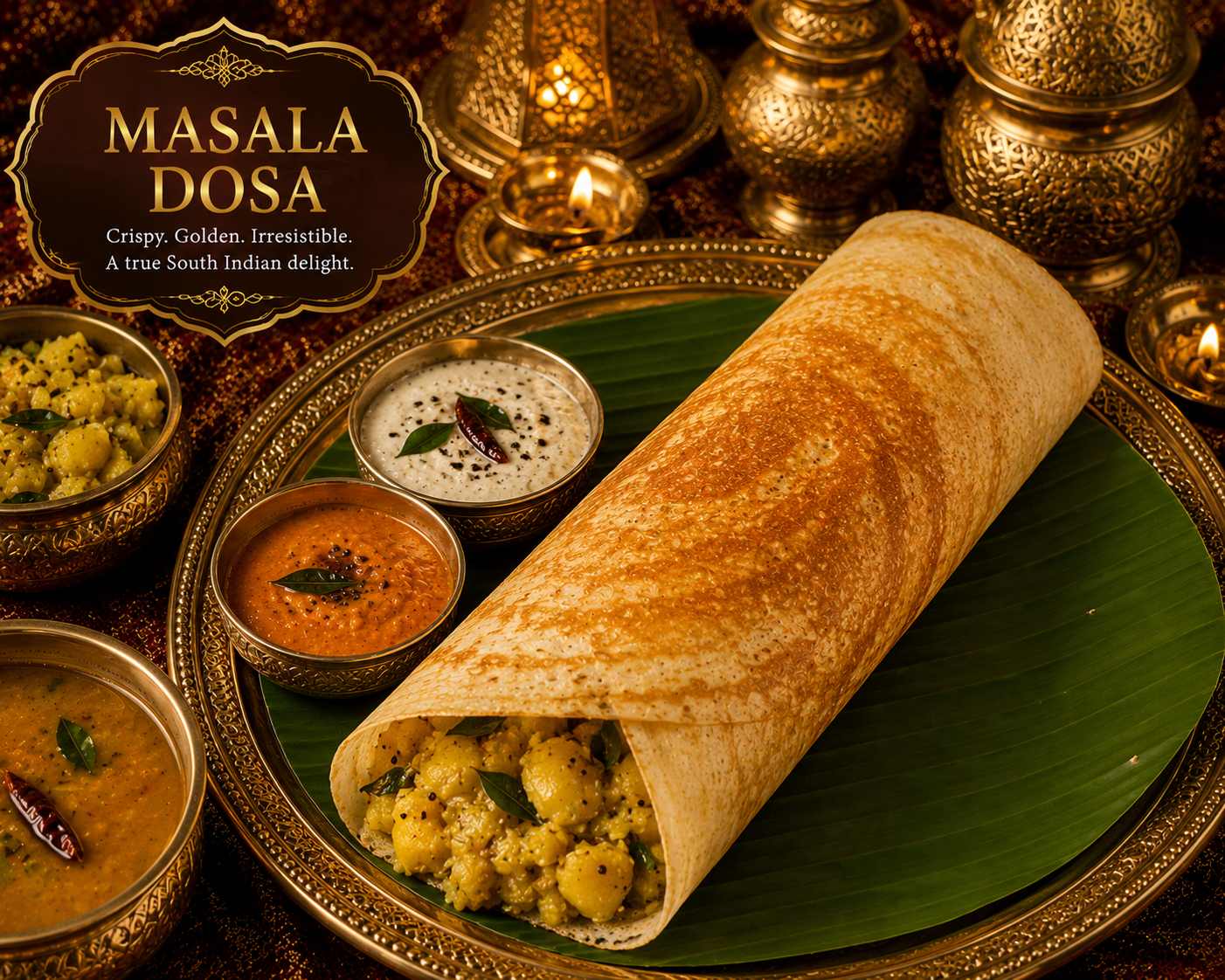
Learn how to make authentic South Indian Masala Dosa at home with this detailed step-by-step recipe. Masala Dosa is one of India’s most iconic breakfast dishes, featuring a thin, crispy fermented rice-lentil crepe filled with a flavorful potato masala. Served with coconut chutney and sambar, this restaurant-style Masala Dosa recipe delivers golden crisp edges, soft interiors, and perfectly spiced potato filling every time.
Recipe Overview
Recipe Summary
Prep Time
30 Min
Fermentation
8–10 Hrs
Cook Time
20 Min
Difficulty
Moderate
Yield
8 Dosas
Calories
320 kcal
About This Recipe
Masala Dosa is a beloved South Indian dish made from a fermented batter of rice and urad dal. The batter is spread thinly on a hot griddle until golden and crispy, then filled with a mildly spiced potato masala made with onions, curry leaves, mustard seeds, and turmeric.
Originating from Karnataka and popular throughout India, Masala Dosa has become a staple breakfast and restaurant favorite. The secret lies in proper fermentation, correct batter consistency, and cooking on a well-heated tawa to achieve the perfect crispy texture.
This recipe follows authentic restaurant-style techniques and includes detailed chef tips to help you make perfectly crisp, golden-brown Masala Dosas at home.
Why You’ll Love This Masala Dosa Recipe
- Authentic South Indian flavor.
- Perfectly crispy texture.
- Restaurant-style results at home.
- Flavorful potato masala filling.
- Naturally vegetarian.
- Perfect breakfast or dinner option.
- Pairs beautifully with chutney and sambar.
- Made using traditional fermentation.
- Budget-friendly ingredients.
- Detailed chef tips included.
What Makes This Masala Dosa Special?
The combination of properly fermented batter, crispy golden dosa, and aromatic potato masala creates the authentic restaurant-style experience. The batter develops complex flavors during fermentation, while the potato filling provides a delicious savory contrast that makes Masala Dosa one of India’s most loved dishes.
For the Dosa Batter
For the Potato Masala
For Tempering the Masala
For Cooking the Dosa
For Serving
Equipment Needed
Ingredient Substitutions
- Regular rice can replace idli rice.
- Poha (flattened rice) can be added for softer dosas.
- Yellow potatoes can replace regular potatoes.
- Ghee may be replaced with oil for a vegan version.
- Red chilies can replace green chilies.
- Shallots can replace onions for richer flavor.
- Butter can be used for a restaurant-style finish.
- Coconut oil can be used for authentic South Indian flavor.
- Asafoetida (hing) can be added to the masala.
- Fenugreek powder can replace fenugreek seeds if needed.
👨🍳 Restaurant-Style Crispy Dosa Secrets
- Use well-fermented batter.
- Grind urad dal until fluffy.
- Keep rice batter slightly grainy.
- Use a cast-iron tawa whenever possible.
- Maintain medium-high cooking temperature.
- Spread batter quickly and evenly.
- Do not make the batter too thick.
- Use ghee for superior flavor.
- Allow the dosa to crisp fully before folding.
- Serve immediately after cooking.
Step-by-Step Instructions
Wash the Rice
Rinse the rice thoroughly 3–4 times until the water becomes mostly clear.
Remove excess starch and impurities before soaking.
👨🍳 Chef Tip: Proper washing improves fermentation and results in a cleaner-tasting dosa batter.
Soak Rice and Dal
Soak rice separately and soak urad dal with fenugreek seeds in another bowl.
Allow both to soak for 4–6 hours.
👨🍳 Chef Tip: Longer soaking helps achieve smoother batter and better fermentation.
Grind the Urad Dal
Drain the soaked dal and grind using minimal water until light and fluffy.
The batter should become airy and smooth.
👨🍳 Chef Tip: Well-ground urad dal creates the crisp-yet-light texture of authentic dosa.
Grind the Rice
Grind the soaked rice separately into a slightly grainy batter.
Avoid making it completely smooth.
👨🍳 Chef Tip: A slight grainy texture helps produce crisp restaurant-style dosas.
Combine the Batters
Mix both batters thoroughly in a large bowl.
Leave enough room for the batter to rise during fermentation.
👨🍳 Chef Tip: Use clean hands while mixing; natural warmth helps fermentation.
Ferment the Batter
Cover the bowl loosely and place it in a warm location.
Allow it to ferment for 8–10 hours or overnight.
👨🍳 Chef Tip: Properly fermented batter will increase in volume and develop a pleasant aroma.
Prepare the Tempering for Masala
Heat oil in a pan and add mustard seeds, chana dal, and urad dal.
Allow them to crackle and turn lightly golden.
👨🍳 Chef Tip: Proper tempering creates the foundation of authentic potato masala flavor.
Cook the Aromatics
Add onions, green chilies, ginger, and curry leaves.
Sauté until the onions become soft and translucent.
👨🍳 Chef Tip: Avoid browning the onions; soft onions give traditional texture and sweetness.
Prepare the Potato Masala
Add turmeric and boiled potatoes.
Mash lightly and mix everything together.
Season with salt and cook for a few minutes.
👨🍳 Chef Tip: Keep some potato chunks intact for authentic restaurant-style masala.
Adjust the Batter
Add salt to the fermented batter and mix gently.
Adjust consistency with water if needed.
👨🍳 Chef Tip: The batter should flow smoothly from the ladle but not be watery.
Heat the Tawa
Place a cast-iron tawa over medium-high heat.
Sprinkle a few drops of water to test the temperature.
👨🍳 Chef Tip: Water should sizzle and evaporate immediately without smoking.
Spread the Dosa Batter
Pour a ladle of batter in the center of the tawa.
Spread outward in circular motions to form a thin dosa.
👨🍳 Chef Tip: Use light pressure and quick movements for a thin, even dosa.
Cook Until Crisp
Drizzle ghee or oil around the edges.
Cook until the bottom becomes golden brown and crispy.
👨🍳 Chef Tip: Do not rush this stage; slow crisping develops the classic golden color.
Add Masala and Fold
Place a portion of potato masala in the center.
Fold the dosa over the filling and serve immediately.
👨🍳 Chef Tip: Serve straight from the tawa for maximum crispness and flavor.
🫧 Perfect Fermentation Guide
A properly fermented batter should rise noticeably, feel airy, and have a pleasant mildly tangy aroma. Fermentation is the key to achieving authentic South Indian dosa texture.
🌟 Professional Tawa Technique
Restaurant chefs maintain consistent tawa temperature between every dosa. After cooking one dosa, lightly wipe the surface with a damp cloth before spreading the next dosa. This prevents overheating and helps the batter spread evenly.
The combination of correct temperature, proper batter consistency, and quick circular spreading creates the signature thin, crisp dosa.
🥔 Perfect Potato Masala Secrets
- Use freshly boiled potatoes.
- Do not over-mash the potatoes.
- Cook onions until soft, not brown.
- Use fresh curry leaves.
- Add ginger for authentic flavor.
- Balance turmeric carefully.
- Keep the filling moist.
- Season properly with salt.
- Allow flavors to blend before filling.
- Serve hot for best taste.
❌ Common Mistakes to Avoid
- Using under-fermented batter.
- Making the batter too thick.
- Using a cold tawa.
- Overheating the tawa.
- Spreading batter too slowly.
- Adding too much filling.
- Making the potato masala dry.
- Flipping the dosa unnecessarily.
- Using stale curry leaves.
- Serving after it loses crispness.
Popular Masala Dosa Variations
- 🥞 Classic Masala Dosa
- 🧈 Ghee Roast Masala Dosa
- 🌶️ Mysore Masala Dosa
- 🧀 Cheese Masala Dosa
- 🥬 Spinach Masala Dosa
- 🌾 Ragi Masala Dosa
- 🥕 Vegetable Masala Dosa
- 🌱 Millet Masala Dosa
- 🧄 Garlic Masala Dosa
- 👑 Udupi Style Masala Dosa
🍽️ Serving Suggestions
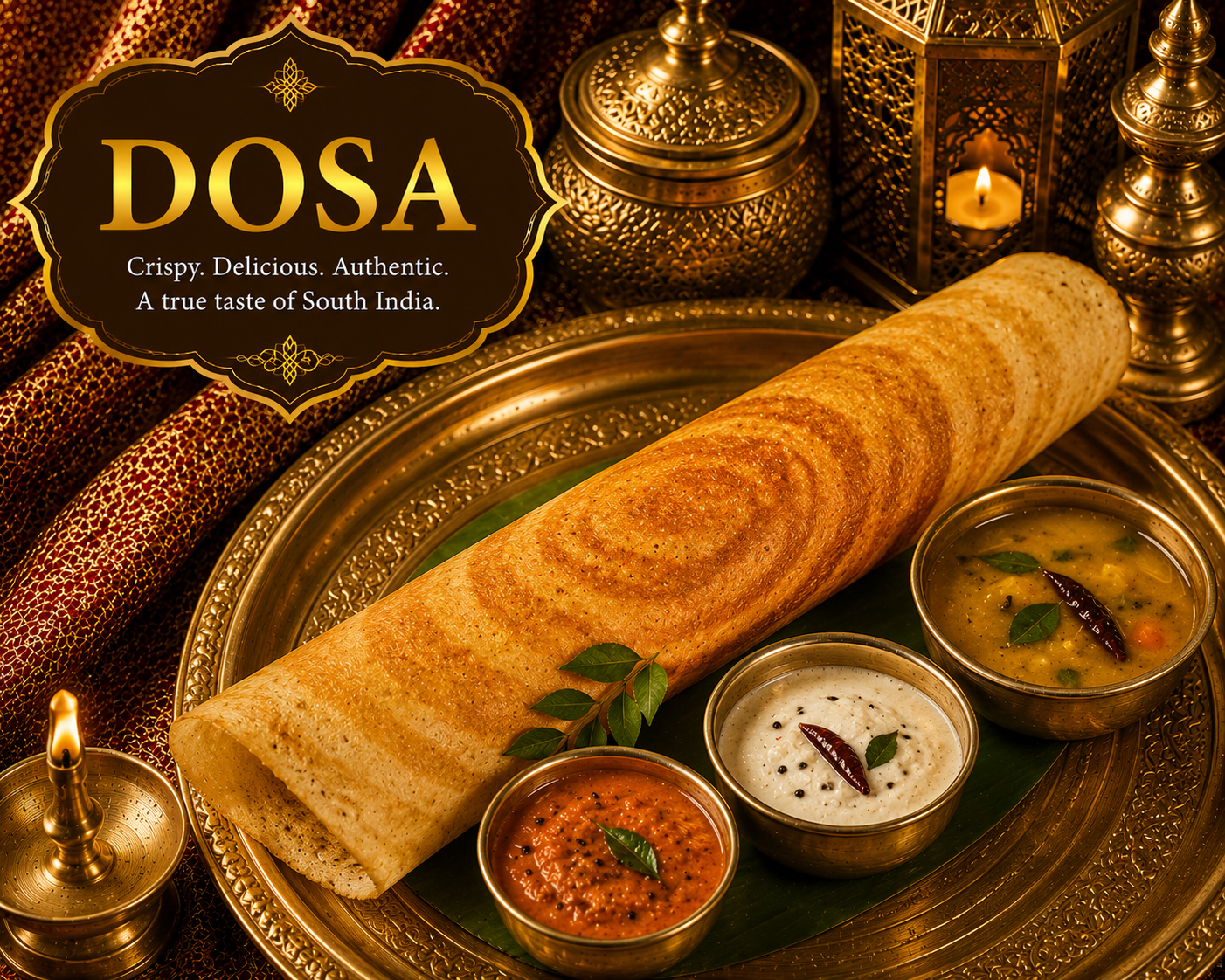
Serve hot and crispy Masala Dosa with coconut chutney, hotel-style sambar, tomato chutney, mint chutney, and a small bowl of potato masala. For an authentic South Indian restaurant experience, accompany it with filter coffee and medu vada.
🧊 Storage & Reheating Guide
🧊 Refrigerator
Store leftover potato masala in an airtight container for up to 3 days.
❄️ Freezer
Dosa batter can be refrigerated for 4–5 days after fermentation.
🔥 Reheating
Reheat potato masala gently and prepare fresh dosas whenever possible.
Make Ahead Tips
- Soak rice and dal the night before.
- Prepare batter one day ahead.
- Ferment batter overnight.
- Cook potato masala in advance.
- Store chutneys separately.
- Keep batter refrigerated after fermentation.
- Bring batter to room temperature before use.
- Prepare fresh dosas just before serving.
🥗 Nutrition Information (Approx. Per Dosa)
These values are approximate and may vary depending on ingredients and serving size.
Calories
Protein
Carbohydrates
Fat
Fiber
Sodium
❤️ Health Highlights
- Provides sustained energy from rice and lentils.
- Good source of plant-based protein.
- Contains dietary fiber from potatoes and lentils.
- Naturally vegetarian.
- Fermented batter supports digestion.
- Can be customized with healthier fillings.
- Balanced combination of carbohydrates and protein.
- Suitable for breakfast, lunch, or dinner.
💡 Did You Know?
Masala Dosa is believed to have originated in Karnataka and later became popular throughout India and around the world. Today, it is considered one of the most iconic South Indian dishes and is frequently featured on lists of the world’s best breakfasts due to its crispy texture, flavorful filling, and wholesome ingredients.
Frequently Asked Questions
Why is my dosa not crispy?
The batter may be too thick, under-fermented, or the tawa temperature may be incorrect.
Can I make dosa without fermentation?
Fermentation is highly recommended for authentic flavor, texture, and crispness.
Which tawa is best for dosa?
A well-seasoned cast-iron tawa is considered the best choice for crispy dosas.
Can I store dosa batter?
Yes, fermented batter can be refrigerated for up to 5 days.
Why does my dosa stick to the tawa?
The tawa may not be seasoned properly, or the temperature may be too low.
Can I freeze dosa batter?
Yes, but fresh batter generally produces the best results.
Can I make dosa without potatoes?
Absolutely. Plain dosa is equally popular and delicious.
How do restaurants make dosas so crispy?
Proper fermentation, correct batter consistency, high-quality tawa seasoning, and controlled heat are the key factors.
Can I use brown rice?
Yes, though the texture and flavor will differ slightly from traditional Masala Dosa.
What chutney goes best with Masala Dosa?
Coconut chutney is the most traditional accompaniment, followed by tomato and mint chutneys.
Related Recipes You May Like
Why This Masala Dosa Recipe Works
This recipe combines authentic South Indian techniques with carefully balanced ingredients. Proper fermentation develops flavor and texture, the slightly grainy rice batter creates crispness, and the perfectly seasoned potato masala adds rich savory flavor. Together, they produce a restaurant-style Masala Dosa that is crispy, golden, and incredibly satisfying.
🌟 Expert Serving Tip
For authentic restaurant-style presentation, serve Masala Dosa immediately after folding while still sizzling hot. Pair it with freshly prepared coconut chutney, piping hot sambar, and a small bowl of extra potato masala. A drizzle of melted ghee just before serving adds exceptional aroma and flavor.
Chef’s Final Note
Perfect Masala Dosa is a balance of patience and technique. Focus on proper fermentation, maintain the correct batter consistency, use a well-heated tawa, and spread the batter confidently. With practice, you’ll create beautifully crisp, golden-brown dosas that rival those served in the finest South Indian restaurants.