Pongal Recipe | Authentic South Indian Ven Pongal
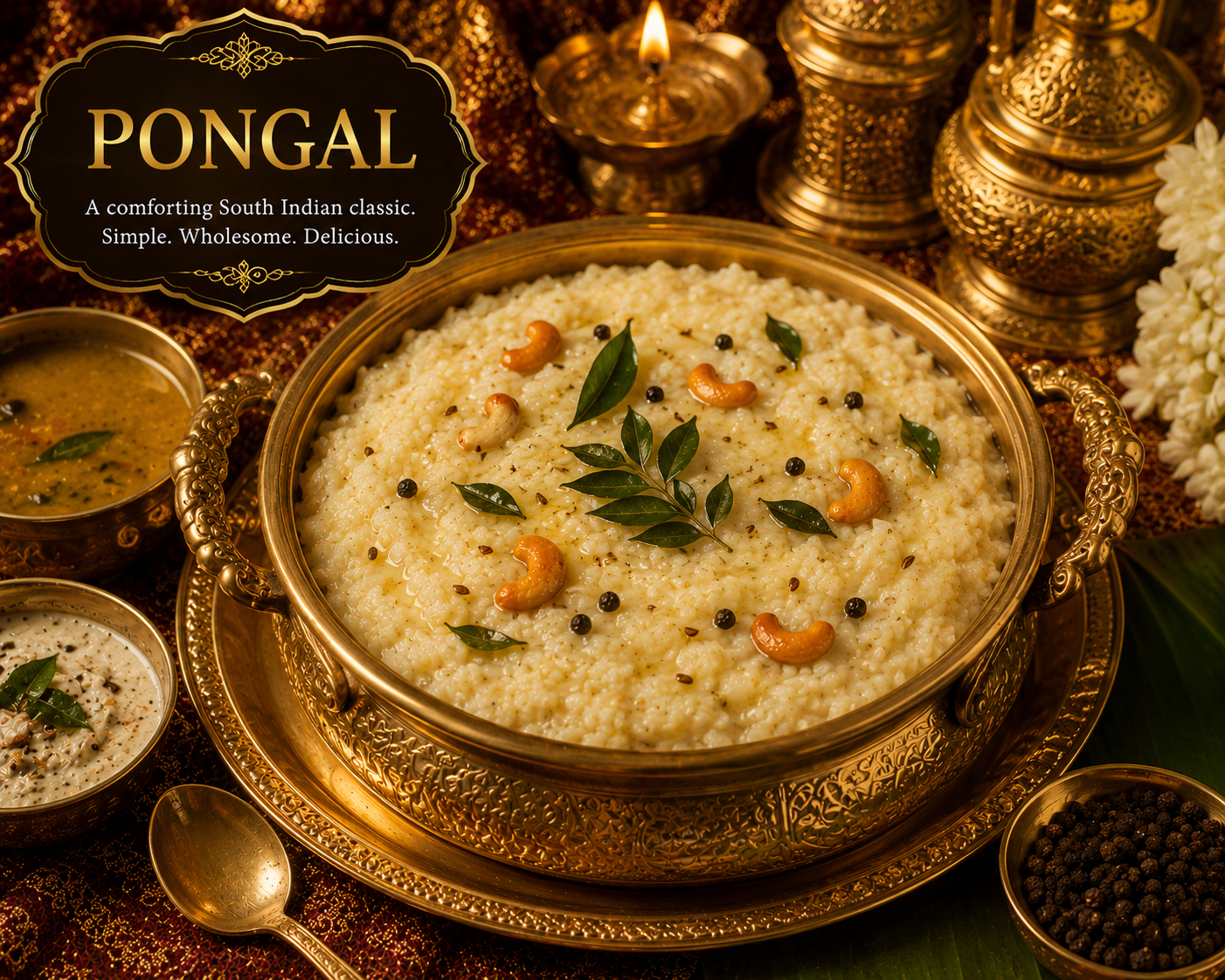
Learn how to make creamy, flavorful, and authentic South Indian Ven Pongal at home with this detailed step-by-step recipe. Made with rice, moong dal, black pepper, cumin, ginger, curry leaves, and ghee, Pongal is one of South India’s most beloved comfort foods. This rich and aromatic dish is commonly enjoyed for breakfast, festive occasions, and temple offerings. With its soft texture and fragrant tempering, Ven Pongal pairs perfectly with coconut chutney, sambar, and medu vada.
Recipe Overview
Recipe Summary
Prep Time
10 Min
Cook Time
30 Min
Difficulty
Easy
Yield
4 Servings
Main Ingredient
Rice & Moong Dal
Calories
320 kcal
About This Recipe
Ven Pongal is a classic South Indian dish prepared using rice and yellow moong dal cooked together until soft and creamy. The dish is then elevated with a fragrant tempering of ghee, black peppercorns, cumin seeds, ginger, curry leaves, and cashews.
Pongal is deeply rooted in South Indian culture and is especially associated with the harvest festival of Pongal. However, it is enjoyed year-round as a comforting breakfast and satisfying meal. Its simple ingredients combine to create a rich, flavorful dish that is both nourishing and delicious.
This recipe follows traditional temple-style methods while incorporating detailed instructions and professional chef tips to help you achieve the perfect creamy consistency and authentic South Indian flavor.
Why You’ll Love This Pongal Recipe
- Authentic South Indian flavor.
- Creamy and comforting texture.
- Perfect breakfast or light meal.
- Simple pantry ingredients.
- One-pot preparation.
- Rich aroma from ghee and spices.
- Naturally vegetarian.
- Temple-style taste at home.
- Easy to prepare.
- Includes professional chef tips.
What Makes This Pongal Special?
Unlike ordinary rice dishes, Pongal achieves its unique texture through slow cooking rice and moong dal together until creamy and soft. The finishing tempering of ghee, black pepper, cumin, ginger, curry leaves, and roasted cashews creates the signature aroma and flavor that make authentic South Indian Pongal so special.
For the Pongal
For the Tempering
Optional Flavor Enhancers
For Serving
Equipment Needed
Ingredient Substitutions
- Short-grain rice can replace regular raw rice.
- Split yellow moong dal is traditional, but split green moong can also be used.
- Butter may replace ghee, though ghee provides authentic flavor.
- Crushed black pepper can replace whole peppercorns.
- Peanuts can replace cashews for a budget-friendly version.
- Vegetable oil can replace ghee for a vegan variation.
- Fresh ginger paste can replace chopped ginger.
- Asafoetida (hing) can be added for extra aroma.
- Green chilies can be increased for a spicier Pongal.
- Coconut oil can be used for a unique South Indian twist.
Step-by-Step Instructions
Measure the Rice and Dal
Measure the rice and yellow moong dal according to the recipe quantities.
Maintaining the correct ratio is important for authentic Pongal texture.
👨🍳 Chef Tip: The classic ratio is 1 cup rice to ½ cup moong dal for a creamy consistency.
Dry Roast the Moong Dal
Heat a pan and roast the moong dal on low heat for 3–4 minutes.
Roast only until a pleasant nutty aroma develops.
👨🍳 Chef Tip: Do not brown the dal. Light roasting enhances flavor without changing the traditional taste.
Wash the Rice and Dal
Combine the roasted dal and rice in a bowl.
Wash thoroughly 2–3 times until the water becomes clearer.
👨🍳 Chef Tip: Proper washing removes excess starch and impurities while maintaining a creamy final texture.
Add Water and Salt
Transfer the washed rice and dal to a pressure cooker.
Add water and salt, then stir gently.
👨🍳 Chef Tip: Use slightly extra water compared to regular rice dishes because Pongal should be soft and creamy.
Pressure Cook Until Soft
Cook for 4–5 whistles or until both the rice and dal become extremely soft.
Allow the pressure to release naturally.
👨🍳 Chef Tip: The grains should almost lose their shape for authentic temple-style Pongal.
Mash the Mixture Lightly
Open the cooker and gently mash the cooked rice and dal using a ladle.
Mix until creamy and smooth.
👨🍳 Chef Tip: Avoid over-mashing. Some texture should remain for the best mouthfeel.
Prepare the Tempering
Heat ghee in a tempering pan over medium heat.
Allow the ghee to become aromatic.
👨🍳 Chef Tip: Good-quality ghee is one of the most important ingredients in authentic Pongal.
Roast the Cashews
Add cashews to the hot ghee and fry until lightly golden.
Stir continuously for even coloring.
👨🍳 Chef Tip: Remove cashews immediately once golden to prevent burning.
Add Whole Spices
Add black peppercorns and cumin seeds to the ghee.
Allow them to crackle and release their aroma.
👨🍳 Chef Tip: Slightly crush a few peppercorns beforehand for stronger flavor distribution.
Add Ginger and Curry Leaves
Add chopped ginger and fresh curry leaves.
Cook briefly until fragrant.
👨🍳 Chef Tip: Fresh curry leaves create the signature South Indian aroma that defines great Pongal.
Combine Tempering with Pongal
Pour the entire tempering mixture over the cooked rice and dal.
Mix thoroughly until evenly distributed.
👨🍳 Chef Tip: Mix while the Pongal is still hot so the flavors spread evenly throughout the dish.
Adjust Consistency and Serve
If the Pongal becomes too thick, add a little hot water and mix.
Finish with extra ghee and serve immediately.
👨🍳 Chef Tip: Pongal naturally thickens as it cools, so keep it slightly loose before serving.
👨🍳 Temple-Style Pongal Secrets
- Always roast moong dal lightly before cooking.
- Use generous amounts of ghee.
- Cook rice and dal until extremely soft.
- Use whole black pepper for authentic flavor.
- Add fresh ginger rather than ginger powder.
- Use fresh curry leaves.
- Do not reduce the cooking water.
- Serve immediately after tempering.
- Finish with an extra spoon of hot ghee.
- Pair with coconut chutney and sambar.
🥣 Perfect Pongal Consistency Guide
Traditional Pongal should be soft, creamy, and slightly loose when hot. It will naturally thicken as it cools, so avoid over-reducing the moisture during cooking.
🌟 Authentic South Indian Flavor Secrets
The distinctive flavor of Pongal comes from the balance of ghee, black pepper, cumin, ginger, and curry leaves. Unlike heavily spiced dishes, Pongal relies on simple ingredients that complement each other beautifully.
Many South Indian temples prepare Pongal using extra ghee and freshly cracked peppercorns to create a rich aroma and luxurious texture.
❌ Common Mistakes to Avoid
- Using insufficient water.
- Skipping the roasting of moong dal.
- Undercooking the rice and dal.
- Using stale cumin or pepper.
- Burning the cashews.
- Adding too little ghee.
- Overcooking the tempering spices.
- Making the Pongal too dry.
- Using old curry leaves.
- Serving after it becomes overly thick.
Popular Pongal Variations
- 🥣 Traditional Ven Pongal
- 🍬 Sweet Sakkarai Pongal
- 🌶️ Spicy Pepper Pongal
- 🧈 Extra Ghee Pongal
- 🥬 Spinach Pongal
- 🌱 Millet Pongal
- 🧄 Garlic Pongal
- 🥕 Vegetable Pongal
- 🌰 Cashew Rich Pongal
- 👑 Temple Style Pongal
🍽️ Serving Suggestions
Serve hot Pongal with coconut chutney, hotel-style sambar, tomato chutney, onion chutney, or crispy medu vada. For a complete South Indian breakfast experience, pair it with filter coffee and a side of freshly prepared chutneys.
🧊 Storage & Reheating Guide
🧊 Refrigerator
Store leftover Pongal in an airtight container for up to 2 days.
❄️ Freezer
Freezing is possible for up to 1 month, though fresh Pongal always tastes best.
🔥 Reheating
Add a little hot water while reheating to restore the creamy consistency.
Make Ahead Tips
- Roast the moong dal in advance.
- Measure ingredients the night before.
- Prepare coconut chutney ahead of time.
- Cook Pongal fresh for best results.
- Store tempering ingredients separately.
- Use freshly made ghee whenever possible.
- Keep extra hot water ready for consistency adjustment.
- Perfect for weekend breakfast preparation.
🥗 Nutrition Information (Approx. Per Serving)
These values are approximate and may vary depending on ingredients and serving size.
Calories
Protein
Carbohydrates
Fat
Fiber
Iron
❤️ Health Highlights
- Good source of plant-based protein.
- Provides long-lasting energy.
- Easy to digest and comforting.
- Contains fiber from moong dal.
- Rich in essential minerals.
- Naturally vegetarian.
- Suitable for breakfast or light meals.
- Made with wholesome pantry ingredients.
💡 Did You Know?
The word “Pongal” means “to boil over” in Tamil. The dish is closely associated with the famous Pongal harvest festival celebrated across Tamil Nadu. During the festival, freshly harvested rice is cooked until it overflows from the pot, symbolizing prosperity, abundance, and gratitude for a successful harvest.
Frequently Asked Questions
What is the difference between Ven Pongal and Sakkarai Pongal?
Ven Pongal is a savory dish, while Sakkarai Pongal is a sweet version made with jaggery, ghee, and nuts.
Why is my Pongal dry?
Insufficient water or excessive cooking can make Pongal dry and dense.
Can I make Pongal without ghee?
Yes, but ghee provides the authentic flavor and richness associated with traditional Pongal.
Can I use brown rice?
Yes, though the texture will be less creamy and require additional cooking time.
How do I make Pongal creamier?
Use more water, cook longer, and add an extra spoonful of ghee before serving.
Can I prepare Pongal in an Instant Pot?
Absolutely. An Instant Pot works very well for achieving the soft texture required.
Why is black pepper important in Pongal?
Black pepper provides the signature warmth and flavor that balances the richness of ghee.
Can I add vegetables?
Yes, vegetables such as carrots, peas, and spinach can be added for a nutritious variation.
What should I serve with Pongal?
Coconut chutney, sambar, tomato chutney, and medu vada are traditional accompaniments.
Can Pongal be made ahead?
Yes, but it is best enjoyed fresh when the texture is at its creamiest.
Related Recipes You May Like
Why This Pongal Recipe Works
This recipe combines the perfect rice-to-dal ratio, slow cooking, generous ghee, aromatic spices, and traditional South Indian tempering techniques. The result is a creamy, flavorful Pongal that closely resembles the comforting version served in temples and popular South Indian restaurants.
🌟 Expert Serving Tip
Just before serving, drizzle a teaspoon of hot ghee over the Pongal and garnish with freshly roasted cashews. Pair it with coconut chutney and piping hot sambar for an authentic restaurant-style South Indian breakfast experience.
Chef’s Final Note
Great Pongal is all about simplicity, balance, and texture. Focus on cooking the rice and dal until perfectly soft, use fresh spices for the tempering, and never be shy with the ghee. Follow these traditional techniques, and you’ll create a bowl of Pongal that is creamy, aromatic, comforting, and deeply satisfying.