Dhokla Recipe | Soft, Spongy Gujarati Khaman Dhokla
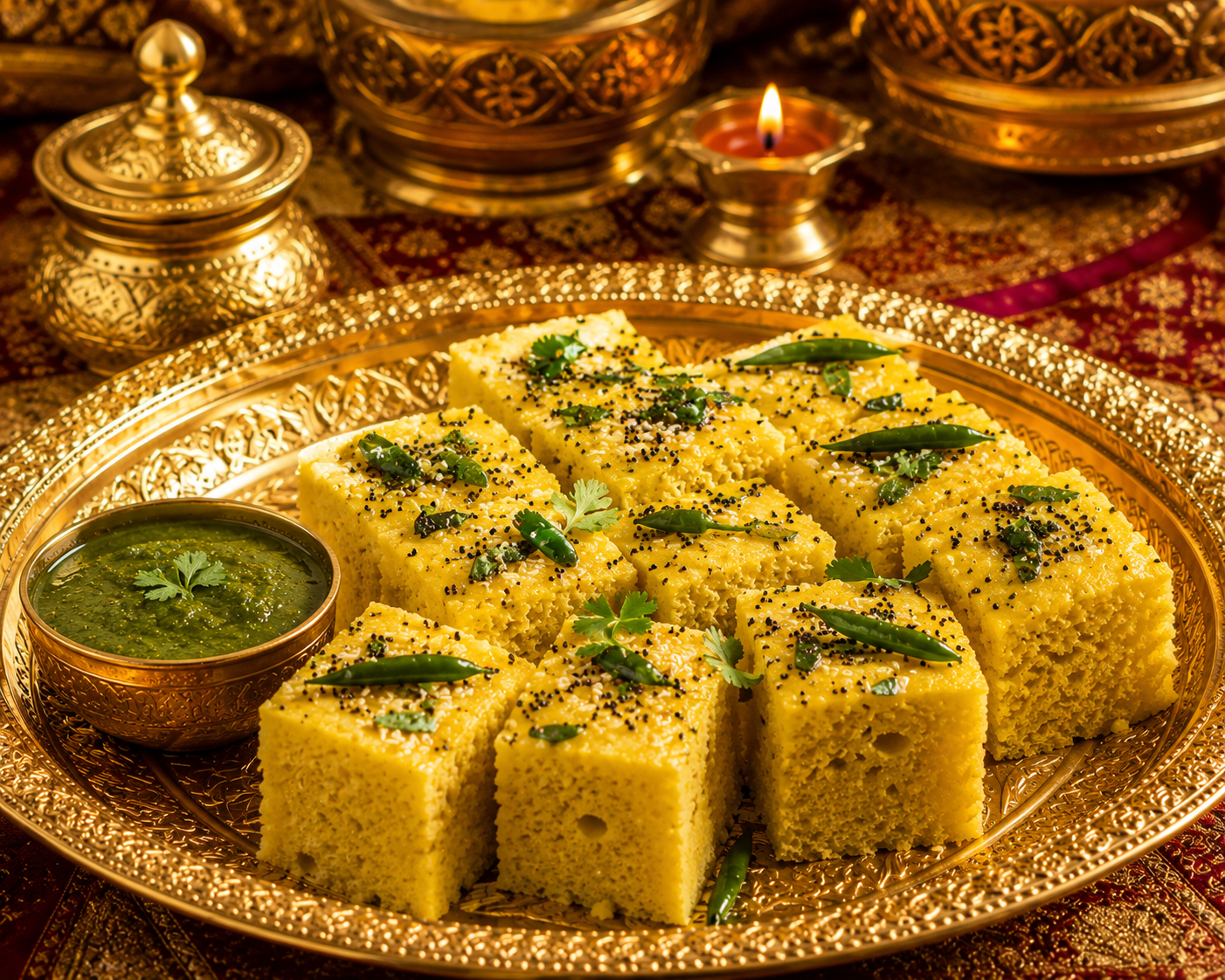
Learn how to make soft, fluffy, and perfectly spongy Khaman Dhokla at home with this authentic Gujarati recipe. Made from gram flour (besan), steamed until light and airy, and topped with a flavorful tempering, this classic snack is healthy, delicious, and incredibly easy to prepare. Whether you’re serving it for breakfast, tea time, lunch, or festive gatherings, this foolproof recipe guarantees bakery-style dhokla every time.
Recipe Overview
Recipe Summary
Prep Time
15 Min
Cook Time
20 Min
Total Time
35 Min
Difficulty
Easy
Yield
16 Pieces
Calories
140 kcal
About This Recipe
Dhokla is one of Gujarat’s most famous dishes and is loved across India for its light texture, mildly sweet and tangy flavor, and healthy preparation method. Unlike many fried snacks, dhokla is steamed, making it a lighter and more nutritious option.
The secret to perfectly soft and airy dhokla lies in achieving the right batter consistency, incorporating the fruit salt at the correct time, and steaming immediately. These simple techniques create the signature sponge-like texture that makes dhokla so popular.
This detailed recipe walks you through every step—from preparing the batter to steaming and tempering—so you can confidently make restaurant-style Khaman Dhokla at home, even if you’re a beginner.
Why You’ll Love This Dhokla Recipe
- Soft, fluffy, and perfectly spongy texture.
- Authentic Gujarati-style flavor.
- Made with simple pantry ingredients.
- Healthy steamed snack.
- Beginner-friendly recipe.
- Ready in under an hour.
- Perfect for breakfast or tea time.
- Naturally vegetarian.
- Excellent make-ahead snack.
- Includes professional chef tips.
What Makes This Dhokla Special?
Many homemade dhokla recipes turn out dense or dry. This recipe focuses on the techniques used in Gujarati kitchens to achieve maximum softness and moisture. The batter is properly balanced, steamed at the right temperature, and finished with a flavorful tempering that soaks into every piece, creating irresistibly soft and flavorful dhokla.
For the Dhokla Batter
For the Tempering
For Garnishing
Ingredient Substitutions
- Citric acid can replace lemon juice for extra tanginess.
- Buttermilk can replace yogurt for a lighter batter.
- Fine semolina can be omitted if unavailable.
- Baking soda can be used instead of Eno, though Eno provides better texture.
- Coconut sugar can replace regular sugar in the tempering.
- Green chilies can be adjusted according to spice preference.
- White sesame seeds can be added to the tempering.
- Fresh coconut can be replaced with desiccated coconut.
- Avocado oil can replace regular cooking oil.
- Mint chutney can be served instead of coriander chutney.
Step-by-Step Instructions
Prepare the Steamer
Fill a steamer or large pot with 2–3 cups of water and bring it to a gentle boil. Grease a round or square steaming tray with oil and keep it ready.
Preparing the steamer beforehand is important because the batter must be steamed immediately after adding Eno.
👨🍳 Chef Tip: Always keep the steamer hot and ready before activating the batter.
Mix the Dry Ingredients
In a large mixing bowl combine gram flour (besan), semolina, and salt. Mix thoroughly to distribute the ingredients evenly.
Proper mixing prevents lumps and creates a uniform batter structure.
👨🍳 Chef Tip: Sift the besan before mixing for an extra smooth batter.
Add Yogurt and Water
Add yogurt, water, lemon juice, and oil to the dry ingredients. Whisk continuously until a smooth, lump-free batter forms.
The batter should flow smoothly but should not be watery.
👨🍳 Chef Tip: Use room-temperature yogurt for the best batter consistency.
Rest the Batter
Cover the batter and let it rest for 10–15 minutes.
This allows the semolina and gram flour to absorb moisture, resulting in softer dhokla.
👨🍳 Chef Tip: Resting improves texture and helps create a more even crumb.
Check Batter Consistency
After resting, stir the batter once and check its consistency. It should be thick yet pourable, similar to pancake batter.
Adjust with a small amount of water if the batter becomes too thick.
👨🍳 Chef Tip: Thick batter produces dense dhokla, while overly thin batter reduces rise.
Add the Fruit Salt (Eno)
Just before steaming, sprinkle the fruit salt over the batter and add 1 tablespoon water on top. Immediately stir gently in one direction.
The batter will become light, airy, and frothy due to the activation of Eno.
👨🍳 Chef Tip: Mix gently and avoid over-stirring or you’ll lose the trapped air bubbles.
Transfer to the Steaming Tray
Immediately pour the activated batter into the greased tray and gently tap the tray once to level the surface.
Quick transfer helps preserve the air incorporated by the fruit salt.
👨🍳 Chef Tip: Never let the activated batter sit on the counter before steaming.
Steam the Dhokla
Place the tray into the preheated steamer and steam on medium heat for 18–20 minutes.
Avoid opening the lid during steaming as sudden temperature changes can affect the rise.
👨🍳 Chef Tip: Cover the lid with a cloth if condensation is excessive.
Check for Doneness
Insert a toothpick or skewer into the center of the dhokla. If it comes out clean, the dhokla is fully cooked.
Properly cooked dhokla should spring back lightly when pressed.
👨🍳 Chef Tip: Avoid over-steaming, which can dry out the dhokla.
Prepare the Tempering
Heat oil in a small pan. Add mustard seeds and allow them to crackle. Add green chilies and curry leaves and sauté briefly.
The tempering adds aroma, flavor, and moisture to the dhokla.
👨🍳 Chef Tip: Keep the heat moderate to prevent burning the curry leaves.
Create the Tempering Syrup
Add water, sugar, and lemon juice to the tempering. Stir until the sugar dissolves completely and bring it to a gentle simmer.
This sweet-tangy liquid helps keep the dhokla moist and flavorful.
👨🍳 Chef Tip: The syrup should be warm when poured over the dhokla for maximum absorption.
Finish and Garnish
Cut the dhokla into squares or diamonds. Pour the prepared tempering evenly over the surface. Garnish with fresh coriander and grated coconut before serving.
The dhokla will absorb the tempering and become incredibly soft, moist, and flavorful.
👨🍳 Chef Tip: Let the dhokla rest for 5–10 minutes after tempering so every piece absorbs maximum flavor.
👨🍳 Pro Chef Secrets for Ultra-Soft Dhokla
- Sift the besan before preparing the batter.
- Use fresh fruit salt (Eno) for maximum rise.
- Keep the batter thick yet pourable.
- Prepare the steamer before activating the batter.
- Steam immediately after adding Eno.
- Avoid over-mixing once Eno is added.
- Do not open the steamer during cooking.
- Use medium heat for even steaming.
- Pour tempering while both are still warm.
- Allow resting time after tempering for maximum softness.
❌ Common Mistakes to Avoid
- Using old or expired fruit salt.
- Preparing watery batter.
- Making the batter excessively thick.
- Over-mixing after adding Eno.
- Waiting too long before steaming.
- Opening the steamer repeatedly.
- Steaming on very high heat.
- Skipping the tempering syrup.
- Overcooking the dhokla.
- Cutting the dhokla immediately without resting.
Popular Dhokla Variations
- 💛 Khaman Dhokla
- 🌾 Rava Dhokla
- 🌱 White Dhokla (Khatta Dhokla)
- 🟢 Spinach Dhokla
- 🌽 Corn Dhokla
- 🥕 Mixed Vegetable Dhokla
- 🧀 Paneer Dhokla
- 🌿 Mint Dhokla
- 🔥 Masala Dhokla
- 🌾 Multigrain Dhokla
🍽️ Serving Suggestions
Serve freshly prepared dhokla with green coriander chutney, mint chutney, fried green chilies, or sweet tamarind chutney. It pairs beautifully with masala chai for breakfast or evening tea. For festive gatherings, arrange the dhokla on a serving platter and garnish generously with coriander, grated coconut, and additional tempering.
🧊 Storage & Reheating
🧊 Refrigerator
Store dhokla in an airtight container for up to 3 days. Keep it refrigerated to maintain freshness.
❄️ Freezer
Freeze individual pieces in a freezer-safe container for up to 1 month. Thaw overnight before reheating.
♨️ Reheating
Steam for 2–3 minutes or microwave lightly with a few drops of water to restore softness.
Make Ahead Tips
- Prepare the batter ingredients in advance.
- Mix and measure the tempering ingredients beforehand.
- Prepare chutneys one day earlier.
- Steam the dhokla a few hours before serving.
- Add the tempering shortly before serving for best flavor.
- Store cut pieces in an airtight container.
- Reheat gently before serving.
- Keep garnishes ready for quick assembly.
🥗 Nutrition Information (Approx. Per Serving)
These values are approximate and may vary depending on ingredients and portion size.
Calories
Protein
Carbohydrates
Fat
Fiber
Sodium
❤️ Health Highlights
- Rich in plant-based protein from gram flour.
- Steamed instead of deep-fried.
- Contains less oil than many traditional snacks.
- Provides dietary fiber for digestion.
- Can be part of a balanced vegetarian diet.
- Offers sustained energy through complex carbohydrates.
- Easy to digest and light on the stomach.
- A healthier alternative to many fried snacks.
💡 Did You Know?
Dhokla originated in Gujarat and has been enjoyed for centuries. Traditional versions were made using naturally fermented batters, while modern Khaman Dhokla often uses fruit salt (Eno) for convenience and a guaranteed soft texture. Today, dhokla is one of India’s most recognized vegetarian snacks and is enjoyed around the world.
Frequently Asked Questions
Why is my dhokla dense instead of spongy?
Dense dhokla is usually caused by expired Eno, over-mixing the batter, or delaying steaming after activation.
Can I make dhokla without Eno?
Yes, but you may need baking soda and a longer fermentation process for similar results.
Why did my dhokla turn dry?
Over-steaming or skipping the tempering syrup can make dhokla dry.
Can I prepare dhokla in advance?
Yes. It stores well and can be reheated while maintaining its soft texture.
Can I use only besan without semolina?
Absolutely. The recipe will still work well, though semolina adds slight texture.
How do I know when the dhokla is fully cooked?
Insert a toothpick into the center. If it comes out clean, the dhokla is ready.
Can I make dhokla in a pressure cooker?
Yes. Steam without the whistle, just as you would in a regular steamer.
Why is tempering important?
Tempering adds moisture, flavor, aroma, and helps keep the dhokla soft.
Can I freeze dhokla?
Yes. Freeze in airtight containers and reheat gently before serving.
Which chutney pairs best with dhokla?
Fresh coriander-mint chutney is the most traditional accompaniment.
Related Recipes You May Like
Why This Dhokla Recipe Works
This recipe uses the ideal ratio of besan, yogurt, and fruit salt to create a perfectly aerated batter. Immediate steaming locks in the air bubbles, producing an exceptionally soft and fluffy texture. The sweet-tangy tempering soaks into the dhokla, ensuring every bite remains moist, flavorful, and authentically Gujarati.
🌟 Expert Serving Tip
For bakery-style softness, pour the warm tempering evenly over the freshly steamed dhokla and allow it to rest for at least 10 minutes before serving. This simple step dramatically improves moisture, flavor absorption, and overall texture.
Chef’s Final Note
The key to perfect dhokla is timing. Once the fruit salt is added, work quickly and steam immediately. Combined with proper batter consistency and a generous tempering, you’ll achieve incredibly soft, fluffy, and flavorful dhokla that rivals the best Gujarati sweet shops.