Pav Bhaji Recipe | Authentic Mumbai Style Pav Bhaji
Learn how to make rich, buttery, and flavorful Mumbai-style Pav Bhaji at home with this detailed step-by-step recipe. Made with a delicious blend of vegetables, aromatic spices, generous butter, and soft toasted pav buns, Pav Bhaji is one of India’s most iconic street foods. This authentic recipe delivers restaurant-quality taste, vibrant color, and irresistible flavor in every bite.
Recipe Overview
Recipe Summary
Prep Time
20 Min
Cook Time
30 Min
Total Time
50 Min
Difficulty
Easy
Yield
6 Servings
Calories
390 kcal
About This Recipe
Pav Bhaji originated in Mumbai and quickly became one of India’s most famous street foods. It consists of a spicy vegetable mash called bhaji, served with buttery toasted pav buns. The combination of rich flavors, vibrant spices, and soft bread makes it a favorite among people of all ages.
The secret to authentic Pav Bhaji lies in slow-cooking a variety of vegetables with butter, tomatoes, onions, and Pav Bhaji Masala until everything becomes smooth, flavorful, and perfectly blended. The pav is then toasted with butter until golden and aromatic.
This recipe recreates the taste of Mumbai’s popular street stalls while providing detailed instructions and professional chef tips to help you achieve restaurant-quality results at home.
Why You’ll Love This Pav Bhaji Recipe
- Authentic Mumbai street-food flavor.
- Rich, buttery, and incredibly satisfying.
- Loaded with vegetables.
- Perfect for family dinners and parties.
- Easy-to-follow beginner-friendly recipe.
- Customizable spice levels.
- Restaurant-style taste at home.
- One-pot vegetable preparation.
- Pairs perfectly with buttery pav.
- Includes detailed chef secrets for success.
What Makes This Pav Bhaji Special?
Unlike many quick versions, this authentic recipe focuses on slow cooking, proper vegetable ratios, generous butter, and balanced spices. The bhaji develops deep flavor while maintaining its signature smooth texture. Combined with perfectly toasted butter pav, every bite delivers the classic taste found at Mumbai’s most famous street-food stalls.
For the Bhaji
For Toasting the Pav
For Garnishing & Serving
Ingredient Substitutions
- Sweet potatoes can replace part of the regular potatoes.
- Capsicum can be added for extra street-style flavor.
- Fresh garlic and ginger can replace ginger-garlic paste.
- Vegan butter can replace dairy butter.
- Canned tomatoes can be used when fresh tomatoes are unavailable.
- Frozen peas work perfectly in this recipe.
- Whole wheat pav can replace regular pav buns.
- Homemade Pav Bhaji Masala can be used for deeper flavor.
- Beetroot can be added in small amounts for vibrant color.
- Lime juice can replace lemon juice for serving.
Step-by-Step Instructions
Boil the Vegetables
Add potatoes, cauliflower, peas, and carrots to a pressure cooker or large pot. Cook until the vegetables become very soft and tender.
The vegetables should be soft enough to mash easily without leaving large chunks.
👨🍳 Chef Tip: Slightly overcooked vegetables create a smoother and creamier bhaji texture.
Mash the Vegetables
Drain excess water if necessary and mash the cooked vegetables thoroughly using a potato masher.
The mixture should be mostly smooth while retaining a little texture for authentic street-style consistency.
👨🍳 Chef Tip: Avoid using a blender as it can make the bhaji gummy instead of creamy.
Heat Butter and Oil
In a large heavy-bottomed pan or tawa, heat butter and oil together over medium heat.
The oil prevents the butter from burning while maintaining its rich flavor.
👨🍳 Chef Tip: Street vendors often combine butter and oil to achieve perfect cooking temperature.
Sauté the Onions
Add finely chopped onions and cook until they become soft, translucent, and lightly golden.
This creates the flavor foundation for the bhaji.
👨🍳 Chef Tip: Cook onions slowly for better sweetness and depth of flavor.
Add Ginger-Garlic and Chilies
Add ginger-garlic paste and chopped green chilies. Sauté until the raw aroma completely disappears.
This step develops aromatic complexity and mild heat.
👨🍳 Chef Tip: Cook until fragrant but do not allow the garlic to brown excessively.
Cook the Tomatoes
Add chopped tomatoes and cook until they soften completely and begin releasing oil from the sides.
Properly cooked tomatoes create the signature rich base of Pav Bhaji.
👨🍳 Chef Tip: Mash the tomatoes while cooking to speed up breakdown and improve texture.
Add the Spices
Add Pav Bhaji Masala, Kashmiri red chili powder, and salt. Stir continuously and cook for 2–3 minutes.
The spices bloom in the butter and oil, releasing their full aroma and flavor.
👨🍳 Chef Tip: Cooking the masala briefly removes any raw spice taste.
Combine the Vegetables
Add the mashed vegetables to the pan and mix thoroughly with the tomato-spice mixture.
Ensure the vegetables are evenly coated with the masala.
👨🍳 Chef Tip: Use a masher directly in the pan to blend everything together like Mumbai street vendors.
Slow Cook the Bhaji
Add water as needed and simmer for 10–15 minutes while stirring occasionally.
Slow cooking allows all flavors to blend into a rich and cohesive bhaji.
👨🍳 Chef Tip: Longer simmering produces deeper flavor and a smoother texture.
Add Extra Butter
Stir in an additional tablespoon of butter during the final few minutes of cooking.
This creates the luxurious richness associated with authentic street-style Pav Bhaji.
👨🍳 Chef Tip: Adding butter at the end preserves its aroma and flavor.
Toast the Pav
Heat a flat griddle and melt butter. Sprinkle a little Pav Bhaji Masala and coriander over the butter, then place the pav buns on the griddle.
Toast until golden, crisp on the surface, and soft inside.
👨🍳 Chef Tip: Press gently while toasting for even browning and better flavor absorption.
Serve Hot
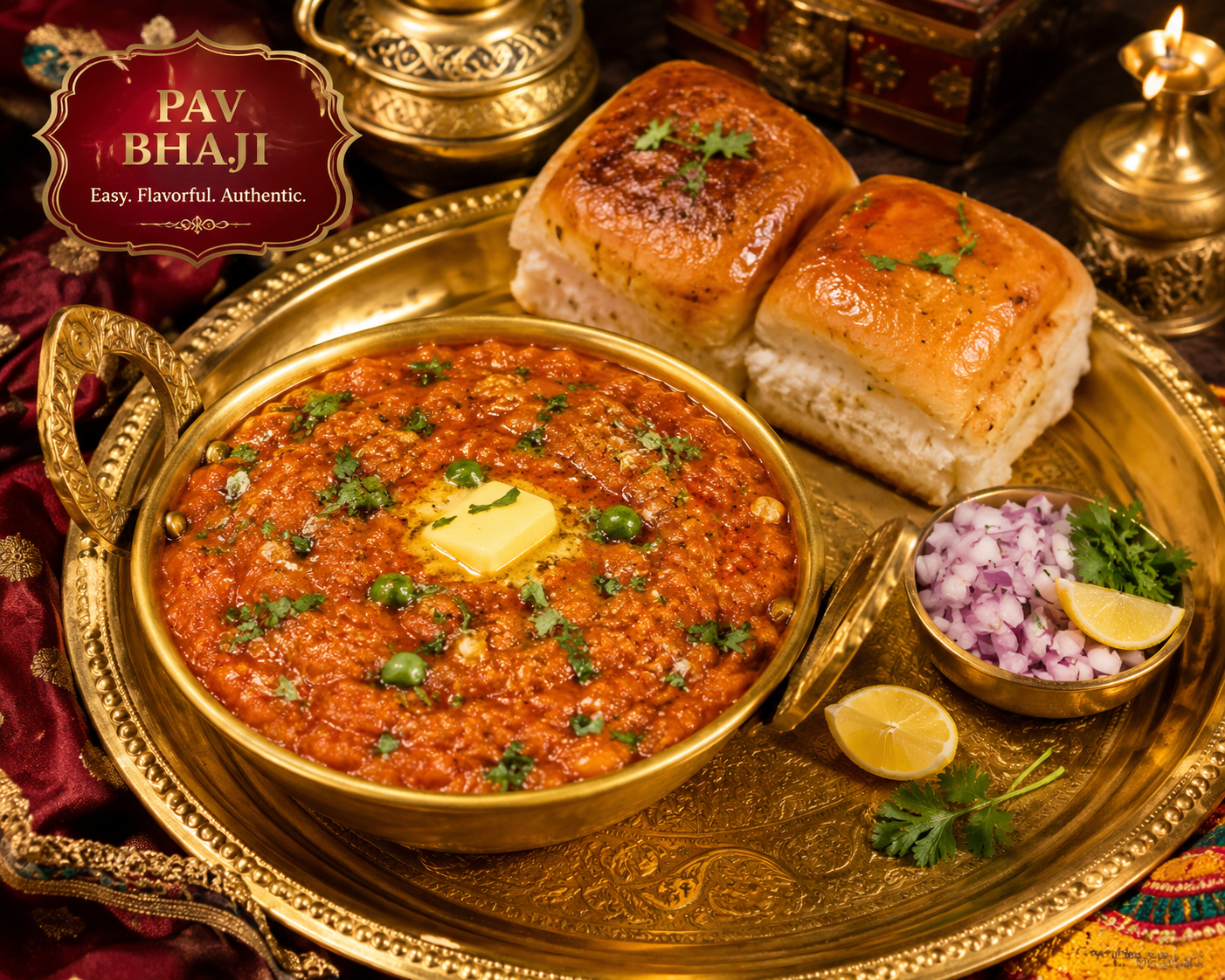
Transfer the hot bhaji to serving plates. Top with butter, chopped onions, coriander, and lemon wedges. Serve immediately with toasted pav.
The combination of buttery pav and spicy vegetable bhaji creates the iconic Mumbai street-food experience.
👨🍳 Chef Tip: Squeeze fresh lemon juice over the bhaji just before eating for maximum flavor.
👨🍳 Pro Chef Secrets for Restaurant-Style Pav Bhaji
- Use plenty of ripe tomatoes for natural sweetness.
- Cook the onions slowly to develop flavor.
- Always use fresh Pav Bhaji Masala.
- Mash vegetables thoroughly for a smooth texture.
- Simmer the bhaji for at least 10 minutes after mixing.
- Add butter in stages instead of all at once.
- Use Kashmiri chili powder for vibrant color.
- Toast the pav just before serving.
- Finish with fresh lemon juice.
- Serve piping hot for the best experience.
❌ Common Mistakes to Avoid
- Using undercooked vegetables.
- Not mashing the vegetables properly.
- Adding too much water at once.
- Using stale Pav Bhaji Masala.
- Skipping the slow simmering stage.
- Burning the onions or garlic.
- Adding butter only at the beginning.
- Serving cold or lukewarm bhaji.
- Over-toasting the pav until hard.
- Forgetting the lemon and onion garnish.
Popular Pav Bhaji Variations
- 🧈 Mumbai Street Style Pav Bhaji
- 🧀 Cheese Pav Bhaji
- 🌱 Jain Pav Bhaji
- 🥬 Khada Pav Bhaji
- 🌶 Extra Spicy Pav Bhaji
- 🍄 Mushroom Pav Bhaji
- 🌽 Corn Pav Bhaji
- 🥕 Mixed Vegetable Pav Bhaji
- 🫘 Protein-Rich Pav Bhaji
- 🔥 Tawa Pav Bhaji
🍽️ Serving Suggestions
Serve hot Pav Bhaji with generously buttered pav, finely chopped onions, fresh coriander, lemon wedges, and a cube of butter on top. For an authentic Mumbai street-food experience, serve it directly on a large plate with toasted pav on the side. It also pairs wonderfully with masala soda, sweet lassi, or chilled buttermilk.
🧊 Storage & Reheating
🧊 Refrigerator
Store leftover bhaji in an airtight container for up to 3 days. Keep the pav separate to maintain freshness.
❄️ Freezer
The bhaji freezes very well. Store in freezer-safe containers for up to 2 months.
♨️ Reheating
Reheat on a stovetop with a splash of water and a small amount of butter until hot and creamy.
Make Ahead Tips
- Boil and mash the vegetables one day in advance.
- Prepare the onion-tomato masala ahead of time.
- Make the bhaji a few hours before serving.
- Store garnishes separately.
- Toast pav only when ready to serve.
- Prepare extra bhaji for meal prep.
- Keep butter and lemon ready for finishing.
- Reheat gently to preserve texture.
🥗 Nutrition Information (Approx. Per Serving)
These values are approximate and may vary depending on ingredients, butter quantity, and serving size.
Calories
Protein
Carbohydrates
Fat
Fiber
Sodium
❤️ Health Highlights
- Contains a variety of vegetables rich in nutrients.
- Provides dietary fiber for digestive health.
- Offers vitamins from tomatoes, peas, cauliflower, and carrots.
- Can be customized with additional vegetables.
- A satisfying vegetarian meal option.
- Homemade versions allow complete control over ingredients.
- Can be made with reduced butter for a lighter version.
- Provides a balance of carbohydrates and vegetables.
💡 Did You Know?
Pav Bhaji was created in Mumbai during the 19th century as a quick and affordable meal for textile mill workers. Street vendors combined leftover vegetables with spices and served the mash alongside buttered bread rolls known as pav. Over time, it evolved into one of India’s most beloved street foods and is now enjoyed worldwide.
Frequently Asked Questions
What vegetables are traditionally used in Pav Bhaji?
Potatoes, cauliflower, peas, carrots, tomatoes, and onions are the most commonly used vegetables.
Why is my Pav Bhaji not smooth?
The vegetables may not have been cooked enough or mashed thoroughly.
Can I make Pav Bhaji without butter?
Yes, but butter contributes significantly to the authentic Mumbai street-style flavor.
What is Pav Bhaji Masala?
It is a special spice blend specifically created for Pav Bhaji and is essential for authentic flavor.
Can I make Pav Bhaji spicy?
Absolutely. Increase green chilies and chili powder according to your preference.
How do I make restaurant-style red Pav Bhaji?
Use ripe tomatoes, Kashmiri chili powder, and cook the masala properly for vibrant color.
Can I prepare Pav Bhaji ahead of time?
Yes. In fact, the flavor often improves after resting and reheating.
Which pav should I use?
Soft Indian pav buns are traditional, but dinner rolls can also work.
Can I freeze Pav Bhaji?
Yes. The bhaji freezes very well for future meals.
What should I serve with Pav Bhaji?
Serve with buttered pav, onions, lemon wedges, coriander, and extra butter.
Related Recipes You May Like
Why This Pav Bhaji Recipe Works
This recipe combines perfectly cooked vegetables, aromatic onions, rich tomatoes, authentic Pav Bhaji Masala, and generous butter to create the classic Mumbai street-food flavor. Slow simmering allows the spices and vegetables to blend beautifully, while freshly toasted pav adds the perfect buttery crunch. The result is a rich, flavorful, and satisfying meal that tastes just like your favorite street-side Pav Bhaji stall.
🌟 Expert Serving Tip
For the most authentic Mumbai-style experience, serve the bhaji piping hot with a generous cube of butter melting on top. Toast the pav in butter and a pinch of Pav Bhaji Masala just before serving, and always provide chopped onions and lemon wedges on the side for maximum flavor.
Chef’s Final Note
Great Pav Bhaji isn’t about using expensive ingredients—it’s about patience. Cook the vegetables until they’re perfectly soft, allow the masala to develop slowly, and don’t rush the simmering process. These simple techniques transform everyday vegetables into a rich, buttery, and unforgettable Mumbai street-food classic.