Black Cardamom (Badi Elaichi): The Complete Guide to India’s Bold Aromatic Spice
Discover everything about Black Cardamom (Badi Elaichi)—its fascinating history, botanical origin, nutritional profile, culinary applications, traditional importance, cultivation process, popular varieties, storage methods, buying guide and much more. Learn why this distinctive spice continues to be an essential ingredient in Indian cuisine and many traditional recipes around the world.
Quick Facts About Black Cardamom
🌿 Scientific Name
Amomum subulatum
🏠 Plant Family
Zingiberaceae (Ginger Family)
🇮🇳 Hindi Name
Badi Elaichi (बड़ी इलायची)
🌍 Native Region
Eastern Himalayas
⚫ Colour
Dark Brown to Black
👃 Aroma
Smoky, Woody & Camphor-Like
🌶 Taste
Warm, Bold & Slightly Sweet
🌡 Climate
Cool, Humid Mountain Climate
📅 Harvest Season
September to November
🧺 Shelf Life
18–24 Months
🌿 Key Aromatic Compounds
Cineole & Terpinyl Acetate
🍛 Common Uses
Biryani, Curries, Garam Masala, Rice Dishes, Gravies & Slow-Cooked Recipes
What is Black Cardamom?
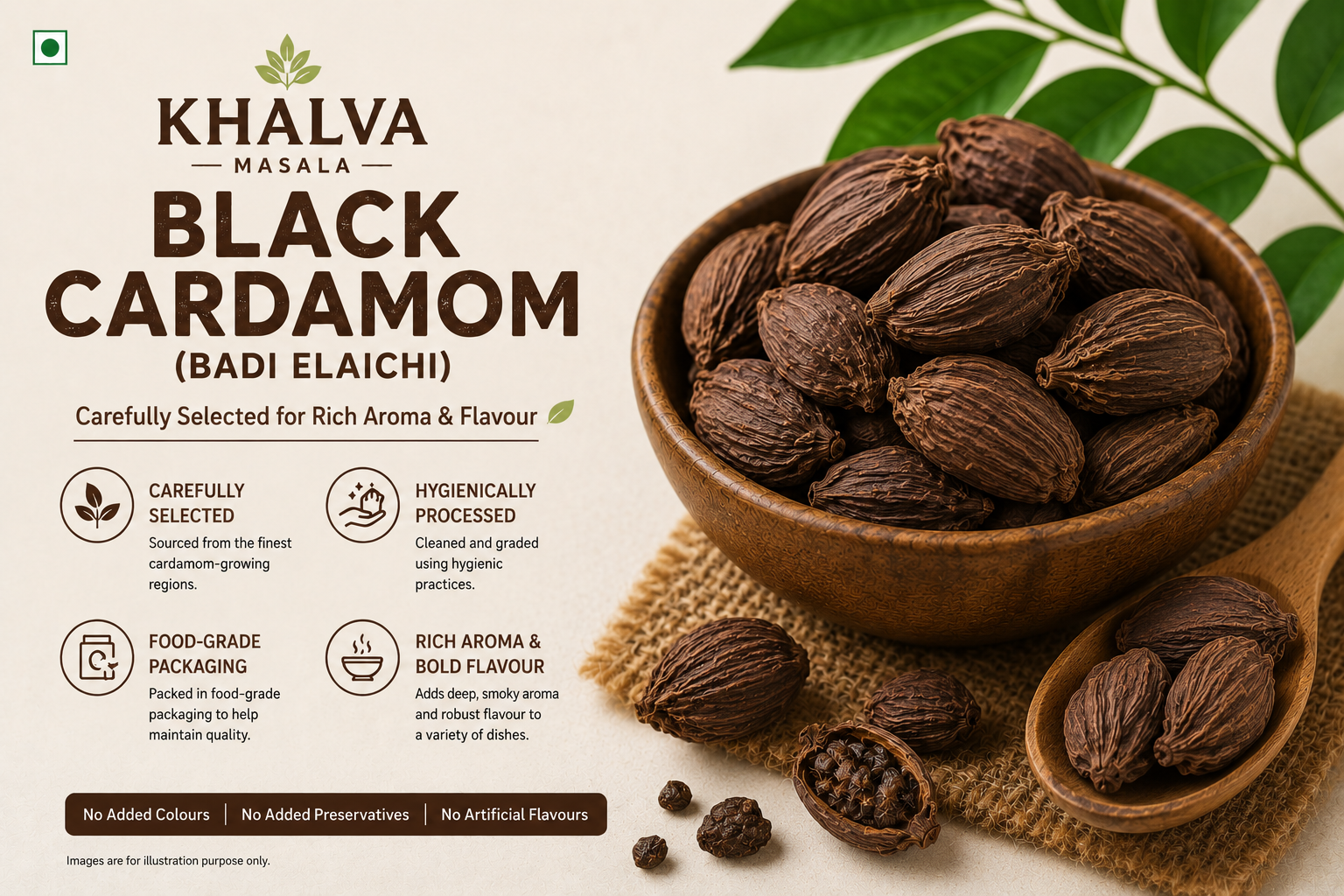
Black Cardamom, popularly known as Badi Elaichi, is the dried fruit of Amomum subulatum, a perennial herb belonging to the ginger family (Zingiberaceae). It is valued for its distinctive smoky aroma, bold flavour and culinary versatility, making it an important ingredient in many traditional Indian and Asian recipes.
Unlike green cardamom, which is commonly used in desserts and sweet dishes, black cardamom is primarily used in savoury preparations. The pods are harvested when mature and traditionally dried before being used whole or with the seeds in a variety of spice blends and slow-cooked dishes.
Today, Black Cardamom is widely appreciated in Indian, Nepalese, Bhutanese and Tibetan cuisines. It is commonly used in biryanis, pulao, curries, lentils, meat dishes, garam masala and other recipes where its characteristic smoky aroma complements the overall flavour of the dish.
History & Origin of Black Cardamom
Black Cardamom has a long history of cultivation in the Eastern Himalayan region, where favourable climatic conditions support its growth. For generations, it has been cultivated by farming communities across parts of India, Nepal and Bhutan and has remained an important spice in regional culinary traditions.
Historically, Black Cardamom became well known for its distinctive aroma and its ability to enhance slow-cooked dishes. It has traditionally been traded through regional spice markets before becoming widely available across India and international markets.
Today, Black Cardamom continues to be cultivated in several Himalayan regions and remains a valued ingredient in professional kitchens, restaurants and households. Its unique flavour profile has made it a popular component of traditional spice blends and authentic regional cuisine.
Why is Black Cardamom Special?
Black Cardamom is appreciated for its bold smoky aroma, warm flavour and distinctive character, which set it apart from other culinary spices. Even a small quantity can contribute depth and complexity to recipes without dominating the overall flavour profile.
Its characteristic aroma comes from naturally occurring volatile compounds present in the pods and seeds. These compounds contribute to the spice’s recognisable fragrance, making Black Cardamom a preferred ingredient in many traditional spice blends, rice dishes and slow-cooked recipes.
Whether added whole during cooking or lightly crushed before use, Black Cardamom complements biryanis, pulao, curries, dals, gravies and other savoury dishes. Its distinctive smoky notes continue to make it a valued spice in kitchens across India and many parts of the world.
Nutritional Information
Calories
311 kcal
Protein
10.8 g
Carbohydrates
68.5 g
Dietary Fiber
28.0 g
Fat
6.7 g
Calcium
383 mg
Iron
14 mg
Magnesium
229 mg
Potassium
1119 mg
Vitamin C
21 mg
*Approximate nutritional values per 100 grams of whole Black Cardamom. Values may vary depending on variety, origin, growing conditions and processing methods.
🌿 Natural Aroma & Active Compounds
Black Cardamom naturally contains aromatic compounds that contribute to its distinctive smoky fragrance and characteristic flavour. Among the better-known naturally occurring compounds are cineole, terpinyl acetate and other volatile essential oil components that contribute to its unique culinary profile.
In addition to these aromatic compounds, Black Cardamom naturally contains dietary fibre and small amounts of minerals commonly found in spices. These naturally occurring constituents contribute to the spice’s value as a flavouring ingredient in traditional and contemporary cooking.
Popular Types of Cardamom
🟢 Green Cardamom
Known for its sweet, fresh aroma and widely used in desserts, beverages and spice blends.
⚫ Black Cardamom
Recognised for its smoky aroma and commonly used in savoury dishes, curries and biryanis.
🌿 Whole Pods
Preferred for slow-cooked recipes where gradual flavour release is desired.
🥄 Seeds Only
Used in selected spice blends after removing the outer pod.
✨ Ground Cardamom
Convenient for recipes requiring evenly distributed flavour.
🌰 Smoked Pods
Traditional drying methods contribute to the spice’s characteristic smoky aroma.
Comparison of Green & Black Cardamom
| Feature | Green Cardamom | Black Cardamom |
|---|---|---|
| Colour | Green | Dark Brown to Black |
| Aroma | Sweet & Fresh | Smoky & Woody |
| Flavour | Mild & Sweet | Bold & Earthy |
| Primary Use | Desserts & Beverages | Curries, Biryani & Spice Blends |
| Common Form | Whole Pods | Whole Pods |
| Typical Cuisine | Sweet & Savoury | Mainly Savoury |
Major Black Cardamom Producing Regions in India
- 🏔️ Sikkim
- 🏔️ Arunachal Pradesh
- 🏔️ West Bengal (Darjeeling Hills)
- 🏔️ Nagaland
- 🏔️ Meghalaya
- 🏔️ Manipur
- 🏔️ Mizoram
Ideal Climate for Growing Black Cardamom
Black Cardamom grows best in cool, humid mountain environments with well-drained soils and consistent rainfall. It is commonly cultivated at higher elevations where moderate temperatures and natural shade provide favourable growing conditions.
The crop benefits from fertile soil rich in organic matter and adequate moisture throughout the growing season. Gentle slopes and forest-like environments often provide suitable conditions for healthy plant development.
Regions within the Eastern Himalayas offer favourable climatic conditions for Black Cardamom cultivation and have supported its production for generations.
Features of Black Cardamom
Naturally Aromatic
Contains naturally occurring aromatic compounds responsible for its distinctive smoky fragrance.
Ideal for Savoury Recipes
Widely used in biryanis, curries, rice dishes and spice blends.
Distinctive Flavour
Adds depth and complexity to slow-cooked recipes.
Globally Appreciated
Used in traditional cuisines across South Asia and beyond.
Versatile Culinary Spice
Suitable for whole-pod cooking, spice blends and seasoning preparations.
Easy to Store
Whole pods retain their aroma well when stored correctly.
🌿 Black Cardamom in Traditional Ayurveda
Black Cardamom (Badi Elaichi) has long been used as a culinary spice in traditional Indian food practices. It is appreciated for its distinctive aroma and is commonly included in spice blends and recipes prepared according to regional culinary traditions.
Traditional Ayurvedic literature describes Black Cardamom as a warming spice that has been incorporated into numerous classical culinary preparations. Its use in traditional cooking reflects centuries of culinary heritage rather than modern therapeutic recommendations.
🌡️ Traditional Nature
Traditionally Considered Warming
🌶️ Taste
Pungent & Slightly Sweet
🍛 Culinary Role
Traditional Cooking Spice
🌿 Common Form
Whole Pods
🥄 Popular Use
Garam Masala & Rice Dishes
📜 Traditional Importance
Long-Standing Culinary Heritage
🌰 Why Black Cardamom Has Been Valued for Generations
Black Cardamom has remained an important culinary spice because of its distinctive smoky aroma, bold flavour and versatility in savoury cooking. It continues to be widely used in regional cuisines where its characteristic flavour complements slow-cooked dishes and traditional spice blends.
Whether used whole in biryani, curries, lentils or aromatic rice dishes, Black Cardamom contributes depth and complexity to recipes while remaining a valued ingredient in kitchens across South Asia.
🍽️ Culinary Uses of Black Cardamom
- Commonly added whole to biryani and pulao for a rich, smoky aroma.
- Widely used in Indian curries, gravies and slow-cooked dishes.
- An important ingredient in many traditional garam masala blends.
- Often used in meat, poultry and vegetable preparations.
- Suitable for flavouring lentils, stews and hearty soups.
- Frequently added to rich rice dishes and festive recipes.
- Used in selected Himalayan and North Indian regional cuisines.
- Can be lightly crushed before cooking to release more aroma.
- Pairs well with cinnamon, cloves, cumin, coriander and bay leaves.
- Usually removed before serving, similar to bay leaves and whole spices.
🏡 Traditional Home Uses
✨ Beauty & Lifestyle Uses
- Black Cardamom is primarily valued as a culinary spice for everyday cooking.
- Its naturally aromatic essential oils contribute to its distinctive fragrance.
- Cardamom extracts may be used in selected fragrance and personal care products.
- Whole pods are appreciated for their pleasant aroma in traditional household spice storage.
- Store in an airtight container to help retain its characteristic aroma.
- Use whole pods for slow cooking and remove before serving where appropriate.
- Crush pods only when required to help preserve their aroma.
- Avoid using damaged, mouldy or moisture-affected pods.
🥄 How to Use Black Cardamom
- Add whole pods while preparing biryani or pulao.
- Include in curries and gravies during the initial cooking stage.
- Lightly crush the pods before use for stronger aroma if desired.
- Blend the seeds into homemade garam masala recipes.
- Use in slow-cooked lentils, soups and stews.
- Pair with cinnamon, cloves, bay leaves and cumin for balanced flavour.
- Remove the whole pods before serving whenever preferred.
- Adjust the quantity according to the recipe and personal taste.
- Store unused pods in a sealed container after every use.
- Use in moderation as a flavouring spice in everyday cooking.
🥄 Recommended Daily Intake
Black Cardamom is generally used in small culinary quantities as a flavouring spice. The amount used varies depending on the recipe, serving size and personal taste preferences.
If using Black Cardamom as part of your regular diet, consume it in normal culinary quantities. Individuals with specific dietary requirements or medical concerns should seek personalised advice from a qualified healthcare professional before consuming concentrated extracts or supplements.
👨🍳 Chef’s Tip
For the best flavour, add whole Black Cardamom pods at the beginning of cooking, allowing them to slowly release their characteristic smoky aroma. Lightly crushing the pod before use can help enhance flavour release. Remove the whole pods before serving if preferred.
⚠️ Possible Side Effects of Excess Consumption
- Excessive consumption may cause digestive discomfort in some individuals.
- Large quantities of spices may not be suitable for people with sensitive digestive systems.
- Some individuals may have allergies or sensitivities to cardamom, although this is uncommon.
- Highly concentrated cardamom extracts or supplements should only be used according to professional advice.
- Use Black Cardamom in normal culinary quantities as part of a varied and balanced diet.
- If any unusual reaction occurs after consumption, discontinue use and consult a qualified healthcare professional.
- Store properly and avoid using pods showing signs of mould, moisture or spoilage.
- Always inspect whole spices before use for quality and freshness.
🚫 Who Should Be Careful?
- Individuals with a known allergy to cardamom or related spices.
- People with digestive sensitivities should consume according to their individual tolerance.
- Pregnant or breastfeeding women should seek professional advice before using concentrated cardamom supplements.
- People taking prescription medications should consult a qualified healthcare professional before using concentrated extracts or supplements.
- Children should consume Black Cardamom only in normal culinary quantities.
- Anyone with specific dietary or medical conditions should follow professional healthcare advice.
How Black Cardamom is Grown
Nursery Preparation
Healthy planting material is raised in nurseries before field transplantation.
Land Preparation
Well-drained, fertile soil in cool, humid hill regions is prepared for planting.
Transplanting
Young plants are transplanted under suitable shade conditions to encourage healthy growth.
Crop Care
Regular irrigation, mulching, weeding and field management help support healthy plant development.
Harvesting
Mature capsules are harvested at the appropriate stage of development.
Drying & Processing
The harvested capsules are carefully dried, cleaned, graded and packed for culinary use.
🚜 From Farm to Kitchen
📦 Storage Tips for Black Cardamom
Proper storage helps maintain the characteristic aroma and quality of Black Cardamom for a longer period. Following a few simple practices can help protect the spice from moisture, air and excessive heat.
- Store in a clean, dry and airtight container after opening.
- Keep the container away from direct sunlight and heat sources.
- Store in a cool, dry place with low humidity.
- Avoid exposing the pods to moisture or wet utensils.
- Keep whole pods intact until required for cooking to help retain aroma.
- Close the container immediately after each use.
- Avoid storing near strongly scented foods to minimise flavour transfer.
- Check periodically for signs of moisture, mould or insect infestation.
✅ How to Identify Good Quality Black Cardamom
🌰 Well-Formed Pods
Pods should appear mature, intact and reasonably uniform in size.
👃 Characteristic Aroma
The pods should have the distinctive smoky aroma commonly associated with Black Cardamom.
🌿 Clean Appearance
The product should be free from visible dust, mould and excessive foreign matter.
⚫ Healthy Seeds
When opened, the seeds should appear well-developed and characteristic of the spice.
📦 Proper Packaging
Choose products packed in sealed, food-grade packaging with clear labelling.
📅 Check the Label
Review the manufacturing date, best-before information and storage instructions before purchase.
🛒 Buying Guide
Selecting good-quality Black Cardamom helps ensure a better cooking experience. Consider the following points when purchasing whole pods.
- Choose sealed packs from trusted brands or reliable retailers.
- Read the ingredient declaration and product label carefully.
- Prefer whole pods that appear mature and free from visible damage.
- Check the manufacturing date and best-before period.
- Inspect the packaging for any signs of damage or moisture.
- Purchase quantities suitable for your regular cooking requirements.
- Store according to the instructions provided on the label after opening.
- If buying loose spices, purchase from hygienic and reputable sources.
🇮🇳 India’s Role in Black Cardamom Production
India is among the important producers of Black Cardamom, with cultivation concentrated primarily in the Eastern Himalayan region. States such as Sikkim, Arunachal Pradesh and parts of West Bengal provide favourable climatic conditions for growing this spice.
Black Cardamom cultivation supports the livelihoods of many farming communities in hill regions. The spice is supplied to domestic markets and is also exported for culinary use in various countries.
🚢 Major Export Destinations
🇦🇪 United Arab Emirates
Important market for Indian spices.
🇸🇦 Saudi Arabia
Widely used in traditional cuisine.
🇺🇸 United States
Demand from retail and food service sectors.
🇬🇧 United Kingdom
Popular among diverse culinary communities.
🇨🇦 Canada
Used in restaurants and household cooking.
🇦🇺 Australia
Growing demand for authentic spices.
💡 Did You Know?
- 🌰 Black Cardamom belongs to the ginger family (Zingiberaceae).
- 🏔️ It is primarily cultivated in the Eastern Himalayan region.
- 🔥 Traditional drying methods contribute to its characteristic smoky aroma.
- 🍛 It is a key ingredient in many regional biryani and curry recipes.
- 🌿 Black Cardamom is different from Green Cardamom in both flavour and culinary use.
- 🥄 Whole pods are commonly used in slow-cooked dishes for gradual flavour release.
- 📦 Whole pods generally retain their aroma longer than ground spice when stored appropriately.
- 🌎 Black Cardamom is used in the cuisines of India, Nepal, Bhutan, Tibet and several other countries.
Frequently Asked Questions
What is Black Cardamom (Badi Elaichi)?
Black Cardamom is the dried fruit of Amomum subulatum, a spice commonly used in savoury dishes for its distinctive smoky aroma and warm flavour.
How is Black Cardamom different from Green Cardamom?
Black Cardamom has a bold, smoky flavour and is mainly used in savoury cooking, whereas Green Cardamom has a sweeter aroma and is widely used in desserts, beverages and sweet dishes.
Can Black Cardamom be used every day?
Black Cardamom may be used in normal culinary quantities as part of a varied and balanced diet, depending on individual food preferences.
Should I use whole pods or seeds?
Whole pods are commonly used in slow-cooked dishes. The seeds may also be used in spice blends depending on the recipe.
How should Black Cardamom be stored?
Store it in a clean, dry, airtight container away from moisture, sunlight and strong odours.
Can Black Cardamom be ground?
Yes. Whole pods may be opened and the seeds ground when required. Grinding only the required quantity helps retain aroma.
Which dishes commonly use Black Cardamom?
It is widely used in biryani, pulao, curries, lentils, gravies, spice blends, soups and other slow-cooked savoury recipes.
What gives Black Cardamom its smoky aroma?
Its characteristic aroma develops naturally from the spice itself and traditional drying methods commonly used after harvesting.
Is Black Cardamom the same as Green Cardamom?
No. Although both belong to the ginger family, they differ in appearance, aroma, flavour and typical culinary applications.
How long does Black Cardamom remain suitable for use?
When stored under appropriate conditions and within the best-before period indicated on the package, whole pods generally retain their quality longer than ground spice.
🌿 Continue Exploring Indian Spices
🟢 Green Cardamom
Discover the fragrant queen of spices used in sweets, beverages and aromatic recipes.
⚫ Black Pepper
Explore one of the world’s most widely used culinary spices.
🌾 Coriander
Learn about the versatile spice used in countless Indian dishes.
🌿 Cumin
Discover the warm, earthy spice valued in kitchens across the world.
⭐ Our Quality Commitment
Every pack of KHALVA Masala Black Cardamom reflects our commitment to quality, hygiene and consistency. From sourcing through processing and packaging, we follow established practices designed to provide a product suitable for everyday cooking.
We strive to deliver spices that complement traditional recipes while meeting the expectations of modern kitchens.
📖 Final Summary
Black Cardamom (Badi Elaichi) is a distinctive culinary spice recognised for its smoky aroma, warm flavour and versatility in savoury cooking. From biryanis and curries to spice blends and slow-cooked dishes, it continues to be an important ingredient in many regional and international cuisines.
Understanding its origin, cultivation, storage and culinary applications helps you make informed choices and enjoy its characteristic flavour in everyday cooking.
🌿 Continue Your Spice Journey
Explore more comprehensive spice guides from KHALVA Masala and discover the origin, cultivation, culinary uses and traditional significance of India’s most loved spices.