Turmeric (Haldi): The Ultimate Guide to India’s Golden Spice
Discover everything about Turmeric—from its history, nutrition, health benefits, Ayurvedic importance, farming, different varieties, culinary uses, medicinal properties, side effects, storage methods, and much more. This comprehensive guide helps you understand why turmeric has remained one of India’s most treasured spices for thousands of years.
Quick Facts About Turmeric
🌿 Scientific Name
Curcuma longa
🏠 Plant Family
Zingiberaceae (Ginger Family)
🇮🇳 Hindi Name
Haldi (हल्दी)
🌎 Origin
Indian Subcontinent
🎨 Color
Golden Yellow
👃 Aroma
Warm & Earthy
🥄 Taste
Slightly Bitter & Peppery
🌡 Climate
Tropical & Humid
📅 Harvest Season
January to March
🧺 Shelf Life
12–18 Months
⭐ Main Compound
Curcumin
🍛 Common Uses
Cooking, Ayurveda, Medicine & Skincare
What is Turmeric?
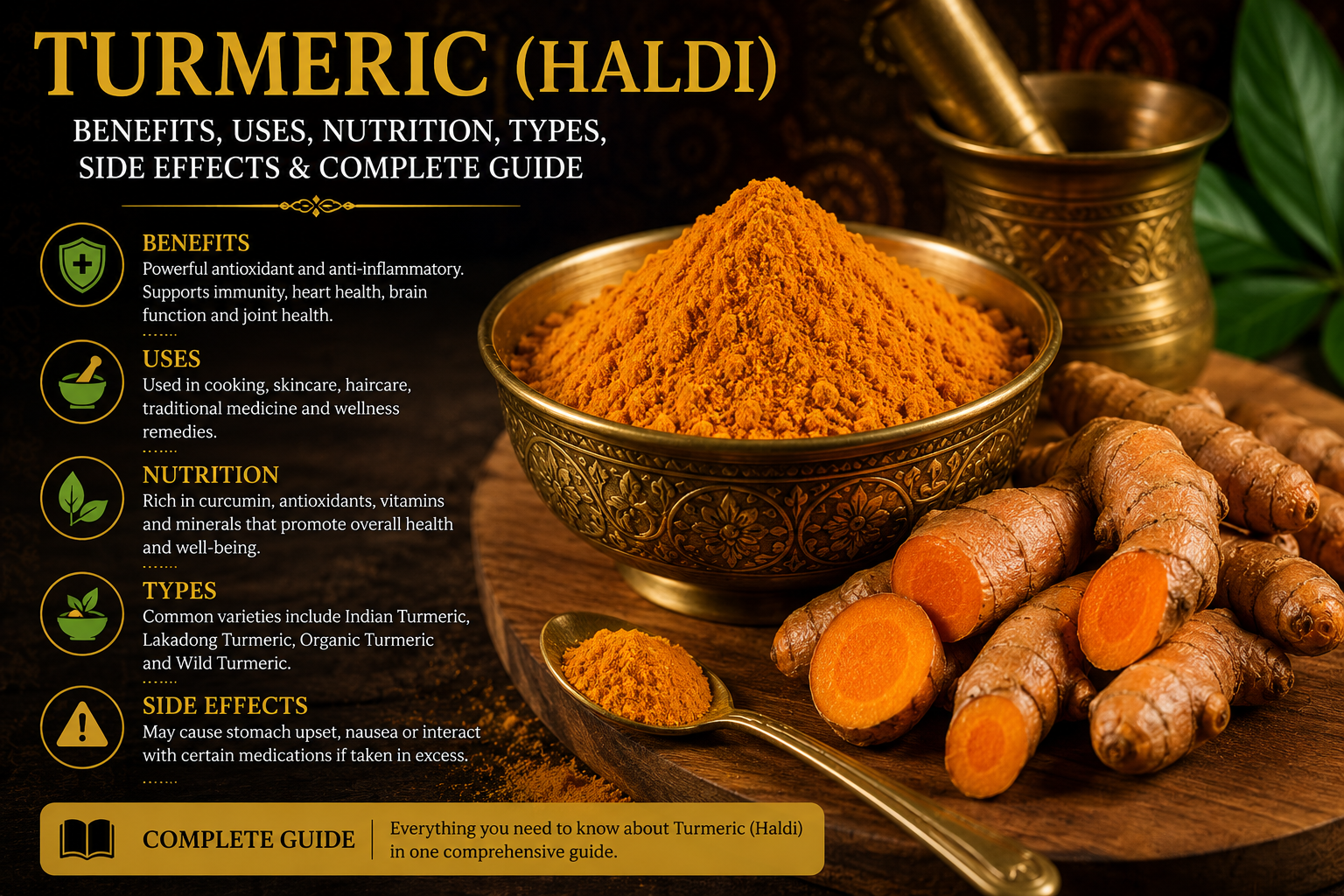
Turmeric, popularly known as Haldi, is one of the world’s oldest and most valuable spices. It is obtained from the underground rhizome of the Curcuma longa plant and belongs to the ginger family. Famous for its brilliant golden-yellow color, earthy aroma, and powerful medicinal properties, turmeric has been an essential part of Indian kitchens and Ayurvedic medicine for more than 4,000 years.
Today, turmeric is valued not only as a cooking spice but also as a natural health supplement, skincare ingredient, food color, preservative, and medicinal herb. The primary active compound in turmeric, Curcumin, is widely researched for its antioxidant and anti-inflammatory properties.
History & Origin of Turmeric
Turmeric originated in the Indian subcontinent and has been cultivated for thousands of years. Ancient Ayurvedic texts describe turmeric as a sacred herb used for healing, purification, beauty rituals, and religious ceremonies.
Over centuries, Indian traders introduced turmeric to Southeast Asia, the Middle East, Africa, and Europe. Today, India remains the world’s largest producer, consumer, and exporter of turmeric, supplying high-quality turmeric to countries around the globe.
Why is Turmeric Called the Golden Spice?
Turmeric is often called the “Golden Spice of India” because of its vibrant golden-yellow color, immense cultural significance, exceptional medicinal value, and widespread culinary use. In Indian traditions, turmeric symbolizes prosperity, purity, health, and good fortune.
Its rich color comes from natural pigments called curcuminoids, especially Curcumin, which also contributes to many of its health-promoting properties.
Nutritional Information
Calories
354 kcal
Protein
8 g
Carbohydrates
65 g
Dietary Fiber
21 g
Fat
10 g
Iron
41 mg
Calcium
183 mg
Potassium
2525 mg
Magnesium
193 mg
Vitamin C
25.9 mg
*Approximate values per 100 grams of turmeric powder.*
The Power of Curcumin
Curcumin is the principal bioactive compound found in turmeric and is responsible for most of its health benefits. It possesses strong antioxidant and anti-inflammatory properties that help protect the body from oxidative stress and inflammation.
Modern scientific research continues to explore Curcumin for its potential role in supporting heart health, brain function, immunity, joint health, digestive wellness, and overall well-being.
Popular Types of Turmeric in India
🟡 Lakadong Turmeric
Known for exceptionally high curcumin content and premium quality.
🟡 Salem Turmeric
Popular for its deep color and excellent culinary quality.
🟡 Erode Turmeric
One of India’s famous GI-tagged turmeric varieties.
🟡 Alleppey Turmeric
Bright orange-yellow color and exported worldwide.
Comparison of Popular Turmeric Varieties
| Variety | Color | Curcumin | Best For |
|---|---|---|---|
| Lakadong | Dark Yellow | Very High | Medicinal Use |
| Salem | Golden Yellow | High | Cooking |
| Erode | Bright Yellow | Medium | Daily Kitchen |
| Alleppey | Orange Yellow | Medium | Export Quality |
Major Turmeric Producing States in India
- 🌿 Telangana
- 🌿 Maharashtra
- 🌿 Karnataka
- 🌿 Tamil Nadu
- 🌿 Andhra Pradesh
- 🌿 Odisha
- 🌿 Meghalaya (Lakadong)
- 🌿 Kerala
- 🌿 Assam
- 🌿 West Bengal
Ideal Climate for Growing Turmeric
Turmeric grows best in warm, humid tropical climates with temperatures between 20°C and 35°C. It requires well-drained fertile soil rich in organic matter and moderate to heavy rainfall during the growing season.
The crop is generally planted before the monsoon and harvested after 7–9 months once the leaves begin to dry naturally.
Health Benefits of Turmeric
Boosts Immunity
Curcumin helps strengthen the immune system and supports the body’s natural defense against infections.
Powerful Anti-Inflammatory
Turmeric naturally helps reduce inflammation that may contribute to various chronic health conditions.
Rich in Antioxidants
Its antioxidant compounds help protect body cells from damage caused by free radicals.
Supports Heart Health
Regular consumption may support healthy blood circulation and cardiovascular wellness.
Brain Wellness
Curcumin is being studied for its potential role in supporting memory and cognitive function.
Improves Digestion
Traditionally used to stimulate digestion and reduce bloating.
Supports Joint Health
Its anti-inflammatory properties may help maintain healthy joints.
Supports Blood Sugar Balance
Some studies suggest turmeric may help maintain healthy blood sugar levels as part of a balanced diet.
Supports Liver Function
Turmeric has traditionally been valued for supporting normal liver health.
Overall Wellness
Regular use in cooking contributes to a healthy and balanced lifestyle.
🌿 Turmeric in Ayurveda
Ayurveda considers turmeric one of the most valuable healing herbs. It is known as “Haridra” and has been used for thousands of years to support digestion, skin health, respiratory wellness, wound healing, and overall vitality.
Nature
Warm (Ushna)
Taste
Bitter & Pungent
Balances
Kapha & Vata
Traditional Name
Haridra
🍛 Culinary Uses of Turmeric
- Used in everyday Indian curries.
- Essential ingredient in dal recipes.
- Adds color to vegetable dishes.
- Perfect for rice preparations.
- Used in marinades for paneer, chicken, fish and seafood.
- Added to pickles.
- Used in spice blends like Garam Masala and Sabji Masala.
- Prepared as Golden Milk (Haldi Doodh).
- Added to soups and stews.
- Used in herbal teas.
💊 Traditional Home Remedies
✨ Beauty & Skincare Uses
- Traditional face packs.
- Bridal ubtan preparations.
- Supports healthy-looking skin.
- Used in homemade face masks.
- May help improve skin glow.
- Popular in natural skincare routines.
- Often combined with sandalwood and gram flour.
- Traditional hair care ingredient.
🥄 How to Consume Turmeric
- Add to daily vegetable curries.
- Use while preparing dal.
- Mix into soups.
- Prepare Golden Milk.
- Add to herbal tea.
- Use in smoothies.
- Include in spice blends.
- Use in marinades.
🥄 Recommended Daily Intake
For most healthy adults, approximately ½ to 1 teaspoon (2–4 grams) of turmeric powder per day is commonly used in cooking. Higher amounts or turmeric supplements should only be taken under the guidance of a qualified healthcare professional.
⚠️ Possible Side Effects of Excess Consumption
- Stomach discomfort.
- Acid reflux in sensitive individuals.
- Nausea.
- Diarrhea.
- May increase bleeding risk in some people.
- May interact with certain medications.
- High doses may contribute to kidney stone risk in susceptible individuals.
- Possible allergic reactions in rare cases.
🚫 Who Should Be Careful?
- People taking blood-thinning medicines.
- Individuals with gallbladder disorders.
- People with kidney stone history.
- Those allergic to turmeric.
- Pregnant or breastfeeding women should seek medical advice before using supplements.
- Diabetic patients taking medication should consult their doctor before consuming concentrated turmeric supplements.
How Turmeric is Grown
Land Preparation
Farmers prepare fertile, well-drained soil rich in organic matter before planting.
Planting Rhizomes
Healthy seed rhizomes are planted before the monsoon season.
Irrigation
Regular watering supports healthy plant growth.
Crop Care
Weeding, mulching and organic fertilization help improve yield.
Harvesting
Rhizomes are harvested after 7–9 months when leaves naturally dry.
Processing
The harvested turmeric is cleaned, boiled, dried, polished and finally ground into powder.
🏭 From Farm to Kitchen
📦 Storage Tips
- Store in an airtight container.
- Keep away from moisture.
- Avoid direct sunlight.
- Store in a cool, dry place.
- Use a dry spoon while handling.
- Close the lid immediately after use.
- Keep away from strong-smelling foods.
- Best consumed within 12–18 months.
How to Identify Pure Turmeric
High-quality turmeric should have a rich golden-yellow color, pleasant earthy aroma, and a fine, dry texture. Premium turmeric is free from artificial colors, fillers, starch, and excess moisture. Choosing pure turmeric ensures better flavor, nutrition, and health benefits.
🎨 Color
Bright golden yellow without unnatural shine.
👃 Aroma
Fresh, earthy, warm and slightly peppery.
✋ Texture
Fine powder without lumps or moisture.
💧 Moisture
Completely dry and free-flowing.
🧪 Simple Home Tests for Turmeric Purity
Water Test
Add one teaspoon of turmeric powder to a glass of water without stirring. Pure turmeric settles slowly, while artificial colors may immediately spread through the water.
Rub Test
Rub a small amount between your fingers. Pure turmeric leaves a natural yellow stain with a pleasant aroma.
Smell Test
Fresh turmeric has a strong earthy fragrance. Weak or chemical odors may indicate poor quality.
Visual Inspection
Check for clumps, excess moisture, or unusual bright colors that may indicate adulteration.
🛒 Buying Guide
- Choose trusted and reputed brands.
- Prefer freshly packed turmeric.
- Check manufacturing and expiry dates.
- Look for natural aroma and vibrant color.
- Avoid products containing artificial colors or additives.
- Select airtight packaging.
- Choose food-grade certified products.
- Store properly after opening.
🌍 India’s Position in Global Turmeric Production
India is the world’s largest producer, consumer, and exporter of turmeric. Indian turmeric is highly valued internationally for its quality, color, aroma, and curcumin content. Premium varieties from states like Telangana, Tamil Nadu, Karnataka, Maharashtra, Odisha, and Meghalaya are exported to numerous countries worldwide.
🌎 Top Turmeric Export Destinations
- 🇺🇸 United States
- 🇦🇪 United Arab Emirates
- 🇲🇾 Malaysia
- 🇧🇩 Bangladesh
- 🇬🇧 United Kingdom
- 🇩🇪 Germany
- 🇯🇵 Japan
- 🇦🇺 Australia
- 🇸🇦 Saudi Arabia
- 🇨🇦 Canada
💡 Did You Know?
- Turmeric has been used in India for more than 4,000 years.
- It belongs to the same botanical family as ginger.
- Curcumin gives turmeric its golden-yellow color.
- India produces nearly 80% of the world’s turmeric.
- Turmeric plays an important role in Indian festivals and weddings.
- Golden Milk is one of the oldest traditional turmeric drinks.
- Turmeric is widely used in Ayurveda and traditional medicine.
- It is also used as a natural food color.
Frequently Asked Questions
What is turmeric?
Turmeric is a spice obtained from the rhizome of the Curcuma longa plant and is widely used in cooking and traditional medicine.
Why is turmeric yellow?
The natural compound Curcumin gives turmeric its bright golden-yellow color.
Can turmeric be consumed every day?
Yes, moderate amounts used in regular cooking are generally considered safe for most healthy adults.
Is turmeric good for immunity?
Turmeric contains natural compounds that support overall immune health as part of a balanced diet.
Should turmeric be consumed with black pepper?
Black pepper contains piperine, which may improve the absorption of curcumin.
Can turmeric expire?
Yes. Although it remains safe for some time, its aroma, flavor, and potency gradually decrease.
How should turmeric be stored?
Store it in an airtight container away from moisture, heat, and direct sunlight.
Can children consume turmeric?
Small amounts used in everyday cooking are generally suitable for children unless advised otherwise by a healthcare professional.
Is fresh turmeric better than powder?
Both have their own uses. Fresh turmeric offers a vibrant flavor, while powder is more convenient for daily cooking.
Which state produces the best turmeric?
Different regions are known for different varieties. Lakadong (Meghalaya), Erode (Tamil Nadu), and Salem (Tamil Nadu) are among the most popular.
📚 Related Spice Guides
🌿 Why Choose KHALVA Masala Turmeric?
At KHALVA Masala, we believe that great cooking begins with exceptional ingredients. Our turmeric is carefully sourced from trusted farms, processed with strict quality standards, and packed to preserve its natural color, aroma, and freshness. Every pack reflects our commitment to purity, authenticity, and the traditional flavors of India.
📝 Final Summary
Turmeric is much more than a kitchen spice—it’s an essential part of India’s culinary heritage, Ayurveda, and daily life. From adding beautiful color and flavor to supporting overall wellness, turmeric has earned its place as one of the world’s most treasured spices. Choosing high-quality turmeric, storing it correctly, and using it in moderation allows you to enjoy its full potential in everyday cooking.
⭐ Continue Your Spice Journey
Explore more premium spice guides from KHALVA Masala to discover the history, health benefits, farming, culinary uses, and fascinating facts about India’s most treasured spices. Learn how each spice brings authentic flavor, aroma, and tradition to your kitchen.