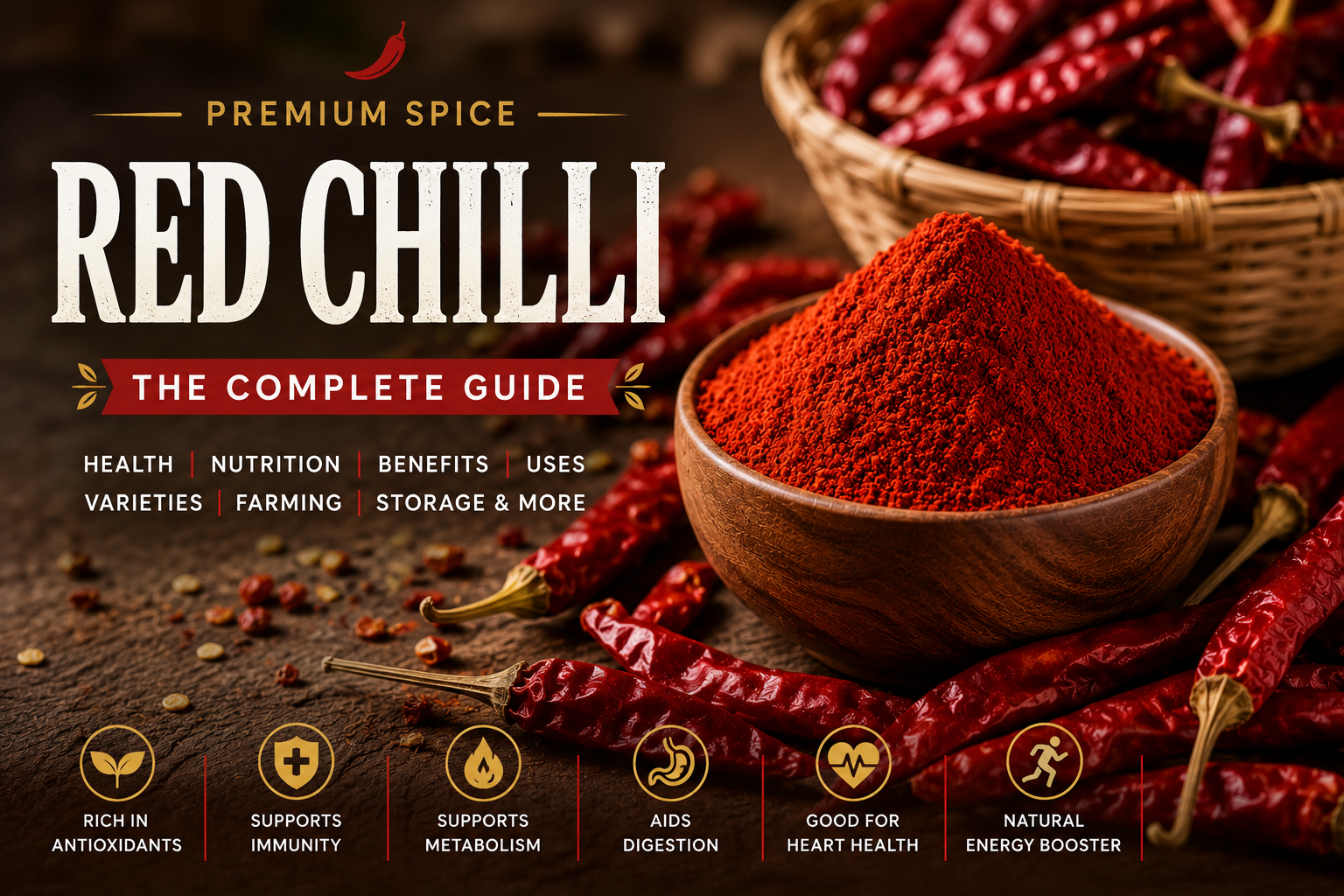
Red Chilli (Lal Mirch): The Complete Guide to India’s Fiery Spice
Discover everything about Red Chilli (Lal Mirch)—its fascinating history, nutritional value, health benefits, Ayurvedic importance, farming methods, popular varieties, culinary uses, capsaicin, storage tips, purity tests, buying guide, export information and much more. This comprehensive guide explores why red chilli has become one of the world’s most loved spices.
Quick Facts About Red Chilli
🌿 Scientific Name
Capsicum annuum
🏠 Plant Family
Solanaceae (Nightshade Family)
🇮🇳 Hindi Name
Lal Mirch (लाल मिर्च)
🌍 Origin
Central & South America
🎨 Colour
Bright Red to Deep Crimson
👃 Aroma
Warm, Smoky & Spicy
🌶️ Taste
Hot, Pungent & Bold
🌡 Climate
Warm & Sunny
📅 Harvest Season
January to April
🧺 Shelf Life
12–18 Months
⭐ Main Compound
Capsaicin
🍛 Common Uses
Curries, Masalas, Pickles & Seasoning
What is Red Chilli?
Red Chilli, popularly known as Lal Mirch, is one of the world’s most widely used spices and an essential ingredient in Indian cooking. It is obtained by drying ripe chilli peppers from the Capsicum annuum plant and grinding them into a fine powder or using them whole. Known for its fiery heat, vibrant red colour and distinctive aroma, red chilli enhances the flavour and appearance of countless dishes.
From everyday home cooking to gourmet cuisine, red chilli is valued for much more than its heat. It contributes depth of flavour, natural colour and a pleasant pungency to curries, vegetables, lentils, marinades, snacks, pickles and spice blends. Fresh chillies, dried whole chillies, flakes and chilli powder each offer unique culinary experiences.
Today, India is one of the world’s largest producers, consumers and exporters of red chilli. Premium Indian varieties are highly appreciated globally for their colour, aroma and balanced pungency, making them an indispensable ingredient in kitchens and food industries around the world.
History & Origin of Red Chilli
Red chilli originated in Central and South America, where it was cultivated for thousands of years by ancient civilizations such as the Aztecs and Mayans. Following the voyages of Christopher Columbus in the late 15th century, chilli peppers spread rapidly across Europe, Asia and Africa through international trade.
Portuguese traders introduced chilli to India during the 16th century. Its adaptability to India’s climate, affordability and bold flavour quickly made it a preferred alternative to black pepper. Within a few generations, red chilli became deeply rooted in Indian agriculture and cuisine.
Today, India is recognised as one of the leading producers and exporters of premium-quality red chilli. Indian chillies are prized worldwide for their brilliant colour, exceptional flavour and varying levels of heat, catering to diverse culinary traditions across the globe.
Why is Red Chilli Known as the Spice that Brings Food to Life?
Red chilli is celebrated for its remarkable ability to transform ordinary dishes into vibrant culinary experiences. Its rich crimson colour, distinctive aroma and varying levels of heat create depth, excitement and balance in recipes ranging from traditional Indian curries to international cuisines.
Unlike many spices that provide only flavour or fragrance, red chilli contributes colour, pungency and complexity all at once. Whether used whole, crushed, flaked or powdered, it blends effortlessly with other spices to create authentic masalas and unforgettable flavours.
The naturally occurring compound Capsaicin is responsible for the characteristic heat of red chilli. This unique compound has been widely studied for its role in culinary enjoyment and traditional wellness practices. Combined with its versatility and cultural importance, red chilli has earned a permanent place in kitchens across the world.
Nutritional Information
Calories
318 kcal
Protein
12.0 g
Carbohydrates
56.6 g
Dietary Fiber
27.2 g
Fat
17.3 g
Vitamin A
9524 IU
Vitamin C
76.4 mg
Iron
7.8 mg
Potassium
2014 mg
Magnesium
152 mg
*Approximate nutritional values per 100 grams of dried red chilli powder.
🔥 The Power of Capsaicin
The signature heat of red chilli comes from a naturally occurring compound called Capsaicin. It is concentrated mainly in the inner membranes of the chilli and is responsible for the spicy sensation experienced while eating. Capsaicin has been widely studied for its unique properties and is one of the most recognized bioactive compounds found in spices.
In addition to capsaicin, red chilli contains valuable plant compounds including Capsanthin, Carotenoids, Flavonoids, and Vitamin C. These natural components contribute to its vibrant colour, antioxidant content, and nutritional value, making red chilli much more than just a spice that adds heat.
Popular Types of Red Chilli in India
🌶️ Kashmiri Red Chilli
Famous for its brilliant red colour with mild heat. Ideal for curries and tandoori dishes.
🌶️ Guntur Chilli
One of India’s hottest varieties, known for its strong pungency and deep red colour.
🌶️ Byadgi Chilli
Popular for its rich colour, pleasant aroma and comparatively low pungency.
🌶️ Mathania Chilli
A premium Rajasthani variety widely used in authentic traditional recipes.
🌶️ Teja Chilli
Highly pungent variety commonly used in spice blends and food processing.
🌶️ Organic Red Chilli
Naturally cultivated without synthetic chemicals while preserving authentic flavour.
Comparison of Popular Red Chilli Varieties
| Variety | Heat Level | Colour | Best Use |
|---|---|---|---|
| Kashmiri | Mild | Bright Red | Colour & Curry |
| Guntur | Very Hot | Deep Red | Spicy Foods |
| Byadgi | Medium | Rich Crimson | Masalas |
| Mathania | Medium Hot | Dark Red | Rajasthani Cuisine |
| Teja | Extremely Hot | Deep Red | Processing Industry |
| Organic | Varies | Natural Red | Healthy Cooking |
Major Red Chilli Producing States in India
- 🌶️ Andhra Pradesh
- 🌶️ Telangana
- 🌶️ Karnataka
- 🌶️ Maharashtra
- 🌶️ Madhya Pradesh
- 🌶️ Rajasthan
- 🌶️ Tamil Nadu
- 🌶️ Odisha
- 🌶️ Gujarat
- 🌶️ West Bengal
Ideal Climate for Growing Red Chilli
Red chilli grows best in warm tropical and subtropical climates with temperatures ranging between 20°C and 30°C. The crop requires plenty of sunlight, moderate rainfall and well-drained fertile soil for healthy growth and high-quality fruit production.
In India, red chilli is generally sown during the monsoon or post-monsoon season depending on the region. The crop takes approximately 120 to 180 days to reach maturity. Proper irrigation, balanced fertilization, pest management and timely harvesting play a significant role in achieving superior colour, pungency and yield.
India’s diverse agro-climatic conditions allow farmers to cultivate several premium varieties of red chilli that are highly valued in domestic and international markets for their exceptional flavour, colour and heat.
Health Benefits of Red Chilli
Supports Healthy Metabolism
Capsaicin, the natural compound found in red chilli, is known for supporting normal metabolic activity as part of a healthy lifestyle.
Rich in Antioxidants
Red chilli contains natural antioxidants such as carotenoids and vitamin C that help protect cells from oxidative stress.
Supports Heart Health
When consumed in moderation, red chilli can be part of a balanced diet that supports overall cardiovascular wellness.
Supports Healthy Blood Circulation
Traditional practices have long valued red chilli for promoting healthy circulation throughout the body.
Supports Eye Health
Vitamin A and natural carotenoids contribute to maintaining healthy vision and normal eye function.
Supports Immunity
Red chilli naturally provides vitamin C, which contributes to the normal functioning of the immune system.
Natural Energy Booster
The warming sensation of chilli can make meals feel more vibrant and satisfying while complementing an active lifestyle.
Supports Digestion
In moderate quantities, red chilli has traditionally been used to stimulate appetite and support healthy digestion.
Supports Weight Management
As part of a balanced diet and regular exercise routine, red chilli may support healthy weight management goals.
Supports Cognitive Wellness
Natural antioxidants found in red chilli contribute to protecting cells throughout the body, including the brain.
Source of Essential Nutrients
Red chilli contains vitamins, minerals and plant compounds that contribute to a nutritious diet.
Adds Healthy Flavor
Its bold taste enhances meals naturally, allowing delicious recipes without relying heavily on extra salt or rich sauces.
🌿 Red Chilli in Ayurveda
In Ayurveda, red chilli is considered a warming spice that should be used thoughtfully and in moderation. It is traditionally believed to stimulate digestion, awaken appetite and provide warmth to the body. Because of its heating nature, Ayurvedic practitioners generally recommend balancing it with cooling ingredients such as coriander, cumin, fennel or yogurt.
Although ancient Ayurvedic texts primarily emphasized black pepper, long pepper and ginger, red chilli gradually became an important culinary spice after its introduction to India. Today it is widely used to enhance flavour while maintaining balance within a wholesome diet.
🔥 Nature
Heating (Ushna)
🌶️ Taste
Pungent (Katu)
⚖️ Balances
Traditionally used in moderation to balance Kapha
📜 Ayurvedic Name
Rakta Maricha (Modern Ayurvedic Usage)
🍽️ Traditional Role
Supports Appetite & Digestion
🔥 Main Property
Warming & Stimulating
🌿 Common Forms
Whole, Powder & Flakes
🥄 Best Usage
In Moderate Culinary Quantities
🌶️ Why Moderate Consumption Matters
Red chilli is one of the most flavourful spices in the world, but its natural heat means that a little goes a long way. Using the right quantity enhances colour, aroma and taste without overpowering other ingredients. Excessive consumption, however, may cause discomfort in some individuals, particularly those who are sensitive to spicy foods.
Professional chefs often combine red chilli with spices such as coriander, cumin, turmeric and black pepper to create balanced flavour profiles. This careful blending allows the heat to complement the dish while preserving its authentic taste and aroma.
🍛 Culinary Uses of Red Chilli
- Essential ingredient in Indian curries and gravies.
- Adds vibrant colour and balanced heat to recipes.
- Used in traditional masalas and spice blends.
- Perfect for seasoning vegetables, lentils and rice dishes.
- Enhances the flavour of soups, stews and sauces.
- Commonly used in marinades for paneer, chicken, fish and meat.
- Widely used in pickles and chutneys.
- Ideal for stir-fries, noodles and Indo-Chinese cuisine.
- Used as chilli flakes for pizzas, pasta and snacks.
- An indispensable spice in cuisines around the world.
🏡 Traditional Home Uses
✨ Beauty & Lifestyle Uses
- Red chilli is valued mainly for culinary purposes rather than direct skincare.
- Capsaicin is widely researched for use in topical wellness products.
- Commonly used in warming massage formulations by manufacturers.
- Extracts are used in selected cosmetic and personal care products.
- Always avoid applying raw chilli directly to the skin.
- Use only professionally formulated products containing chilli extracts.
- Store chilli powder away from the eyes and sensitive areas.
- Handle with clean, dry hands while cooking.
🥄 How to Use Red Chilli
- Use red chilli powder in curries and gravies.
- Add whole dried chillies while tempering dals.
- Sprinkle chilli flakes over pizza and pasta.
- Blend into homemade spice mixes.
- Mix with marinades for vegetables and proteins.
- Use in chutneys and pickles.
- Add to soups for extra warmth and flavour.
- Season roasted vegetables and snacks.
- Combine with coriander, cumin and turmeric for balanced taste.
- Adjust the quantity according to your preferred spice level.
🥄 Recommended Daily Intake
Most healthy adults can comfortably consume approximately ½ to 1 teaspoon (1–3 grams) of red chilli powder daily as part of a balanced diet. Individual tolerance varies depending on the chilli variety and its heat level.
If you are sensitive to spicy foods or have digestive conditions, consider using milder varieties such as Kashmiri Red Chilli or consult a qualified healthcare professional for personalised dietary advice.
👨🍳 Chef’s Tip
For rich flavour without excessive heat, combine Kashmiri Red Chilli for its vibrant colour with a small quantity of a hotter variety such as Guntur or Teja. This technique creates beautifully coloured dishes with balanced spice and authentic restaurant-style flavour.
⚠️ Possible Side Effects of Excess Consumption
- Excessive consumption may cause stomach irritation or discomfort.
- Can trigger heartburn or acid reflux in sensitive individuals.
- Very spicy foods may cause a burning sensation in the mouth and digestive tract.
- People with gastric ulcers should consume red chilli only as advised by their healthcare professional.
- Overconsumption may temporarily irritate the digestive system.
- Handling fresh or dried chillies may cause skin or eye irritation.
- Concentrated chilli extracts should only be used according to product instructions.
- Moderation is recommended for comfortable daily consumption.
🚫 Who Should Be Careful?
- Individuals sensitive to spicy foods.
- People with acid reflux or frequent heartburn.
- Those with stomach ulcers or digestive disorders should seek professional advice.
- Young children should consume only mild quantities.
- Pregnant or breastfeeding women should consume according to individual tolerance.
- Anyone allergic to chilli peppers should avoid consumption.
- People using capsaicin-based supplements should consult a healthcare professional if needed.
How Red Chilli is Grown
Seed Selection
Healthy, disease-free seeds are carefully selected for high yield and superior quality.
Nursery Preparation
Seeds are raised in nursery beds before healthy seedlings are transplanted to the field.
Field Plantation
Seedlings are planted in fertile, well-drained soil with adequate spacing for proper growth.
Crop Management
Regular irrigation, nutrient management and pest monitoring help produce healthy chilli plants.
Harvesting
Fully matured red chillies are carefully harvested at peak colour and quality.
Drying & Processing
Harvested chillies are dried, cleaned, graded and processed into whole chillies, flakes or powder.
🚜 From Farm to Kitchen
📦 Storage Tips
- Store in an airtight container.
- Keep away from moisture and humidity.
- Avoid direct sunlight.
- Store in a cool, dry place.
- Use a clean and dry spoon every time.
- Keep away from steam while cooking.
- Whole dried chillies remain fresh longer than chilli powder.
- Grind only the required quantity for maximum aroma.
- Keep containers tightly closed after every use.
- Consume within 12–18 months for the best flavour and colour.
How to Identify Premium Red Chilli
Premium red chilli should display a vibrant natural red colour, a fresh spicy aroma and a clean appearance. High-quality chilli should be free from excessive dust, artificial colours, mould, insects and foreign particles. Fresh chilli powder should flow freely without forming lumps.
🎨 Colour
Bright, natural red without artificial colouring.
👃 Aroma
Fresh, pungent and naturally spicy fragrance.
✨ Texture
Fine, dry powder or clean whole chillies.
💧 Moisture
Dry and free from clumping or fungal growth.
🧪 Simple Home Tests for Red Chilli Purity
Visual Check
Inspect for artificial colours, dust, stems or unwanted particles.
Water Test
Add a small quantity to water. Excess artificial colour may quickly spread into the water.
Touch Test
Fresh chilli powder should feel dry and smooth without moisture or lumps.
Aroma Test
Premium red chilli releases a naturally fresh and spicy aroma without any chemical smell.
🛒 Buying Guide
- Choose red chilli from trusted and reputed brands.
- Select naturally bright red chillies with a fresh spicy aroma.
- Always check the manufacturing and expiry dates.
- Avoid products containing excessive dust, stems or foreign particles.
- Prefer food-grade, airtight packaging for longer freshness.
- Whole dried chillies generally retain flavour longer than powder.
- Look for naturally processed products without unnecessary additives.
- Buy the variety that best matches your preferred spice level.
🌍 India’s Position in Global Red Chilli Production
India is one of the world’s largest producers, consumers and exporters of red chilli. The country’s favourable climate, experienced farmers and diverse chilli varieties make Indian chillies highly sought after across international markets.
Indian red chillies are valued for their brilliant colour, balanced pungency, rich flavour and consistent quality. Popular varieties such as Guntur, Byadgi, Kashmiri and Teja are exported worldwide for culinary and food processing applications.
🌎 Top Export Destinations
- 🇺🇸 United States
- 🇦🇪 United Arab Emirates
- 🇧🇩 Bangladesh
- 🇹🇭 Thailand
- 🇲🇾 Malaysia
- 🇸🇬 Singapore
- 🇬🇧 United Kingdom
- 🇸🇦 Saudi Arabia
- 🇨🇦 Canada
- 🇦🇺 Australia
💡 Did You Know?
- Red chilli was introduced to India by Portuguese traders during the 16th century.
- India produces dozens of unique chilli varieties with different colours and heat levels.
- Capsaicin is the natural compound responsible for the heat in chillies.
- Kashmiri chilli is prized for its rich colour rather than extreme spiciness.
- Byadgi chilli is internationally known for its distinctive aroma.
- The pungency of chillies is measured using the Scoville Heat Unit (SHU) scale.
- Whole dried chillies retain their natural oils longer than chilli powder.
- India exports premium chillies to more than 100 countries.
- Different chilli varieties are selected based on colour, flavour and pungency.
- Red chilli is one of the most traded spices in the global spice industry.
Frequently Asked Questions
What is red chilli?
Red chilli is the dried fruit of the Capsicum plant that is used as a spice to add colour, flavour and heat to food.
Why are some red chillies hotter than others?
The amount of capsaicin naturally present in each variety determines its heat level.
Which red chilli gives the best colour?
Kashmiri Red Chilli is widely appreciated for its vibrant natural colour and mild heat.
Which Indian chilli is the hottest?
Teja and Guntur varieties are among the hottest commercially cultivated Indian red chillies.
Can red chilli be consumed every day?
Yes, moderate amounts used in regular cooking are generally suitable for most healthy adults.
How should red chilli powder be stored?
Store it in an airtight container in a cool, dry place away from sunlight and moisture.
Is chilli powder and paprika the same?
No. Paprika is usually milder and made from specific sweet pepper varieties, whereas Indian red chilli powder is generally hotter.
What is the shelf life of red chilli powder?
When stored correctly, it generally maintains its quality for about 12–18 months.
Does red chilli contain vitamins?
Yes. Red chilli naturally contains vitamin A, vitamin C and several beneficial plant compounds.
How do I choose the right chilli variety?
Select a variety based on your preferred balance of colour, flavour and heat. Kashmiri is mild, while Guntur and Teja provide stronger pungency.
📚 Related Spice Guides
🌶️ Why Choose KHALVA Masala Red Chilli?
At KHALVA Masala, we are committed to bringing carefully selected spices to your kitchen. Our Red Chilli is sourced from well-known chilli-growing regions of India, where favourable growing conditions help develop its distinctive colour, aroma and flavour.
Each batch is cleaned, graded and processed using hygienic practices before being packed in food-grade packaging designed to help maintain freshness and quality during storage and transportation.
Whether you’re preparing traditional Indian recipes, tandoori dishes, pickles, snacks or global cuisine, KHALVA Masala Red Chilli is crafted to complement a wide variety of recipes with vibrant colour, rich flavour and balanced heat.
🌾 Carefully Selected
Sourced from established chilli-growing regions in India.
🌶️ Rich Colour & Aroma
Selected to offer vibrant colour and a naturally spicy aroma.
📦 Hygienically Packed
Packed in food-grade packaging designed to help maintain freshness.
🍛 Made for Everyday Cooking
Suitable for a variety of home-cooked recipes and spice blends.
⭐ Our Quality Promise
Quality is at the heart of everything we do. From selecting premium chilli varieties to maintaining strict hygiene standards during processing and packaging, every step is carefully monitored to deliver a product that reflects our commitment to excellence.
🌱 Carefully Sourced
Selected from trusted farming communities.
🧹 Hygienically Processed
Cleaned and processed under quality-controlled conditions.
📦 Freshness Protected
Secure packaging helps retain colour, aroma and flavour.
🍛 Authentic Indian Taste
Created to deliver rich flavour in every recipe.
📝 Final Summary
Red Chilli is much more than a spice that adds heat—it is an essential ingredient that brings colour, aroma and character to cuisines around the world. From traditional Indian recipes to modern international dishes, its versatility makes it one of the most important spices found in every kitchen.
Choosing high-quality Red Chilli ensures better flavour, vibrant appearance and a superior cooking experience. Whether you prefer the mild richness of Kashmiri chilli or the bold heat of Guntur and Teja varieties, premium-quality chillies can transform everyday meals into memorable culinary creations.
By understanding its varieties, nutritional value, farming practices, storage methods and culinary uses, you can confidently select the perfect Red Chilli for every recipe while enjoying authentic flavour and freshness.
🌍 Continue Your Spice Journey
Every spice has a unique story shaped by tradition, farming expertise and culinary heritage. Explore the complete collection of premium spice guides from KHALVA Masala to discover the history, nutritional value, health benefits, cultivation techniques, storage methods and cooking applications of India’s most treasured spices.
🌶️ Premium Spice Collection
Discover India’s finest spices for every kitchen.
📖 Expert Guides
Learn about nutrition, farming and culinary applications.
🍛 Authentic Recipes
Cook with confidence using premium-quality spices.
❤️ Trusted Quality
Experience freshness, flavour and authenticity in every meal.