Coriander (Dhania): The Complete Guide to India’s Most Aromatic Spice
Discover everything about Coriander (Dhania)—its fascinating history, nutritional value, health benefits, Ayurvedic importance, farming methods, popular varieties, culinary applications, medicinal properties, storage tips, purity tests, and much more. Whether you use whole seeds, coriander powder, or fresh leaves, this comprehensive guide explains why coriander has remained one of India’s most loved spices for centuries.
Quick Facts About Coriander
🌿 Scientific Name
Coriandrum sativum
🏠 Plant Family
Apiaceae (Parsley Family)
🇮🇳 Hindi Name
Dhania (धनिया)
🌍 Origin
Mediterranean & Western Asia
🎨 Seed Color
Light Brown to Golden
👃 Aroma
Warm, Citrusy & Fresh
🥄 Taste
Mild, Sweet & Slightly Nutty
🌡 Climate
Cool & Dry
📅 Harvest Season
February to April
🧺 Shelf Life
12–18 Months
⭐ Main Compound
Linalool
🍛 Common Uses
Cooking, Masalas, Chutneys & Ayurveda
What is Coriander?
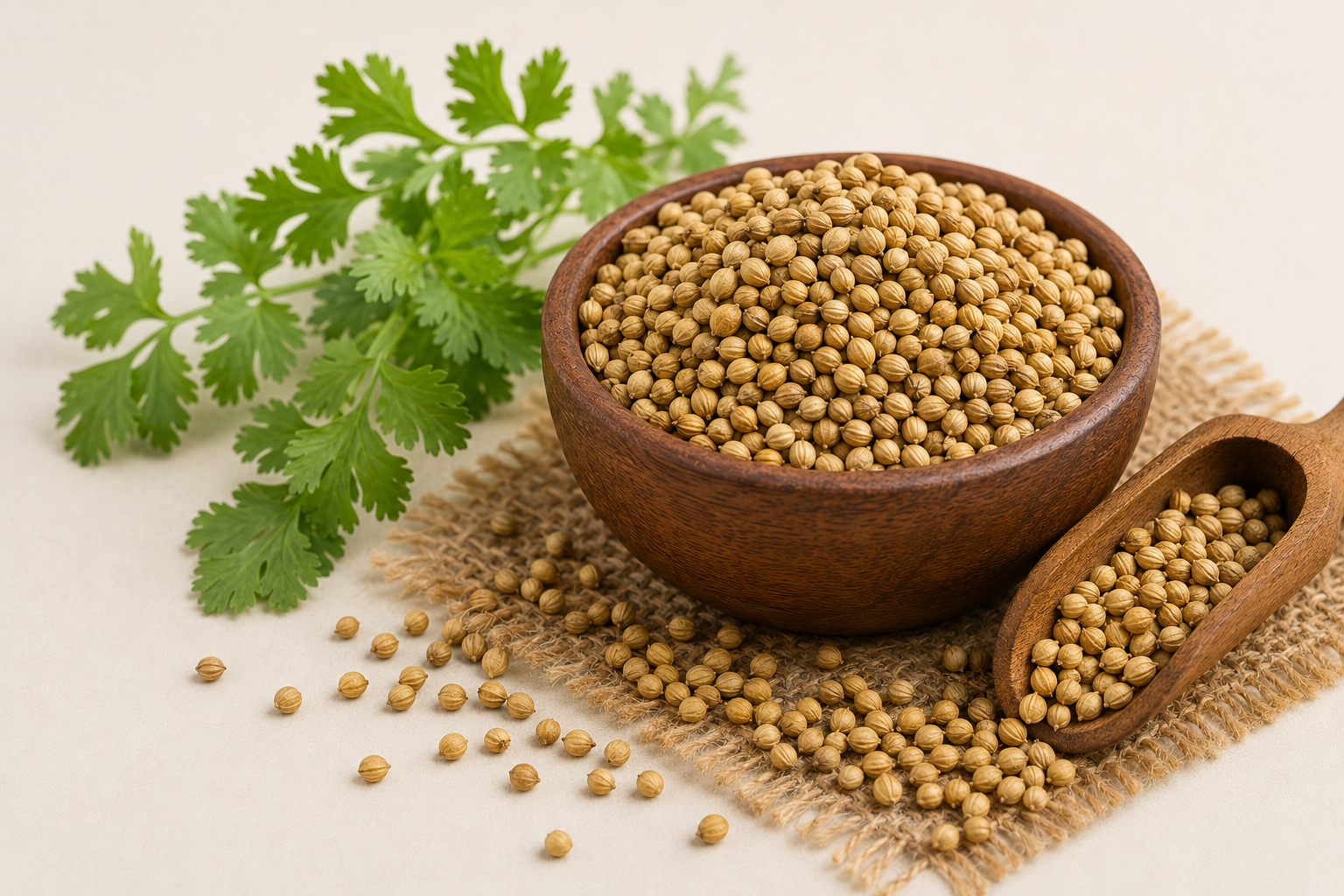
Coriander, popularly known as Dhania in India, is one of the world’s oldest culinary herbs and spices. It comes from the Coriandrum sativum plant, where almost every part is useful. The fresh green leaves are widely known as coriander leaves, while the dried round seeds are used whole or ground into coriander powder. Both offer unique flavours and are essential ingredients in Indian, Asian, Middle Eastern, and Mediterranean cuisines.
Known for its pleasant citrusy aroma and mild earthy flavour, coriander enhances the taste of curries, vegetables, dals, spice blends, chutneys, marinades, soups, and snacks. Beyond the kitchen, coriander has also been valued for centuries in Ayurveda and traditional medicine for supporting digestion, promoting overall wellness, and maintaining a balanced lifestyle.
Today, coriander is cultivated across many parts of the world, with India being one of the largest producers and exporters. Its versatility, nutritional value, refreshing fragrance, and culinary importance make coriander an indispensable spice in households, restaurants, and food industries alike.
History & Origin of Coriander
Coriander is one of the earliest cultivated spices known to mankind. Historical records suggest that it has been grown for more than 3,000 years and was highly valued by ancient civilizations including the Egyptians, Greeks, and Romans. Archaeologists have even discovered coriander seeds inside Egyptian tombs, highlighting its cultural and medicinal significance in ancient times.
The spice eventually spread across Persia, the Middle East, Europe, and Asia through trade routes. In India, coriander became deeply integrated into Ayurvedic medicine and traditional cooking, where it has remained an indispensable ingredient for centuries. Today, Indian coriander is recognised worldwide for its excellent aroma, premium quality, and rich essential oil content.
Modern agriculture and improved farming techniques have helped India become one of the world’s leading producers, consumers, and exporters of coriander, supplying premium-quality seeds and powder to markets across the globe.
Why is Coriander Called the King of Everyday Spices?
Coriander is often regarded as one of the most versatile spices because it delivers aroma, flavour, freshness, and nutritional value in a single ingredient. Unlike many spices that are used only in powdered form, coriander offers two completely different culinary experiences—its fresh green leaves add brightness and freshness to dishes, while its dried seeds contribute a warm, citrusy, slightly sweet flavour.
From traditional Indian curries and garam masala to international cuisines, coriander blends beautifully with countless ingredients without overpowering them. It enhances both vegetarian and non-vegetarian recipes, making it one of the few spices that is used almost every day in kitchens around the world.
Its long history in Ayurveda, digestive benefits, pleasant aroma, and exceptional versatility have earned coriander a permanent place in Indian households. Whether sprinkled as fresh garnish or blended into aromatic spice powders, coriander continues to define authentic flavours across generations.
Nutritional Information
Calories
298 kcal
Protein
12.4 g
Carbohydrates
55 g
Dietary Fiber
41.9 g
Fat
17.8 g
Iron
16.3 mg
Calcium
709 mg
Potassium
1267 mg
Magnesium
330 mg
Vitamin C
21 mg
*Approximate nutritional values per 100 grams of coriander seeds.
The Power of Natural Essential Oils
Coriander is naturally rich in essential oils and plant compounds that contribute to its refreshing aroma, pleasant flavour, and nutritional value. The most abundant compound is Linalool, which gives coriander its characteristic citrusy fragrance and makes it highly valued in cooking, aromatherapy, and traditional wellness practices.
Besides Linalool, coriander contains several naturally occurring compounds such as Geraniol, Borneol, Camphor, and Cineole. These aromatic compounds not only enhance flavour but also contribute to coriander’s long-standing reputation in traditional herbal systems around the world.
Popular Types of Coriander in India
🌿 Rajasthan Coriander
Highly aromatic variety widely used for premium spice production.
🌿 Gujarat Coriander
Known for its excellent flavour and high essential oil content.
🌿 Malwa Coriander
Premium quality seeds with rich aroma and bold flavour.
🌿 Organic Coriander
Grown naturally without synthetic fertilizers or pesticides.
🌿 Whole Coriander Seeds
Preferred for roasting and freshly grinding before cooking.
🌿 Coriander Powder
Finely ground spice used daily in Indian kitchens.
Comparison of Popular Coriander Varieties
| Variety | Aroma | Oil Content | Best For |
|---|---|---|---|
| Rajasthan | Very Strong | High | Masala Industry |
| Gujarat | Fresh | High | Cooking |
| Malwa | Rich | Medium | Premium Powder |
| Organic | Natural | Medium | Healthy Cooking |
| Whole Seeds | Excellent | Natural | Fresh Grinding |
| Powder | Mild | Processed | Daily Kitchen |
Major Coriander Producing States in India
- 🌿 Rajasthan
- 🌿 Madhya Pradesh
- 🌿 Gujarat
- 🌿 Uttar Pradesh
- 🌿 Karnataka
- 🌿 Tamil Nadu
- 🌿 Andhra Pradesh
- 🌿 Telangana
- 🌿 Haryana
- 🌿 Maharashtra
Ideal Climate for Growing Coriander
Coriander grows best in cool, dry climates with moderate temperatures ranging from 20°C to 30°C. It thrives in fertile, well-drained loamy soil that is rich in organic matter. Excessive humidity during flowering or seed development may reduce both yield and seed quality.
The crop is generally sown between October and December in most parts of India and harvested after approximately 90 to 120 days. Timely irrigation, proper weed management, and balanced nutrition help farmers produce highly aromatic coriander seeds with excellent flavour and essential oil content.
India’s diverse climate and fertile agricultural regions make it one of the world’s leading producers of premium coriander. Proper harvesting and post-harvest drying are essential to preserve the spice’s natural aroma, colour, and shelf life.
Health Benefits of Coriander
Supports Healthy Digestion
Coriander has traditionally been used to support digestion, reduce bloating, and promote a comfortable digestive system after meals.
Strengthens Immunity
Rich in natural antioxidants, coriander contributes to the body’s natural defence system and supports overall wellness.
Supports Heart Health
When included in a balanced diet, coriander may help maintain healthy cholesterol levels and support cardiovascular wellness.
Supports Healthy Blood Sugar
Research suggests coriander may help support healthy blood sugar levels when combined with a healthy lifestyle.
Rich in Antioxidants
Natural plant compounds help protect the body’s cells from oxidative stress caused by free radicals.
Natural Detox Support
Coriander is traditionally appreciated for supporting the body’s natural detoxification processes.
Supports Bone Health
Its naturally occurring minerals such as calcium and magnesium contribute to maintaining healthy bones.
Supports Brain Function
Antioxidant compounds found in coriander are being studied for their role in supporting cognitive wellness.
Freshens Breath Naturally
Coriander seeds have long been chewed after meals for their refreshing aroma and pleasant aftertaste.
Supports Eye Health
Coriander contains vitamins and antioxidants that contribute to maintaining healthy vision.
Supports Weight Management
Its fibre content and digestive properties make coriander a valuable addition to a balanced diet.
Promotes Overall Wellness
Regular culinary use of coriander enhances flavour while contributing valuable nutrients to everyday meals.
🌿 Coriander in Ayurveda
In Ayurveda, coriander is regarded as one of the most balancing spices and is traditionally known as “Dhanyaka”. It has been valued for thousands of years for supporting digestion, cooling the body, promoting urinary health, improving appetite, and maintaining overall well-being. Its naturally cooling nature makes it especially beneficial during warm weather and in balancing excess body heat.
Ayurvedic practitioners commonly recommend coriander seeds, fresh leaves, and coriander-infused water as part of traditional wellness routines. The spice is appreciated for its gentle action on the digestive system while helping maintain harmony among the body’s natural energies (Doshas).
🌡️ Nature
Cooling (Sheeta)
🥄 Taste
Sweet, Mild & Slightly Astringent
⚖️ Balances
Pitta & Kapha Dosha
📜 Ayurvedic Name
Dhanyaka
🍽️ Traditional Use
Supports Digestion & Appetite
💧 Wellness Support
Cooling & Refreshing
🌿 Common Forms
Seeds, Powder & Fresh Leaves
☀️ Best Season
Suitable Throughout the Year
🍛 Culinary Uses of Coriander
- Essential ingredient in Indian curries and gravies.
- Used in almost every homemade spice blend.
- Adds rich aroma to vegetable dishes.
- Perfect seasoning for dal and lentil recipes.
- Fresh coriander leaves are widely used as garnish.
- Enhances the flavour of chutneys and dips.
- Used in marinades for paneer, chicken, fish and vegetables.
- Important ingredient in pickles and masala powders.
- Commonly used in soups, stews and rice preparations.
- Popular in North Indian, South Indian and international cuisines.
💊 Traditional Home Remedies
✨ Beauty & Skincare Uses
- Fresh coriander is used in homemade face packs.
- Supports naturally healthy-looking skin.
- Popular ingredient in herbal skincare routines.
- Traditionally used in DIY face masks.
- Often combined with aloe vera and sandalwood.
- Used in natural cleansing preparations.
- Included in herbal hair care recipes.
- Widely valued in traditional beauty practices.
🥄 How to Consume Coriander
- Use whole coriander seeds while tempering.
- Add freshly ground coriander powder to curries.
- Sprinkle chopped fresh coriander over cooked dishes.
- Prepare refreshing coriander chutney.
- Infuse coriander seeds in warm water.
- Add to soups and vegetable stews.
- Mix into homemade spice blends.
- Use in marinades for vegetables and proteins.
- Blend fresh leaves into smoothies or green juices.
- Use roasted coriander powder as a finishing seasoning.
🥄 Recommended Daily Intake
For most healthy adults, using approximately 1–2 teaspoons (2–5 grams) of coriander seeds or coriander powder daily in regular cooking is generally considered appropriate as part of a balanced diet. Fresh coriander leaves may also be enjoyed regularly in salads, chutneys, soups and garnishes.
Individuals with existing medical conditions, allergies, or those taking medications should consult a qualified healthcare professional before consuming coriander in concentrated forms or herbal supplements.
⚠️ Possible Side Effects of Excess Consumption
- May cause stomach discomfort when consumed in excessive quantities.
- Can trigger allergic reactions in sensitive individuals.
- Excess intake may contribute to loose stools.
- Large quantities may lower blood sugar levels in some people.
- May interact with certain diabetes medications.
- Very high intake may reduce blood pressure in susceptible individuals.
- Overconsumption of coriander supplements should be avoided without medical advice.
- Essential oil should never be consumed without professional guidance.
🚫 Who Should Be Careful?
- People allergic to coriander or other Apiaceae family plants.
- Individuals taking diabetes medication.
- People with naturally low blood pressure.
- Anyone scheduled for surgery should seek medical advice regarding herbal supplements.
- Pregnant or breastfeeding women should consult a healthcare professional before consuming concentrated supplements.
- Children should consume coriander only as part of normal cooking unless advised otherwise.
How Coriander is Grown
Land Preparation
Farmers prepare fertile, loose, well-drained soil enriched with organic manure for healthy crop growth.
Sowing Seeds
Quality coriander seeds are sown evenly during the cool season for better germination.
Irrigation
Light and timely irrigation ensures steady growth without waterlogging.
Crop Care
Regular weeding, nutrient management and pest monitoring help maximize yield and quality.
Harvesting
Plants are harvested when seed heads turn golden brown and reach full maturity.
Cleaning & Processing
The harvested seeds are dried, cleaned, graded and packed or ground into premium coriander powder.
🏭 From Farm to Kitchen
📦 Storage Tips
- Store coriander in an airtight container.
- Keep it away from moisture and humidity.
- Avoid direct sunlight.
- Store in a cool and dry place.
- Always use a clean and dry spoon.
- Close the container immediately after use.
- Keep away from strong-smelling spices and foods.
- Whole seeds retain aroma longer than coriander powder.
- For maximum freshness, grind seeds only when needed.
- Best consumed within 12–18 months.
How to Identify Pure Coriander
Premium coriander should have a pleasant citrusy aroma, uniform golden-brown colour, clean appearance and natural freshness. High-quality coriander is free from dust, stones, artificial colours, excessive moisture and foreign particles. Fresh coriander seeds release a rich fragrance when lightly crushed.
🎨 Colour
Uniform light brown to golden colour without discoloration.
👃 Aroma
Fresh, citrusy and pleasantly aromatic.
✋ Texture
Clean, dry, firm seeds or fine free-flowing powder.
💧 Moisture
Completely dry with no signs of dampness or mould.
🧪 Simple Home Tests for Coriander Purity
Visual Inspection
Check for stones, dust, broken seeds, insects or other foreign materials. Premium coriander should appear clean and uniform.
Crush Test
Crush a few seeds gently between your fingers. Fresh coriander releases a strong citrus-like aroma almost immediately.
Water Test
Place coriander powder in water. Pure coriander settles naturally while excessive floating particles may indicate impurities.
Smell Test
Good-quality coriander has a naturally sweet and refreshing fragrance without any chemical or musty odour.
🛒 Buying Guide
- Choose coriander from trusted and reputed brands.
- Prefer freshly harvested coriander seeds for maximum aroma.
- Check the manufacturing and expiry dates before purchasing.
- Look for uniform colour and naturally fragrant seeds.
- Avoid products containing dust, stones or artificial additives.
- Select airtight and food-grade packaging.
- Organic coriander is an excellent choice whenever available.
- Buy whole coriander seeds and grind them fresh for the best flavour.
🌍 India’s Position in Global Coriander Production
India is one of the world’s largest producers, consumers and exporters of coriander. The country’s favourable climate, fertile agricultural land and centuries of farming expertise allow Indian farmers to produce premium-quality coriander with excellent aroma, flavour and essential oil content.
Indian coriander is widely exported to international markets where it is valued for spice blends, processed foods, herbal products and culinary applications. Rajasthan and Madhya Pradesh remain the leading contributors to India’s coriander production.
🌎 Top Coriander Export Destinations
- 🇺🇸 United States
- 🇦🇪 United Arab Emirates
- 🇬🇧 United Kingdom
- 🇩🇪 Germany
- 🇲🇾 Malaysia
- 🇸🇦 Saudi Arabia
- 🇯🇵 Japan
- 🇨🇦 Canada
- 🇦🇺 Australia
- 🇸🇬 Singapore
💡 Did You Know?
- Coriander has been cultivated for more than 3,000 years.
- Both the leaves and seeds of the coriander plant are edible.
- Fresh coriander leaves are known as cilantro in many countries.
- Coriander belongs to the parsley family (Apiaceae).
- The spice is an essential ingredient in Garam Masala.
- Whole coriander seeds retain their aroma longer than ground powder.
- India is among the world’s leading producers of coriander.
- Coriander seeds naturally contain aromatic essential oils.
- The spice is widely used in Ayurveda and traditional medicine.
- Coriander is one of the few spices used in almost every Indian kitchen.
Frequently Asked Questions
What is coriander?
Coriander is an aromatic herb and spice obtained from the Coriandrum sativum plant. Its fresh leaves and dried seeds are both widely used in cooking.
Are coriander and cilantro the same?
Yes. In many countries the fresh green leaves are called cilantro, while the dried seeds are known as coriander.
Can coriander be consumed every day?
Yes. Moderate amounts used in everyday cooking are generally suitable for most healthy adults.
Is coriander good for digestion?
Coriander has traditionally been used to support healthy digestion and is commonly included in digestive recipes.
What is the difference between coriander seeds and coriander powder?
Coriander powder is made by grinding dried coriander seeds. Freshly ground seeds usually provide a stronger aroma.
How should coriander be stored?
Store it in an airtight container in a cool, dry place away from sunlight and moisture.
Can coriander help support heart health?
As part of a balanced diet, coriander may contribute to overall cardiovascular wellness.
How long does coriander powder stay fresh?
When stored properly, coriander powder generally maintains good quality for about 12 to 18 months.
Which state produces the most coriander in India?
Rajasthan is widely recognised as India’s largest coriander-producing state, followed by Madhya Pradesh.
Is whole coriander better than coriander powder?
Whole coriander seeds retain their natural oils longer and provide better flavour when freshly ground before cooking.
📚 Related Spice Guides
🌿 Why Choose KHALVA Masala Coriander?
At KHALVA Masala, we are committed to delivering coriander that is carefully sourced from selected farming regions and processed with attention to quality and hygiene. Every batch is selected according to our quality standards to help provide consistent aroma, flavour and appearance.
Our coriander undergoes cleaning, grading and hygienic processing before being packed in secure, food-grade packaging designed to help maintain freshness and protect the product during storage and transportation.
Suitable for a wide variety of Indian and international recipes, KHALVA Masala Coriander adds a naturally aromatic flavour to curries, vegetables, lentils, spice blends, chutneys and everyday cooking.
🌾 Carefully Selected
Sourced from selected farming regions and chosen according to our quality standards.
✨ Quality Processing
Cleaned, graded and processed using hygienic practices to support consistent product quality.
📦 Secure Packaging
Packed in food-grade packaging designed to help maintain freshness during storage.
❤️ Made for Everyday Cooking
Ideal for preparing a variety of Indian and international dishes with rich coriander flavour.
📝 Final Summary
Coriander is much more than a simple kitchen spice. It is a timeless ingredient that combines remarkable flavour, refreshing aroma and centuries of culinary tradition. From enhancing everyday meals to playing an important role in Ayurveda and traditional wellness practices, coriander continues to be one of the most valuable spices found in Indian households.
Whether you use whole coriander seeds, freshly ground coriander powder or vibrant green coriander leaves, choosing premium-quality coriander ensures the best flavour, freshness and cooking experience. Proper storage and careful selection allow you to enjoy its natural aroma and versatility every day.
⭐ Continue Your Spice Journey
Every spice tells a unique story of tradition, farming and flavour. Explore the complete collection of premium spice guides from KHALVA Masala and discover everything from cultivation and nutritional value to health benefits, cooking techniques and storage tips. Learn how authentic Indian spices can transform everyday meals into memorable culinary experiences.
🌿 Premium Spices
Expertly sourced from India’s finest farming regions.
🍛 Authentic Recipes
Discover delicious ways to use every spice.
📖 Complete Guides
Learn farming, nutrition, storage and culinary uses.
❤️ Indian Taste
Experience freshness, aroma and traditional flavour in every meal.