Cumin (Jeera): The Complete Guide to India’s Essential Spice
Discover everything about Cumin (Jeera)—its fascinating history, nutritional value, culinary uses, traditional importance, farming process, popular varieties, storage methods, buying guide and much more. This comprehensive guide explores why cumin remains one of the most treasured spices in Indian and global cuisine.
Quick Facts About Cumin
🌿 Scientific Name
Cuminum cyminum
🏠 Plant Family
Apiaceae (Parsley Family)
🇮🇳 Hindi Name
Jeera (जीरा)
🌍 Origin
Eastern Mediterranean & Southwest Asia
🎨 Colour
Light Brown to Golden Brown
👃 Aroma
Warm, Earthy & Distinctive
🌾 Taste
Nutty, Peppery & Slightly Bitter
🌡 Climate
Cool & Dry
📅 Harvest Season
February to April
🧺 Shelf Life
12–24 Months
⭐ Main Compound
Cuminaldehyde
🍛 Common Uses
Curries, Rice, Dal, Masalas & Tempering
What is Cumin?
Cumin, commonly known as Jeera, is one of the world’s oldest and most widely used spices. It is obtained from the dried seeds of the Cuminum cyminum plant, a flowering herb belonging to the parsley family. Known for its warm aroma, earthy flavour and distinctive taste, cumin is an essential ingredient in Indian kitchens and numerous cuisines around the world.
Whether used as whole seeds or ground into powder, cumin enhances a wide variety of dishes including curries, lentils, rice preparations, vegetables, soups, spice blends and snacks. When lightly roasted, cumin develops a deeper aroma that adds remarkable character to everyday cooking.
Beyond its culinary importance, cumin has been valued for centuries in traditional food cultures and herbal practices. Today, it continues to be appreciated for its versatility, rich flavour profile and role in creating authentic spice blends enjoyed across the globe.
History & Origin of Cumin
Cumin has been cultivated for thousands of years and is believed to have originated in the Eastern Mediterranean region and Southwest Asia. Archaeological discoveries suggest that cumin was used by ancient civilizations including the Egyptians, Greeks and Romans for both culinary and traditional purposes.
Through centuries of trade, cumin spread across Asia, Europe and North Africa, eventually becoming one of the defining spices of Indian cuisine. Its ability to complement a wide variety of ingredients made it an indispensable component of regional cooking traditions.
Today, India is among the world’s largest producers and consumers of cumin. Indian cumin is recognised internationally for its distinctive aroma, consistent quality and extensive use in spice blends, processed foods and everyday cooking.
Why is Cumin One of the World’s Most Essential Spices?
Cumin is admired for its remarkable ability to add warmth, depth and complexity to food without overpowering other ingredients. Its earthy aroma and balanced flavour make it a versatile spice that complements vegetables, grains, legumes, meats and countless traditional recipes.
Unlike many spices that contribute primarily heat or colour, cumin is valued for its distinctive fragrance and flavour profile. It is commonly used whole for tempering or ground into powder for spice blends, creating layers of flavour that define many iconic Indian dishes.
Cumin naturally contains aromatic compounds such as Cuminaldehyde, which contribute to its characteristic aroma. Combined with centuries of culinary tradition and global popularity, cumin continues to be one of the most cherished spices in kitchens around the world.
Nutritional Information
Calories
375 kcal
Protein
17.8 g
Carbohydrates
44.2 g
Dietary Fiber
10.5 g
Fat
22.3 g
Iron
66.4 mg
Calcium
931 mg
Magnesium
366 mg
Potassium
1788 mg
Vitamin E
3.3 mg
*Approximate nutritional values per 100 grams of whole cumin seeds. Values may vary depending on origin and growing conditions.
🌿 Natural Aroma & Active Compounds
Cumin owes its distinctive aroma and flavour to naturally occurring essential oils and aromatic compounds. The most notable of these is Cuminaldehyde, which contributes to the warm, earthy fragrance that makes cumin instantly recognizable in cuisines around the world.
Cumin also contains naturally occurring plant compounds such as Terpenes, Flavonoids, Phenolic Compounds and essential oils. Together, these components contribute to cumin’s characteristic aroma and its long-standing role in traditional cooking.
Popular Types of Cumin
🌾 Indian Cumin
Known for its strong aroma, rich flavour and extensive culinary use across India.
🌍 Syrian Cumin
Offers a slightly milder flavour and is commonly used in Middle Eastern cuisine.
🌱 Organic Cumin
Cultivated using certified organic farming practices where applicable.
🟤 Whole Cumin Seeds
Ideal for tempering and roasting to release maximum aroma.
🥄 Ground Cumin
Finely milled for convenient use in spice blends and everyday cooking.
🔥 Roasted Cumin Powder
Prepared by roasting whole seeds before grinding for a deeper, smoky flavour.
Comparison of Popular Cumin Types
| Type | Aroma | Best Use | Flavour |
|---|---|---|---|
| Indian Cumin | Strong | Curries & Masalas | Warm & Earthy |
| Syrian Cumin | Medium | Middle Eastern Dishes | Mild & Nutty |
| Whole Seeds | High | Tempering | Fresh & Aromatic |
| Ground Cumin | Medium | Daily Cooking | Balanced |
| Roasted Powder | Very High | Chaats & Raita | Smoky |
| Organic Cumin | Varies | General Cooking | Natural |
Major Cumin Producing States in India
- 🌾 Gujarat
- 🌾 Rajasthan
- 🌾 Madhya Pradesh
- 🌾 Uttar Pradesh
- 🌾 Haryana
- 🌾 Punjab
- 🌾 Maharashtra
- 🌾 Andhra Pradesh
Ideal Climate for Growing Cumin
Cumin grows best in cool, dry climates with abundant sunshine and well-drained sandy or loamy soil. It generally thrives in temperatures between 20°C and 30°C during its growing season.
The crop is usually sown during the winter months and harvested in early spring. Low humidity, moderate irrigation and dry weather during maturity help support seed development and maintain the spice’s characteristic aroma and quality.
Gujarat and Rajasthan provide favourable conditions for cumin cultivation and together contribute a significant share of India’s cumin production.
Health Benefits of Cumin
Traditionally Used for Digestion
Cumin has long been used in traditional cooking practices and is commonly included in meals to complement digestion as part of a balanced diet.
Contains Natural Antioxidants
Cumin naturally contains plant compounds including flavonoids and phenolics that contribute to its antioxidant properties.
Supports Overall Wellness
When consumed as part of a varied diet, cumin can contribute to overall health and wellbeing.
Source of Essential Minerals
Cumin naturally provides minerals such as iron, magnesium and calcium that are important in a balanced diet.
Adds Flavor Naturally
Its rich aroma and earthy taste help enhance dishes without relying heavily on additional seasonings.
Provides Iron
Cumin naturally contains iron, an essential mineral that contributes to normal bodily functions.
Rich in Aromatic Oils
Natural essential oils give cumin its distinctive aroma and have made it a valued spice for centuries.
Versatile Everyday Spice
Cumin complements vegetables, lentils, rice, curries and spice blends, making healthy meals more enjoyable.
Popular in Traditional Diets
Cumin has been an important ingredient in Indian, Middle Eastern and Mediterranean cuisines for generations.
Suitable for Daily Cooking
Small culinary quantities of cumin are commonly used in everyday recipes around the world.
Globally Appreciated Spice
Cumin is one of the world’s most widely used spices because of its balanced flavour and culinary versatility.
Enhances Culinary Experience
Whether roasted or ground, cumin adds warmth, aroma and depth to countless traditional and modern recipes.
🌿 Cumin in Ayurveda
Cumin (Jeera) has been valued in Ayurveda for centuries and is traditionally used as a culinary spice in many everyday preparations. It is appreciated for its warm nature, aromatic qualities and its role in balanced meals. In traditional Ayurvedic cooking, cumin is often combined with coriander and fennel to create harmonious spice blends.
Roasted cumin powder, cumin water and tempering with whole cumin seeds are common culinary practices inspired by traditional Indian cooking. These preparations are valued for their flavour, aroma and versatility in everyday meals.
🌡️ Nature
Traditionally Considered Warming
🌿 Taste
Pungent & Slightly Bitter
🍽️ Traditional Use
Everyday Culinary Spice
🥄 Common Forms
Whole Seeds & Ground Powder
🔥 Popular Preparation
Roasted Cumin Powder
🍛 Best Paired With
Coriander, Fennel & Turmeric
🌾 Kitchen Essential
Used in Daily Indian Cooking
📜 Traditional Significance
Widely Mentioned in Classical Indian Food Traditions
🌾 Why Cumin Has Been Valued for Centuries
Cumin is one of the few spices that can completely transform a dish with just a small quantity. Its earthy aroma, warm flavour and versatility make it suitable for everything from simple home-cooked meals to elaborate festive recipes.
Across India and many other parts of the world, cumin is an essential ingredient in spice blends, tempering, roasted powders and traditional recipes. Its ability to pair well with other spices has made it a cornerstone of countless culinary traditions.
Whether used whole, roasted or ground, cumin continues to be appreciated for the distinctive flavour and aroma it brings to everyday cooking.
🍛 Culinary Uses of Cumin
- Essential ingredient in Indian curries, dals and vegetable dishes.
- Widely used for tempering (tadka) to enhance aroma and flavour.
- Common ingredient in garam masala and other traditional spice blends.
- Adds warmth and depth to rice dishes such as jeera rice and pulao.
- Used in soups, stews and gravies across global cuisines.
- Popular in marinades for paneer, vegetables and protein-based dishes.
- Roasted cumin powder is commonly sprinkled over chaats, raita and salads.
- Used in snacks, savoury baked products and spice seasonings.
- Pairs well with coriander, turmeric, fennel and black pepper.
- Suitable for both traditional recipes and contemporary cooking.
🏡 Traditional Home Uses
✨ Beauty & Lifestyle Uses
- Cumin is primarily valued as a culinary spice in everyday cooking.
- Cumin seed extracts are used in selected personal care and cosmetic formulations.
- Its naturally aromatic essential oils are appreciated in traditional wellness practices.
- Cumin is commonly included in herbal spice blends used in various food traditions.
- Use professionally formulated skincare products when choosing products containing cumin extracts.
- Avoid applying concentrated essential oils directly to the skin unless appropriately diluted.
- Store cumin in a cool, dry place to help maintain its natural aroma.
- Handle whole seeds and powder with clean, dry utensils during cooking.
🥄 How to Use Cumin
- Use whole cumin seeds for tempering dals and curries.
- Add roasted cumin powder to yogurt, buttermilk and raita.
- Mix ground cumin into vegetable and lentil preparations.
- Use cumin in homemade spice blends and marinades.
- Prepare jeera rice using lightly roasted whole cumin seeds.
- Season soups and stews with freshly ground cumin.
- Sprinkle roasted cumin powder over chaats and fruit salads.
- Add cumin while preparing pickles and savoury snacks.
- Pair with coriander and turmeric for balanced flavour.
- Adjust the quantity according to your recipe and personal preference.
🥄 Recommended Daily Intake
For most healthy adults, approximately 1 to 3 grams (about ½ to 1 teaspoon) of cumin can be comfortably included in everyday cooking as part of a varied and balanced diet.
Individual dietary needs may differ. If you have a specific medical condition, dietary restriction or are pregnant or breastfeeding, consult a qualified healthcare professional for personalised advice.
👨🍳 Chef’s Tip
For maximum aroma, lightly dry roast whole cumin seeds over medium heat until they become fragrant, then grind only the quantity needed. Freshly ground roasted cumin offers a richer flavour than pre-ground powder and enhances the taste of curries, rice dishes, raita and spice blends.
⚠️ Possible Side Effects of Excess Consumption
- Consuming excessive amounts of cumin may cause digestive discomfort in some individuals.
- Large quantities may contribute to acidity or heartburn in people who are sensitive to spices.
- Some individuals may experience allergic reactions, although these are uncommon.
- Concentrated cumin supplements should only be taken according to professional advice.
- Excessive intake may not be suitable for everyone, particularly outside normal culinary use.
- Use cumin as part of a balanced diet and avoid unnecessary overconsumption.
- If you experience unusual symptoms after consuming cumin, seek medical advice.
- Moderation is the best approach for everyday cooking.
🚫 Who Should Be Careful?
- People with known allergies to cumin or other Apiaceae family plants.
- Individuals with digestive sensitivities should consume according to personal tolerance.
- Pregnant or breastfeeding women should follow the advice of their healthcare professional regarding supplements.
- People taking prescription medications should seek medical advice before using concentrated cumin supplements.
- Children should consume cumin only in normal culinary quantities.
- Anyone with a medical condition requiring dietary restrictions should consult a qualified healthcare professional.
How Cumin is Grown
Seed Selection
High-quality seeds are selected to support healthy crop establishment.
Land Preparation
Fields are prepared with well-drained soil suitable for cumin cultivation.
Sowing
Seeds are sown during the winter season with proper spacing.
Crop Care
Regular irrigation, weed management and crop monitoring help support healthy plant growth.
Harvesting
Mature seed heads are harvested when the plants turn golden brown.
Cleaning & Processing
The harvested seeds are cleaned, graded and packed for culinary use.
🚜 From Farm to Kitchen
📦 Storage Tips
- Store cumin in an airtight container.
- Keep it away from moisture and direct sunlight.
- Use a cool, dry place for storage.
- Always use a clean, dry spoon.
- Whole cumin seeds generally retain aroma longer than ground cumin.
- Grind small quantities as needed for the freshest flavour.
- Close the container immediately after use.
- Avoid storing near heat sources or steam.
- Check periodically for freshness and aroma.
- Use within the recommended shelf life for the best culinary experience.
How to Identify Good Quality Cumin
Good quality cumin typically has a uniform light brown colour, a pleasant earthy aroma and clean, well-formed seeds. It should be free from excessive dust, moisture, insects and foreign matter.
🌾 Appearance
Uniform, clean and well-shaped seeds.
👃 Aroma
Fresh, warm and naturally earthy fragrance.
✨ Cleanliness
Free from stones, dust and unwanted particles.
💧 Moisture
Dry seeds without signs of mould or clumping.
🧪 Simple Home Checks for Cumin
Visual Inspection
Look for clean, uniform seeds without foreign particles.
Aroma Check
Rub a few seeds between your fingers. Fresh cumin should release a warm, earthy aroma.
Touch Test
The seeds should feel dry and firm, not damp or sticky.
Colour Check
Good quality cumin usually has a consistent light brown to golden-brown colour.
🛒 Buying Guide
- Purchase cumin from trusted and reputable food brands.
- Choose seeds that are clean, uniform in colour and free from visible impurities.
- Look for a fresh, warm and earthy aroma, which is a characteristic of good-quality cumin.
- Check the manufacturing and best-before dates before purchasing.
- Select food-grade, well-sealed packaging to help maintain freshness.
- Whole cumin seeds generally retain their aroma longer than ground cumin.
- Avoid packages showing signs of moisture, damage or insect infestation.
- Purchase quantities suitable for your regular cooking to enjoy the best flavour.
🌍 India’s Position in Global Cumin Production
India is among the world’s leading producers, consumers and exporters of cumin. The country’s favourable agro-climatic conditions, experienced farming communities and long history of spice cultivation have contributed to its strong presence in the global cumin market.
States such as Gujarat and Rajasthan account for a significant share of India’s cumin production. Indian cumin is widely used in domestic kitchens as well as in food processing and international culinary applications.
🌎 Major Export Destinations
- 🇺🇸 United States
- 🇦🇪 United Arab Emirates
- 🇬🇧 United Kingdom
- 🇨🇦 Canada
- 🇸🇦 Saudi Arabia
- 🇦🇺 Australia
- 🇩🇪 Germany
- 🇳🇱 Netherlands
- 🇲🇾 Malaysia
- 🇸🇬 Singapore
💡 Did You Know?
- Cumin has been cultivated for thousands of years and is one of the oldest known spices.
- It belongs to the Apiaceae family, the same family as coriander, fennel and parsley.
- Roasting cumin seeds enhances their natural aroma and flavour.
- Cumin is an essential ingredient in many traditional Indian spice blends.
- India is recognised as one of the leading producers and exporters of cumin.
- Whole cumin seeds generally retain their aroma longer than ground cumin.
- Cumin is widely used in Indian, Middle Eastern, Mexican and Mediterranean cuisines.
- The characteristic aroma of cumin comes primarily from the natural compound cuminaldehyde.
- Jeera rice is one of the most popular rice dishes prepared using whole cumin seeds.
- Cumin remains one of the most widely traded spices in the international spice market.
Frequently Asked Questions
What is cumin (jeera)?
Cumin is the dried seed of the Cuminum cyminum plant and is widely used as a culinary spice around the world.
Can cumin be used every day?
Yes. Cumin is commonly used in everyday cooking as part of a balanced diet.
What is the difference between whole cumin and cumin powder?
Whole cumin seeds are generally used for tempering, while ground cumin is commonly added directly to recipes and spice blends.
How should cumin be stored?
Store cumin in an airtight container in a cool, dry place away from heat, moisture and direct sunlight.
Can cumin be roasted before use?
Yes. Lightly roasting cumin seeds enhances their natural aroma and flavour before grinding or cooking.
Which state produces the most cumin in India?
Gujarat is one of India’s leading cumin-producing states, followed by Rajasthan.
Does cumin have a strong flavour?
Cumin has a warm, earthy and slightly nutty flavour that complements many savoury dishes.
Is cumin used in international cuisines?
Yes. Cumin is widely used in Indian, Middle Eastern, Mexican, North African and Mediterranean cooking.
How long do cumin seeds stay fresh?
When stored correctly, whole cumin seeds generally retain their quality longer than ground cumin.
Why is cumin called the “King of Tempering”?
Cumin is one of the most commonly used spices for tempering because it releases a rich aroma and flavour when heated in oil or ghee.
📚 Related Spice Guides
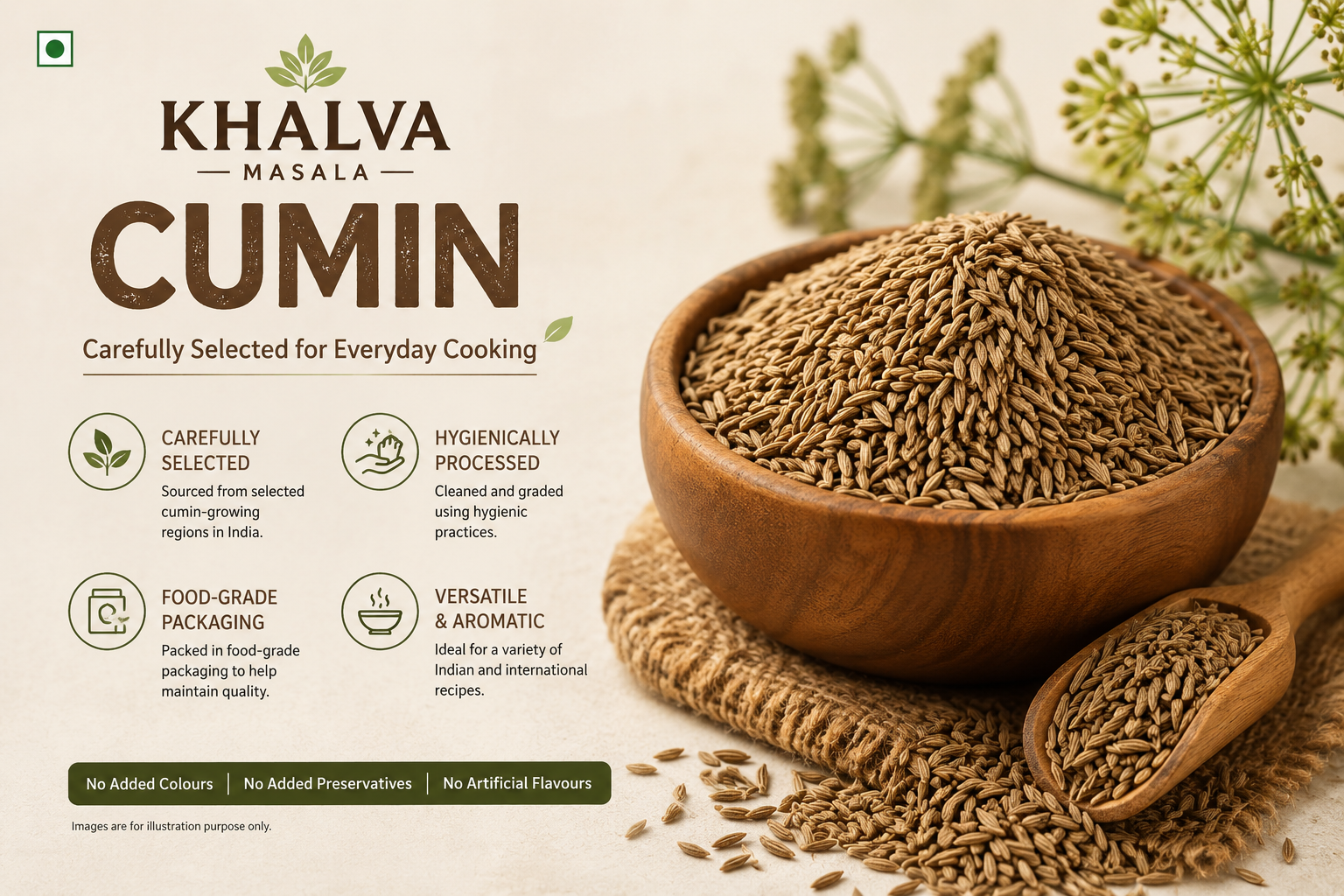
🌾 Why Choose KHALVA Masala Cumin?
At KHALVA Masala, we are committed to providing carefully selected spices for everyday cooking. Our cumin is sourced from selected cumin-growing regions of India and processed in accordance with established quality and hygiene practices to support product consistency.
Each batch undergoes cleaning, grading and hygienic processing before being packed in food-grade packaging designed to help protect the product and assist in maintaining its quality during storage under recommended conditions.
Suitable for a variety of Indian and international recipes, KHALVA Masala Cumin can be used in curries, rice dishes, lentils, vegetables, spice blends and other everyday preparations where cumin is traditionally used.
🌾 Carefully Selected
Sourced from selected cumin-growing regions in India according to our quality standards.
🌿 Quality Processing
Cleaned, graded and processed using hygienic practices to support consistent product quality.
📦 Food-Grade Packaging
Packed in food-grade packaging designed to help protect the product during storage and transportation.
🍛 Versatile for Everyday Cooking
Suitable for a wide variety of traditional and contemporary recipes.
⭐ Our Quality Commitment
Quality remains an important part of every stage of our process. From sourcing cumin seeds through cleaning, grading and hygienic packing, each step is carried out with attention to maintaining product quality and consistency.
🌱 Carefully Sourced
Selected from recognised cumin-growing regions.
🧹 Hygienically Processed
Handled using hygienic processing practices.
📦 Freshness Protected
Food-grade packaging designed to help maintain product quality.
🍽️ Made for Everyday Cooking
Suitable for a wide variety of home-style recipes.
📝 Final Summary
Cumin (Jeera) has earned its place as one of the world’s most widely used spices through its distinctive aroma, earthy flavour and exceptional versatility. From simple tempering to complex spice blends, it plays an important role in countless traditional and modern recipes.
Learning about cumin’s origin, varieties, nutritional profile, farming practices, culinary uses and proper storage can help you make informed choices when selecting and using this essential kitchen spice.
Whether used as whole seeds, roasted powder or ground cumin, this timeless spice continues to add warmth, depth and flavour to everyday cooking across India and around the world.
🌍 Continue Your Spice Journey
Every spice tells a story shaped by nature, cultivation and culinary tradition. Explore the complete collection of KHALVA Masala spice guides to discover the history, nutritional information, traditional uses, growing methods and cooking applications of India’s most cherished spices.
🌾 Premium Spice Collection
Discover informative guides covering a variety of Indian spices.
📖 Expert Information
Learn about cultivation, nutrition and culinary applications.
🍛 Cooking Inspiration
Explore recipes and traditional cooking techniques.
❤️ Crafted for Food Lovers
Helping you enjoy authentic flavours in everyday cooking.