Black Pepper (Kali Mirch): The Complete Guide to the King of Spices
Discover everything about Black Pepper (Kali Mirch)—its fascinating history, nutritional profile, culinary uses, traditional importance, farming process, popular varieties, storage methods, buying guide and much more. Explore why black pepper has earned the title “King of Spices” and continues to be one of the world’s most valued spices.
Quick Facts About Black Pepper
🌿 Scientific Name
Piper nigrum
🏠 Plant Family
Piperaceae (Pepper Family)
🇮🇳 Hindi Name
Kali Mirch (काली मिर्च)
🌍 Origin
South-Western India (Malabar Coast)
⚫ Colour
Dark Brown to Black
👃 Aroma
Warm, Woody & Spicy
🌶 Taste
Sharp, Pungent & Earthy
🌡 Climate
Warm, Humid Tropical
📅 Harvest Season
December to March
🧺 Shelf Life
18–24 Months
⭐ Main Compound
Piperine
🍛 Common Uses
Curries, Soups, Marinades, Seasoning & Spice Blends
What is Black Pepper?
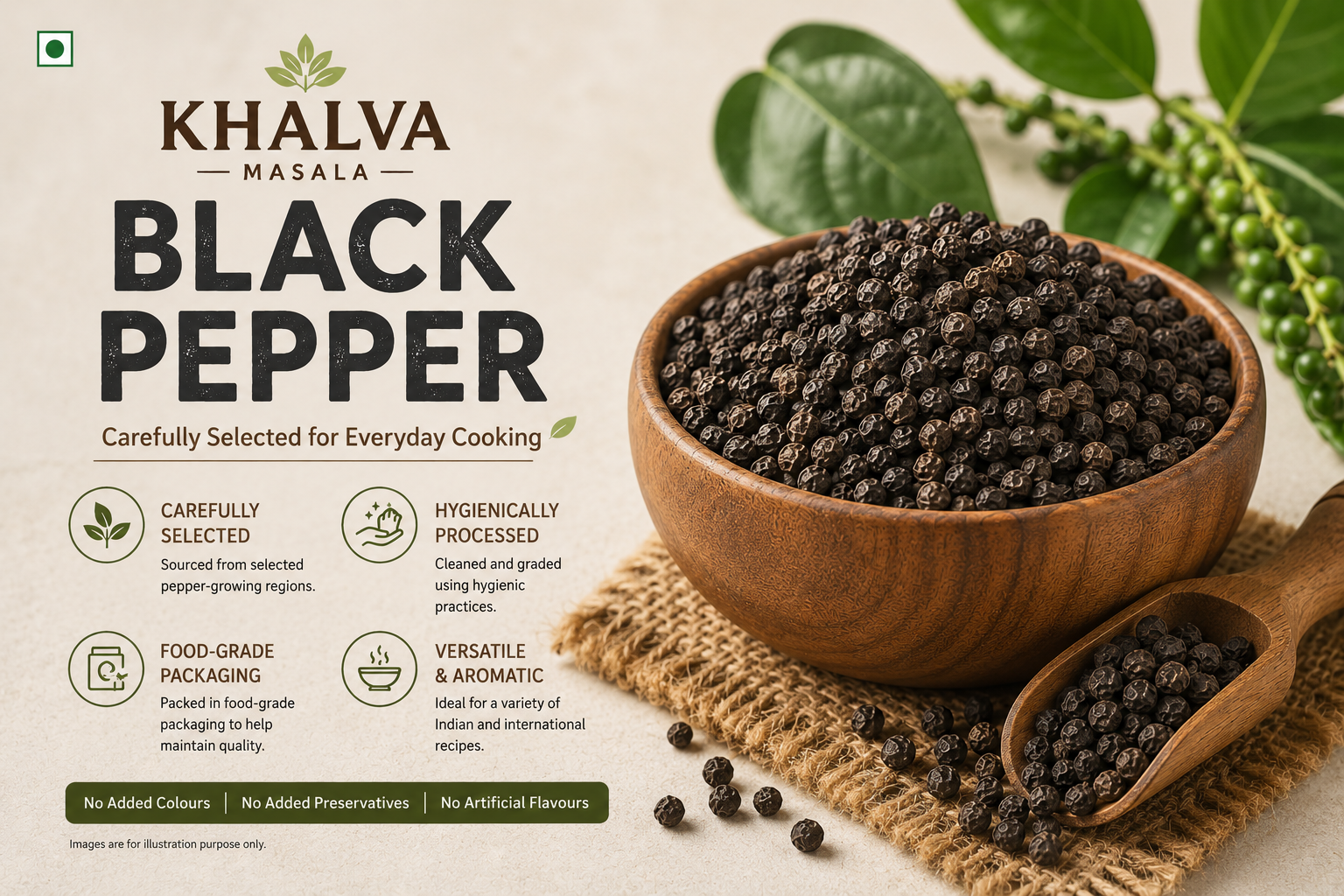
Black Pepper, popularly known as Kali Mirch, is the dried fruit of the Piper nigrum vine, a flowering plant native to the Malabar Coast of India. It is one of the oldest and most widely traded spices in the world, valued for its bold aroma, distinctive flavour and culinary versatility.
The berries are harvested while still green and then carefully dried until they develop their characteristic dark colour and wrinkled appearance. Whole peppercorns can be used directly in cooking or freshly ground to release their rich aroma and warm, peppery flavour.
Today, black pepper is an essential ingredient in cuisines around the world. It is commonly used in spice blends, soups, curries, marinades, salads, sauces and countless savoury dishes, making it a true kitchen essential.
History & Origin of Black Pepper
Black Pepper has a remarkable history spanning more than two thousand years. Native to India’s Malabar Coast in present-day Kerala, it became one of the earliest spices traded internationally and played an important role in ancient commerce between India, the Middle East and Europe.
Often referred to as the “King of Spices”, black pepper was once considered so valuable that it was used as a form of currency and exchanged alongside precious goods. Its popularity encouraged maritime trade routes that connected civilizations across continents.
Today, black pepper remains one of the world’s most widely cultivated and consumed spices. India continues to be recognised for producing high-quality pepper, while the spice is enjoyed in homes and professional kitchens across the globe.
Why is Black Pepper Called the King of Spices?
Black Pepper has earned the title “King of Spices” because of its remarkable versatility, distinctive flavour and historical significance. A small quantity can add warmth, depth and balanced pungency to a wide variety of dishes without overpowering other ingredients.
Its characteristic aroma comes primarily from naturally occurring compounds, including Piperine, which contributes to its signature pungency. Whether used whole or freshly ground, black pepper complements vegetables, soups, curries, sauces, marinades and spice blends across many cuisines.
For centuries, black pepper has remained an indispensable ingredient in culinary traditions around the world, appreciated for the unique flavour and aroma it brings to everyday cooking.
Nutritional Information
Calories
251 kcal
Protein
10.4 g
Carbohydrates
64.8 g
Dietary Fiber
25.3 g
Fat
3.3 g
Calcium
443 mg
Iron
9.7 mg
Magnesium
171 mg
Potassium
1329 mg
Vitamin K
164 µg
*Approximate nutritional values per 100 grams of whole black pepper. Values may vary depending on variety, origin and growing conditions.
🌿 Natural Aroma & Active Compounds
Black Pepper contains naturally occurring aromatic compounds that contribute to its distinctive flavour and pungent aroma. The most well-known of these is Piperine, a naturally occurring alkaloid responsible for the characteristic sharp taste of black pepper.
In addition to piperine, black pepper naturally contains essential oils, terpenes, flavonoids and phenolic compounds that contribute to its unique aroma and culinary value. These naturally occurring compounds have made black pepper one of the world’s most appreciated spices for centuries.
Popular Types of Pepper
⚫ Black Pepper
Harvested before full ripening and dried naturally to develop its bold flavour and dark colour.
⚪ White Pepper
Produced by removing the outer skin of ripe pepper berries, resulting in a milder flavour.
🟢 Green Pepper
Harvested while immature and preserved to retain its fresh colour and mild flavour.
🩷 Pink Pepper
Obtained from a different plant species and valued for its delicate appearance and mild taste.
🌿 Whole Peppercorns
Preferred for grinding fresh to enjoy maximum aroma and flavour.
🥄 Ground Black Pepper
Convenient for everyday cooking, seasoning and spice blends.
Comparison of Popular Pepper Types
| Type | Flavour | Aroma | Best Use |
|---|---|---|---|
| Black Pepper | Bold & Pungent | Strong | Everyday Cooking |
| White Pepper | Mild & Earthy | Medium | Soups & Light Sauces |
| Green Pepper | Fresh & Mild | Light | Salads & Marinades |
| Pink Pepper | Sweet & Fruity | Light | Garnishing |
| Whole Peppercorns | Fresh | Very High | Grinding Fresh |
| Ground Pepper | Balanced | High | Seasoning |
Major Black Pepper Producing States in India
- 🌴 Kerala
- 🌴 Karnataka
- 🌴 Tamil Nadu
- 🌴 Goa
- 🌴 Maharashtra
- 🌴 Arunachal Pradesh
- 🌴 Assam
- 🌴 Tripura
Ideal Climate for Growing Black Pepper
Black Pepper grows best in warm, humid tropical climates with abundant rainfall and fertile, well-drained soil. It thrives in temperatures between 23°C and 32°C and performs well in regions with partial shade and high humidity.
Pepper vines are commonly cultivated alongside support trees, allowing them to climb naturally while receiving filtered sunlight. Consistent rainfall followed by a relatively dry harvesting season helps support healthy berry development.
Kerala’s tropical climate and the Western Ghats provide particularly favourable conditions for cultivating black pepper, contributing to India’s long-standing reputation in pepper production.
Health Benefits of Black Pepper
Rich in Natural Plant Compounds
Black pepper naturally contains piperine and other plant compounds that contribute to its distinctive flavour and aroma.
Contains Natural Antioxidants
Black pepper contains naturally occurring antioxidant compounds that form part of a balanced diet.
Traditionally Used in Everyday Cooking
Black pepper has long been used in traditional cuisines to add warmth, depth and balanced pungency to meals.
Supports a Balanced Diet
When enjoyed as part of a varied diet, black pepper contributes flavour without adding significant calories.
Source of Essential Minerals
Black pepper naturally provides minerals including manganese, iron, calcium and potassium.
Enhances Culinary Experience
Its bold flavour complements vegetables, soups, curries, salads, marinades and spice blends.
Versatile Kitchen Spice
Suitable for seasoning a wide range of vegetarian and non-vegetarian dishes.
Widely Used Worldwide
Black pepper remains one of the world’s most commonly used culinary spices.
Pairs Well with Other Spices
Often combined with cumin, coriander, turmeric and other spices to create balanced flavour profiles.
Suitable for Everyday Recipes
Freshly ground pepper can enhance the flavour of both simple and elaborate dishes.
Ideal for Fresh Seasoning
Grinding whole peppercorns just before serving helps preserve their natural aroma.
Timeless Culinary Favourite
For centuries, black pepper has remained a staple spice valued for its versatility and distinctive taste.
⚫ Black Pepper in Ayurveda
Black Pepper (Kali Mirch) has been used in traditional Ayurvedic practices for centuries as a culinary spice. It is appreciated for its warming nature, pungent taste and its role in many traditional spice combinations used in Indian cuisine.
In Ayurvedic culinary traditions, black pepper is frequently combined with spices such as ginger, turmeric and long pepper. These combinations have been used in traditional recipes and spice preparations for generations.
🌡️ Nature
Traditionally Considered Warming
🌶️ Taste
Pungent
🍛 Traditional Role
Everyday Culinary Spice
🌿 Common Form
Whole Peppercorns & Freshly Ground Pepper
🥄 Culinary Use
Seasoning & Spice Blends
🍲 Popular Pairing
Ginger, Turmeric & Cumin
🌾 Kitchen Essential
Used Across Traditional Indian Recipes
📜 Traditional Importance
Widely Referenced in Classical Indian Culinary Traditions
👑 Why Black Pepper Has Been Valued for Centuries
Black Pepper has remained one of the world’s most valuable spices because of its distinctive flavour, remarkable versatility and historical importance in global trade. It has enhanced recipes across cultures for generations while remaining a staple ingredient in everyday kitchens.
Its naturally occurring compound Piperine contributes to the spice’s characteristic pungency, while aromatic essential oils provide its warm and inviting fragrance. These natural qualities have made black pepper an indispensable ingredient in cuisines worldwide.
Whether freshly ground over soups, added to curries or blended into seasoning mixes, black pepper continues to be appreciated for the depth and balance it brings to countless dishes.
🍽️ Culinary Uses of Black Pepper
- Freshly ground over soups, salads and pasta for a bold finishing touch.
- Widely used in Indian curries, dals and vegetable preparations.
- An essential seasoning for grilled vegetables, paneer and protein-based dishes.
- Commonly added to marinades, sauces and dressings.
- Used in spice blends such as garam masala and other seasoning mixes.
- Enhances the flavour of rice dishes, noodles and stir-fries.
- Pairs well with eggs, sandwiches and roasted vegetables.
- Frequently used in soups, broths and creamy sauces.
- Complements both vegetarian and non-vegetarian cuisines around the world.
- Best enjoyed when freshly ground to preserve its natural aroma.
🏡 Traditional Home Uses
✨ Beauty & Lifestyle Uses
- Black pepper is primarily valued as a culinary spice in everyday cooking.
- Pepper extracts are used in selected cosmetic and personal care formulations.
- Its naturally aromatic essential oils contribute to its distinctive fragrance.
- Often included in traditional herbal spice preparations.
- Use professionally formulated skincare products containing black pepper extracts where appropriate.
- Avoid applying concentrated essential oils directly to the skin unless properly diluted.
- Store peppercorns in airtight containers to help preserve aroma and freshness.
- Grind whole peppercorns only when required for the freshest flavour.
🥄 How to Use Black Pepper
- Grind whole peppercorns fresh before serving whenever possible.
- Use in soups, curries and vegetable dishes.
- Season salads, sandwiches and pasta with freshly ground pepper.
- Add to marinades for vegetables and protein-based recipes.
- Mix into homemade spice blends and seasonings.
- Use sparingly to maintain a balanced flavour.
- Pair with cumin, coriander, turmeric and garlic in traditional recipes.
- Sprinkle over roasted vegetables and baked dishes.
- Add near the end of cooking to retain maximum aroma.
- Adjust the quantity according to the recipe and personal taste.
🥄 Recommended Daily Intake
Black pepper is generally used in small culinary quantities. Around ½ to 1 teaspoon (approximately 1–3 grams) per day is commonly sufficient for most recipes as part of a varied and balanced diet.
Individual dietary needs may vary. If you have specific health concerns, dietary restrictions or are considering concentrated black pepper supplements, consult a qualified healthcare professional for personalised advice.
👨🍳 Chef’s Tip
For the richest aroma and flavour, use a pepper mill to grind whole black peppercorns immediately before serving. Freshly ground pepper retains more of its natural essential oils than pre-ground pepper and adds a vibrant finishing touch to soups, salads, pasta, curries and grilled dishes.
⚠️ Possible Side Effects of Excess Consumption
- Excessive consumption of black pepper may cause stomach discomfort in some individuals.
- Large amounts may contribute to heartburn or digestive irritation in sensitive people.
- Some individuals may have an allergy to black pepper, although this is uncommon.
- Highly concentrated black pepper supplements should only be used according to professional advice.
- Very high intake may not be suitable for everyone outside normal culinary use.
- Use black pepper in moderation as part of a varied and balanced diet.
- If you notice unusual reactions after consuming black pepper, discontinue use and consult a healthcare professional.
- Freshly ground pepper is generally preferred over excessive quantities of pre-ground pepper.
🚫 Who Should Be Careful?
- Individuals with known allergies to black pepper or related spices.
- People with digestive sensitivities should consume according to their personal tolerance.
- Pregnant or breastfeeding women should seek professional advice before taking concentrated pepper supplements.
- People taking prescription medications should consult a healthcare professional before using high-dose black pepper supplements.
- Children should consume black pepper in normal culinary quantities only.
- Anyone with specific dietary or medical conditions should follow advice from a qualified healthcare professional.
How Black Pepper is Grown
Healthy Planting Material
Healthy pepper vines or cuttings are selected for cultivation.
Land Preparation
Fertile, well-drained soil is prepared along with suitable support trees or poles.
Planting
Pepper vines are planted during the rainy season to support healthy establishment.
Crop Care
Regular irrigation, pruning, nutrition management and vine support help maintain healthy growth.
Harvesting
Pepper spikes are harvested when the berries reach the appropriate stage of maturity.
Drying & Processing
The harvested berries are cleaned, carefully dried and packed for culinary use.
🚜 From Farm to Kitchen
📦 Storage Tips
- Store black pepper in an airtight container.
- Keep it away from direct sunlight and moisture.
- Store in a cool, dry location.
- Always use a clean and dry spoon when handling ground pepper.
- Whole peppercorns generally retain their aroma longer than ground pepper.
- Grind peppercorns only when needed for maximum freshness.
- Keep containers tightly closed after every use.
- Avoid storing near the stove or areas exposed to steam.
- Check aroma periodically as a simple indicator of freshness.
- Use within the recommended shelf life for the best culinary experience.
How to Identify Good Quality Black Pepper
Good quality black pepper typically consists of clean, well-developed peppercorns with a deep black to dark brown colour, a firm texture and a strong, fresh aroma. It should be free from excess dust, moisture, mould and foreign matter.
⚫ Appearance
Uniform, mature and well-dried peppercorns.
👃 Aroma
Strong, warm and naturally peppery fragrance.
✨ Cleanliness
Free from stones, dust and unwanted particles.
💧 Dryness
Firm, dry peppercorns without signs of moisture or mould.
🧪 Simple Home Quality Checks
Visual Check
Look for uniformly coloured, clean and well-formed peppercorns.
Aroma Test
Crush a few peppercorns gently. Fresh black pepper should release a strong, warm aroma.
Texture Check
Peppercorns should feel firm and dry rather than soft or damp.
Grinding Test
Fresh peppercorns should grind easily and produce a fragrant, coarse powder.
🛒 Buying Guide
- Purchase black pepper from trusted and reputable food brands.
- Choose whole peppercorns that are uniform in size, well-dried and naturally dark in colour.
- Look for a fresh, strong and naturally peppery aroma, which is a sign of good-quality pepper.
- Check the manufacturing and best-before dates before purchasing.
- Select hygienically packed, food-grade packaging to help maintain freshness.
- Whole peppercorns generally retain their aroma longer than pre-ground pepper.
- Avoid packages showing moisture, broken seals or visible impurities.
- Buy quantities suitable for your regular cooking to enjoy maximum freshness.
🌍 India’s Position in Global Black Pepper Production
India is internationally recognised as one of the historic homes of black pepper cultivation. The famous Malabar Coast played a significant role in introducing black pepper to global trade, making it one of the world’s most sought-after spices.
Today, India continues to cultivate high-quality black pepper across several tropical states. Indian pepper is widely used in domestic kitchens, food processing industries and international markets for its distinctive aroma and flavour.
🌎 Major Export Destinations
- 🇺🇸 United States
- 🇩🇪 Germany
- 🇬🇧 United Kingdom
- 🇨🇦 Canada
- 🇦🇪 United Arab Emirates
- 🇸🇦 Saudi Arabia
- 🇳🇱 Netherlands
- 🇦🇺 Australia
- 🇯🇵 Japan
- 🇸🇬 Singapore
💡 Did You Know?
- Black pepper is often referred to as the “King of Spices” because of its historical importance and worldwide popularity.
- It is produced from the dried berries of the Piper nigrum vine.
- The spice originated on India’s Malabar Coast, particularly in present-day Kerala.
- Piperine is the natural compound responsible for black pepper’s characteristic pungency.
- Freshly ground pepper generally offers a stronger aroma than pre-ground pepper.
- Black, white and green pepper all come from the same plant but are processed differently.
- Black pepper has been traded internationally for more than two thousand years.
- Pepper vines can continue producing berries for many years under suitable growing conditions.
- Whole peppercorns usually retain their flavour longer than ground pepper.
- Black pepper is one of the most widely used seasonings in kitchens around the world.
Frequently Asked Questions
What is Black Pepper (Kali Mirch)?
Black pepper is the dried fruit of the Piper nigrum vine and is one of the world’s most widely used culinary spices.
Why is black pepper called the King of Spices?
It earned this title because of its historical importance in global trade, distinctive flavour and extensive culinary use.
What is piperine?
Piperine is the naturally occurring compound that gives black pepper its characteristic pungent taste.
Should I buy whole peppercorns or ground pepper?
Whole peppercorns generally retain their aroma longer and can be freshly ground when needed for the best flavour.
How should black pepper be stored?
Store it in an airtight container in a cool, dry place away from heat, moisture and direct sunlight.
Which Indian state is famous for black pepper?
Kerala is widely recognised for its long history of black pepper cultivation, followed by Karnataka and Tamil Nadu.
Can black pepper be used every day?
Yes. Black pepper is commonly used in small culinary quantities as part of everyday cooking.
What is the difference between black and white pepper?
Both come from the same plant. White pepper is produced by removing the outer layer of ripe berries, resulting in a milder flavour.
Why is freshly ground pepper preferred?
Fresh grinding helps preserve the natural aroma and flavour of black pepper until it is used.
Is black pepper used in cuisines around the world?
Yes. Black pepper is an essential seasoning in Indian, European, Asian, Middle Eastern and many other global cuisines.
📚 Related Spice Guides
⭐ Our Quality Commitment
Quality is at the heart of every pack of KHALVA Masala Black Pepper. From careful sourcing and cleaning to hygienic processing and secure packaging, every step is carried out with attention to consistency, freshness and product quality.
🌱 Carefully Sourced
Selected from established pepper-growing regions.
🧹 Hygienically Processed
Handled using hygienic processing practices.
📦 Freshness Protected
Food-grade packaging designed to help maintain quality and aroma.
🍛 Made for Everyday Cooking
Suitable for a wide variety of recipes and cuisines.
📝 Final Summary
Black Pepper (Kali Mirch) has been treasured for centuries for its distinctive aroma, bold flavour and remarkable versatility. From traditional Indian cooking to international cuisine, it continues to be one of the world’s most widely used and appreciated spices.
Understanding its origin, nutritional profile, cultivation, varieties, culinary uses and proper storage can help you choose quality black pepper and make the most of this timeless kitchen essential.
Whether used as whole peppercorns or freshly ground, black pepper adds warmth, depth and character to everyday meals, making it a true staple in kitchens around the world.
🌍 Continue Your Spice Journey
Every spice has a unique story shaped by nature, farming traditions and culinary heritage. Explore the complete collection of KHALVA Masala spice guides to learn about the history, cultivation, nutrition, traditional uses and cooking applications of India’s most cherished spices.
🌿 Premium Spice Collection
Explore informative guides covering India’s favourite spices.
📖 Trusted Information
Learn about cultivation, nutrition and everyday culinary uses.
👨🍳 Cooking Inspiration
Discover practical ideas for enhancing everyday recipes.
❤️ Crafted for Every Kitchen
Helping you enjoy authentic flavours with confidence.