Cloves (Laung): The Complete Guide to India’s Aromatic Spice
Discover everything about Cloves (Laung)—their fascinating history, nutritional value, culinary uses, traditional importance, farming process, popular varieties, storage methods, buying guide and much more. This comprehensive guide explores why cloves remain one of the world’s most treasured aromatic spices in Indian and global cuisine.
Quick Facts About Cloves
🌿 Scientific Name
Syzygium aromaticum
🏠 Plant Family
Myrtaceae (Myrtle Family)
🇮🇳 Hindi Name
Laung (लौंग)
🌍 Origin
Maluku Islands (Indonesia)
🎨 Colour
Dark Brown to Reddish Brown
👃 Aroma
Warm, Sweet, Strong & Aromatic
🌶 Taste
Pungent, Warm & Slightly Sweet
🌡 Climate
Warm, Humid Tropical Climate
📅 Harvest Season
September to February
🧺 Shelf Life
18–24 Months
⭐ Main Compound
Eugenol
🍛 Common Uses
Biryani, Curries, Garam Masala, Tea, Desserts & Spice Blends
What are Cloves?
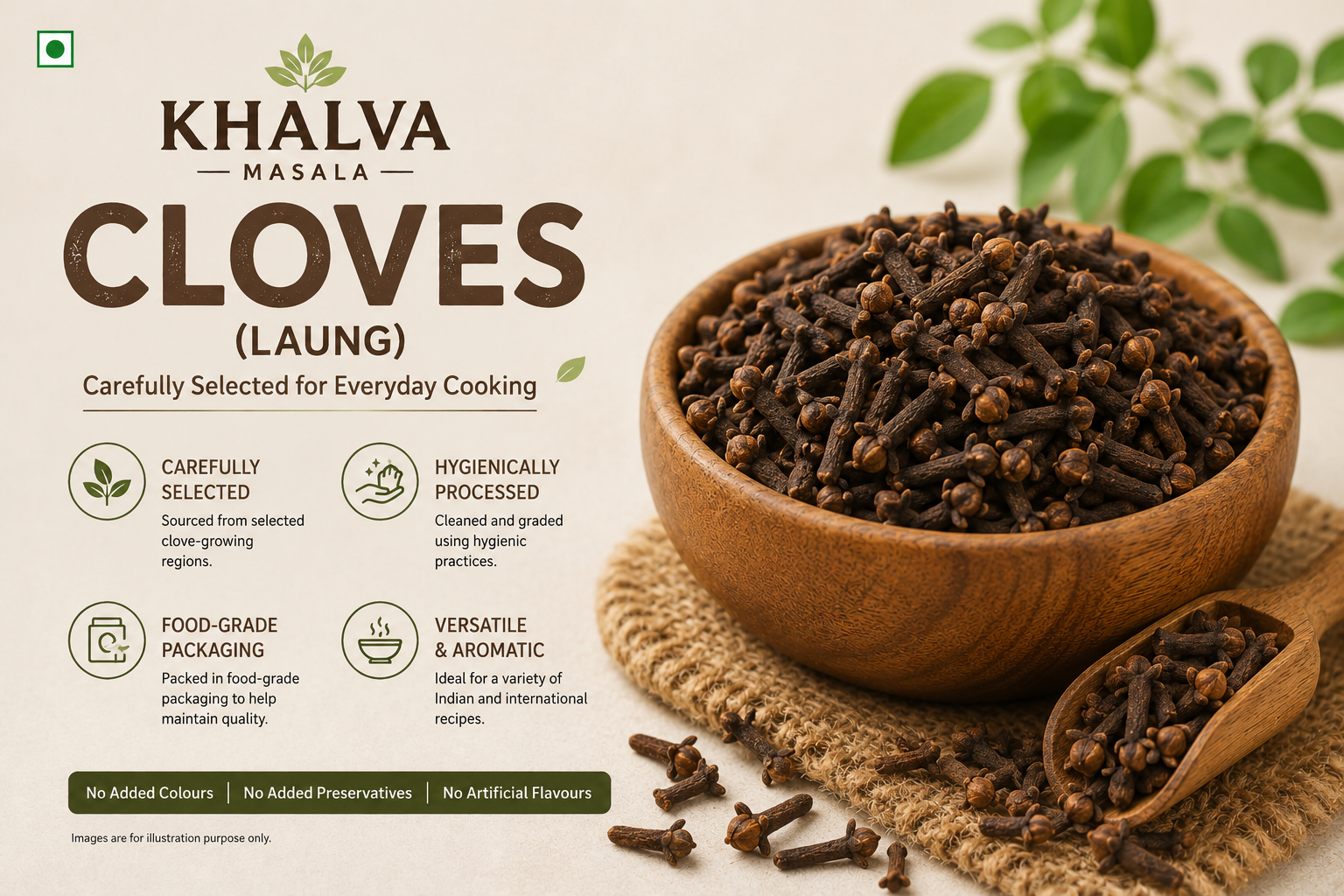
Cloves, commonly known as Laung, are the dried, unopened flower buds of the Syzygium aromaticum tree, an evergreen plant belonging to the myrtle family. Renowned for their intense aroma, warm flavour and rich essential oils, cloves have been treasured for centuries as one of the world’s most valuable spices.
Used both whole and ground, cloves add remarkable depth and fragrance to a wide range of dishes including biryanis, curries, pulao, masalas, desserts, baked goods and beverages. Even a small quantity is enough to impart their distinctive sweet-spicy flavour to recipes.
Beyond their culinary importance, cloves have long been valued in traditional food cultures for their aromatic qualities and versatility. Today, they remain an essential ingredient in Indian kitchens and are widely used in cuisines across Asia, Europe, the Middle East and many other parts of the world.
History & Origin of Cloves
Cloves are believed to have originated in the Maluku Islands, also known as the Spice Islands of present-day Indonesia. They have been cultivated and traded for more than two thousand years, making them one of the oldest and most prized spices in global history.
Ancient traders carried cloves along famous maritime trade routes to India, China, the Middle East and Europe. Their exceptional aroma, long shelf life and culinary versatility made them highly valuable commodities, often considered worth their weight in gold during certain periods of history.
Today, cloves are cultivated in several tropical countries, including India, Indonesia, Sri Lanka, Madagascar and Tanzania. Indian cloves are appreciated for their rich aroma and are widely used in traditional cuisine, spice blends and festive preparations.
Why are Cloves One of the World’s Most Valuable Spices?
Cloves are admired for their exceptionally rich aroma, warm flavour and remarkable versatility in cooking. Their powerful fragrance enhances both savoury and sweet dishes, making them an indispensable ingredient in numerous traditional and international cuisines.
Unlike many spices that contribute mainly flavour or colour, cloves provide an intense aromatic character even when used in small quantities. They are commonly added whole to rice dishes, curries and beverages or ground into spice blends to create complex layers of flavour.
Cloves naturally contain aromatic compounds such as Eugenol, which contribute to their distinctive fragrance and characteristic taste. Combined with centuries of culinary tradition and global popularity, cloves continue to be one of the world’s most cherished and widely traded spices.
Nutritional Information
Calories
274 kcal
Protein
5.9 g
Carbohydrates
65.5 g
Dietary Fiber
33.9 g
Fat
13.0 g
Iron
11.8 mg
Calcium
632 mg
Magnesium
259 mg
Potassium
1020 mg
Vitamin K
141.8 µg
*Approximate nutritional values per 100 grams of whole cloves. Values may vary depending on origin, cultivation methods and processing.
🌿 Natural Aroma & Active Compounds
Cloves are renowned for their powerful aroma and warm flavour, which come primarily from naturally occurring essential oils. The most important of these is Eugenol, a naturally occurring aromatic compound responsible for the characteristic fragrance and distinctive taste of cloves.
Cloves also naturally contain plant compounds such as Flavonoids, Tannins, Triterpenoids, Phenolic Compounds and essential oils. Together, these components contribute to the spice’s rich aroma, culinary importance and long-standing use in traditional food preparations.
Popular Types of Cloves
🌿 Indian Cloves
Highly aromatic cloves cultivated mainly in southern India and widely used in traditional cooking.
🌍 Indonesian Cloves
Known for their bold aroma and premium quality, originating from the historic Spice Islands.
🌱 Sri Lankan Cloves
Valued for their balanced flavour, excellent oil content and culinary versatility.
🟤 Whole Cloves
Perfect for biryanis, curries, rice dishes, teas and spice-infused beverages.
🥄 Ground Cloves
Finely powdered for baking, spice blends, desserts and everyday cooking.
✨ Organic Cloves
Cultivated using organic farming practices where certified production standards are followed.
Comparison of Popular Clove Types
| Type | Aroma | Best Use | Flavour |
|---|---|---|---|
| Indian Cloves | Strong | Curries & Garam Masala | Warm & Spicy |
| Indonesian Cloves | Very Strong | Premium Culinary Use | Rich & Aromatic |
| Sri Lankan Cloves | Medium | Everyday Cooking | Smooth & Balanced |
| Whole Cloves | High | Biryani, Rice & Tea | Bold & Aromatic |
| Ground Cloves | Medium | Baking & Spice Mixes | Warm & Sweet-Spicy |
| Organic Cloves | Varies | General Cooking | Natural |
Major Clove Producing States in India
- 🌿 Kerala
- 🌿 Tamil Nadu
- 🌿 Karnataka
- 🌿 Andhra Pradesh
- 🌿 Goa
- 🌿 Maharashtra (Konkan Region)
- 🌿 Andaman & Nicobar Islands
- 🌿 Odisha (Limited Cultivation)
Ideal Climate for Growing Cloves
Cloves thrive in warm, humid tropical climates with abundant rainfall and fertile, well-drained soil. They grow best in temperatures ranging between 20°C and 35°C and require consistent moisture without waterlogging for healthy tree growth.
Clove trees flourish in regions receiving high annual rainfall and partial shade during their early years. The trees generally begin flowering after several years of cultivation, and the unopened flower buds are carefully harvested by hand before they bloom to preserve their premium aroma and quality.
In India, Kerala, Tamil Nadu and Karnataka provide highly favourable climatic conditions for clove cultivation due to their tropical weather, rich soils and adequate rainfall, making these regions important producers of high-quality cloves.
Health Benefits of Cloves
Rich in Natural Antioxidants
Cloves naturally contain antioxidant plant compounds, including eugenol and flavonoids, that contribute to their nutritional value.
Traditionally Used in Digestive Foods
Cloves have long been included in traditional recipes and spice blends that complement balanced meals.
Supports Overall Wellness
When enjoyed as part of a varied diet, cloves contribute valuable nutrients and aromatic compounds.
Source of Essential Minerals
Cloves naturally provide minerals including manganese, calcium, magnesium and iron.
Naturally Aromatic
The high essential oil content gives cloves their distinctive warm aroma appreciated worldwide.
Contains Eugenol
Cloves naturally contain eugenol, one of their most recognized aromatic compounds.
Enhances Food Naturally
Its bold flavour helps enrich dishes while only small quantities are required in cooking.
Widely Used Worldwide
Cloves remain an important ingredient in Indian, Asian, Middle Eastern and European cuisines.
Popular in Beverages
Frequently used in tea, kahwa, mulled drinks and traditional spice-infused beverages.
Perfect for Spice Blends
An essential ingredient in garam masala, biryani masala and numerous traditional spice mixes.
Rich Culinary Heritage
Cloves have been valued in traditional cuisines and food cultures for centuries.
Versatile Kitchen Spice
Suitable for savoury recipes, desserts, baked goods, beverages and festive dishes.
🌿 Cloves in Ayurveda
Cloves (Laung) have been valued in Ayurveda for generations and are traditionally used as an aromatic culinary spice in numerous preparations. Their warming nature and pleasant fragrance make them an important ingredient in traditional Indian cooking.
Cloves are commonly added to herbal teas, spice blends, festive recipes and warming beverages. They are often paired with spices such as cinnamon, cardamom, black pepper and ginger to create balanced flavour profiles.
🌡️ Nature
Traditionally Considered Warming
🌿 Taste
Pungent, Sweet & Aromatic
🍽️ Traditional Use
Everyday Culinary Spice
🥄 Common Forms
Whole Cloves & Powder
☕ Popular Preparation
Herbal Tea & Masala Chai
🍛 Best Paired With
Cinnamon, Cardamom & Black Pepper
🌿 Kitchen Essential
Used in Traditional Indian Cooking
📜 Traditional Significance
Widely Mentioned in Classical Food Traditions
🌿 Why Cloves Have Been Valued for Centuries
Cloves are among the world’s most prized spices because of their exceptionally rich aroma, warm flavour and remarkable versatility. A small quantity can transform both savoury and sweet dishes with its unmistakable fragrance.
Across India and many other countries, cloves are indispensable in biryanis, curries, spice blends, teas and festive recipes. Their ability to blend harmoniously with numerous spices has made them a cornerstone of traditional cooking.
Whether used whole or ground, cloves continue to enrich kitchens around the world with their bold aroma and timeless culinary appeal.
🍛 Culinary Uses of Cloves
- Essential ingredient in biryani, pulao and rich Indian curries.
- Widely used in garam masala and traditional spice blends.
- Adds warm aroma to masala chai, kahwa and herbal teas.
- Used in marinades for paneer, vegetables and meat preparations.
- Enhances soups, stews and slow-cooked recipes.
- Popular in cakes, cookies, puddings and festive desserts.
- Frequently combined with cinnamon, cardamom and black pepper.
- Used whole in pickles and spice-infused oils.
- Adds fragrance to rice dishes and festive meals.
- Suitable for both traditional and modern recipes.
🏡 Traditional Home Uses
✨ Beauty & Lifestyle Uses
- Cloves are primarily valued as an aromatic culinary spice.
- Clove essential oil is used in selected personal care formulations.
- Their natural aroma makes them popular in potpourri and fragrance blends.
- Often included in traditional wellness and herbal preparations.
- Choose professionally formulated products containing clove extracts.
- Avoid applying concentrated clove oil directly to the skin unless properly diluted.
- Store cloves in airtight containers to preserve their aroma.
- Always use clean, dry utensils when handling whole cloves.
🥄 How to Use Cloves
- Add whole cloves while preparing biryani and pulao.
- Use in curries for deep aroma and flavour.
- Grind into powder for baking and spice mixes.
- Prepare masala chai using whole cloves.
- Blend with cinnamon and cardamom in homemade masalas.
- Use in soups and slow-cooked stews.
- Add to festive desserts and baked recipes.
- Include in pickles and infused beverages.
- Use sparingly because of their strong flavour.
- Adjust quantity according to recipe and personal preference.
🥄 Recommended Daily Intake
For most healthy adults, cloves are typically consumed in small culinary quantities. Approximately 1–2 whole cloves or about 0.5–1 gram per day is generally sufficient when included as part of a varied and balanced diet.
Individual dietary needs vary. If you are pregnant, breastfeeding, taking medication or have a specific medical condition, consult a qualified healthcare professional before consuming large quantities or concentrated clove supplements.
👨🍳 Chef’s Tip
Use whole cloves while cooking rice dishes, curries or stews and remove them before serving if preferred. Freshly grinding only the required quantity of cloves provides a richer aroma than pre-ground powder and enhances the flavour of both savoury dishes and desserts.
⚠️ Possible Side Effects of Excess Consumption
- Consuming excessive quantities of cloves may cause digestive discomfort in some individuals.
- Large amounts may cause irritation of the mouth or stomach because of their strong aromatic compounds.
- Some people may experience allergic reactions to cloves, although this is uncommon.
- Concentrated clove oil should only be used according to professional guidance.
- Very high intake of cloves or clove supplements may not be suitable for everyone.
- Use cloves as part of a balanced diet and avoid unnecessary overconsumption.
- If unusual symptoms occur after consuming cloves, seek medical advice.
- Moderation is the best approach for everyday culinary use.
🚫 Who Should Be Careful?
- People with known allergies to cloves or other members of the Myrtaceae family.
- Individuals with digestive sensitivities should consume according to personal tolerance.
- Pregnant or breastfeeding women should seek professional advice before consuming concentrated clove products.
- People taking blood-thinning medications should consult a healthcare professional before using clove supplements or essential oils.
- Children should consume cloves only in normal culinary quantities.
- Anyone with a medical condition requiring dietary restrictions should consult a qualified healthcare professional.
How Cloves are Grown
Seedling Selection
Healthy seedlings are selected to establish vigorous clove plantations.
Land Preparation
Fields with fertile, well-drained soil are prepared before planting.
Planting
Young clove saplings are planted with adequate spacing for healthy growth.
Tree Care
Regular watering, mulching, pruning and weed management help maintain healthy trees.
Harvesting
Unopened flower buds are carefully handpicked before they bloom.
Drying & Processing
The harvested buds are sun-dried until they develop their characteristic dark brown colour before grading and packing.
🚜 From Farm to Kitchen
📦 Storage Tips
- Store whole cloves in an airtight container.
- Keep them away from moisture, heat and direct sunlight.
- Use a cool, dry place for long-term storage.
- Always use a clean, dry spoon while handling.
- Whole cloves retain their aroma much longer than ground cloves.
- Grind only the required quantity for maximum freshness.
- Close the container immediately after every use.
- Avoid storing near the stove or steaming cookware.
- Check periodically for freshness and strong aroma.
- Use within the recommended shelf life for the best culinary experience.
How to Identify Good Quality Cloves
Premium-quality cloves are dark brown, well-formed, aromatic and rich in natural essential oils. They should be free from dust, mould, insects and excessive moisture. Whole cloves with tightly closed flower buds generally indicate better quality.
🌿 Appearance
Dark brown, clean and well-shaped unopened flower buds.
👃 Aroma
Strong, sweet and naturally spicy fragrance.
✨ Cleanliness
Free from dust, foreign matter and damaged buds.
💧 Moisture
Dry cloves without mould, softness or excess moisture.
🧪 Simple Home Checks for Cloves
Visual Inspection
Choose whole cloves that are dark brown, intact and free from impurities.
Aroma Check
Rub a clove gently between your fingers. Fresh cloves should release a strong, pleasant aroma.
Float Test
Good-quality cloves usually sink or stand upright in water because of their high essential oil content.
Oil Check
Press a clove gently with your fingernail. Fresh cloves may release a small amount of aromatic oil.
🛒 Buying Guide
- Purchase cloves from trusted and reputable food brands.
- Choose whole cloves with tightly closed flower buds and a uniform dark brown colour.
- Select cloves that have a rich, sweet and spicy aroma.
- Check the manufacturing and best-before dates before purchasing.
- Look for food-grade, well-sealed packaging.
- Whole cloves retain freshness longer than ground cloves.
- Avoid packages showing moisture, mould or insect infestation.
- Purchase quantities suitable for your regular cooking to maintain freshness.
🌍 India’s Position in Global Clove Production
India is an important producer and consumer of cloves, particularly in the southern states where tropical climatic conditions support cultivation. Although countries such as Indonesia and Madagascar are among the world’s leading producers, Indian-grown cloves are valued for their rich aroma, quality and culinary versatility.
Cloves play a significant role in Indian cuisine, spice processing and the food industry. They are widely used in households, restaurants and packaged spice blends, making them one of the country’s most important aromatic spices.
🌎 Major Export Destinations
- 🇺🇸 United States
- 🇦🇪 United Arab Emirates
- 🇬🇧 United Kingdom
- 🇨🇦 Canada
- 🇸🇦 Saudi Arabia
- 🇦🇺 Australia
- 🇩🇪 Germany
- 🇳🇱 Netherlands
- 🇲🇾 Malaysia
- 🇸🇬 Singapore
💡 Did You Know?
- Cloves are actually the dried flower buds of an evergreen tree.
- They originated in Indonesia’s famous Spice Islands.
- Clove trees can continue producing flower buds for several decades.
- Eugenol is the primary natural compound responsible for the characteristic aroma of cloves.
- Only a few whole cloves are enough to flavour an entire pot of biryani or curry.
- Cloves are one of the essential ingredients in traditional garam masala.
- Whole cloves retain their aroma much longer than ground cloves.
- Cloves are widely used in Indian, Middle Eastern, European and Asian cuisines.
- Besides savoury dishes, cloves are popular in desserts, cakes and festive beverages.
- For centuries, cloves were among the world’s most valuable traded spices.
Frequently Asked Questions
What are cloves (laung)?
Cloves are the dried unopened flower buds of the Syzygium aromaticum tree and are widely used as an aromatic culinary spice.
Can cloves be used every day?
Yes. Small culinary quantities of cloves are commonly used in everyday cooking and beverages as part of a balanced diet.
Should I use whole cloves or clove powder?
Whole cloves are ideal for rice dishes, curries and teas, while clove powder is commonly used in baking, spice blends and desserts.
How should cloves be stored?
Store cloves in an airtight container in a cool, dry place away from moisture, heat and direct sunlight.
Can cloves be added to tea?
Yes. Whole cloves are commonly added to masala chai, herbal teas and other warm beverages for their rich aroma.
Which Indian state produces the most cloves?
Kerala is India’s leading clove-producing state, followed by Tamil Nadu and Karnataka.
Why do cloves have such a strong aroma?
Cloves naturally contain eugenol, an aromatic compound responsible for their distinctive fragrance and flavour.
Can cloves be used in desserts?
Yes. Ground cloves are widely used in cakes, cookies, puddings, festive sweets and baked recipes.
How long do whole cloves stay fresh?
When stored properly, whole cloves generally retain their quality and aroma much longer than ground cloves.
Why are cloves called one of the world’s most valuable spices?
Because of their intense aroma, rich essential oils, long history in global trade and exceptional culinary versatility, cloves have been prized for centuries.
📖 Final Thoughts
Cloves (Laung) have earned their place among the world’s most treasured spices through centuries of culinary tradition and global appreciation. Their warm aroma, bold flavour and remarkable versatility make them an indispensable ingredient in Indian kitchens and cuisines across the world.
Whether you’re preparing aromatic biryani, rich curries, masala chai, festive desserts or homemade spice blends, premium-quality cloves add depth, fragrance and character to every recipe. Choosing well-selected whole cloves and storing them properly ensures the best flavour and freshness.