Mustard Seeds (Sarson / Rai): The Complete Guide to India’s Ancient Spice
Discover everything about Mustard Seeds (Sarson / Rai)—their fascinating history, nutritional value, popular varieties, culinary uses, traditional importance, cultivation process, storage tips, buying guide and much more. This comprehensive guide explains why mustard seeds remain one of the most essential spices in Indian kitchens and cuisines around the world.
Quick Facts About Mustard Seeds
🌿 Scientific Name
Brassica juncea, Brassica nigra & Sinapis alba
🏠 Plant Family
Brassicaceae (Mustard Family)
🇮🇳 Hindi Names
Sarson (सरसों) & Rai (राई)
🌍 Origin
Mediterranean Region & Central Asia
🎨 Colour
Yellow, Brown & Black
👃 Aroma
Pungent, Earthy & Nutty
🌶 Taste
Sharp, Peppery & Slightly Bitter
🌡 Climate
Cool & Dry Winter Climate
📅 Harvest Season
February – April
🧺 Shelf Life
12–18 Months
⭐ Main Compounds
Glucosinolates, Sinigrin & Allyl Isothiocyanate
🍛 Common Uses
Tempering, Pickles, Curries, Mustard Oil & Spice Blends
What are Mustard Seeds (Sarson / Rai)?
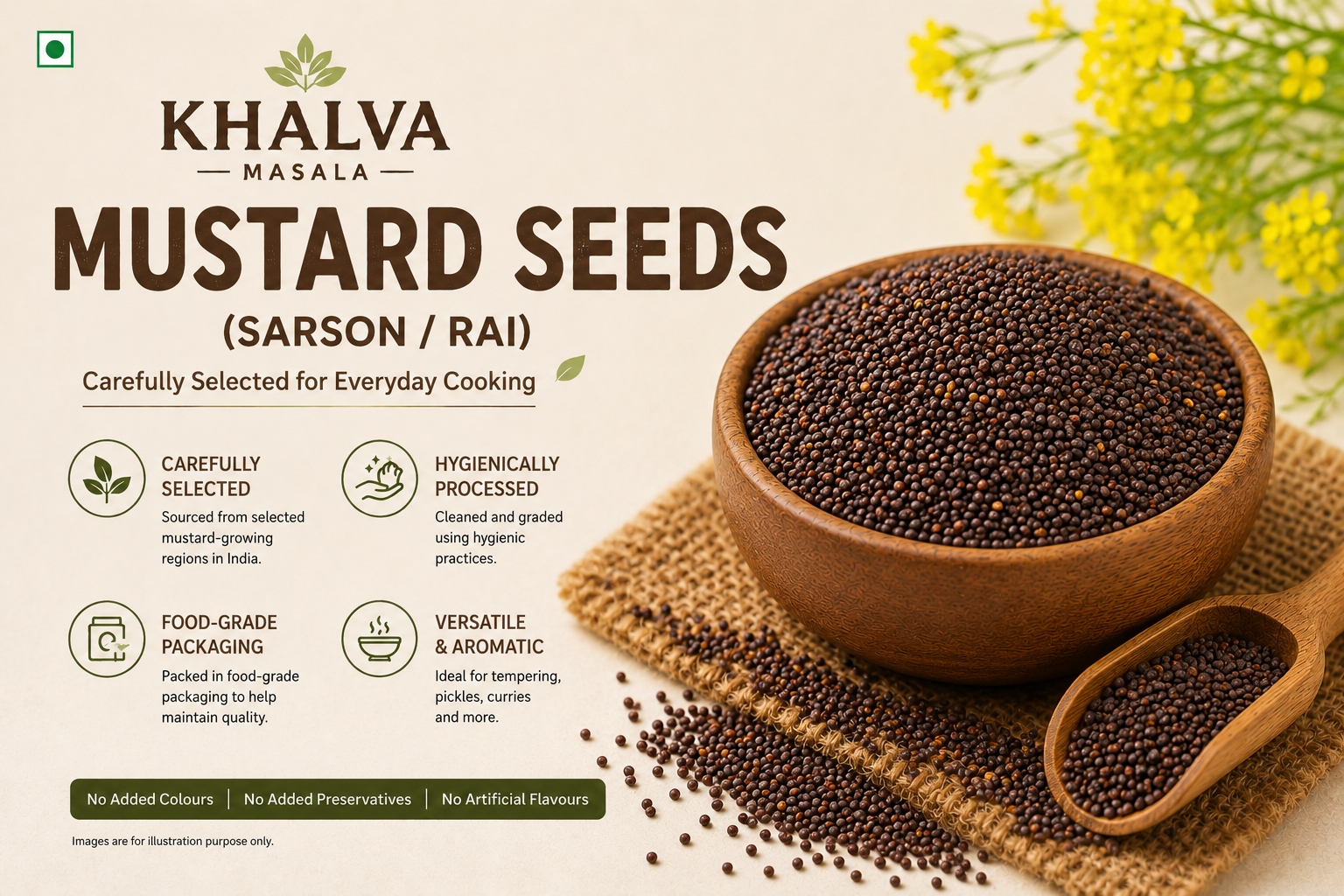
Mustard seeds, popularly known as Sarson and Rai in India, are tiny round seeds obtained from plants belonging to the Brassica family. Despite their small size, these seeds are packed with bold flavour and have been an integral part of Indian cooking for thousands of years.
Available in yellow, brown and black varieties, mustard seeds are widely used for tempering (tadka), pickles, curries, spice blends and mustard oil production. When heated in oil, the seeds crackle and release a rich, nutty aroma that enhances the flavour of countless dishes.
Mustard seeds are not only valued for their culinary versatility but also for their importance in agriculture, traditional food culture and regional cuisines across India. From everyday home cooking to festive recipes, Sarson and Rai continue to be indispensable ingredients in millions of kitchens worldwide.
History & Origin of Mustard Seeds
Mustard is considered one of the oldest cultivated spice crops in human history. Archaeological evidence suggests that mustard seeds were used more than 5,000 years ago in ancient civilizations across the Mediterranean region, Central Asia and the Indian subcontinent.
Over centuries, mustard spread through international trade routes and became an essential crop in Europe, Asia and Africa. In India, mustard has long been associated with agriculture, traditional cuisine and rural life, with its seeds and oil becoming staples in countless regional recipes.
Today, India is among the world’s largest producers and consumers of mustard. The spice remains deeply connected with Indian culinary traditions, especially in states such as Rajasthan, Uttar Pradesh, Haryana, Punjab and West Bengal.
Why are Mustard Seeds So Special?
Mustard seeds are admired for their distinctive sharp flavour, earthy aroma and exceptional versatility. Unlike many spices, they completely transform when heated, developing a pleasant nutty taste that forms the foundation of countless Indian dishes.
Whether used whole for tempering, ground into spice pastes or pressed to produce mustard oil, these tiny seeds contribute depth, aroma and character to recipes. Their ability to complement vegetables, lentils, curries, pickles and seafood makes them one of the most versatile spices in the culinary world.
Rich in naturally occurring compounds such as glucosinolates and allyl isothiocyanate, mustard seeds are recognized for their distinctive pungent flavour. Their long culinary history and widespread use continue to make Sarson and Rai indispensable ingredients in Indian and international cuisines.
Nutritional Information
Calories
508 kcal
Protein
26.1 g
Carbohydrates
28.1 g
Dietary Fiber
12.2 g
Fat
36.2 g
Calcium
266 mg
Iron
9.2 mg
Magnesium
370 mg
Potassium
738 mg
Selenium
208 µg
*Approximate nutritional values per 100 grams of mustard seeds. Values may vary depending on the variety, cultivation practices, growing conditions and processing methods.
🌿 Natural Aroma & Active Compounds
Mustard seeds are known for their sharp aroma and distinctive flavour, which develop when the seeds are crushed or heated. Their characteristic pungency comes from naturally occurring compounds called glucosinolates, especially sinigrin, which are converted into allyl isothiocyanate through natural enzymatic reactions.
In addition to these flavour compounds, mustard seeds naturally contain plant proteins, healthy fats, dietary fibre, minerals and antioxidant plant compounds. Together, these components contribute to the spice’s unique culinary qualities and long-standing popularity in kitchens around the world.
Popular Types of Mustard Seeds
🟡 Yellow Mustard
Mild in flavour with a gentle pungency. Popular in sauces, dressings and Western cuisine.
🟤 Brown Mustard (Rai)
The most widely used variety in Indian cooking, offering a balanced spicy flavour and rich aroma.
⚫ Black Mustard (Sarson)
Smaller seeds with a stronger, sharper flavour. Commonly used in pickles, curries and traditional recipes.
🥄 Mustard Powder
Finely ground mustard seeds used in spice blends, marinades, sauces and seasoning mixes.
🫙 Mustard Paste
Prepared by blending ground mustard with water, vinegar or spices for condiments and cooking.
🛢️ Mustard Oil
Extracted from mustard seeds and widely used in Indian cooking, especially in eastern and northern regions.
Comparison of Popular Mustard Seed Types
| Type | Colour | Flavour | Best Uses |
|---|---|---|---|
| Yellow Mustard | Yellow | Mild & Tangy | Sauces, Dressings & Pickling |
| Brown Mustard (Rai) | Brown | Moderately Pungent | Tempering, Curries & Spice Blends |
| Black Mustard (Sarson) | Black | Strong & Sharp | Pickles, Traditional Indian Dishes & Mustard Oil |
| Mustard Powder | Light Brown | Smooth & Spicy | Seasoning, Marinades & Baking |
| Mustard Paste | Yellow/Brown | Tangy & Spicy | Dips, Sauces & Sandwiches |
| Mustard Oil | Golden Yellow | Rich & Pungent | Cooking, Pickling & Traditional Recipes |
Major Mustard Producing States in India
- 🌾 Rajasthan (Largest Producer)
- 🌾 Uttar Pradesh
- 🌾 Haryana
- 🌾 Madhya Pradesh
- 🌾 West Bengal
- 🌾 Punjab
- 🌾 Bihar
- 🌾 Assam
- 🌾 Gujarat
- 🌾 Jharkhand
Ideal Climate for Growing Mustard
Mustard is a cool-season (Rabi) crop that grows best in regions with mild winter temperatures and low humidity. It thrives in temperatures between 10°C and 25°C and requires bright sunlight during flowering and seed development for optimum yield.
Well-drained loamy or alluvial soils with good organic matter are ideal for mustard cultivation. The crop requires moderate irrigation, although timely winter rainfall can significantly improve productivity. Excessive rainfall or waterlogging during flowering and seed formation may reduce both yield and seed quality.
Rajasthan, Uttar Pradesh, Haryana, Madhya Pradesh and Punjab provide highly favourable climatic conditions for mustard cultivation, making these states the backbone of India’s mustard production.
How Mustard is Grown
Land Preparation
The field is ploughed thoroughly and enriched with organic manure to create a fertile seedbed.
Sowing
High-quality mustard seeds are sown during the Rabi season with proper spacing for healthy plant growth.
Crop Management
Regular irrigation, nutrient management and weed control help ensure vigorous plant development.
Flowering
Plants produce bright yellow flowers that later develop into slender seed pods.
Harvesting
Mature plants are harvested when the seed pods turn yellowish-brown and become dry.
Threshing & Cleaning
The harvested crop is threshed, cleaned, dried and graded before storage or processing.
🚜 From Farm to Kitchen
Health Benefits of Mustard Seeds
Rich in Natural Plant Compounds
Mustard seeds naturally contain glucosinolates, flavonoids and other beneficial plant compounds.
Natural Source of Antioxidants
They contain naturally occurring antioxidant compounds that contribute to a balanced diet.
Good Source of Healthy Fats
Mustard seeds naturally provide healthy unsaturated fats along with essential nutrients.
Rich in Protein
Compared to many spices, mustard seeds contain a relatively high amount of plant-based protein.
High in Dietary Fibre
The seeds naturally provide dietary fibre, making them a valuable ingredient in everyday meals.
Excellent Mineral Source
Mustard seeds naturally contain calcium, magnesium, selenium, phosphorus and iron.
Enhances Food Naturally
Only a small amount of mustard seeds is enough to add bold flavour and aroma to many dishes.
Popular Across World Cuisines
Used extensively in Indian, Asian, European and African cooking traditions.
Highly Versatile
Suitable for tempering, pickles, curries, spice blends, sauces and mustard oil production.
Traditional Culinary Heritage
One of the oldest cultivated spices with centuries of culinary importance across cultures.
Ideal for Preservation
Mustard seeds are widely used in traditional pickling due to their distinctive flavour.
Essential Kitchen Spice
An indispensable ingredient in countless Indian recipes, from everyday meals to festive dishes.
🌿 Mustard Seeds in Ayurveda
Mustard seeds (Sarson/Rai) have been valued in Ayurveda and traditional Indian food culture for centuries. They are traditionally regarded as a warming spice and are commonly used to enhance the flavour and aroma of a wide variety of dishes.
Mustard seeds are frequently combined with cumin, fenugreek, turmeric, curry leaves and asafoetida to prepare aromatic tempering for dals, vegetables and curries. Their bold flavour makes them one of the most widely used spices in Indian households.
🌡️ Nature
Traditionally Considered Warming
🌶️ Taste
Sharp, Pungent & Slightly Bitter
🍽️ Traditional Use
Daily Culinary Spice
🥄 Common Forms
Whole Seeds, Powder & Oil
🍛 Popular Preparation
Tadka, Pickles & Curries
🌿 Best Paired With
Cumin, Curry Leaves & Turmeric
🏡 Everyday Use
Essential Ingredient in Indian Kitchens
📜 Traditional Importance
Widely Used in Indian Culinary Heritage
🌿 Why Mustard Seeds Are One of India’s Most Important Spices
Mustard seeds are treasured for their bold flavour, nutty aroma and remarkable versatility. Their unique ability to crackle and release aromatic oils during tempering makes them an essential ingredient in countless Indian recipes.
From dals and vegetable dishes to pickles, curries, chutneys and mustard oil, Sarson and Rai play an important role in everyday cooking across different regions of India. They also contribute significantly to the country’s agricultural economy.
Whether used whole, ground into powder or pressed into mustard oil, these tiny seeds continue to enrich cuisines around the world with their distinctive flavour, rich tradition and culinary excellence.
🍛 Culinary Uses of Mustard Seeds
- Widely used for tempering (tadka) in dals, curries and vegetable dishes.
- An essential ingredient in traditional Indian pickles and achar.
- Used to prepare mustard oil for cooking and food preservation.
- Ground into mustard paste for curries, marinades and regional recipes.
- Commonly added to sambhar, rasam and South Indian chutneys.
- Enhances the flavour of fish, seafood and Bengali mustard-based dishes.
- Used in spice blends, seasoning mixes and masalas.
- Pairs perfectly with curry leaves, cumin, fenugreek and asafoetida.
- Popular in salad dressings, sauces and homemade condiments.
- Suitable for both traditional Indian cuisine and international recipes.
🏡 Traditional Home Uses
✨ Beauty & Lifestyle Uses
- Mustard seeds are primarily valued as an important culinary spice.
- Mustard oil has traditionally been used in various household and personal care practices.
- Mustard seed extracts are included in selected cosmetic and skincare products.
- The seeds are commonly used in traditional food preservation methods.
- Choose professionally formulated products containing mustard extracts.
- Avoid applying concentrated mustard essential preparations directly to the skin unless properly diluted.
- Store mustard seeds in airtight containers to preserve freshness and flavour.
- Always use clean, dry utensils while handling mustard seeds or mustard powder.
🥄 How to Use Mustard Seeds
- Heat oil first, then add mustard seeds until they begin to crackle.
- Use for tempering dals, curries and vegetable preparations.
- Add to homemade pickles for authentic flavour.
- Grind into fresh mustard paste for regional recipes.
- Mix with other whole spices while preparing homemade masalas.
- Use mustard oil where traditionally preferred for cooking.
- Add to soups, stews and lentil dishes for extra depth of flavour.
- Lightly roast before grinding for a richer aroma.
- Use in moderation because of its naturally strong flavour.
- Adjust the quantity according to the recipe and personal preference.
🥄 Recommended Daily Intake
Mustard seeds are generally consumed in small culinary quantities. Around ½–1 teaspoon (approximately 2–5 grams) per day is commonly used in cooking as part of a balanced diet.
Individual dietary needs vary. If you are pregnant, breastfeeding, taking medication or have an existing medical condition, consult a qualified healthcare professional before consuming large quantities or concentrated mustard supplements.
👨🍳 Chef’s Tip
Always add mustard seeds to properly heated oil and allow them to crackle before adding other ingredients. This simple step releases their rich nutty aroma while reducing bitterness, giving dals, curries, vegetables and pickles their authentic flavour. Store mustard seeds in an airtight container away from moisture and sunlight to preserve their freshness and natural pungency.
⚠️ Possible Side Effects of Excess Consumption
- Excessive consumption of mustard seeds may cause digestive discomfort in some individuals.
- Their naturally pungent compounds may irritate the mouth, throat or stomach when consumed in very large quantities.
- Some people may be allergic to mustard, which is a recognized food allergen in many countries.
- Concentrated mustard oil or mustard extracts should only be used according to professional guidance.
- Overconsumption of mustard products is not recommended as part of a balanced diet.
- If you experience any allergic reaction after consuming mustard, discontinue use immediately and seek medical advice.
- Use mustard seeds in moderate culinary quantities for the best flavour and safety.
- Always purchase food-grade mustard seeds from trusted brands.
🚫 Who Should Be Careful?
- People with a known mustard allergy should completely avoid mustard seeds and mustard products.
- Individuals with sensitive digestive systems should consume mustard according to personal tolerance.
- Pregnant or breastfeeding women should consult a healthcare professional before consuming concentrated mustard supplements.
- People taking medication or following special dietary plans should seek professional guidance before regularly consuming large quantities.
- Children should consume mustard only in normal culinary quantities.
- Anyone with specific medical conditions should consult a qualified healthcare professional before making major dietary changes.
📦 Storage Tips
- Store mustard seeds in an airtight container.
- Keep them in a cool, dry place away from direct sunlight.
- Protect the seeds from moisture to maintain freshness.
- Always use a clean and dry spoon while handling the seeds.
- Whole mustard seeds stay fresh much longer than ground mustard.
- Grind only the quantity required for immediate use.
- Close the container tightly after every use.
- Keep away from strong-smelling foods to preserve their natural aroma.
- Regularly inspect the seeds for freshness and natural colour.
- Use within the recommended shelf life for the best flavour.
How to Identify Good Quality Mustard Seeds
Premium-quality mustard seeds should be clean, uniform in size and naturally coloured according to their variety. Fresh seeds have a pleasant pungent aroma, are free from excess moisture and contain no dust, insects or foreign particles.
🎨 Appearance
Uniform colour, clean surface and evenly sized seeds without visible impurities.
👃 Aroma
Fresh mustard should have a characteristic sharp and earthy aroma.
✨ Cleanliness
Free from dust, stones, insects, mould and foreign matter.
🌿 Texture
Dry, hard and smooth seeds without signs of moisture or damage.
🧪 Simple Home Quality Checks
Visual Check
Look for clean, uniform seeds with natural colour and no foreign particles.
Aroma Test
Crush a few seeds gently. Fresh mustard releases a sharp, pleasant aroma.
Texture Check
The seeds should feel hard, dry and free from moisture.
Purity Check
Inspect carefully for dust, stones, damaged seeds or other impurities before use.
🛒 Buying Guide
- Purchase mustard seeds from trusted and reputed food brands.
- Select clean, uniformly sized seeds with a natural colour.
- Check the manufacturing and best-before dates before purchasing.
- Choose hygienically packed, food-grade products.
- Whole mustard seeds generally retain freshness longer than mustard powder.
- Avoid packages showing moisture, insects or damaged seeds.
- Buy quantities suitable for your regular cooking needs to maintain freshness.
- Transfer the seeds to an airtight container immediately after opening.
🌍 India’s Position in Global Mustard Production
India is one of the world’s largest producers, consumers and processors of mustard seeds. The crop plays a vital role in the country’s agricultural economy and is cultivated extensively during the Rabi season across northern and central India.
Mustard is not only an important spice crop but also a major oilseed crop. A significant portion of India’s mustard harvest is processed into mustard oil, while the remaining seeds are used in cooking, spice blends, pickles and the food processing industry.
With strong domestic demand and increasing international interest in Indian spices, mustard seeds continue to be an important agricultural commodity and a valuable export product.
🌎 Major Export Destinations
- 🇺🇸 United States
- 🇨🇦 Canada
- 🇦🇪 United Arab Emirates
- 🇬🇧 United Kingdom
- 🇦🇺 Australia
- 🇸🇬 Singapore
- 🇲🇾 Malaysia
- 🇸🇦 Saudi Arabia
- 🇩🇪 Germany
- 🇳🇵 Nepal
💡 Did You Know?
- Mustard is one of the oldest cultivated spice crops, with a history of more than 5,000 years.
- India is among the world’s largest producers and consumers of mustard seeds.
- Mustard belongs to the Brassicaceae (cabbage) family.
- There are three main culinary varieties—yellow, brown and black mustard seeds.
- Mustard seeds begin to crackle when added to hot oil, releasing their distinctive aroma.
- Mustard oil is a preferred cooking medium in many regions of India, especially the east and north.
- Yellow mustard is commonly used in Western sauces and condiments, while brown and black mustard dominate Indian cuisine.
- Mustard flowers create beautiful golden-yellow fields during the winter season.
- Mustard seeds are an essential ingredient in traditional Indian pickles and spice blends.
- Even a small quantity of mustard seeds can dramatically enhance the flavour and aroma of a dish.
Frequently Asked Questions
What are Mustard Seeds (Sarson/Rai)?
Mustard seeds are tiny edible seeds obtained from plants of the Brassica family. They are widely used for tempering, pickling, spice blends and mustard oil production.
What is the difference between Sarson and Rai?
In India, Sarson generally refers to black mustard, while Rai commonly refers to brown mustard. The names may vary depending on the region and local language.
Can mustard seeds be used every day?
Yes. Mustard seeds are commonly used in small culinary quantities as part of everyday cooking and a balanced diet.
Why do mustard seeds crackle in hot oil?
As the seeds heat up, internal moisture turns into steam, causing them to pop and release their natural aroma and flavour.
Which mustard seed is best for Indian cooking?
Brown mustard (Rai) and black mustard (Sarson) are the most commonly used varieties in Indian cuisine.
How should mustard seeds be stored?
Store them in an airtight container in a cool, dry place away from moisture, heat and direct sunlight.
Can mustard seeds be ground into powder?
Yes. Freshly ground mustard powder is widely used in spice blends, marinades, sauces and traditional recipes.
Which Indian states produce the most mustard?
Rajasthan is the largest producer, followed by Uttar Pradesh, Haryana, Madhya Pradesh, Punjab and West Bengal.
What gives mustard seeds their sharp flavour?
Natural compounds such as glucosinolates and allyl isothiocyanate are responsible for mustard’s characteristic pungent taste and aroma.
Why are mustard seeds so important in Indian cuisine?
They provide a distinctive nutty aroma during tempering and are indispensable in dals, curries, vegetables, pickles and many regional dishes.
📖 Final Thoughts
Mustard Seeds (Sarson/Rai) are among India’s oldest and most treasured spices. Their bold flavour, rich aroma and remarkable versatility make them indispensable in tempering, curries, pickles, spice blends and traditional regional cuisines.
Whether you prefer yellow, brown or black mustard seeds, choosing premium-quality products and storing them properly helps preserve their freshness, natural aroma and authentic flavour. With centuries of culinary heritage behind them, mustard seeds continue to bring depth, character and tradition to kitchens around the world.