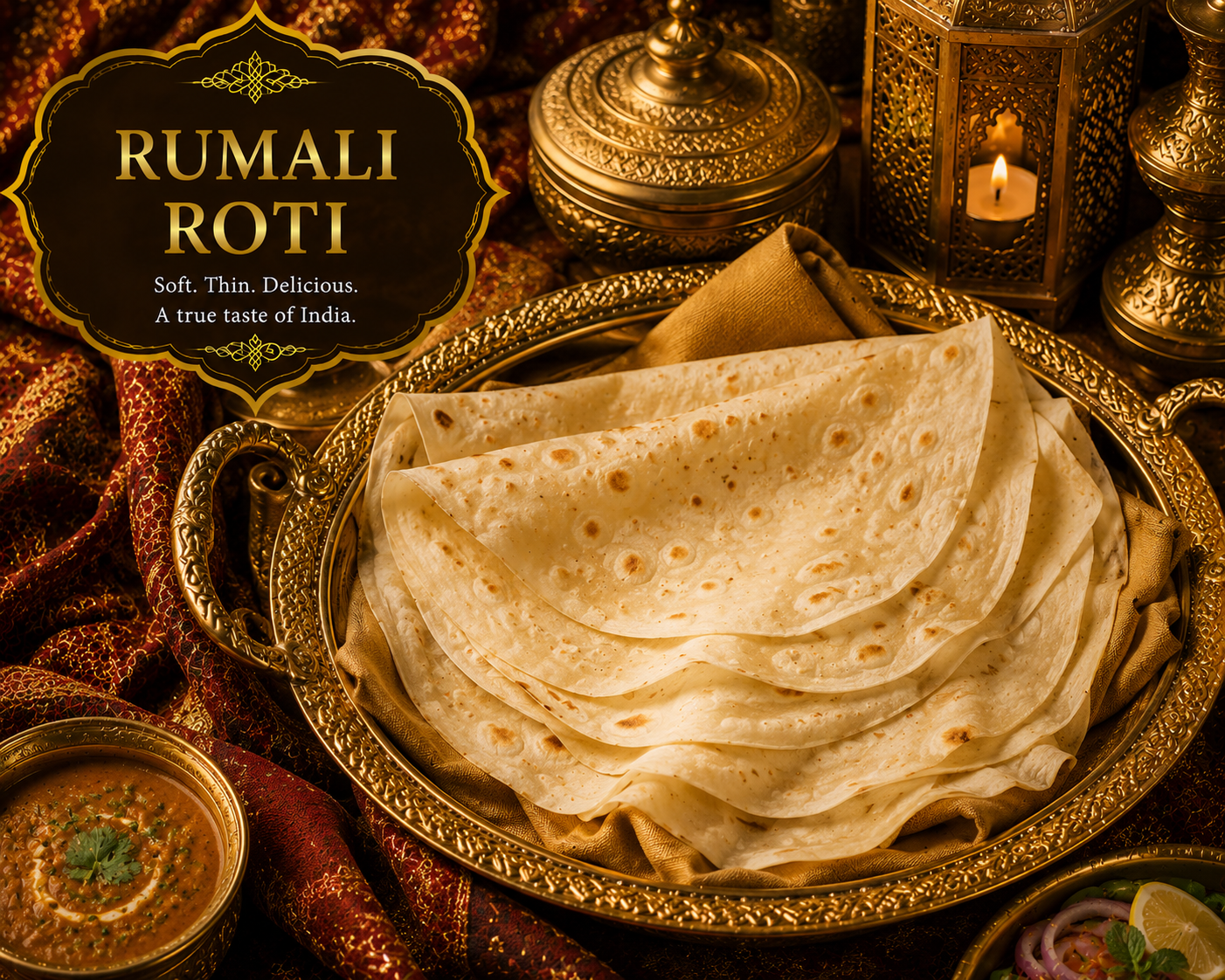
Rumali Roti Recipe | Soft & Thin Restaurant-Style Rumali Roti
Learn how to make soft, paper-thin Rumali Roti at home with this authentic restaurant-style recipe. Known for its delicate texture and handkerchief-like appearance, Rumali Roti pairs perfectly with kebabs, curries, tandoori dishes, and rich Mughlai gravies. This easy step-by-step recipe will help you achieve soft, flexible, and beautifully thin rotis every time.
Recipe Overview
Recipe Summary
Prep Time
50 Min
Cook Time
20 Min
Total Time
1 Hr 10 Min
Difficulty
Medium
Yield
8 Rotis
Calories
140 kcal
About This Recipe
Rumali Roti is a traditional North Indian flatbread famous for its incredibly thin texture and soft, foldable nature. The name “Rumali” comes from the Hindi word “Rumal,” meaning handkerchief, because the roti is thin enough to be folded like a cloth.
Traditionally cooked on the inverted side of a large convex iron griddle over high heat, Rumali Roti is commonly served in Mughlai restaurants alongside rich curries, kebabs, tandoori dishes, and creamy gravies.
This homemade version uses simple pantry ingredients and a few professional techniques to help you achieve soft, stretchy, restaurant-style Rumali Rotis.
Why You’ll Love This Rumali Roti Recipe
- Authentic restaurant-style results.
- Soft and flexible texture.
- Paper-thin appearance.
- Made with simple ingredients.
- Perfect with rich curries.
- Impressive dinner-party bread.
- No yeast required.
- Traditional Mughlai flavor.
- Budget-friendly recipe.
- Easy to customize.
What Makes Rumali Roti Special?
Unlike regular rotis or naan, Rumali Roti is rolled extremely thin and cooked quickly over intense heat. The unique dough composition and resting process create elasticity that allows the bread to stretch without tearing.
Its delicate texture makes it ideal for scooping up rich gravies and wrapping around kebabs, making it one of the most elegant Indian breads.
Main Ingredients
For Kneading
Optional Enhancements
For Serving
Equipment Needed
Ingredient Substitutions
- All-purpose flour can be partially replaced with wheat flour.
- Milk may be replaced with yogurt for softness.
- Vegetable oil can replace any neutral cooking oil.
- Butter can be used instead of oil for richer flavor.
- Plant-based milk works well for a dairy-free version.
- Garlic butter may replace plain butter for serving.
- Whole wheat flour can be used, though the rotis may be slightly less elastic.
- Olive oil can replace regular cooking oil.
- Fine semolina can be added for extra texture.
- Fresh herbs can be sprinkled before serving.
Step-by-Step Instructions
Combine the Dry Ingredients
Add all-purpose flour, wheat flour, and salt to a large mixing bowl.
Mix thoroughly until evenly combined.
👨🍳 Chef Tip: Combining two flours creates the perfect balance of softness and elasticity.
Add Oil and Milk
Pour in the oil and milk.
Mix until the flour resembles coarse crumbs.
👨🍳 Chef Tip: Oil helps create softer and more flexible rotis.
Knead the Dough
Gradually add warm water and knead into a smooth dough.
Continue kneading for 8–10 minutes.
👨🍳 Chef Tip: A well-kneaded dough is essential for achieving paper-thin rotis.
Apply Oil
Lightly coat the dough with a small amount of oil.
This prevents drying during resting.
👨🍳 Chef Tip: Oiling the dough improves elasticity.
Rest the Dough
Cover with a damp cloth and rest for 30–40 minutes.
Allow the gluten to relax completely.
👨🍳 Chef Tip: Proper resting makes rolling much easier.
Divide Into Portions
Divide the dough into equal-sized balls.
Keep them covered while working.
👨🍳 Chef Tip: Covered dough balls stay soft and manageable.
Dust and Flatten
Lightly dust each dough ball with flour.
Flatten gently using your palms.
👨🍳 Chef Tip: Use minimal flour to avoid dryness.
Roll Very Thin
Roll each dough ball into an extremely thin circle.
Aim for a nearly translucent appearance.
👨🍳 Chef Tip: Thin rolling is the signature characteristic of Rumali Roti.
Preheat the Cooking Surface
Heat an inverted kadai or convex tawa on high heat.
Allow it to become thoroughly hot.
👨🍳 Chef Tip: High heat helps cook the roti within seconds.
Cook the Roti
Carefully place the rolled roti on the hot inverted surface.
Cook for a few seconds until bubbles appear.
👨🍳 Chef Tip: Rumali Roti cooks extremely quickly, so stay attentive.
Flip and Finish
Turn the roti and cook briefly on the other side.
Remove as soon as light brown spots develop.
👨🍳 Chef Tip: Overcooking may make the roti brittle.
Fold and Serve
Fold the hot roti into quarters like a handkerchief.
Keep covered until serving.
👨🍳 Chef Tip: Covering helps retain softness and flexibility.
👨🍳 Perfect Rumali Roti Secrets
- Knead the dough thoroughly.
- Allow proper resting time.
- Use warm water for kneading.
- Keep the dough soft but not sticky.
- Roll the dough very thin.
- Preheat the cooking surface completely.
- Cook over high heat.
- Avoid overcooking.
- Keep cooked rotis covered.
- Serve immediately for the best texture.
🫓 Perfect Thin Roti Guide
The ideal Rumali Roti should be thin enough to fold easily while remaining strong enough to hold curries and kebabs.
🌟 Dough Elasticity Secrets
Elasticity comes from proper kneading, resting, and hydration. The dough should feel smooth, supple, and slightly stretchy before rolling.
Allowing the dough to rest gives the gluten structure time to relax, making it easier to roll into large, thin circles without shrinking.
🔥 Restaurant Cooking Technique
Traditional chefs cook Rumali Roti on an inverted iron griddle heated to a very high temperature. The bread cooks in seconds and develops soft, delicate layers while remaining flexible.
Using a hot inverted kadai at home closely mimics this traditional technique.
❌ Common Mistakes to Avoid
- Using a stiff dough.
- Skipping the resting period.
- Rolling unevenly.
- Using too much dusting flour.
- Cooking on low heat.
- Overcooking the roti.
- Leaving cooked rotis uncovered.
- Making the dough too dry.
- Using a cold cooking surface.
- Rushing the kneading process.
Popular Rumali Roti Variations
- 🫓 Classic Rumali Roti
- 🧄 Garlic Rumali Roti
- 🧈 Butter Rumali Roti
- 🌿 Herb Rumali Roti
- 🌾 Whole Wheat Rumali Roti
- 🧀 Cheese Rumali Wrap
- 🌶 Spicy Masala Rumali Roti
- 🥬 Spinach Rumali Roti
- 🌱 Vegan Rumali Roti
- 🍢 Rumali Roti Rolls
🍽️ Serving Suggestions
Rumali Roti pairs wonderfully with rich North Indian and Mughlai dishes such as Butter Chicken, Chicken Tikka Masala, Kadai Paneer, Paneer Butter Masala, Dal Makhani, Mutton Rogan Josh, and Seekh Kebabs.
Its soft and thin texture also makes it perfect for wraps, rolls, and kebab platters. Serve warm immediately after cooking for the best experience.
🧊 Storage & Reheating Guide
🧊 Refrigerator
Store in an airtight container for up to 2 days.
❄️ Freezer
Freeze with parchment paper between rotis for up to 1 month.
🔥 Reheating
Warm briefly on a hot tawa and keep covered to retain softness.
Make Ahead Tips
- Prepare the dough several hours ahead.
- Allow extra resting time for softer rotis.
- Divide dough balls in advance.
- Keep dough covered to prevent drying.
- Roll rotis just before cooking.
- Cook and stack between clean kitchen towels.
- Freeze extra rotis for future meals.
- Reheat quickly before serving.
🥗 Nutrition Information (Approx. Per Roti)
Nutritional values are approximate and may vary depending on ingredients and portion size.
Calories
Protein
Carbohydrates
Fat
Fiber
Sodium
❤️ Health Highlights
- Lower in fat than many enriched breads.
- Provides energy-rich carbohydrates.
- Contains moderate protein.
- Can be made with whole wheat flour.
- Suitable for vegetarian meals.
- Pairs well with protein-rich curries.
- Contains simple pantry ingredients.
- Can be adapted for healthier meal plans.
💡 Did You Know?
Rumali Roti gets its name from the Hindi word “Rumal,” meaning handkerchief. Traditional chefs often toss and stretch the dough skillfully before cooking it on an inverted griddle, creating an ultra-thin bread that can be folded like a cloth.
Frequently Asked Questions
Why is my Rumali Roti not soft?
Insufficient kneading, lack of resting time, or overcooking can cause stiffness.
Can I make Rumali Roti without maida?
Yes, but the texture may be less stretchy and slightly denser.
Why does my dough shrink while rolling?
The dough likely needs more resting time for the gluten to relax.
Can I cook Rumali Roti on a regular tawa?
Yes, though an inverted kadai or convex tawa provides more authentic results.
How thin should Rumali Roti be?
It should be very thin, almost translucent, but not so thin that it tears easily.
Can I freeze cooked Rumali Rotis?
Yes, separate them with parchment paper before freezing.
What is the best flour combination?
A mixture of all-purpose flour and wheat flour gives excellent elasticity and flavor.
Can I brush butter on top?
Absolutely. Butter enhances flavor and helps retain softness.
How do restaurants make them so thin?
Professional chefs use highly elastic dough and special stretching techniques.
What dishes pair best with Rumali Roti?
Mughlai curries, kebabs, paneer dishes, and rich gravies are ideal companions.
Related Recipes You May Like
Why This Rumali Roti Recipe Works
This recipe uses the perfect combination of flour, hydration, kneading, and resting to create a dough with excellent elasticity. Cooking over high heat ensures soft, flexible rotis with authentic restaurant-style texture and appearance.
🌟 Expert Serving Tip
Stack freshly cooked Rumali Rotis in a clean kitchen towel and keep them covered until serving. This traps steam and keeps the rotis exceptionally soft and pliable.
Chef’s Final Note
Rumali Roti may seem challenging at first, but with proper dough preparation and practice, you’ll achieve beautifully thin, soft rotis that rival your favorite restaurant. Focus on dough elasticity and high-heat cooking for the best results.
⭐ Rate This Recipe
If you enjoyed this Rumali Roti recipe, save it for future meals and share it with family and friends. Pair it with your favorite curries and kebabs for an authentic restaurant-style dining experience at home.