Cinnamon (Dalchini): The Complete Guide to Nature’s Sweet Spice
Discover everything about Cinnamon (Dalchini)—its fascinating history, nutritional value, popular varieties, culinary uses, traditional significance, cultivation process, storage tips, buying guide, and much more. This comprehensive guide explores why cinnamon has remained one of the world’s most cherished spices for centuries.
Quick Facts About Cinnamon
🌿 Scientific Name
Cinnamomum verum (True Cinnamon)
🏠 Plant Family
Lauraceae (Laurel Family)
🇮🇳 Hindi Name
Dalchini (दालचीनी)
🌍 Origin
Sri Lanka (Ceylon)
🎨 Colour
Light Brown to Reddish Brown
👃 Aroma
Sweet, Warm & Woody
🌶 Taste
Sweet, Mildly Spicy & Fragrant
🌡 Climate
Warm, Humid Tropical Climate
📅 Harvest Season
Twice a Year (Varies by Region)
🧺 Shelf Life
18–24 Months
⭐ Main Compound
Cinnamaldehyde
🍛 Common Uses
Curries, Desserts, Tea, Biryani, Baking & Spice Blends
What is Cinnamon (Dalchini)?
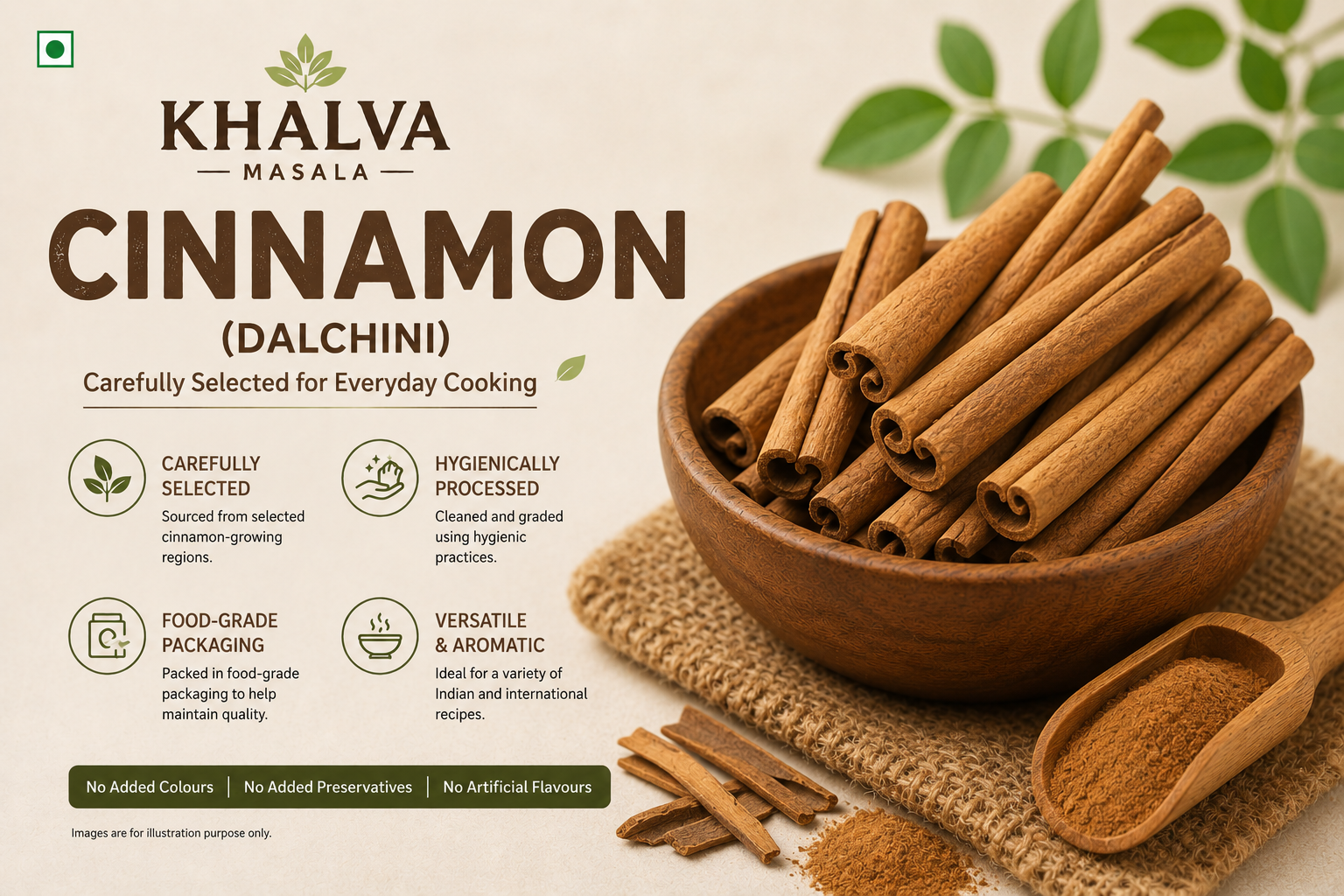
Cinnamon, popularly known as Dalchini in India, is one of the world’s oldest and most treasured spices. It is obtained from the inner bark of trees belonging to the Cinnamomum genus. Once harvested, the bark naturally curls into the familiar cinnamon quills as it dries, developing its characteristic sweet aroma and warm flavour.
Cinnamon is widely used in Indian, Asian, Middle Eastern and Western cuisines. Whether used as whole sticks or finely ground powder, it enhances curries, biryanis, desserts, baked goods, beverages and spice blends with its distinctive sweet and woody fragrance.
Beyond its culinary appeal, cinnamon has been valued for centuries in traditional food cultures because of its pleasant aroma and versatility. Today, it remains an indispensable spice in kitchens around the world.
History & Origin of Cinnamon
Cinnamon has a history spanning more than four thousand years and is considered one of the oldest known spices. It is believed to have originated in Sri Lanka (formerly Ceylon), where true cinnamon has been cultivated for centuries.
Ancient traders transported cinnamon along famous spice routes to India, the Middle East, Egypt and Europe. During medieval times, it became one of the world’s most valuable commodities and symbolized wealth, luxury and fine cuisine.
Today, cinnamon is cultivated in several tropical countries including Sri Lanka, India, Indonesia, Vietnam and China. Indian households continue to use cinnamon extensively in traditional recipes, festive dishes and aromatic spice blends.
Why is Cinnamon One of the World’s Most Loved Spices?
Cinnamon is admired for its naturally sweet aroma, delicate woody flavour and incredible versatility. Unlike many spices that contribute only heat or colour, cinnamon brings warmth, sweetness and depth to both savoury and sweet dishes.
It pairs beautifully with spices such as cloves, cardamom, black pepper, star anise and nutmeg, making it a key ingredient in countless spice blends, desserts, beverages and festive recipes around the world.
Cinnamon naturally contains aromatic compounds such as Cinnamaldehyde, which gives the spice its characteristic fragrance and flavour. Combined with its rich culinary heritage, this makes cinnamon one of the most cherished spices in global cuisine.
Nutritional Information
Calories
247 kcal
Protein
4.0 g
Carbohydrates
80.6 g
Dietary Fiber
53.1 g
Fat
1.2 g
Calcium
1002 mg
Iron
8.3 mg
Magnesium
60 mg
Potassium
431 mg
Manganese
17.5 mg
*Approximate nutritional values per 100 grams of cinnamon. Values may vary depending on the variety, origin, cultivation practices and processing methods.
🌿 Natural Aroma & Active Compounds
Cinnamon is prized for its naturally sweet aroma and warm flavour, which come from its rich essential oils and naturally occurring plant compounds. The primary aromatic compound in cinnamon is Cinnamaldehyde, responsible for its distinctive fragrance, sweet-spicy taste and characteristic woody aroma.
Cinnamon also naturally contains Eugenol (particularly in Ceylon cinnamon), Polyphenols, Flavonoids, Tannins and various antioxidant compounds. Together, these naturally occurring constituents contribute to cinnamon’s unique flavour profile and long-standing popularity in cuisines worldwide.
Popular Types of Cinnamon
🌿 Ceylon Cinnamon
Often called “True Cinnamon,” it offers a delicate, naturally sweet flavour and soft texture.
🌳 Cassia Cinnamon
The most widely available variety with a bold flavour, thicker bark and darker appearance.
🇮🇩 Indonesian Cinnamon
Popular for its sweet taste and commonly used in baking and spice blends.
🇻🇳 Vietnamese Cinnamon
Known for its intense aroma and naturally high essential oil content.
🥄 Cinnamon Powder
Finely ground cinnamon ideal for desserts, beverages, baking and everyday cooking.
🪵 Cinnamon Sticks
Perfect for curries, biryanis, tea, soups and slow-cooked recipes.
Comparison of Popular Cinnamon Types
| Type | Aroma | Best Use | Flavour |
|---|---|---|---|
| Ceylon Cinnamon | Sweet & Mild | Desserts & Premium Recipes | Delicate |
| Cassia Cinnamon | Strong | Curries & Everyday Cooking | Bold & Spicy |
| Indonesian Cinnamon | Medium | Baking & Spice Blends | Sweet |
| Vietnamese Cinnamon | Very Strong | Premium Culinary Use | Rich & Aromatic |
| Cinnamon Powder | Medium | Beverages & Baking | Sweet-Spicy |
| Cinnamon Sticks | High | Tea, Rice & Curries | Warm & Woody |
Major Cinnamon Producing States in India
- 🌿 Kerala
- 🌿 Karnataka
- 🌿 Tamil Nadu
- 🌿 Andhra Pradesh
- 🌿 Goa
- 🌿 Maharashtra (Konkan Region)
- 🌿 Odisha (Limited Cultivation)
- 🌿 North Eastern States (Experimental Cultivation)
Ideal Climate for Growing Cinnamon
Cinnamon grows best in warm, humid tropical climates with abundant rainfall and fertile, well-drained soils rich in organic matter. The crop thrives in temperatures ranging from 20°C to 30°C and performs exceptionally well in regions with consistently high humidity.
Young cinnamon plants require adequate moisture and partial shade during their initial growth stages. Once established, the trees can tolerate full sunlight and are periodically harvested by carefully cutting mature stems, from which the valuable inner bark is removed, processed and naturally dried into the familiar cinnamon quills.
In India, the favourable climatic conditions of Kerala, Karnataka and Tamil Nadu make these states ideal for cinnamon cultivation. Their tropical weather, fertile soils and regular rainfall help produce high-quality cinnamon with excellent aroma and flavour.
Health Benefits of Cinnamon
Rich in Natural Antioxidants
Cinnamon naturally contains antioxidant plant compounds, including polyphenols, that contribute to its nutritional value.
Traditionally Used in Everyday Cooking
Dalchini has been an important ingredient in traditional cuisines for centuries, adding warmth and aroma to numerous recipes.
Supports a Balanced Diet
When enjoyed in moderate culinary quantities, cinnamon contributes valuable nutrients and natural plant compounds.
Good Source of Minerals
Cinnamon naturally provides calcium, manganese, iron, magnesium and dietary fibre.
Naturally Aromatic
The essential oils in cinnamon provide its distinctive sweet aroma and pleasant woody fragrance.
Contains Cinnamaldehyde
Cinnamon naturally contains cinnamaldehyde, the primary compound responsible for its characteristic flavour and aroma.
Enhances Food Naturally
Only a small quantity of cinnamon is needed to enrich both sweet and savoury dishes.
Globally Popular Spice
Cinnamon is widely enjoyed in Indian, Asian, Middle Eastern, European and American cuisines.
Perfect for Beverages
Frequently used in masala chai, herbal tea, coffee, hot chocolate and festive drinks.
Essential in Spice Blends
A key ingredient in garam masala, biryani masala and numerous traditional spice mixes.
Centuries of Culinary Heritage
One of the oldest known spices, valued across civilizations for thousands of years.
Extremely Versatile
Suitable for curries, rice dishes, desserts, baked goods, beverages and spice blends.
🌿 Cinnamon in Ayurveda
Cinnamon (Dalchini) has been valued in Ayurveda for centuries and is traditionally used as a warming culinary spice. Its pleasant aroma and naturally sweet flavour make it an important ingredient in many traditional Indian food preparations.
Cinnamon is commonly added to herbal teas, spice blends, festive recipes and warm beverages. It is often paired with cloves, cardamom, ginger and black pepper to create balanced and aromatic flavour combinations.
🌡️ Nature
Traditionally Considered Warming
🌿 Taste
Sweet, Mildly Spicy & Aromatic
🍽️ Traditional Use
Everyday Culinary Spice
🥄 Common Forms
Whole Sticks & Powder
☕ Popular Preparation
Masala Chai & Herbal Tea
🍛 Best Paired With
Cloves, Cardamom & Ginger
🌿 Kitchen Essential
Used in Traditional Indian Cooking
📜 Traditional Importance
Highly Valued in Indian Culinary Heritage
🌿 Why Cinnamon Has Been Loved for Thousands of Years
Cinnamon is celebrated worldwide for its naturally sweet aroma, delicate woody flavour and exceptional versatility. It enhances both savoury and sweet recipes while blending beautifully with numerous spices.
Across India and many other countries, cinnamon is an essential ingredient in biryanis, curries, desserts, baked goods, masala chai and festive recipes. Its pleasant fragrance and warm taste have made it one of the world’s most recognizable spices.
Whether used as whole sticks or finely ground powder, cinnamon continues to bring warmth, richness and elegance to kitchens around the globe, making it a timeless favourite for home cooks and professional chefs alike.
🍛 Culinary Uses of Cinnamon
- Essential ingredient in biryani, pulao and rich Indian curries.
- Widely used in garam masala and traditional spice blends.
- Adds a sweet, warm aroma to masala chai, kahwa and herbal teas.
- Perfect for cakes, cookies, muffins, pies and other baked goods.
- Enhances soups, stews and slow-cooked recipes.
- Frequently used in desserts such as kheer, halwa and puddings.
- Pairs beautifully with cloves, cardamom, nutmeg and black pepper.
- Popular in festive beverages, hot chocolate and coffee.
- Used whole in rice dishes and slow-cooked gravies.
- Suitable for both traditional and modern recipes.
🏡 Traditional Home Uses
✨ Beauty & Lifestyle Uses
- Cinnamon is primarily valued as a premium culinary spice.
- Cinnamon essential oil is used in selected fragrance and personal care products.
- Its naturally pleasant aroma makes it popular in potpourri and home fragrance blends.
- Often included in traditional wellness and herbal preparations.
- Choose professionally formulated products containing cinnamon extracts.
- Avoid applying concentrated cinnamon essential oil directly to the skin unless properly diluted.
- Store cinnamon in airtight containers to preserve its aroma and flavour.
- Always use clean, dry utensils while handling cinnamon powder or sticks.
🥄 How to Use Cinnamon
- Add whole cinnamon sticks while preparing biryani and pulao.
- Use in curries, gravies and slow-cooked dishes for a warm aroma.
- Sprinkle cinnamon powder over oatmeal, fruits or yoghurt.
- Add to tea, coffee or hot chocolate for extra flavour.
- Use in homemade garam masala and spice blends.
- Mix into cakes, cookies, muffins and baked desserts.
- Blend into smoothies and festive beverages.
- Add to soups and stews for subtle sweetness.
- Use in moderation because of its naturally rich flavour.
- Adjust the quantity according to the recipe and personal preference.
🥄 Recommended Daily Intake
Cinnamon is generally enjoyed in small culinary quantities. About ½–1 teaspoon (approximately 1–3 grams) per day is commonly used in cooking and beverages as part of a balanced diet.
Individual dietary needs vary. If you are pregnant, breastfeeding, taking medication or have an existing medical condition, consult a qualified healthcare professional before consuming large quantities or concentrated cinnamon supplements.
👨🍳 Chef’s Tip
Add whole cinnamon sticks at the beginning of cooking to gradually infuse rich aroma into curries, rice dishes and soups. For desserts and beverages, freshly ground cinnamon delivers a sweeter, more vibrant flavour than pre-ground powder. Store cinnamon in an airtight container away from moisture and direct sunlight to preserve its natural freshness.
⚠️ Possible Side Effects of Excess Consumption
- Excessive consumption of cinnamon may cause digestive discomfort in some individuals.
- Large quantities may irritate the mouth or stomach because of its naturally active compounds.
- Some people may be allergic to cinnamon, although such reactions are uncommon.
- Concentrated cinnamon essential oil should only be used according to professional guidance.
- Very high intake of Cassia cinnamon may not be suitable for everyone because it naturally contains coumarin.
- Use cinnamon as part of a balanced diet and avoid unnecessary overconsumption.
- If unusual symptoms occur after consuming cinnamon, discontinue use and seek medical advice.
- Moderation is the best approach for everyday culinary use.
🚫 Who Should Be Careful?
- People with known allergies to cinnamon or other members of the Lauraceae family.
- Individuals with sensitive digestive systems should consume according to personal tolerance.
- Pregnant or breastfeeding women should seek professional advice before consuming concentrated cinnamon supplements.
- People taking blood-thinning medication should consult a healthcare professional before using cinnamon supplements.
- Children should consume cinnamon only in normal culinary quantities.
- Anyone with liver-related concerns or specific dietary restrictions should consult a qualified healthcare professional before consuming large amounts regularly.
How Cinnamon is Grown
Planting
Healthy cinnamon saplings are planted in fertile tropical soils with adequate spacing.
Tree Care
Regular watering, mulching, pruning and weed control help maintain healthy growth.
Maturity
The trees are allowed to mature until their stems develop suitable bark for harvesting.
Harvesting
Mature stems are carefully cut, and the outer bark is removed to expose the valuable inner bark.
Peeling
The inner bark is gently peeled into thin layers that naturally curl into cinnamon quills.
Drying & Packing
The cinnamon quills are naturally dried, graded and hygienically packed for distribution.
🚜 From Farm to Kitchen
📦 Storage Tips
- Store cinnamon sticks or powder in an airtight container.
- Keep away from moisture, heat and direct sunlight.
- Store in a cool, dry place for maximum freshness.
- Always use a clean, dry spoon when handling cinnamon powder.
- Whole cinnamon sticks retain their aroma longer than ground cinnamon.
- Grind only the required quantity whenever possible.
- Close the container tightly after every use.
- Avoid storing near the stove or steaming cookware.
- Regularly check for freshness and natural aroma.
- Use within the recommended shelf life for the best flavour.
How to Identify Good Quality Cinnamon
Premium-quality cinnamon should have a pleasant sweet aroma, clean appearance and natural light to reddish-brown colour. Good-quality cinnamon sticks are thin, tightly rolled and free from mould, moisture and foreign matter.
🎨 Appearance
Uniform light to reddish-brown colour with neatly rolled quills.
👃 Aroma
Sweet, warm and naturally fragrant without any musty smell.
✨ Cleanliness
Free from dust, insects, mould and foreign particles.
🌿 Texture
Dry, crisp and lightweight without excess moisture.
🧪 Simple Home Quality Checks
Visual Check
Choose clean, evenly coloured cinnamon sticks with thin rolled layers.
Aroma Test
Fresh cinnamon releases a naturally sweet and warm fragrance when gently rubbed.
Texture Check
Good-quality cinnamon should feel dry, light and crisp rather than damp.
Powder Check
Cinnamon powder should have a uniform colour and fresh aroma without lumps or moisture.
🛒 Buying Guide
- Purchase cinnamon from trusted and reputable food brands.
- Choose cinnamon sticks with a pleasant aroma and natural colour.
- Check the manufacturing and best-before dates before purchasing.
- Select hygienically packed, food-grade products.
- Whole cinnamon sticks usually retain freshness longer than ground powder.
- Avoid packages showing moisture, mould or damaged contents.
- Buy quantities that suit your regular cooking needs to maintain freshness.
- Store immediately in an airtight container after opening.
🌍 India’s Position in Global Cinnamon Production
India is an important producer and consumer of cinnamon, with cultivation concentrated mainly in the southern coastal states. While Sri Lanka is internationally renowned for producing premium Ceylon (True) Cinnamon, India contributes significantly to regional production and remains one of the world’s largest consumers of this aromatic spice.
Cinnamon plays a vital role in Indian cuisine, spice processing and the food industry. It is widely used in households, restaurants and packaged spice blends, making it one of the country’s most valued aromatic spices.
🌎 Major Export Destinations
- 🇺🇸 United States
- 🇦🇪 United Arab Emirates
- 🇬🇧 United Kingdom
- 🇨🇦 Canada
- 🇸🇦 Saudi Arabia
- 🇦🇺 Australia
- 🇩🇪 Germany
- 🇳🇱 Netherlands
- 🇲🇾 Malaysia
- 🇸🇬 Singapore
💡 Did You Know?
- Cinnamon is obtained from the inner bark of trees belonging to the Cinnamomum genus.
- As the bark dries, it naturally curls into the familiar cinnamon quills.
- True Cinnamon (Ceylon Cinnamon) is native to Sri Lanka.
- Cinnamon has been traded internationally for more than 4,000 years.
- Its characteristic aroma comes primarily from the natural compound cinnamaldehyde.
- Cinnamon is widely used in both sweet and savoury recipes across the world.
- Whole cinnamon sticks retain their flavour and aroma longer than ground cinnamon.
- It is one of the essential ingredients in garam masala and many traditional spice blends.
- Cinnamon is popular in teas, desserts, curries, biryanis and baked goods.
- For centuries, cinnamon was regarded as one of the world’s most valuable and luxurious spices.
Frequently Asked Questions
What is Cinnamon (Dalchini)?
Cinnamon is a fragrant spice obtained from the inner bark of trees belonging to the Cinnamomum genus. It is widely used in cooking, baking and beverages.
Can cinnamon be used every day?
Yes. Small culinary quantities of cinnamon are commonly used in daily cooking as part of a balanced diet.
What is the difference between Ceylon and Cassia cinnamon?
Ceylon cinnamon has a milder, sweeter flavour and softer bark, while Cassia cinnamon has a stronger taste, thicker bark and is more commonly available.
Should I use cinnamon sticks or cinnamon powder?
Cinnamon sticks are ideal for curries, rice dishes and tea, whereas cinnamon powder is convenient for baking, desserts and beverages.
How should cinnamon be stored?
Store cinnamon in an airtight container in a cool, dry place away from moisture, heat and direct sunlight.
Can cinnamon be added to tea or coffee?
Yes. Cinnamon is widely used in masala chai, herbal teas, coffee, hot chocolate and festive beverages.
Which Indian states produce cinnamon?
Kerala, Karnataka and Tamil Nadu are among the leading cinnamon-producing states in India.
Why does cinnamon have a sweet aroma?
Cinnamon naturally contains cinnamaldehyde and other aromatic compounds that provide its characteristic sweet and woody fragrance.
How long does cinnamon stay fresh?
When stored properly, whole cinnamon sticks generally retain their quality and aroma much longer than ground cinnamon.
Why is cinnamon one of the world’s most popular spices?
Its warm flavour, sweet aroma, versatility and centuries-long culinary history have made cinnamon a favourite spice across cultures worldwide.
📖 Final Thoughts
Cinnamon (Dalchini) is one of the world’s oldest and most treasured spices, admired for its sweet aroma, warm flavour and exceptional versatility. From traditional Indian cuisine to international desserts and beverages, cinnamon continues to enrich recipes with its distinctive fragrance and timeless appeal.
Whether you use whole cinnamon sticks for aromatic curries and rice dishes or ground cinnamon for baking and beverages, choosing premium-quality cinnamon and storing it properly helps preserve its natural flavour, aroma and freshness for every meal.