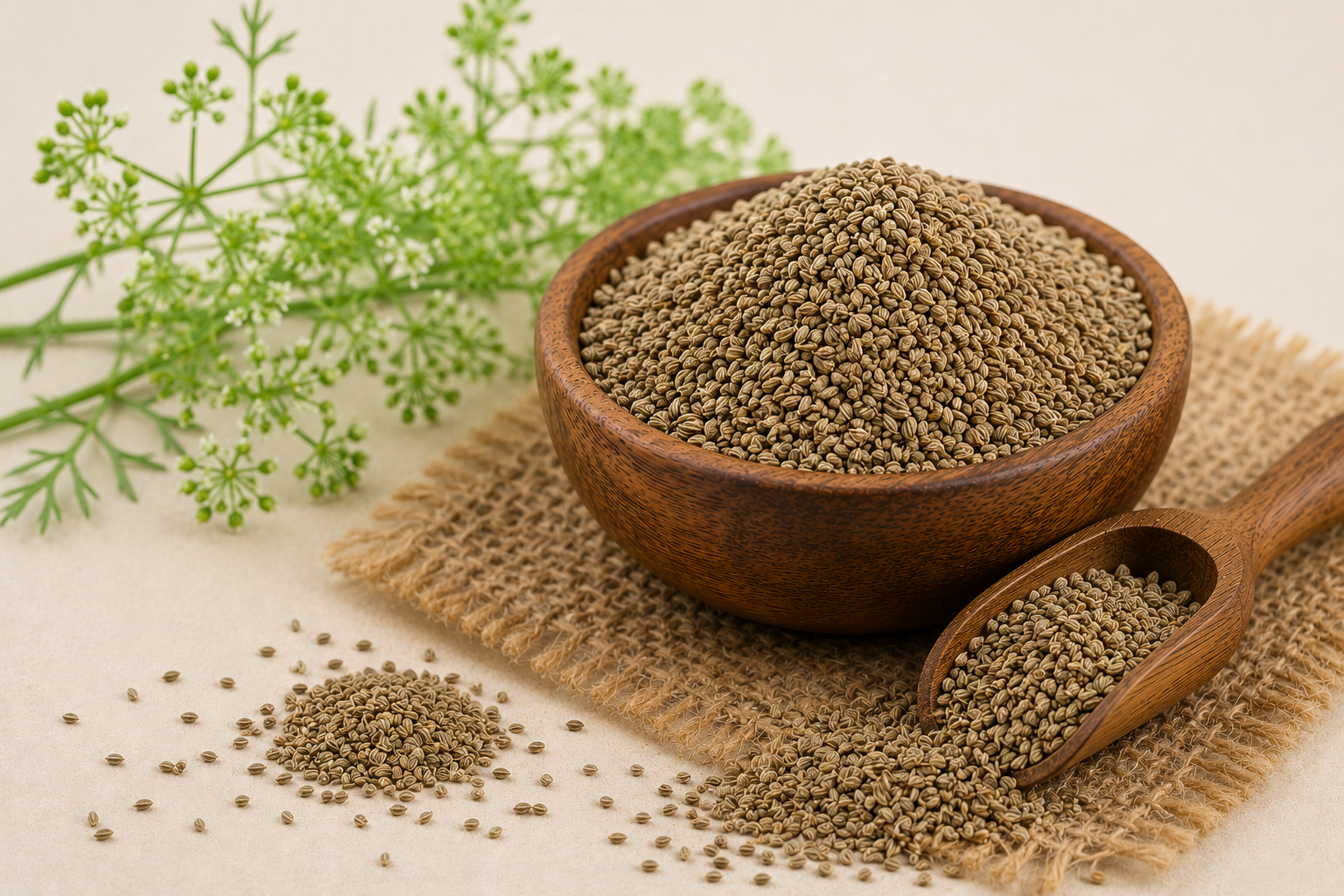
Carom Seeds (Ajwain): The Complete Guide to India’s Aromatic Kitchen Spice
Discover everything about Carom Seeds (Ajwain)—its fascinating history, botanical origin, nutritional profile, cultivation, varieties, culinary uses, traditional importance, storage tips, buying guide and much more. This comprehensive guide explores why Ajwain has remained one of the most valued spices in Indian kitchens for generations.
Quick Facts About Carom Seeds (Ajwain)
🌿 Scientific Name
Trachyspermum ammi
🏠 Plant Family
Apiaceae (Parsley Family)
🇮🇳 Hindi Name
Ajwain (अजवाइन)
🌏 Other Regional Names
Omam, Vamu, Yavani, Oma, Ajmo
🌍 Native Region
Eastern Mediterranean & Southwest Asia
🎨 Colour
Greyish Green to Brownish
👃 Aroma
Strong, Warm & Thyme-like
🌿 Taste
Pungent, Slightly Bitter & Peppery
🌱 Plant Part Used
Dried Fruits (Commonly Called Seeds)
☀️ Growing Climate
Cool, Dry Climate with Well-Drained Soil
🌾 Harvest Season
Late Winter to Early Spring (Varies by Region)
📦 Shelf Life
12–24 Months (When Properly Stored)
⭐ Main Aroma Compound
Thymol
🍛 Common Culinary Uses
Parathas, Pakoras, Curries, Lentils, Pickles, Spice Blends & Savoury Snacks
What are Carom Seeds (Ajwain)?
Carom Seeds (Ajwain) are the small, oval-shaped dried fruits of the Trachyspermum ammi plant, a member of the Apiaceae family. Although commonly referred to as “seeds,” they are botanically classified as dried fruits. Ajwain is prized for its intense aroma, warm peppery flavour and distinctive thyme-like notes, making it one of the most recognizable spices in Indian cuisine.
The spice is rich in naturally occurring aromatic compounds, particularly thymol, which gives Ajwain its characteristic fragrance and bold taste. Even a small quantity can significantly enhance the flavour of breads, curries, lentils, snacks and spice blends.
Ajwain has been an integral part of Indian cooking for centuries and is widely used in regional cuisines across the country. Its versatility makes it equally suitable for everyday home cooking, festive recipes and commercial food preparation.
History & Origin of Ajwain
Ajwain is believed to have originated in the Eastern Mediterranean and Southwest Asia, where it has been cultivated for thousands of years. Through ancient trade routes, the spice reached the Indian subcontinent and gradually became an essential ingredient in Indian culinary traditions.
Over time, Indian farmers adapted Ajwain cultivation to local climatic conditions, particularly in the north-western regions of the country. Today, India is one of the world’s leading producers and consumers of Carom Seeds, supplying high-quality Ajwain to both domestic and international markets.
From traditional kitchens to modern food industries, Ajwain continues to be valued for its unique flavour profile and remarkable versatility, reflecting a rich culinary heritage that has endured for generations.
Why are Carom Seeds (Ajwain) So Special?
Ajwain stands apart from many other spices because of its exceptionally strong aroma and concentrated flavour. A small pinch is often enough to transform an entire dish, adding warmth, depth and a pleasant herbal character.
One of Ajwain’s defining characteristics is its naturally occurring thymol, an aromatic compound that creates its distinctive thyme-like fragrance. This makes Ajwain particularly suitable for breads, savoury snacks, legumes, vegetables and spice blends.
The spice is also appreciated for its versatility. It can be used whole, lightly roasted or ground into powder, allowing cooks to incorporate it into a wide variety of traditional and contemporary recipes.
Whether sprinkled into dough, added during tempering or blended into seasoning mixes, Carom Seeds continue to be one of the most treasured spices in Indian cuisine, celebrated for their bold aroma, rich culinary heritage and exceptional flavour-enhancing qualities.
Nutritional Information
Calories
305 kcal
Protein
15.9 g
Carbohydrates
43.5 g
Dietary Fiber
38.6 g
Fat
25.0 g
Calcium
1,030 mg
Iron
13.6 mg
Phosphorus
300 mg
Potassium
1,350 mg
Magnesium
180 mg
*Approximate nutritional values per 100 grams of dried Carom Seeds (Ajwain). Actual values may vary depending on growing conditions, variety and processing methods.
🌿 Natural Aroma & Active Compounds
Carom Seeds are naturally rich in aromatic essential oils, with thymol being the primary compound responsible for their distinctive warm, thyme-like fragrance. This natural compound gives Ajwain its bold flavour and makes it one of the most aromatic spices used in Indian cooking.
In addition to thymol, Ajwain contains naturally occurring plant compounds, flavonoids and essential oils that contribute to its characteristic aroma, culinary versatility and long-standing importance in traditional spice blends.
Popular Types of Carom Seeds (Ajwain)
🌾 Whole Ajwain Seeds
The most widely used form, ideal for tempering, breads, curries, lentils and savoury snacks.
🥄 Roasted Ajwain
Lightly roasted to enhance its aroma and provide a milder, nuttier flavour in recipes.
🌿 Ground Ajwain Powder
Finely ground seeds used in spice blends, marinades, seasoning mixes and convenience foods.
⭐ Premium Export Quality
Carefully cleaned and graded seeds selected for superior size, aroma, colour and purity.
🏡 Kitchen Grade Ajwain
High-quality everyday Ajwain suitable for regular household cooking and baking.
🌱 Organic Ajwain
Produced under certified organic farming practices for consumers seeking organically grown spices.
Whole Ajwain vs Ground Ajwain
| Feature | Whole Ajwain | Ground Ajwain |
|---|---|---|
| Appearance | Whole Dried Fruits | Fine Powder |
| Aroma | Strong & Long Lasting | More Intense Initially |
| Shelf Life | Longer | Relatively Shorter After Grinding |
| Best Uses | Tempering, Doughs, Curries & Pickles | Seasonings, Marinades & Spice Blends |
| Storage | Airtight Container | Airtight Container Away from Light |
| Preferred By | Home Cooks & Traditional Recipes | Food Manufacturers & Professional Kitchens |
Major Carom Seeds (Ajwain) Producing States in India
- 🌾 Rajasthan (Largest Producer)
- 🌾 Gujarat
- 🌾 Madhya Pradesh
- 🌾 Uttar Pradesh
- 🌾 Haryana
- 🌾 Punjab
- 🌾 Bihar
- 🌾 Telangana (Limited Cultivation)
India is one of the world’s leading producers of Carom Seeds (Ajwain). Rajasthan contributes the largest share of production, followed by Gujarat and Madhya Pradesh. The country’s favourable climate and experienced farmers help produce Ajwain with excellent aroma, flavour and essential oil content.
Ideal Climate for Growing Ajwain
Ajwain is a cool-season spice crop that grows best in regions with a dry climate, moderate temperatures and abundant sunshine. It thrives in fertile, well-drained sandy loam or loamy soils with good organic matter and a slightly alkaline to neutral pH.
Seeds are generally sown during the Rabi season (October to November) and harvested between February and April, depending on the local climate. Excessive rainfall or waterlogging can reduce crop quality and seed yield.
Healthy plants require regular irrigation during early growth, while dry weather during seed maturation helps produce high-quality aromatic seeds.
How Carom Seeds (Ajwain) are Grown
Land Preparation
The field is ploughed thoroughly and enriched with organic matter to create loose, fertile soil for healthy root development.
Sowing
Quality Ajwain seeds are sown during the Rabi season at proper spacing to encourage vigorous plant growth.
Crop Management
Regular irrigation, weed control and nutrient management help ensure healthy plants and optimum seed production.
Flowering
Plants produce clusters of tiny white flowers, which later develop into small aromatic fruits commonly called seeds.
Harvesting
When the seed heads mature and turn light brown, the plants are harvested and dried carefully.
Cleaning & Packaging
The dried seeds are cleaned, graded and hygienically packed to preserve their natural aroma, flavour and freshness.
🌾 From Farm to Kitchen
🌱 Sustainable Cultivation Practices
Many Ajwain growers are increasingly adopting sustainable farming techniques to improve soil health and maintain long-term productivity. Practices such as crop rotation, efficient irrigation, balanced nutrient management and responsible pest control help produce high-quality seeds while conserving natural resources.
Careful harvesting, proper drying and hygienic post-harvest handling also play an important role in preserving the natural aroma, essential oils and overall quality of Carom Seeds before they reach consumers.
Health Benefits of Carom Seeds (Ajwain)
Rich in Natural Plant Compounds
Ajwain naturally contains essential oils, aromatic compounds and plant-based nutrients that contribute to its distinctive flavour and culinary value.
Natural Source of Antioxidants
Carom Seeds contain naturally occurring antioxidant compounds that make them a valuable addition to a balanced and varied diet.
Rich in Thymol
Ajwain is well known for its naturally occurring thymol, the aromatic compound responsible for its warm, thyme-like fragrance and bold flavour.
Excellent Flavour Enhancer
A small quantity of Ajwain adds depth and a pleasant herbal taste to breads, curries, lentils, snacks and spice blends.
Suitable for Vegetarian Cooking
Its robust aroma makes Ajwain a favourite ingredient in vegetarian recipes across Indian regional cuisines.
Versatile Culinary Spice
Perfect for tempering, parathas, pakoras, savoury snacks, legumes, vegetables, pickles and bakery products.
Globally Appreciated
Although most popular in India, Ajwain is also used in Middle Eastern, African and South Asian cuisines.
Highly Aromatic
Its strong aroma allows cooks to achieve rich flavour while using only a small quantity.
Rich in Dietary Fiber
Carom Seeds naturally contain dietary fibre along with essential minerals that contribute to their nutritional profile.
Long Shelf Life
When stored properly in an airtight container, Ajwain retains its aroma and flavour for many months.
Chef’s Favourite
Professional chefs appreciate Ajwain for adding warmth, complexity and authentic character to traditional recipes.
Everyday Kitchen Essential
From homemade breads to festive snacks, Ajwain continues to be an indispensable spice in Indian households.
🌿 Carom Seeds (Ajwain) in Ayurveda
Ajwain has been valued in Ayurveda and traditional Indian culinary practices for centuries because of its distinctive aroma and versatile nature. It has long been incorporated into everyday cooking and is especially popular in dishes prepared with lentils, legumes, vegetables and whole wheat flour.
Across India, Ajwain is commonly added to parathas, puris, pakoras, savoury biscuits, mathri and spice blends. Its warm aroma complements spices such as cumin, coriander, fennel, mustard seeds and turmeric, helping create balanced and flavourful recipes.
🌿 Traditional Nature
Highly Aromatic Culinary Spice
⭐ Signature Compound
Thymol
🍛 Common Use
Tempering & Dough Preparation
🥣 Popular Recipes
Parathas, Pakoras, Curries & Lentils
🌱 Culinary Role
Natural Flavour Enhancer
🤝 Best Paired With
Cumin, Coriander, Fennel & Turmeric
🏡 Everyday Use
Traditional Indian Kitchens
📜 Heritage
Used in Indian Cuisine for Generations
🌟 Why Carom Seeds (Ajwain) are Popular in Indian Cooking
Carom Seeds are one of the few spices capable of delivering a powerful burst of flavour with just a small pinch. Their warm, slightly peppery and thyme-like taste enhances a wide variety of traditional Indian dishes without overwhelming other ingredients.
Ajwain is particularly valued in breads, savoury snacks and legume-based recipes, where its distinctive aroma creates a balanced and authentic flavour profile. Whether used whole, roasted or ground, it blends beautifully with numerous Indian spices.
From household kitchens to professional restaurants and commercial food production, Ajwain continues to be an indispensable spice. Its rich culinary heritage, versatility and unmistakable aroma have secured its place among the most treasured spices in Indian cuisine.
🍛 Culinary Uses of Carom Seeds (Ajwain)
- Ajwain is widely used in Indian breads such as parathas, puris, naan, kulchas and pooris to enhance flavour.
- A pinch of Ajwain is commonly added to pakoras, mathri, namak pare and other traditional savoury snacks.
- It is used in tempering (tadka) for lentils, legumes and vegetable dishes to add a warm, aromatic taste.
- Ajwain is an important ingredient in many homemade spice blends and masalas.
- It pairs beautifully with potatoes, cauliflower, cabbage, okra and root vegetables.
- Often added to pickles for its distinctive aroma and robust flavour.
- Ground Ajwain is used in marinades for paneer, vegetables and traditional Indian snacks.
- The seeds are lightly roasted before use in some recipes to enhance their natural fragrance.
- Ajwain complements spices such as cumin, coriander, fennel, mustard seeds and turmeric.
- Only a small quantity is needed because of its concentrated aroma and bold taste.
🏡 Traditional Home Uses
✨ Lifestyle & Household Uses
- Ajwain has been valued in Indian households for generations because of its distinctive aroma and culinary versatility.
- Its pleasant fragrance makes it a popular ingredient in traditional spice storage containers and masala boxes.
- Whole Ajwain seeds retain their aroma longer than ground Ajwain when stored properly.
- Light roasting before use can further enhance the spice’s warm fragrance.
- Always use a clean, dry spoon when handling Ajwain.
- Store the seeds in airtight containers away from moisture and direct sunlight.
- Grinding only the required quantity helps preserve freshness and essential oils.
- Purchase high-quality food-grade Ajwain from reputable brands for the best flavour.
🥄 How to Use Carom Seeds (Ajwain)
- Use whole seeds for tempering in hot oil or ghee before adding other ingredients.
- Mix Ajwain into wheat flour while preparing dough for breads and savoury snacks.
- Lightly crush or roast the seeds to release their aromatic essential oils.
- Use ground Ajwain in marinades, spice blends and seasoning mixes.
- Add small quantities to vegetable dishes, legumes and lentil recipes.
- Blend with cumin, coriander and fennel for balanced spice mixtures.
- Use sparingly, as Ajwain has a strong and concentrated flavour.
- Store the remaining seeds immediately after use to preserve freshness.
- Grind only as much as needed for maximum aroma.
- Follow recipe recommendations for the ideal quantity and flavour balance.
🥄 Recommended Daily Intake
Carom Seeds (Ajwain) are generally used in small culinary quantities. For most recipes, approximately ¼ to ½ teaspoon (about 0.5–2 grams) is sufficient to provide their characteristic aroma and flavour. Larger amounts are usually unnecessary because of their naturally concentrated taste.
If you are pregnant, breastfeeding, taking prescription medication or have a medical condition, consult a qualified healthcare professional before consuming concentrated Ajwain supplements or making significant dietary changes.
👨🍳 Chef’s Tip
For the best flavour, lightly crush or roast Carom Seeds (Ajwain) over low heat for 20–30 seconds before adding them to your recipe. This simple step releases their natural essential oils and enhances their warm, thyme-like aroma, giving breads, curries and savoury snacks a richer, more authentic taste without overpowering other spices.
⚠️ Possible Side Effects of Excess Consumption
- Consuming excessive amounts of Ajwain may cause stomach discomfort or irritation in some individuals.
- Some people may experience allergic reactions if they are sensitive to Carom Seeds or other plants in the Apiaceae family.
- Highly concentrated Ajwain extracts or supplements should only be consumed under professional guidance.
- Because of its strong flavour, excessive use may overpower the taste of food.
- People with known food allergies should introduce Ajwain gradually and monitor for any adverse reactions.
- If you experience itching, swelling, skin rashes or difficulty breathing after consuming Ajwain, discontinue use immediately and seek medical advice.
- Always purchase food-grade Ajwain from trusted manufacturers and avoid products showing signs of contamination.
- Using Ajwain in normal culinary quantities is generally preferred over excessive consumption.
🚫 Who Should Be Careful?
- People with a known allergy to Carom Seeds (Ajwain) should avoid consuming them.
- Individuals with food sensitivities should consult a healthcare professional before using concentrated Ajwain supplements.
- Pregnant or breastfeeding women should seek medical advice before consuming large quantities of Ajwain or using concentrated extracts.
- People taking prescription medications or those with existing medical conditions should consult their healthcare provider before using herbal supplements containing Ajwain.
- Young children should consume Ajwain only in normal culinary quantities unless advised otherwise by a qualified healthcare professional.
- Anyone following a medically prescribed diet should consult a healthcare provider before making significant dietary changes.
📦 Storage Tips
- Store Ajwain in an airtight container immediately after opening.
- Keep the container in a cool, dry place away from heat, sunlight and moisture.
- Always use a clean and dry spoon to prevent contamination.
- Whole Ajwain seeds retain their aroma longer than ground Ajwain.
- If possible, grind only the quantity needed for immediate use.
- Keep the spice away from strong-smelling foods to preserve its natural aroma.
- Do not expose Ajwain to excessive humidity, as moisture can reduce its freshness.
- Close the container tightly after every use.
- Check the product periodically for freshness, aroma and expiry date.
- Following proper storage practices helps preserve Ajwain’s essential oils and flavour for many months.
How to Identify Good Quality Carom Seeds (Ajwain)
Premium-quality Ajwain should have a strong, fresh aroma, uniform colour and clean appearance. High-quality seeds are free from dust, stones, insects, mould and excess moisture. Choosing properly cleaned and hygienically packed Ajwain helps ensure the best flavour and freshness.
👃 Aroma
Fresh Ajwain has a strong, warm, thyme-like fragrance that becomes more pronounced when lightly crushed.
🎨 Appearance
The seeds should have a uniform greyish-green to brownish colour with minimal broken pieces.
✨ Purity
Quality Ajwain should be free from foreign matter, dust, insects, mould and excess moisture.
📦 Packaging
Choose airtight, food-grade packaging that protects the seeds from moisture, light and contamination.
🧪 Simple Home Quality Checks
Smell the Seeds
Fresh Ajwain should have a strong, pleasant thyme-like aroma. A weak smell may indicate old or poor-quality seeds.
Check the Colour
The seeds should appear clean, evenly coloured and free from dark spots, mould or excessive discoloration.
Inspect the Texture
Quality Ajwain should feel dry, crisp and free-flowing, without signs of dampness or clumping.
Read the Label
Verify the ingredient list, manufacturing date, expiry date, batch details and packaging seal before purchasing.
🛒 Buying Guide
- Buy Ajwain from trusted spice brands or reputable grocery stores.
- Prefer whole seeds over ground Ajwain for maximum freshness and longer shelf life.
- Choose hygienically packed products with intact, airtight packaging.
- Check the manufacturing date and best-before date before purchasing.
- Select food-grade Ajwain that meets applicable quality standards.
- Avoid products containing excess dust, broken seeds or visible impurities.
- Purchase quantities appropriate for your household so the spice remains fresh.
- Store Ajwain properly after opening to maintain its natural aroma, flavour and quality.
🌍 India’s Position in the Global Carom Seeds (Ajwain) Market
India is one of the world’s largest producers, consumers and exporters of Carom Seeds (Ajwain). The country’s favourable climate, experienced farmers and advanced spice processing industry enable the production of high-quality Ajwain with excellent aroma, flavour and essential oil content.
Rajasthan, Gujarat and Madhya Pradesh are among the leading Ajwain-producing states, contributing significantly to both domestic consumption and international exports. Indian Ajwain is widely appreciated for its purity, strong aroma and consistent quality, making it a preferred choice in global spice markets.
In addition to supplying households across India, Ajwain is processed into cleaned, graded and hygienically packed products for export to numerous countries, strengthening India’s reputation as a trusted source of premium spices.
🌎 Major Export Destinations for Indian Ajwain
- 🇺🇸 United States
- 🇨🇦 Canada
- 🇬🇧 United Kingdom
- 🇦🇪 United Arab Emirates
- 🇸🇦 Saudi Arabia
- 🇶🇦 Qatar
- 🇴🇲 Oman
- 🇰🇼 Kuwait
- 🇦🇺 Australia
- 🇸🇬 Singapore
- 🇲🇾 Malaysia
- 🇿🇦 South Africa
Indian Ajwain is exported to numerous countries where it is valued for its rich aroma, culinary versatility and premium quality. It is widely used in households, restaurants, spice blends and food manufacturing industries around the world.
💡 Did You Know?
- Although commonly called Carom Seeds, Ajwain is botanically a dried fruit rather than a true seed.
- Ajwain belongs to the Apiaceae family, the same botanical family as cumin, coriander, fennel and celery.
- The spice gets its distinctive aroma primarily from the naturally occurring compound thymol.
- Only a small quantity of Ajwain is usually enough to flavour an entire recipe.
- India is one of the world’s leading producers and exporters of premium-quality Ajwain.
- Whole Ajwain retains its aroma longer than ground Ajwain when stored properly.
- Ajwain is widely used in breads, savoury snacks, pickles, lentils, curries and spice blends.
- Its warm, thyme-like flavour makes it one of the most distinctive spices in Indian cuisine.
- Lightly roasting Ajwain before use enhances its natural fragrance and flavour.
- Properly stored Ajwain can maintain its quality and aroma for up to two years.
Frequently Asked Questions
What are Carom Seeds (Ajwain)?
Carom Seeds (Ajwain) are the dried fruits of the Trachyspermum ammi plant. They are widely used as an aromatic spice in Indian and South Asian cuisine.
Why does Ajwain have such a strong aroma?
Ajwain contains naturally occurring thymol, which gives it its characteristic warm, thyme-like fragrance and bold flavour.
Can Ajwain be used every day?
Yes. Ajwain is commonly used in normal culinary quantities as part of everyday cooking in many Indian households.
Should Ajwain be roasted before use?
Light roasting is optional but can enhance its natural aroma and flavour. Many traditional recipes recommend lightly roasting or crushing the seeds before cooking.
Which dishes commonly use Ajwain?
Ajwain is frequently used in parathas, puris, pakoras, mathri, curries, lentils, vegetables, pickles, spice blends and savoury bakery products.
How should Carom Seeds be stored?
Store Ajwain in an airtight container in a cool, dry place away from moisture, heat and direct sunlight to preserve its aroma and freshness.
What is the difference between whole and ground Ajwain?
Whole Ajwain generally retains its aroma for a longer period, while ground Ajwain provides a stronger flavour but should be used relatively quickly after grinding.
Which Indian state produces the most Ajwain?
Rajasthan is the largest producer of Carom Seeds (Ajwain) in India, followed by Gujarat and Madhya Pradesh.
How long does Ajwain stay fresh?
When stored properly in an airtight container, whole Ajwain generally maintains good quality and aroma for 12–24 months.
Why is Ajwain considered an important Indian spice?
Its bold aroma, unique flavour and versatility make Ajwain an essential ingredient in numerous traditional Indian breads, snacks, curries and spice blends.
📖 Final Thoughts
Carom Seeds (Ajwain) have earned a special place in Indian kitchens through their unmistakable aroma, bold flavour and remarkable versatility. From freshly prepared parathas and crispy savoury snacks to lentils, vegetables and spice blends, Ajwain continues to enrich countless traditional recipes with its warm, thyme-like character.
Selecting premium-quality Ajwain, storing it correctly and using it in the right quantity allows you to enjoy its full aroma and authentic taste. Whether used whole, roasted or ground, this timeless spice remains an essential ingredient for home cooks and professional chefs alike.
With its rich culinary heritage, growing global popularity and exceptional flavour-enhancing qualities, Carom Seeds continue to be one of the most treasured spices in Indian cuisine, bringing authenticity and depth to every meal.