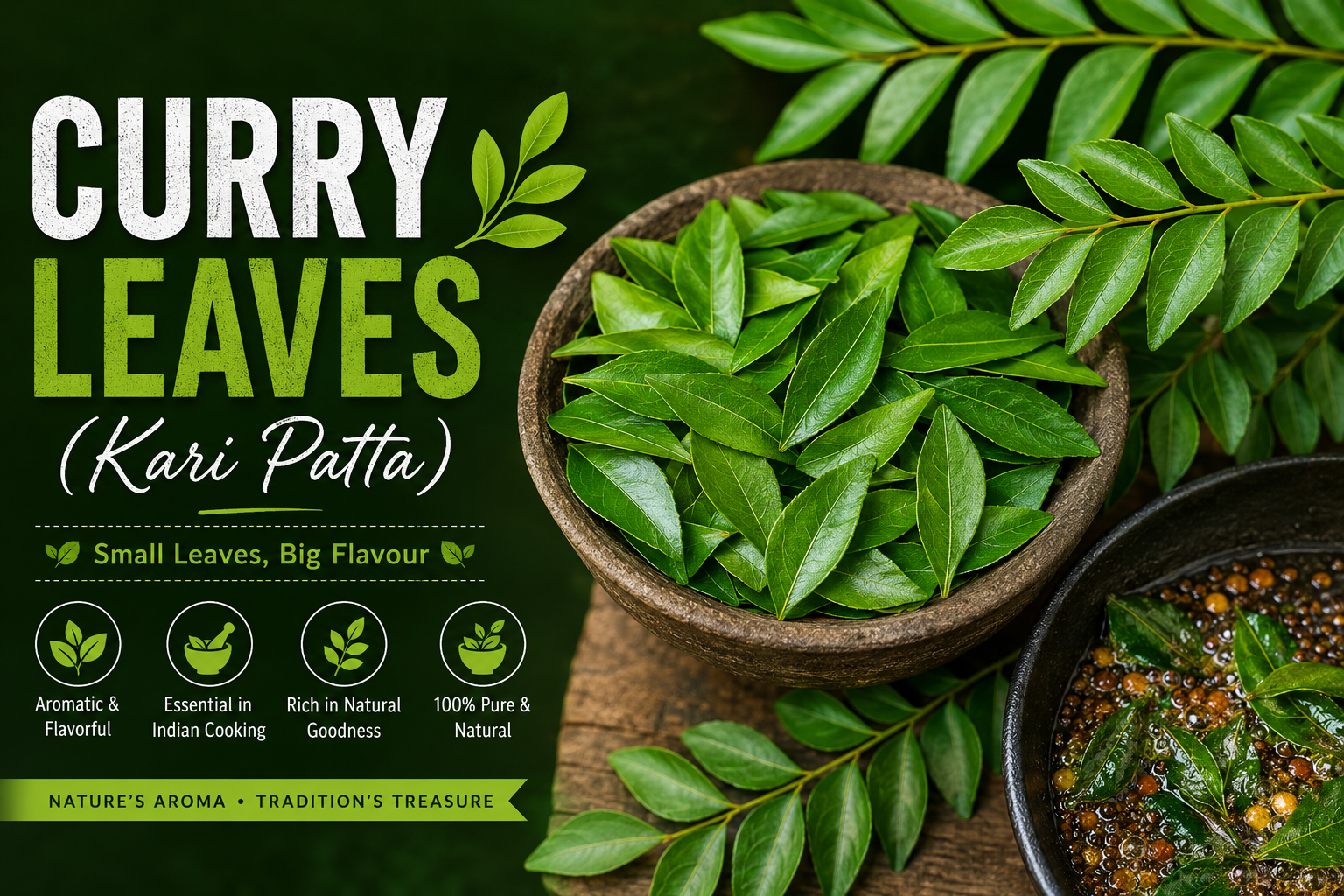
Curry Leaves (Kari Patta): The Complete Guide to India’s Aromatic Culinary Herb
Discover everything about Curry Leaves (Kari Patta), from their history and nutritional profile to varieties, culinary uses, cultivation, storage tips and buying guide. Loved for their fresh aroma and distinctive flavour, curry leaves are an indispensable ingredient in Indian cooking.
Quick Facts About Curry Leaves
🌿 Scientific Name
Murraya koenigii
🌱 Plant Family
Rutaceae (Citrus Family)
🇮🇳 Hindi Name
Kari Patta / Kadi Patta
🌍 Native Region
Indian Subcontinent
💚 Colour
Deep Green
👃 Aroma
Fresh, Citrusy & Aromatic
🍃 Taste
Mildly Bitter, Herbal & Citrusy
🌤 Climate
Warm Tropical & Subtropical
📅 Harvest
Multiple Harvests Throughout the Year
📦 Shelf Life
Fresh: 1–2 Weeks | Dried: Several Months
🍛 Common Uses
Tempering, Curries, Chutneys, Rice & Snacks
🌿 Forms Available
Fresh Leaves, Dried Leaves & Powder
What are Curry Leaves (Kari Patta)?
Curry Leaves (Murraya koenigii), popularly known as Kari Patta or Kadi Patta, are fragrant green leaves widely used in Indian cuisine. They are valued for their refreshing aroma, distinctive flavour and ability to enhance a variety of traditional and modern dishes.
Fresh curry leaves are commonly added to hot oil or ghee during tempering (tadka), allowing their natural aroma to infuse dals, curries, chutneys, rice preparations, vegetable dishes and snacks. Their unique flavour pairs beautifully with mustard seeds, cumin, garlic, ginger and other Indian spices.
Although often referred to as a spice, curry leaves are botanically an aromatic culinary herb. Their versatility and unmistakable fragrance have made them a staple ingredient in kitchens across India and many other parts of the world.
History & Origin of Curry Leaves
Curry leaves are native to the Indian subcontinent and have been used in regional cuisines for centuries. They have long been appreciated for their fresh aroma and their ability to enrich everyday meals with distinctive flavour.
Traditionally grown in home gardens and farms across India, curry leaf plants thrive in warm tropical and subtropical climates. Their popularity gradually spread to neighbouring countries and later to international cuisines through global trade and migration.
Today, curry leaves remain an essential ingredient in South Indian cooking and are increasingly recognised around the world for their culinary versatility, making them a valued addition to both traditional and contemporary recipes.
Why are Curry Leaves an Essential Ingredient in Indian Cooking?
Few ingredients contribute freshness and aroma to Indian cuisine quite like curry leaves. When gently fried in oil or ghee, they release an inviting fragrance that enhances the flavour of dals, curries, rice dishes, chutneys and snacks.
Their ability to complement spices such as mustard seeds, cumin, fenugreek, asafoetida and dried red chillies makes them an integral part of countless regional recipes. Fresh curry leaves are especially valued because they deliver a brighter aroma than dried alternatives.
Easy to grow, versatile to use and deeply rooted in India’s culinary heritage, Curry Leaves (Kari Patta) continue to inspire home cooks and professional chefs alike, bringing authentic flavour to kitchens around the world.
Nutritional Profile of Curry Leaves (Kari Patta)
Curry Leaves (Kari Patta) are naturally rich in essential nutrients and are widely appreciated as a flavourful culinary herb. They contain dietary fibre, vitamins, minerals and naturally occurring plant compounds that contribute to their distinctive aroma and make them a popular ingredient in everyday cooking.
Dietary Fibre
Supports a balanced and varied diet.
Vitamin A
Naturally present in fresh curry leaves.
Vitamin C
Found in fresh leaves as part of their natural composition.
Iron
A naturally occurring mineral found in curry leaves.
Calcium
Contributes to the mineral profile of fresh leaves.
Potassium
An essential mineral naturally present in the leaves.
Natural Plant Compounds
Responsible for the characteristic aroma and flavour.
Low Calories
Commonly used in small culinary quantities.
🌿 Natural Aroma & Flavour
The unmistakable fragrance of curry leaves comes from naturally occurring aromatic compounds present within the fresh leaves. When added to hot oil or ghee, these compounds are released, creating the signature aroma associated with many Indian dishes.
Fresh Herbal Aroma
Produces a pleasant, fresh fragrance during cooking.
Citrusy Notes
Offers subtle citrus-like notes that brighten recipes.
Ideal for Tempering
Releases its aroma beautifully when added to hot oil.
Rich Culinary Flavour
Enhances the taste of dals, curries, rice dishes and snacks.
Popular Varieties of Curry Leaves
🌿 Regular Curry Leaves
The most widely cultivated variety, recognised for its balanced aroma and everyday culinary use.
🌳 Dwarf Variety
A compact plant suitable for home gardens and container cultivation.
🍃 Gamthi Variety
Known for its highly aromatic leaves and rich flavour, often preferred by culinary enthusiasts.
⚖️ Fresh vs Dried Curry Leaves
| Feature | Fresh Leaves | Dried Leaves |
|---|---|---|
| Aroma | Strong & Fresh | Milder |
| Colour | Deep Green | Olive Green |
| Texture | Soft & Tender | Crisp |
| Best Uses | Tempering, Curries, Chutneys | Seasoning Mixes & Spice Blends |
| Shelf Life | Short | Longer |
🇮🇳 Major Curry Leaf Producing States in India
🌱 Ideal Growing Conditions
Climate
Warm tropical and subtropical weather supports healthy growth.
Rainfall
Moderate rainfall with proper drainage is ideal.
Soil
Well-drained fertile soil rich in organic matter.
Watering
Regular watering without waterlogging helps maintain healthy plants.
Sunlight
Thrives in full sunlight with partial shade in hotter regions.
Harvesting
Leaves are harvested several times a year after healthy growth.
Culinary & Nutritional Highlights of Curry Leaves
Distinctive Aroma
Fresh curry leaves release a pleasant herbal aroma that enhances the flavour of countless Indian dishes.
Essential for Tempering
One of the most popular ingredients used in traditional tadka for dals, curries and vegetable preparations.
Versatile Ingredient
Suitable for curries, rice dishes, chutneys, snacks, soups and many regional recipes.
Natural Source of Nutrients
Contains dietary fibre, vitamins and minerals as part of its natural nutritional profile.
Traditional Culinary Heritage
An important ingredient that has been used in Indian kitchens for generations.
Chef’s Favourite
Widely appreciated by home cooks and professional chefs for its unmistakable aroma.
🍽️ Curry Leaves in Indian Cuisine
Curry leaves are one of the signature ingredients of Indian cuisine, especially in South Indian cooking. Their fresh aroma develops beautifully when added to hot oil or ghee, making them an essential component of tempering for many traditional dishes.
They complement ingredients such as mustard seeds, cumin, dried red chillies, garlic, ginger and asafoetida, creating the characteristic flavours found in sambhar, rasam, chutneys, coconut-based curries, rice preparations and vegetable dishes.
Beyond South India, curry leaves are increasingly used across the country in fusion recipes, snacks, spice blends and modern culinary creations, showcasing their remarkable versatility.
🌿 Why Curry Leaves Have Been Valued for Generations
Curry leaves have earned a respected place in Indian culinary traditions because of their ability to enhance flavour naturally. Their refreshing fragrance, ease of cultivation and compatibility with a wide range of ingredients have made them a kitchen essential for generations.
Fresh Aroma
Provides a naturally refreshing fragrance during cooking.
Ideal for Tadka
Releases maximum aroma when lightly fried in hot oil or ghee.
Pairs with Many Foods
Complements rice, dals, vegetables, curries and snacks.
Worldwide Popularity
Increasingly used in international kitchens for authentic Indian flavours.
🍛 Popular Dishes That Use Curry Leaves
❤️ Why Home Cooks Love Curry Leaves
- Instantly enhances the aroma of everyday cooking.
- Easy to use in both traditional and modern recipes.
- Pairs beautifully with almost every Indian tempering spice.
- Suitable for vegetarian and vegan dishes.
- Can be used fresh, dried or powdered depending on the recipe.
- Adds authentic South Indian flavour to meals.
- Simple to grow in home gardens and containers.
- Ideal for curries, rice dishes, snacks and chutneys.
- A staple ingredient in Indian households throughout the year.
- Appreciated by chefs for its versatility and distinctive fragrance.
Culinary Uses of Curry Leaves (Kari Patta)
Curry Leaves (Kari Patta) are among the most valued aromatic herbs in Indian cuisine. Their fresh fragrance is released when added to hot oil or ghee, making them an essential ingredient in tempering (tadka). They complement a wide variety of dishes, adding depth, freshness and authentic flavour.
Dals & Lentils
Used during tempering to enhance the aroma and flavour of dals and lentil-based dishes.
Curries
Adds a signature South Indian touch to vegetable, paneer and curry preparations.
Rice Dishes
Popular in lemon rice, coconut rice, tamarind rice and other seasoned rice recipes.
Chutneys
Blended into chutneys or used in the final tempering for extra aroma.
Vegetable Dishes
Pairs beautifully with potato, beans, cabbage, okra and mixed vegetable recipes.
Snacks
Frequently used in poha, upma, mixtures, murukku and savoury snacks.
🏡 Traditional Household Uses
Curry leaves have been a familiar ingredient in Indian households for generations. They are widely appreciated for their fresh aroma and are commonly used in everyday cooking to prepare simple home-style meals as well as festive dishes.
Daily Tempering
An essential ingredient for preparing aromatic tadka.
Family Recipes
Used in countless regional recipes passed down through generations.
Fresh Garnish
Whole or lightly fried leaves provide freshness and visual appeal.
Homemade Spice Mixes
Dried curry leaves are often added to spice blends and seasoning powders.
👨🍳 Modern Kitchen Applications
Salads
Lightly crisped curry leaves can be used as an aromatic garnish.
Seasoning
Crushed dried leaves can flavour roasted vegetables and snacks.
Soups
Adds a subtle herbal note to fusion soup recipes.
Flavoured Butter
Finely chopped leaves can be incorporated into herb butter.
Fusion Recipes
Increasingly used in wraps, pasta, sandwiches and contemporary dishes.
Snack Seasoning
Popular in homemade savoury mixes and roasted snack recipes.
🥄 How to Use Curry Leaves
- Wash fresh curry leaves thoroughly and pat them dry.
- Heat oil or ghee in a pan before adding the leaves.
- Add curry leaves along with mustard seeds or cumin for traditional tempering.
- Allow the leaves to sizzle briefly to release their natural aroma.
- Mix the tempered ingredients into curries, dals or rice dishes.
- Dried curry leaves can be crushed and added to spice blends or seasoning mixes.
- Use fresh leaves whenever possible for the most vibrant flavour.
🍽️ Best Culinary Pairings
👨🍳 Chef’s Tips
- Always use fresh curry leaves whenever available for the best aroma.
- Add curry leaves to hot oil at the beginning of tempering to release their flavour.
- Do not overcook the leaves, as prolonged cooking may reduce their freshness.
- Store fresh leaves in the refrigerator inside a breathable container.
- Freeze washed leaves if you want to preserve them for longer periods.
- Lightly crush dried curry leaves before adding them to recipes for better flavour distribution.
- Pair curry leaves with mustard seeds, cumin and dried red chillies for authentic South Indian tempering.
- Use freshly harvested leaves from home-grown plants whenever possible for maximum freshness.
Precautions While Using Curry Leaves
Curry Leaves (Kari Patta) are widely used as a culinary herb in Indian and international cuisines. When consumed as part of a balanced diet and used in normal cooking quantities, they are generally well accepted. However, like any food ingredient, a few practical precautions can help ensure the best culinary experience.
Use Fresh Leaves
Select fresh, clean leaves that are free from mould, insects or spoilage.
Wash Thoroughly
Always rinse fresh curry leaves under clean running water before cooking.
Store Properly
Keep fresh leaves refrigerated or freeze them for extended freshness.
Use Appropriate Quantity
Add according to the recipe to achieve a balanced aroma and flavour.
⚠️ When Extra Care May Be Appropriate
- Wash fresh curry leaves thoroughly before use.
- Discard leaves showing mould, excessive discoloration or spoilage.
- If trying curry leaves for the first time, introduce them gradually into recipes according to personal preference.
- Individuals with specific food allergies or dietary concerns should seek professional advice if needed.
- Use clean utensils when handling fresh or dried curry leaves to maintain food hygiene.
- Store dried curry leaves in airtight containers away from heat, sunlight and moisture.
🌱 How Curry Leaves Are Grown
1. Propagation
Curry leaf plants are commonly propagated from seeds or healthy stem cuttings in warm climates.
2. Plant Growth
The plants develop into evergreen shrubs with glossy, aromatic green leaves under suitable growing conditions.
3. Natural Care
Regular watering, sunlight, pruning and nutrient-rich soil help maintain healthy growth throughout the year.
4. Harvesting
Mature leaves are carefully harvested several times each year without damaging the plant.
🚜 Farm to Kitchen Journey
Cultivation
Healthy curry leaf plants are cultivated in warm tropical regions.
Harvesting
Fresh leaves are hand-picked at the appropriate stage of maturity.
Cleaning
Leaves are sorted and cleaned to remove damaged or unsuitable material.
Packing
Fresh or dried leaves are packed carefully to help preserve freshness and aroma.
Distribution
Products are transported efficiently to retailers and consumers.
Kitchen
Curry leaves add authentic aroma and flavour to countless recipes around the world.
🌍 Sustainable Cultivation Practices
Responsible cultivation practices help maintain healthy curry leaf plants while supporting long-term agricultural sustainability. Farmers often combine traditional knowledge with modern farming techniques to produce high-quality aromatic leaves.
Efficient Irrigation
Proper watering practices help conserve water while supporting healthy plant growth.
Healthy Soil
Organic matter and good soil management encourage vigorous plant development.
Regular Pruning
Pruning promotes new leaf growth and maintains productive plants.
Responsible Farming
Good agricultural practices help produce premium-quality curry leaves for culinary use.
“Fresh curry leaves are added at just the right moment to unlock their vibrant aroma, bringing authentic Indian flavour and freshness to every dish.”
📦 Storage Tips
- Store fresh curry leaves in the refrigerator inside a clean, breathable container or perforated bag.
- Wash the leaves only before use. Excess moisture during storage may reduce freshness.
- If washed in advance, dry the leaves completely before refrigerating.
- Wrap fresh leaves in a paper towel before placing them in an airtight container to help absorb excess moisture.
- For long-term storage, freeze clean and dry curry leaves in freezer-safe bags or containers.
- Dried curry leaves should be stored in airtight food-grade containers.
- Keep dried leaves away from direct sunlight, humidity and strong odours.
- Always use clean, dry utensils when handling dried curry leaves.
- Inspect stored leaves regularly and discard any showing mould, spoilage or unusual odours.
- Proper storage helps preserve the natural aroma, colour and culinary quality of curry leaves.
How to Identify Fresh & Good Quality Curry Leaves
Premium-quality curry leaves are recognised by their vibrant green colour, fresh aroma and healthy appearance. Selecting fresh leaves ensures the best flavour and fragrance for everyday cooking.
🌿 Colour
Choose leaves with a vibrant deep green colour and natural shine.
🍃 Freshness
Leaves should look crisp and healthy, not dry, yellow or wilted.
👃 Aroma
Fresh curry leaves have a pleasant herbal and citrus-like fragrance.
✨ Clean Appearance
Avoid leaves with mould, insect damage, excessive spots or decay.
🧪 Simple Home Quality Checks
Visual Check
Look for uniformly green leaves without yellowing or black spots.
Touch Test
Fresh leaves should feel flexible and firm rather than brittle.
Aroma Test
Rub a leaf gently between your fingers to release its natural fragrance.
Stem Check
Healthy stems should remain green and not appear dry or woody.
🛒 Buying Guide
- Buy curry leaves from trusted grocery stores or reputable spice suppliers.
- Select bunches with vibrant green leaves and healthy stems.
- Prefer leaves that are naturally aromatic and free from excessive moisture.
- Avoid bunches containing yellow, wilted or damaged leaves.
- Check packaged dried curry leaves for properly sealed food-grade packaging.
- Read manufacturing and best-before dates when purchasing packaged products.
- Buy only the quantity you can use while the leaves remain fresh.
- If possible, choose freshly harvested curry leaves for maximum aroma.
⚖️ Fresh vs Dried Curry Leaves
| Feature | Fresh Curry Leaves | Dried Curry Leaves |
|---|---|---|
| Appearance | Bright Green | Olive Green |
| Aroma | Fresh & Strong | Milder |
| Texture | Soft & Flexible | Crisp & Dry |
| Best Uses | Tempering, Curries & Chutneys | Seasoning Mixes & Spice Blends |
| Storage | Refrigeration | Airtight Container |
| Shelf Life | 1–2 Weeks | Several Months |
👨🍳 Chef’s Buying Tips
🌿 Prefer Fresh Leaves
Fresh curry leaves provide the brightest aroma and authentic flavour.
👃 Check the Fragrance
A naturally fresh herbal aroma is a sign of good-quality leaves.
🍃 Inspect Every Bunch
Choose leaves with healthy stems and minimal damage or discoloration.
📦 Buy Small Quantities
Purchase only what you can use while the leaves remain fresh and aromatic.
🌍 India’s Position in Curry Leaf Production
India is the native home of Curry Leaves (Kari Patta) and remains one of the world’s leading producers of this aromatic culinary herb. The country’s warm tropical climate, fertile soils and long-standing agricultural traditions provide ideal conditions for year-round cultivation.
Fresh curry leaves are harvested throughout the year and supplied to households, restaurants, food processors and spice manufacturers across India. In addition to fresh leaves, dried curry leaves and curry leaf powder are also produced to meet growing domestic and international demand.
With the increasing global popularity of Indian cuisine, curry leaves have become an important export commodity, helping showcase India’s rich culinary heritage around the world.
🌎 Major Export Destinations
- 🇺🇸 United States
- 🇬🇧 United Kingdom
- 🇨🇦 Canada
- 🇦🇪 United Arab Emirates
- 🇸🇦 Saudi Arabia
- 🇶🇦 Qatar
- 🇰🇼 Kuwait
- 🇴🇲 Oman
- 🇲🇾 Malaysia
- 🇸🇬 Singapore
💡 Did You Know?
- Curry Leaves come from the Murraya koenigii tree, which belongs to the citrus family.
- Despite the name, curry leaves are not related to curry powder.
- Fresh curry leaves release their best aroma when added to hot oil or ghee.
- India is the native home of curry leaves and one of the world’s largest producers.
- The leaves are commonly harvested several times throughout the year.
- Fresh curry leaves are preferred over dried leaves for their stronger aroma.
- Curry leaves are widely used in South Indian, Sri Lankan and Southeast Asian cuisines.
- The plant can be successfully grown in home gardens and containers.
- Each branch contains multiple glossy green leaflets with a naturally pleasant fragrance.
- Curry leaves pair exceptionally well with mustard seeds, cumin, coconut, garlic and ginger.
Frequently Asked Questions
What are Curry Leaves (Kari Patta)?
Curry Leaves are aromatic green leaves obtained from the Murraya koenigii plant and are widely used in Indian and South Asian cooking.
Are curry leaves and curry powder the same?
No. Curry leaves are fresh aromatic leaves, whereas curry powder is a spice blend made from various ground spices.
How are curry leaves commonly used?
They are usually added to hot oil or ghee during tempering (tadka) to enhance the aroma and flavour of dishes.
Can curry leaves be eaten raw?
Yes. Fresh curry leaves can be used raw in certain chutneys and garnishes, although they are most commonly cooked.
How should fresh curry leaves be stored?
Store them in the refrigerator inside a breathable container or freeze them for longer storage.
Which Indian states produce the most curry leaves?
Tamil Nadu, Karnataka, Andhra Pradesh, Telangana, Kerala and Maharashtra are among the major producing states.
Can dried curry leaves replace fresh ones?
Yes, although fresh curry leaves generally provide a stronger aroma and more vibrant flavour.
What dishes commonly use curry leaves?
They are widely used in sambhar, rasam, chutneys, upma, poha, rice dishes, curries and vegetable preparations.
Can curry leaf plants be grown at home?
Yes. Curry leaf plants grow well in warm climates and can also be cultivated in pots or home gardens with proper care.
What ingredients pair well with curry leaves?
Curry leaves pair beautifully with mustard seeds, cumin, dried red chillies, coconut, garlic, ginger, lentils and many traditional Indian spices.
“The unmistakable aroma of fresh Curry Leaves is the signature of authentic Indian cooking—simple, timeless and full of flavour.”
🌿 Final Thoughts on Curry Leaves (Kari Patta)
Curry Leaves (Kari Patta) are among the most cherished culinary herbs in Indian cuisine. Their fresh aroma, vibrant green colour and distinctive flavour make them an indispensable ingredient in countless traditional and contemporary recipes.
Whether used for tempering dals, flavouring curries, enhancing rice dishes or preparing homemade spice blends, curry leaves bring authenticity and freshness to every meal. Their versatility, ease of cultivation and year-round availability have earned them a permanent place in kitchens across India and around the world.
By choosing fresh, high-quality curry leaves, storing them correctly and using them thoughtfully in everyday cooking, you can enjoy their unique culinary character in a wide variety of delicious recipes.
❤️ Why Every Kitchen Needs Curry Leaves
Authentic Indian Aroma
Creates the unmistakable fragrance that defines many Indian dishes.
Versatile Ingredient
Suitable for curries, dals, rice dishes, snacks and chutneys.
Easy to Grow
Thrives in home gardens and containers with proper care.
Chef’s Favourite
Widely appreciated for adding depth, freshness and balance to recipes.
Rich Culinary Heritage
A timeless ingredient deeply connected with Indian cooking traditions.
Everyday Essential
Simple to use and suitable for both home kitchens and professional cooking.
📚 Continue Your Premium Spice Journey
Every spice and culinary herb has its own story, flavour profile and role in creating memorable dishes. Explore the complete KHALVA Masala Spice Guide collection to discover premium ingredients, practical cooking tips, storage advice and fascinating facts that bring Indian cuisine to life.
“Every fragrant curry leaf tells the story of India’s rich culinary heritage—bringing freshness, flavour and tradition to every meal.”
📖 Educational Disclaimer
This article is intended for general educational and culinary information only. It is not intended to diagnose, treat, cure or prevent any disease, nor should it be considered medical or nutritional advice. Information provided may vary depending on growing conditions, variety and processing methods.
Always purchase food products from trusted suppliers, follow proper food handling practices and consult a qualified healthcare professional for personalised dietary or health-related guidance.