Ginger (Adrak / Sonth): The Complete Guide to India’s Versatile Spice
Discover everything about Ginger (Adrak / Sonth)—its fascinating history, nutritional value, traditional importance, culinary uses, farming process, varieties, storage methods, buying guide and much more. Whether enjoyed fresh as Adrak or dried as Sonth, ginger remains one of the world’s most cherished spices, adding warmth, aroma and depth to countless recipes.
Quick Facts About Ginger
🌿 Scientific Name
Zingiber officinale
🏠 Plant Family
Zingiberaceae
🇮🇳 Hindi Name
Adrak (Fresh), Sonth (Dried)
🌍 Native Region
Southeast Asia
🎨 Colour
Light Brown Skin with Pale Yellow Interior
👃 Aroma
Fresh, Warm & Spicy
🌶️ Taste
Pungent, Zesty & Slightly Sweet
🌡 Climate
Warm, Humid Tropical Climate
📅 Harvest Season
October to January
🧺 Shelf Life
Fresh: 2–4 Weeks | Dried: Up to 24 Months
⭐ Main Natural Compound
Gingerol & Shogaol
🍛 Common Uses
Curries, Tea, Soups, Pickles, Sweets & Spice Blends
What is Ginger (Adrak / Sonth)?
Ginger is the underground stem, known as a rhizome, of the plant Zingiber officinale. It is one of the oldest and most widely used spices in the world, valued for its distinctive aroma, bold flavour and versatility in both fresh and dried forms.
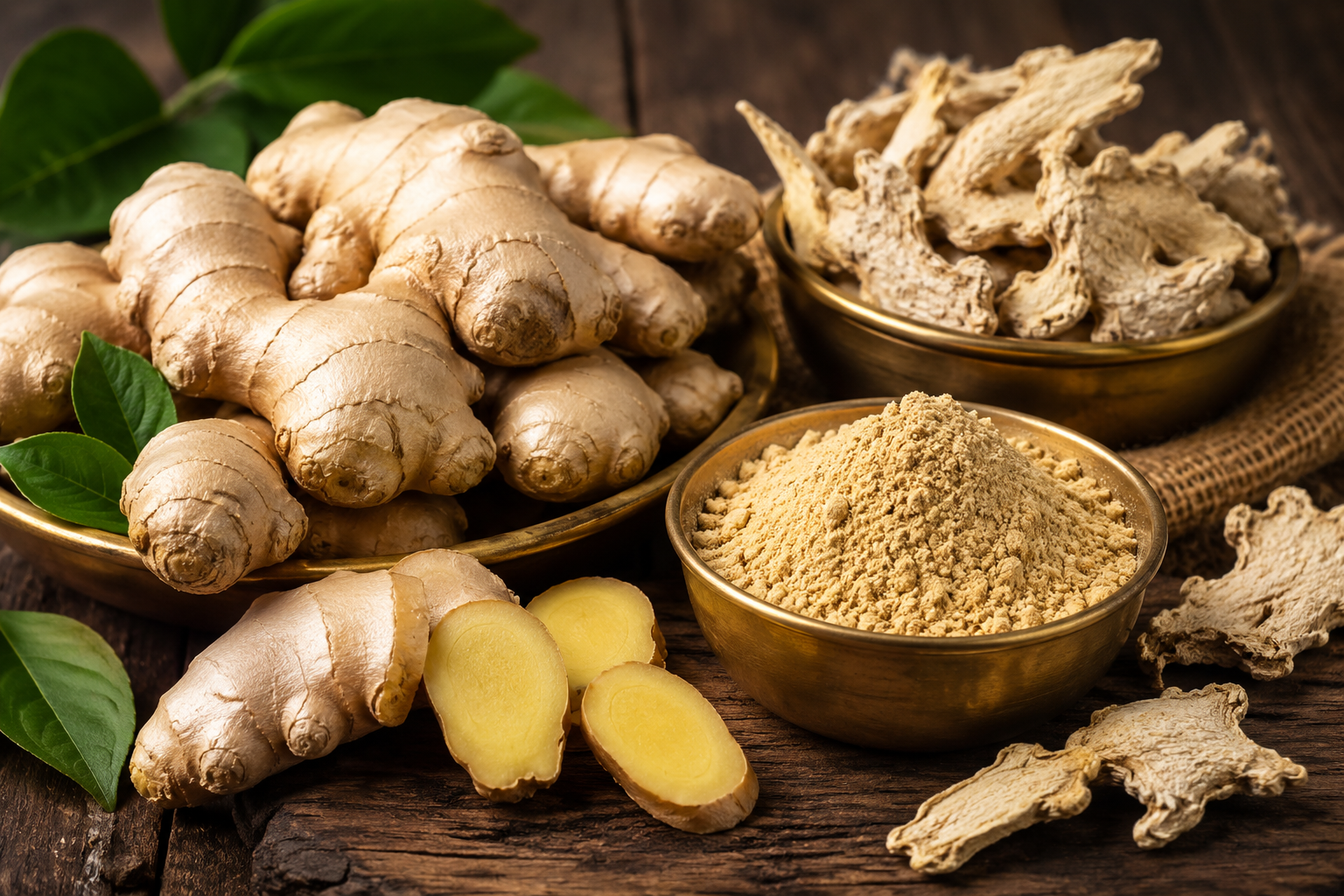
Fresh ginger, commonly known as Adrak, is widely used in Indian cooking, herbal teas, marinades, curries and beverages. When ginger is harvested, cleaned and carefully dried, it becomes Sonth, a spice with a warmer, more concentrated flavour that is commonly used in spice blends, desserts and traditional recipes.
Today, ginger is cultivated in many tropical and subtropical regions, with India being one of the world’s leading producers. Its remarkable culinary versatility and long-standing cultural significance have made it a staple ingredient in kitchens across the globe.
History & Origin of Ginger
Ginger has been cultivated for thousands of years and is believed to have originated in Southeast Asia. Ancient traders introduced this prized spice to different parts of the world, where it quickly became an important ingredient in cooking and traditional food cultures.
India has played a significant role in the cultivation and trade of ginger for centuries. Historical trade routes carried Indian ginger to the Middle East, Europe and beyond, where it gained popularity for its unique flavour and aromatic qualities.
Over time, ginger became an essential ingredient in countless regional cuisines. From Indian masalas and teas to baked goods, beverages and savoury dishes around the world, it continues to be one of the most widely appreciated spices in global culinary traditions.
Why is Ginger One of the World’s Most Popular Spices?
Ginger is admired for its unmistakable combination of warmth, freshness and natural spice. Unlike many ingredients that contribute only flavour or aroma, ginger enhances recipes with both, making it suitable for savoury dishes, beverages, desserts and spice blends.
Its versatility is one of its greatest strengths. Fresh Adrak brings brightness and zest to curries, soups and teas, while dried Sonth offers a richer, deeper flavour ideal for traditional sweets, masalas and slow-cooked recipes.
Across generations and cultures, ginger has remained a kitchen essential because of its adaptability, pleasant aroma and ability to complement a wide variety of ingredients. Whether used fresh, dried or powdered, it continues to play a central role in Indian and international cuisine.
Nutritional Information
Calories
80 kcal
Protein
1.8 g
Carbohydrates
17.8 g
Dietary Fiber
2.0 g
Fat
0.8 g
Vitamin C
5 mg
Potassium
415 mg
Magnesium
43 mg
Calcium
16 mg
Iron
0.6 mg
*Approximate nutritional values per 100 g of fresh ginger. Nutritional composition may vary depending on growing conditions, variety and processing methods. Dried ginger (Sonth) contains more concentrated nutrients due to moisture loss.
🌿 Natural Aroma & Active Compounds
Ginger’s distinctive aroma and warm, spicy flavour come from naturally occurring plant compounds present in its rhizome. These compounds develop during growth and become more concentrated when ginger is dried into Sonth.
Important naturally occurring compounds include Gingerol, Shogaol, Zingerone, Essential Oils, Terpenes and various natural phenolic compounds that contribute to ginger’s characteristic aroma and flavour.
Popular Types of Ginger
🌱 Fresh Ginger (Adrak)
The most commonly used form in curries, vegetables, soups, tea and marinades.
☀️ Dried Ginger (Sonth)
Mature ginger that has been dried to produce a richer, more concentrated flavour.
🥄 Ginger Powder
Finely ground dried ginger used in baking, spice blends and traditional recipes.
🥒 Pickled Ginger
Thin slices preserved in vinegar or brine and commonly served with selected dishes.
🌿 Organic Ginger
Cultivated following certified organic farming practices where applicable.
⭐ Premium Export Grade
Carefully graded ginger selected for appearance, freshness and quality.
Comparison of Popular Ginger Types
| Type | Flavour | Best Used For | Common Form |
|---|---|---|---|
| Fresh Ginger | Fresh & Zesty | Curries, Tea | Whole Rhizome |
| Dried Ginger | Warm & Rich | Traditional Recipes | Dried Pieces |
| Ginger Powder | Strong | Baking & Masalas | Powder |
| Pickled Ginger | Mild | Side Dish | Sliced |
| Organic Ginger | Natural | Daily Cooking | Fresh |
| Premium Grade | Excellent | Export & Retail | Fresh/Dried |
Major Ginger Producing States in India
- 🌿 Kerala
- 🌿 Karnataka
- 🌿 Meghalaya
- 🌿 Arunachal Pradesh
- 🌿 Assam
- 🌿 Sikkim
- 🌿 Odisha
- 🌿 Maharashtra
- 🌿 West Bengal
- 🌿 Himachal Pradesh
Ideal Climate for Growing Ginger
Ginger thrives in warm, humid tropical and subtropical climates with abundant rainfall and fertile, well-drained soil rich in organic matter. These conditions encourage healthy rhizome development and high-quality harvests.
The crop performs best at temperatures between 20°C and 30°C. Partial shade, regular moisture and loose soil support vigorous growth while preventing waterlogging around the rhizomes.
India’s diverse agro-climatic regions provide excellent conditions for cultivating both fresh ginger (Adrak) and dried ginger (Sonth), contributing to the country’s position as one of the world’s leading ginger producers.
Health Benefits of Ginger (Adrak / Sonth)
Rich in Natural Plant Compounds
Ginger naturally contains plant compounds such as gingerol, shogaol and zingerone that contribute to its distinctive aroma and flavour.
Contains Natural Antioxidants
Ginger contains naturally occurring antioxidant compounds that are commonly found in aromatic herbs and spices.
Source of Essential Nutrients
Fresh ginger provides small amounts of vitamin C, potassium, magnesium and other naturally occurring nutrients.
Enhances Flavour Naturally
Its warm, spicy taste adds depth and freshness to savoury dishes, beverages and desserts without artificial flavouring.
Versatile Culinary Ingredient
Fresh Adrak and dried Sonth are used in countless traditional and international recipes throughout the world.
Popular in Herbal Beverages
Fresh ginger is a widely used ingredient in tea, kadha, infused water and other homemade beverages.
Naturally Aromatic
Its essential oils provide the fresh, spicy fragrance that makes ginger one of the world’s most recognised spices.
Suitable for Multiple Cuisines
Ginger complements Indian, Asian, Middle Eastern and many international cuisines with remarkable versatility.
Available in Multiple Forms
Used fresh, dried, powdered, pickled or as part of spice blends depending on the recipe.
Concentrated Flavour in Sonth
Dried ginger (Sonth) develops a deeper and warmer flavour, making it ideal for traditional recipes and spice mixes.
Perfect for Everyday Cooking
Ginger pairs well with vegetables, legumes, rice, soups, curries and beverages.
Part of a Balanced Diet
When used in normal culinary quantities, ginger adds flavour and variety to balanced meals.
🌿 Ginger in Ayurveda
Ginger has been an important culinary ingredient in traditional Ayurvedic food practices for centuries. Both fresh ginger (Adrak) and dried ginger (Sonth) are widely used in traditional recipes and spice combinations to enhance flavour and aroma.
Fresh ginger is commonly included in soups, vegetables, lentils and beverages, while dried ginger powder (Sonth) is traditionally used in spice blends, festive sweets and seasonal recipes. Together, they have become essential ingredients in Indian kitchens and culinary traditions.
🌡️ Traditional Nature
Traditionally Considered Warming
🌿 Taste
Pungent & Slightly Sweet
🍛 Common Use
Everyday Cooking
🍵 Popular Beverage
Ginger Tea
🌱 Forms
Fresh, Dried & Powdered
👨🍳 Best Pairings
Garlic, Turmeric, Cumin & Black Pepper
🏡 Kitchen Essential
Widely Used Across India
📜 Heritage
Centuries of Culinary Tradition
🌟 Why Ginger Has Been Valued for Centuries
Ginger has earned its place as one of the world’s most respected spices because of its remarkable versatility. Few ingredients can enhance both savoury and sweet recipes while also providing a fresh, spicy aroma that complements countless dishes.
In India, fresh Adrak is a daily kitchen essential used in curries, vegetables, dals, tea and marinades. Dried ginger, known as Sonth, is equally valued for traditional sweets, spice blends and recipes where a deeper, warmer flavour is preferred.
Beyond Indian cuisine, ginger is widely appreciated across Asia, the Middle East, Europe and the Americas. It appears in baked goods, beverages, soups, sauces and festive dishes, making it one of the few spices that truly connects global culinary traditions.
Today, ginger continues to represent freshness, authenticity and flavour. Whether used fresh, dried or powdered, it remains an indispensable ingredient in modern kitchens while preserving its centuries-old culinary heritage.
🍛 Culinary Uses of Ginger (Adrak / Sonth)
- Fresh ginger is widely used in curries, vegetables and lentil dishes for its warm, aromatic flavour.
- Common ingredient in Indian tea (Adrak Chai), herbal beverages and infused drinks.
- Adds freshness to soups, broths and stir-fried recipes.
- Used in marinades for paneer, vegetables and various protein-based dishes.
- Dried ginger (Sonth) is an important ingredient in traditional Indian sweets and desserts.
- Popular in spice blends such as garam masala, chai masala and curry powders.
- Enhances the flavour of pickles, chutneys and sauces.
- Frequently used in baking recipes including biscuits, cakes and cookies.
- Pairs exceptionally well with garlic, turmeric, cumin, coriander and black pepper.
- Suitable for Indian, Asian, Middle Eastern and international cuisines.
🏡 Traditional Home Uses
✨ Beauty & Lifestyle Uses
- Ginger is widely appreciated for its naturally refreshing aroma.
- Its extracts are used as ingredients in selected cosmetic and personal care products.
- Ginger essential oil is commonly included in professionally formulated fragrance blends.
- Fresh ginger is often used in homemade beverages as part of everyday wellness routines.
- Commercial skincare and haircare products may include ginger-derived ingredients.
- Concentrated essential oils should not be applied directly to the skin without proper dilution.
- Store fresh and dried ginger properly to maintain quality and aroma.
- Choose clean, high-quality ginger for culinary and household use.
🥄 How to Use Ginger (Adrak / Sonth)
- Grate fresh ginger into curries, vegetables and lentil dishes.
- Add sliced ginger while preparing tea or herbal beverages.
- Mix ginger-garlic paste into marinades before cooking.
- Use dried ginger powder in baking and traditional sweets.
- Add Sonth to homemade spice blends for extra warmth and aroma.
- Use fresh ginger in soups and broths during simmering.
- Blend ginger into chutneys, sauces and dressings.
- Add small quantities according to recipe and taste preference.
- Peel fresh ginger before use unless the recipe specifies otherwise.
- Store fresh and dried ginger separately for maximum freshness.
🥄 Recommended Culinary Use
Ginger is generally used according to individual taste and the recipe being prepared. For everyday cooking, approximately 5–10 grams of fresh ginger or ¼–1 teaspoon of dried ginger powder (Sonth) is commonly sufficient for most household recipes.
Since flavour preferences vary, adjust the quantity as needed. Individuals with specific dietary requirements or medical conditions should seek personalised advice from a qualified healthcare professional before making significant dietary changes.
👨🍳 Chef’s Tip
For the freshest flavour, grate ginger just before cooking instead of preparing it well in advance. Add fresh ginger early when making curries and soups for a mellow flavour, or towards the end of cooking if you prefer a brighter, more pronounced aroma. Use dried ginger (Sonth) in recipes that require a deeper, warmer spice profile, such as traditional sweets, spice blends and slow-cooked dishes.
⚠️ Possible Side Effects of Excess Consumption
- Ginger is generally safe when consumed in normal culinary quantities, but excessive intake may not be suitable for everyone.
- Large amounts of fresh or dried ginger may cause digestive discomfort in some individuals.
- People who are sensitive to spicy foods may experience irritation or discomfort after consuming large quantities.
- Concentrated ginger supplements or extracts should only be used according to the manufacturer’s instructions or under professional guidance.
- Some individuals may have an allergy or sensitivity to ginger and should discontinue use if unusual symptoms occur.
- Use only clean, fresh and good-quality ginger for cooking and avoid spoiled or mouldy rhizomes.
- Fresh ginger should be washed thoroughly before peeling or chopping.
- Moderation is the best approach when including ginger in your everyday diet.
🚫 Who Should Be Careful?
- Individuals with a known allergy or sensitivity to ginger.
- People following medically prescribed diets should consult their healthcare professional before using large amounts of ginger or ginger supplements.
- Pregnant or breastfeeding women should seek professional advice before using concentrated ginger supplements or extracts.
- People taking prescription medications should consult a qualified healthcare professional before using ginger supplements.
- Children should consume ginger only in age-appropriate culinary quantities.
- Anyone with specific health concerns should follow personalised medical advice regarding dietary choices.
How Ginger is Grown
Rhizome Selection
Healthy, disease-free ginger rhizomes are selected as planting material to ensure vigorous crop growth.
Land Preparation
Well-drained, fertile soil enriched with organic matter is prepared before planting begins.
Planting
Seed rhizomes are planted in raised beds with adequate spacing for healthy root development.
Crop Care
Regular irrigation, mulching, weed management and nutrient application help produce healthy ginger plants.
Harvesting
Mature rhizomes are carefully harvested after several months, depending on the intended use.
Cleaning & Processing
The harvested ginger is cleaned, graded and either sold fresh or dried to produce Sonth.
🚜 From Farm to Kitchen
📦 Storage Tips
- Store fresh ginger in a cool, dry place if you plan to use it within a few days.
- For longer storage, keep fresh ginger in the refrigerator inside a breathable paper bag or perforated container.
- Store dried ginger (Sonth) and ginger powder in airtight containers to help preserve their natural aroma.
- Keep ginger away from direct sunlight, heat and excess moisture.
- Always use clean, dry hands or utensils when handling dried ginger or ginger powder.
- Do not store fresh ginger with spoiled vegetables or fruits, as this may reduce its shelf life.
- Close containers immediately after use to maintain freshness and flavour.
- Avoid exposing ginger powder to humidity, as it may develop lumps over time.
- Inspect stored ginger regularly and discard any pieces showing mould, excessive softness or an unpleasant odour.
- For the best flavour and aroma, use ginger within its recommended shelf life.
How to Identify Good Quality Ginger
Premium-quality ginger is recognised by its fresh appearance, pleasant aroma and firm texture. Whether purchasing fresh Adrak or dried Sonth, choosing clean and properly stored products helps ensure excellent culinary performance.
🌿 Appearance
Fresh ginger should have smooth, light-brown skin with minimal wrinkles and no visible mould or decay.
👃 Aroma
Good-quality ginger has a fresh, warm and naturally spicy fragrance.
✋ Texture
Fresh ginger should feel firm and solid, while dried ginger should be hard, dry and free from moisture.
✨ Cleanliness
Choose ginger that is free from excessive dirt, mould, insects and foreign matter.
🧪 Simple Home Quality Checks
Visual Check
Select ginger with a clean appearance and no signs of mould, dark patches or excessive shrivelling.
Aroma Test
Fresh ginger should release a pleasant, spicy aroma when gently scratched or cut.
Firmness Test
Fresh ginger should feel firm and crisp rather than soft, spongy or waterlogged.
Dry Ginger Check
Sonth should be completely dry, hard and free from moisture, insects or fungal growth.
🛒 Buying Guide
- Buy ginger from trusted grocery stores, spice retailers or reputable brands.
- Choose fresh ginger that feels firm, heavy for its size and naturally aromatic.
- Avoid ginger that appears shrivelled, mouldy, excessively fibrous or damaged.
- Select dried ginger (Sonth) that is clean, dry and free from insect damage.
- When purchasing ginger powder, choose well-sealed food-grade packaging.
- Check the manufacturing and best-before dates before buying packaged products.
- Purchase quantities that suit your cooking needs to enjoy maximum freshness.
- Prefer hygienically packed products that protect flavour, aroma and quality.
🌱 Fresh Ginger (Adrak) vs Dried Ginger (Sonth)
| Feature | Fresh Ginger (Adrak) | Dried Ginger (Sonth) |
|---|---|---|
| Appearance | Fresh Rhizome | Dried Rhizome |
| Flavour | Fresh & Zesty | Warm & More Concentrated |
| Common Uses | Curries, Tea, Soups | Masalas, Sweets, Baking |
| Storage | Refrigerator | Airtight Container |
| Shelf Life | 2–4 Weeks | Up to 24 Months |
| Best For | Fresh Recipes | Traditional & Long-Cooked Dishes |
🌍 India’s Position in Global Ginger Production
India is one of the world’s leading producers of Ginger (Adrak), contributing significantly to global cultivation and consumption. The country’s diverse climatic conditions and fertile soils allow ginger to be grown across several states, producing both fresh ginger and dried ginger (Sonth) for domestic and international markets.
Indian ginger is valued for its distinctive aroma, pungent flavour and culinary versatility. It is widely supplied to households, food manufacturers, restaurants and spice processors, while also serving as an important export commodity.
From traditional Indian kitchens to international cuisines, Indian ginger continues to strengthen its reputation as one of the world’s most sought-after spices.
🌎 Major Export Destinations
- 🇺🇸 United States
- 🇦🇪 United Arab Emirates
- 🇧🇩 Bangladesh
- 🇬🇧 United Kingdom
- 🇨🇦 Canada
- 🇸🇦 Saudi Arabia
- 🇲🇾 Malaysia
- 🇸🇬 Singapore
- 🇳🇱 Netherlands
- 🇩🇪 Germany
💡 Did You Know?
- Ginger is not a root—it is an underground stem known as a rhizome.
- Fresh ginger is called Adrak, while dried ginger is known as Sonth in India.
- India is among the world’s largest producers of ginger.
- Ginger belongs to the Zingiberaceae family, the same botanical family as turmeric and cardamom.
- The characteristic spicy flavour of ginger comes primarily from naturally occurring gingerol compounds.
- Dried ginger develops a warmer and more concentrated flavour than fresh ginger.
- Ginger is widely used in savoury dishes, beverages, desserts and baked goods.
- It is one of the few spices commonly used in both sweet and savoury recipes.
- Fresh ginger is an essential ingredient in traditional Indian ginger tea (Adrak Chai).
- Proper storage helps preserve ginger’s aroma, texture and culinary quality.
Frequently Asked Questions
What is the difference between Adrak and Sonth?
Adrak refers to fresh ginger, while Sonth is ginger that has been dried and is commonly used whole or as a powder in traditional recipes and spice blends.
Can fresh ginger and dried ginger be used interchangeably?
They have different flavour profiles. Fresh ginger offers a bright, zesty taste, while dried ginger provides a warmer, more concentrated flavour, so recipe adjustments may be required.
How should fresh ginger be stored?
Fresh ginger can be stored in a cool, dry place for short-term use or refrigerated to help extend its freshness.
How long does dried ginger (Sonth) last?
When stored in an airtight container in a cool, dry place, dried ginger can generally retain its quality for up to 24 months.
Which dishes commonly use ginger?
Ginger is widely used in curries, vegetables, soups, tea, marinades, pickles, desserts, baked goods and spice blends.
Can ginger be consumed every day?
Ginger is commonly used in normal culinary quantities as part of everyday cooking. Individual dietary needs may vary.
Which Indian states produce the most ginger?
Kerala, Karnataka, Meghalaya, Arunachal Pradesh, Assam, Odisha, Sikkim, Maharashtra and West Bengal are among the major ginger-producing states.
What spices pair well with ginger?
Ginger pairs exceptionally well with garlic, turmeric, cumin, coriander, cinnamon, cloves, cardamom and black pepper.
How can I identify fresh, good-quality ginger?
Choose ginger that feels firm, has smooth skin, a pleasant spicy aroma and is free from mould, decay or excessive shrivelling.
Is ginger used only in Indian cuisine?
No. Ginger is widely used in Asian, Middle Eastern, African, European and many international cuisines for both savoury and sweet recipes.
“The finest meals begin with authentic ingredients. Ginger has inspired generations of cooks with its warm aroma, vibrant flavour and timeless place in kitchens around the world.”
🌿 Final Thoughts
Ginger (Adrak / Sonth) has remained one of the world’s most treasured spices for centuries because of its remarkable aroma, versatility and culinary importance. Whether used fresh in everyday cooking or dried as Sonth for traditional recipes, ginger continues to enrich cuisines across India and around the globe.
From flavouring curries, soups and teas to enhancing desserts, baked goods and spice blends, ginger adapts effortlessly to a wide variety of recipes. Its distinctive warm and zesty character makes it an indispensable ingredient in both home kitchens and professional culinary settings.
Selecting high-quality ginger, storing it correctly and using it appropriately allows you to enjoy its authentic flavour and aroma in every meal. Whether you are an experienced chef or a passionate home cook, premium ginger is a timeless addition to every kitchen.
🧭 Continue Your Spice Journey
Every spice has its own story, unique flavour profile and culinary tradition. Discover more premium spice guides from KHALVA Masala and explore how India’s finest spices bring richness, aroma and authenticity to everyday cooking.
Whole Spices
Explore premium whole spices that form the foundation of authentic Indian cuisine.
Ground Spices
Discover finely ground spices prepared to deliver consistent flavour and aroma.
Herbs & Seasonings
Learn about aromatic herbs and seasonings that elevate every recipe.
Cooking Guides
Read practical tips on selecting, storing and using spices like a professional chef.
“Every memorable meal begins with authentic ingredients. Let the rich aroma of premium Ginger (Adrak / Sonth) inspire your next culinary creation.”