Saffron (Kesar)
Discover the fascinating world of Saffron (Kesar)—the world’s most prized spice, celebrated for its rich golden colour, delicate floral aroma and exceptional culinary heritage. Explore its origin, cultivation, culinary uses, nutritional profile, storage tips and much more in this complete guide.
Introduction to Saffron (Kesar)
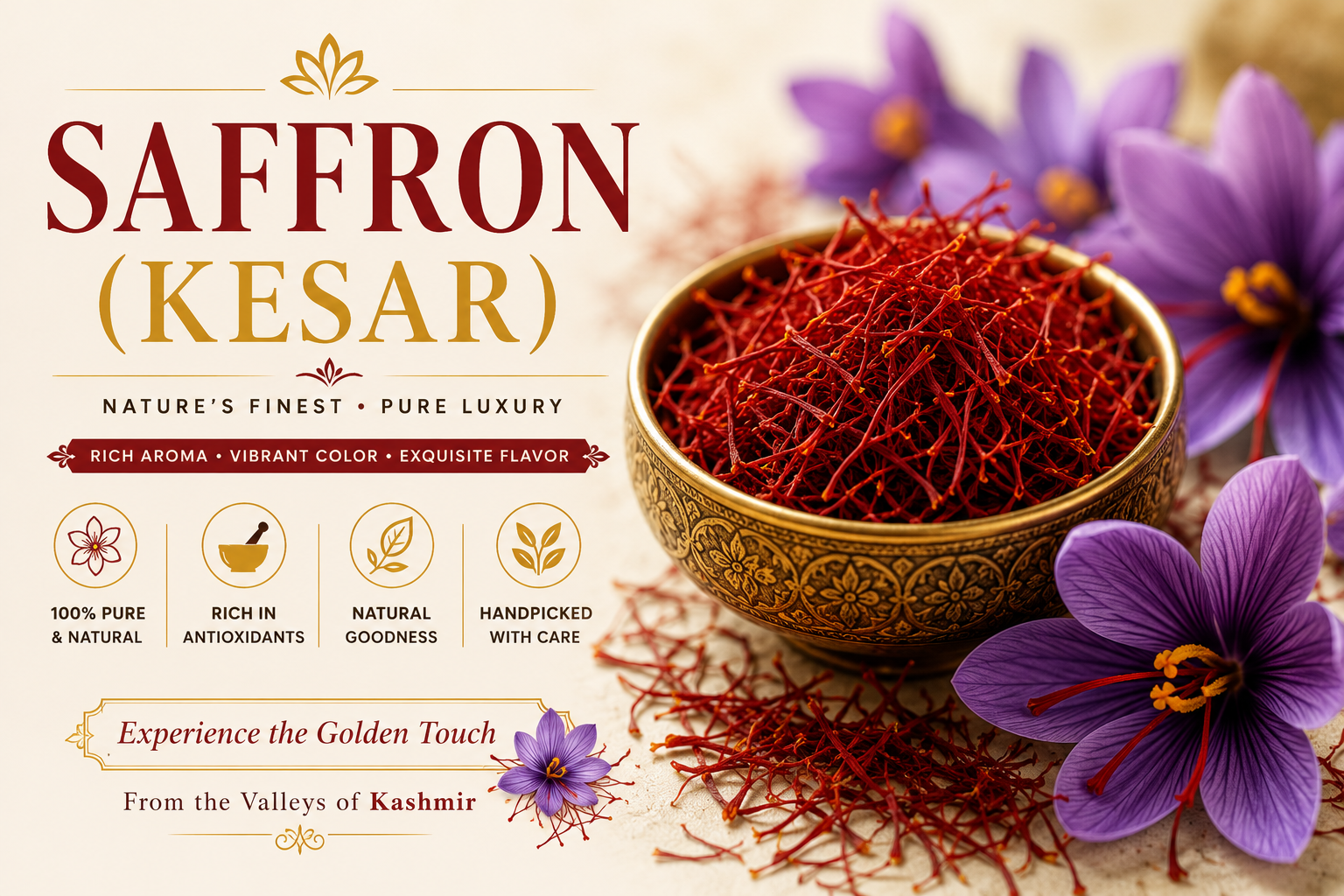
Saffron, popularly known as Kesar in India, is one of the world’s most valuable culinary spices. It is obtained from the delicate crimson stigmas of the Crocus sativus flower and is treasured for its vibrant golden colour, unique aroma and subtle flavour.
For centuries, saffron has been associated with fine cuisine, cultural traditions and festive celebrations. It is widely used in Indian sweets, biryanis, milk-based beverages, desserts and premium international recipes where even a small quantity creates remarkable colour and fragrance.
Due to the careful harvesting process and the large number of flowers required to produce a small amount of spice, saffron is often called the “Golden Spice” and remains one of the most sought-after ingredients in kitchens around the world.
🌸 What is Saffron (Kesar)?
Saffron is the dried stigma of the purple-flowering Crocus sativus plant. Each flower produces only three delicate crimson stigmas, which are carefully hand-harvested and naturally dried to create the premium spice known as saffron.
Its deep red threads, luxurious aroma and ability to impart a beautiful golden-yellow colour make saffron one of the most distinctive spices used in culinary traditions across India, the Middle East, Europe and many other regions.
Flower Derived
Obtained from the delicate stigmas of the Crocus sativus flower.
Premium Spice
Among the world’s most valuable spices due to its careful harvesting process.
Natural Colour
Produces a rich golden-yellow colour in foods and beverages.
Culinary Favourite
Used in desserts, rice dishes, sweets, beverages and gourmet recipes.
Botanical Information
| Common Name | Saffron |
| Hindi Name | Kesar (केसर) |
| Botanical Name | Crocus sativus |
| Family | Iridaceae |
| Plant Type | Flowering Perennial Plant |
| Spice Obtained From | Dried Crimson Stigmas |
| Colour | Deep Red Threads |
| Flavour | Delicate, Slightly Sweet & Floral |
| Aroma | Rich Floral & Honey-like |
| Main Culinary Use | Colouring and Flavouring Premium Dishes |
📜 History & Origin of Saffron
Saffron has been cultivated for thousands of years and is regarded as one of the oldest and most prestigious spices in human history. Ancient civilizations valued it for its remarkable colour, aroma and importance in culinary and cultural traditions.
In India, saffron has long been associated with festive foods, royal kitchens and traditional recipes. The Kashmir region is internationally recognised for producing premium-quality saffron known for its deep colour, rich aroma and exceptional craftsmanship.
Today, saffron continues to be appreciated by chefs and food lovers worldwide for its ability to transform ordinary recipes into extraordinary culinary experiences.
🌟 Quick Facts About Saffron
Known As
The Golden Spice
Source
Dried Stigmas of Crocus sativus
Indian Name
Kesar
Colour
Deep Red Threads with Golden Infusion
Popular Uses
Biryani, Kheer, Milk, Desserts & Sweets
Harvesting
Entirely Handpicked
Major Producers
India, Iran, Spain & Greece
Special Feature
One of the World’s Most Valuable Culinary Spices
Nutritional Profile of Saffron (Kesar)
Saffron (Kesar) is primarily used in very small culinary quantities because of its intense colour, delicate aroma and distinctive flavour. Although consumed sparingly, it naturally contains vitamins, minerals and plant compounds that contribute to its unique characteristics.
Natural Carotenoids
Responsible for saffron’s rich golden colour.
Natural Aromatic Compounds
Create its distinctive floral fragrance.
Vitamin C
Occurs naturally as part of saffron’s composition.
Potassium
An essential mineral naturally present in saffron.
Calcium
Contributes to saffron’s natural mineral profile.
Iron
Naturally found in saffron threads.
Dietary Fibre
Present naturally, though saffron is used in very small amounts.
Low Serving Quantity
Only a few strands are sufficient for most recipes.
🌸 Natural Colour, Aroma & Flavour Compounds
The remarkable characteristics of saffron come from naturally occurring plant compounds that give it its brilliant colour, pleasant fragrance and delicate taste. These compounds make saffron one of the world’s most distinctive culinary spices.
Crocin
Provides saffron’s vibrant golden-yellow colour when infused.
Safranal
Responsible for saffron’s signature floral aroma.
Picrocrocin
Contributes to saffron’s delicate flavour profile.
Natural Pigments
Create the luxurious golden colour in food and beverages.
Popular Types of Saffron
🇮🇳 Kashmiri Saffron
Known for its deep crimson threads, intense aroma and excellent colouring ability.
🇮🇷 Iranian Saffron
Widely produced and appreciated for its long red threads and consistent quality.
🇪🇸 Spanish Saffron
Popular in Mediterranean cuisine for its balanced aroma and flavour.
🇬🇷 Greek Saffron
Produced in limited quantities and valued for premium culinary applications.
⚖️ Common Saffron Grades
| Grade | Appearance | Common Use |
|---|---|---|
| Premium Threads | Deep Red Stigmas | Fine Dining & Premium Cooking |
| Select Threads | Mostly Red with Minimal Yellow | Everyday Premium Recipes |
| Mixed Threads | Red & Yellow Portions | General Culinary Use |
| Saffron Powder | Fine Powder | Bakery & Food Processing |
🌍 Major Saffron Producing Countries
🌱 Ideal Growing Conditions
Climate
Cool winters and warm, dry summers provide ideal conditions.
Sunlight
Requires abundant sunlight for healthy flowering.
Soil
Well-drained, fertile soil with good organic content.
Irrigation
Moderate watering without excessive moisture.
Flowering Season
Blooms during autumn under favourable conditions.
Harvesting
Each flower is hand-picked and processed with exceptional care.
Culinary & Nutritional Highlights of Saffron (Kesar)
World’s Premium Spice
Saffron is treasured for its rarity, craftsmanship and exceptional culinary value.
Natural Golden Colour
Only a few saffron threads can impart an elegant golden hue to dishes and beverages.
Rich Floral Aroma
Its naturally delicate fragrance enhances both sweet and savoury recipes.
Versatile Culinary Ingredient
Used in rice dishes, desserts, sweets, beverages and gourmet cuisine worldwide.
Natural Plant Compounds
Contains naturally occurring colour, aroma and flavour compounds unique to saffron.
Chef’s Favourite
Professional chefs value saffron for its elegance, aroma and visual appeal.
🍛 Saffron in Indian Cuisine
Saffron has been a symbol of luxury and celebration in Indian cuisine for centuries. Its vibrant golden colour and delicate aroma make it a prized ingredient in festive meals, royal recipes and traditional sweets.
It is commonly infused in warm milk or water before being added to biryanis, pulao, kheer, kulfi, shrikhand, rasmalai and numerous festive desserts. This gentle infusion allows the saffron threads to release their colour and fragrance evenly throughout the dish.
Beyond traditional Indian recipes, saffron is also widely used in Mediterranean, Persian, Middle Eastern and European cuisines, making it one of the world’s most celebrated culinary spices.
👑 Why Saffron is One of the World’s Most Valuable Spices
Saffron’s exceptional value comes from the painstaking effort required to produce it. Each flower blooms for only a short period and contains just three delicate crimson stigmas, all of which must be harvested by hand.
Hand Harvested
Every saffron thread is carefully picked by hand.
Limited Blooming Season
The flowers bloom for only a brief period each year.
Highly Concentrated
A small number of threads provide remarkable colour and aroma.
Global Culinary Prestige
Used by chefs around the world in premium recipes.
🍽️ Popular Dishes Prepared with Saffron
❤️ Why Professional Chefs Love Saffron
- Creates an elegant golden colour naturally.
- Provides a luxurious floral aroma.
- Only a few strands are needed for most recipes.
- Perfect for premium desserts and festive dishes.
- Pairs beautifully with milk, rice, dry fruits and nuts.
- Suitable for both sweet and savoury cuisine.
- Highly valued in Indian, Persian, Mediterranean and European cooking.
- Enhances the presentation of gourmet dishes.
- Recognised worldwide as a symbol of culinary excellence.
- Transforms ordinary recipes into premium dining experiences.
Important Precautions
Saffron (Kesar) is a premium culinary spice that is typically used in very small quantities. Using it appropriately helps preserve its unique aroma, flavour and colour while ensuring the best cooking experience.
Use Sparingly
A few saffron threads are usually sufficient for most recipes.
Infuse Before Use
Soak saffron threads in warm milk or water before adding them to dishes.
Avoid Excessive Heat
Very high temperatures for prolonged periods may reduce its delicate aroma.
Store Properly
Keep saffron in an airtight container away from sunlight and moisture.
Buy from Trusted Sources
Purchase saffron from reputable suppliers to ensure authenticity and quality.
Follow Recipe Instructions
Different recipes may require different quantities depending on the serving size.
🏆 What Makes Premium Saffron?
Genuine saffron is recognised by its deep crimson threads, pleasant floral aroma and remarkable colouring ability. Premium saffron consists primarily of carefully harvested red stigmas with minimal yellow portions.
🌺 Deep Red Threads
High-quality saffron contains rich crimson threads with minimal yellow styling.
👃 Natural Aroma
Fresh saffron offers a delicate floral and honey-like fragrance.
🧡 Strong Colour
Produces a beautiful golden-yellow infusion after soaking.
✨ Clean Appearance
Threads should be dry, unbroken and free from dust or foreign materials.
🌱 From Farm to Kitchen
Cultivation
Saffron crocus bulbs are planted in fertile, well-drained soil under suitable climatic conditions.
Flowering
The purple flowers bloom during autumn, producing three delicate crimson stigmas.
Hand Harvesting
Each flower is carefully picked by hand to preserve the delicate stigmas.
Drying
The stigmas are gently dried to develop their colour, aroma and culinary quality.
Packaging
The dried saffron threads are carefully packed to help preserve freshness and aroma.
Your Kitchen
Premium saffron is ready to enrich desserts, rice dishes, beverages and festive recipes.
🌍 Sustainable Cultivation
Traditional saffron cultivation depends on skilled farmers who carefully nurture the crop through every stage of growth. Responsible farming practices help maintain soil quality, protect natural resources and preserve saffron-growing traditions for future generations.
Responsible Farming
Careful cultivation supports long-term agricultural sustainability.
Efficient Water Use
Proper irrigation practices help conserve valuable water resources.
Skilled Farmers
Expert growers preserve traditional harvesting techniques.
Quality Preservation
Thoughtful cultivation helps maintain the premium characteristics of saffron.
“A few delicate threads of saffron can transform an ordinary dish into an extraordinary culinary masterpiece.”
📦 Storage Guide
Saffron (Kesar) is highly valued for its delicate aroma, vibrant colour and premium quality. Proper storage helps preserve these characteristics for an extended period.
- Store saffron threads in an airtight glass or food-grade container.
- Keep the container in a cool, dry and dark place away from direct sunlight.
- Avoid exposure to moisture, as it can reduce quality and aroma.
- Always use clean and completely dry utensils when handling saffron.
- Keep saffron away from strong-smelling spices and foods to prevent aroma absorption.
- Do not refrigerate unless recommended by the manufacturer.
- Keep the container tightly sealed after every use.
- Purchase quantities that you can comfortably use within a reasonable time for maximum freshness.
🏆 How to Identify Premium Quality Saffron
❤️ Colour
Premium saffron threads are deep crimson red with minimal yellow portions.
🌸 Aroma
Fresh saffron has a pleasant floral fragrance with subtle honey-like notes.
🧵 Shape
Threads should appear trumpet-shaped, dry and naturally tapered.
✨ Cleanliness
Quality saffron is free from dust, artificial colouring and foreign materials.
🧪 Simple Home Quality Checks
Warm Water Test
Place a few threads in warm water. Genuine saffron gradually releases a rich golden colour over several minutes.
Thread Inspection
Look for naturally shaped threads rather than uniformly cut pieces.
Aroma Check
Quality saffron has a pleasant floral aroma rather than a strong artificial smell.
Appearance
The threads should remain intact after soaking instead of dissolving.
🛒 Buying Guide
- Purchase saffron from trusted brands or reputable spice sellers.
- Choose whole saffron threads instead of powder whenever possible.
- Check that the packaging is sealed and food-grade.
- Read manufacturing and best-before dates before purchasing.
- Avoid products with excessive broken pieces or dust.
- Prefer saffron with deep red threads and minimal yellow portions.
- Buy quantities suitable for your regular culinary needs.
- Look for proper product labeling and quality certifications where applicable.
⚖️ Kashmiri vs Iranian vs Spanish Saffron
| Feature | Kashmiri | Iranian | Spanish |
|---|---|---|---|
| Thread Colour | Deep Crimson | Bright Red | Red-Orange |
| Aroma | Rich & Intense | Strong Floral | Mild Floral |
| Colour Release | Excellent | Very Good | Good |
| Common Uses | Premium Indian Cuisine | Global Culinary Use | Mediterranean Recipes |
| Availability | Limited | Widely Available | Moderate |
👨🍳 Professional Chef’s Buying Tips
Buy Threads
Whole saffron threads generally make authenticity easier to evaluate than powdered saffron.
Look for Deep Red
Premium saffron usually contains richly coloured crimson threads.
Choose Sealed Packs
Properly sealed packaging helps maintain freshness and aroma.
Quality Over Quantity
A small amount of premium saffron is often sufficient for many recipes.
🇮🇳 India’s Position in Saffron Production
India is internationally recognized for producing premium-quality Saffron (Kesar), particularly from the Kashmir Valley. Kashmiri saffron is admired for its deep crimson threads, rich floral aroma, excellent colouring ability and traditional hand-harvesting methods.
Although India’s production volume is smaller than some major producing countries, Kashmiri saffron is highly valued in domestic and international markets because of its exceptional quality and distinctive characteristics.
Saffron cultivation supports local farming communities while preserving centuries-old agricultural traditions. The spice continues to play an important role in India’s culinary heritage and premium food industry.
🗺️ Major Saffron Growing Regions
🌍 Major Export Destinations
- 🇺🇸 United States
- 🇬🇧 United Kingdom
- 🇨🇦 Canada
- 🇦🇪 United Arab Emirates
- 🇸🇦 Saudi Arabia
- 🇶🇦 Qatar
- 🇴🇲 Oman
- 🇸🇬 Singapore
- 🇦🇺 Australia
- 🇪🇺 Various European Countries
💡 Did You Know?
- Each saffron flower produces only three crimson stigmas.
- Thousands of flowers are required to produce a small quantity of saffron.
- Saffron is harvested entirely by hand.
- Kashmiri saffron has received a Geographical Indication (GI) tag.
- Saffron flowers bloom for only a short period during autumn.
- Saffron is often called the “Golden Spice” because of its value and colour.
- Only a few saffron threads are usually enough for an entire recipe.
- Saffron has been used in royal cuisines for centuries.
- It is widely used in Indian, Persian, Mediterranean and European cooking.
- Whole saffron threads generally retain their aroma longer than powdered saffron.
Frequently Asked Questions
What is Saffron (Kesar)?
Saffron is a premium culinary spice obtained from the dried crimson stigmas of the Crocus sativus flower.
Why is saffron so expensive?
It requires careful hand harvesting, and each flower produces only three delicate stigmas, making production highly labour-intensive.
How should saffron be used in cooking?
For best results, soak saffron threads in warm milk or warm water before adding them to your recipe.
Which Indian state is famous for saffron?
The Union Territory of Jammu & Kashmir, especially the Pampore region, is famous for producing premium-quality saffron.
Can saffron be added directly to food?
Yes, but soaking the threads first helps release their colour, aroma and flavour more effectively.
How should saffron be stored?
Store saffron in an airtight container in a cool, dry and dark place away from moisture and direct sunlight.
Which dishes commonly use saffron?
Saffron is widely used in biryani, pulao, kheer, kulfi, shrikhand, rasmalai, desserts and saffron-infused milk.
Is whole saffron better than saffron powder?
Whole threads are generally preferred because their quality and authenticity are easier to evaluate.
How much saffron should be used in one recipe?
Only a small number of threads are typically required, as saffron is highly concentrated.
What gives saffron its golden colour?
Naturally occurring compounds in saffron release the characteristic golden-yellow colour when infused in warm liquid.
👨🍳 Chef’s Recommendation
For the finest flavour and colour, lightly crush a few saffron threads and soak them in warm milk or water for 15–20 minutes before adding them to your recipe. This simple technique helps release saffron’s natural aroma and golden colour, making every dish look and taste more luxurious.
🌸 Final Thoughts on Saffron (Kesar)
Saffron (Kesar) is one of the world’s most treasured culinary spices, admired for its brilliant golden colour, delicate floral aroma and remarkable versatility. Harvested by hand from the Crocus sativus flower, it represents centuries of craftsmanship and culinary tradition.
Whether infused into fragrant biryanis, luxurious desserts, festive beverages or gourmet recipes, saffron transforms ordinary ingredients into memorable culinary experiences. Its premium quality, distinctive character and rich heritage continue to make it a favourite among home cooks and professional chefs worldwide.
By selecting authentic saffron, storing it correctly and using it thoughtfully, you can enjoy its unique aroma, colour and flavour in every special meal.
❤️ Why Every Kitchen Needs Saffron
Premium Culinary Ingredient
Recognised worldwide as one of the finest and most prestigious spices.
Natural Golden Colour
Adds an elegant golden hue to both sweet and savoury dishes.
Distinctive Aroma
Enhances recipes with its delicate floral fragrance.
Versatile Cooking
Ideal for rice dishes, desserts, sweets, bakery products and beverages.
Global Favourite
Used in Indian, Persian, Mediterranean and international cuisines.
Chef’s Choice
Preferred by culinary professionals for premium presentation and flavour.
📚 Continue Exploring Premium Spices
Every spice tells a unique story through its aroma, flavour and culinary heritage. Continue your journey with the KHALVA Masala Premium Spice Guide collection and discover expert cooking tips, storage advice, sourcing information and fascinating facts about India’s most celebrated spices.
“A handful of spices may create a meal, but a few delicate strands of saffron create an unforgettable experience.”
📖 Educational Disclaimer
This guide is intended for educational and culinary purposes only. It does not provide medical, nutritional or healthcare advice and should not be used to diagnose, treat, cure or prevent any disease or health condition.
Information presented may vary depending on saffron variety, origin, cultivation methods and processing practices. Always purchase food products from trusted suppliers and consult qualified professionals for personalised dietary or health-related guidance.
🌟 Thank You for Exploring KHALVA Masala
We appreciate you taking the time to learn about one of the world’s finest spices. Our mission is to share authentic knowledge about premium spices while celebrating India’s rich culinary heritage.
Keep exploring the complete KHALVA Masala Premium Spice Guide collection for expert insights, cooking inspiration and trusted information on the ingredients that make every recipe truly exceptional.