Fennel Seeds (Saunf): The Complete Guide to India’s Sweet & Aromatic Spice
Discover everything about Fennel Seeds (Saunf)—their fascinating history, nutritional value, popular varieties, culinary uses, traditional importance, cultivation, storage tips, buying guide and much more. This comprehensive guide explains why fennel seeds have remained one of India’s most cherished spices and natural mouth fresheners for centuries.
Quick Facts About Fennel Seeds (Saunf)
🌿 Scientific Name
Foeniculum vulgare
🏠 Plant Family
Apiaceae (Parsley Family)
🇮🇳 Hindi Name
Saunf (सौंफ)
🌍 Origin
Mediterranean Region
🎨 Colour
Light Green to Yellowish Green
👃 Aroma
Sweet, Fresh & Pleasantly Aromatic
🌿 Taste
Sweet, Mildly Licorice-like & Refreshing
🌡️ Climate
Cool & Dry Climate with Moderate Sunlight
📅 Harvest Season
February – April
🧺 Shelf Life
12–24 Months (When Properly Stored)
⭐ Main Compounds
Anethole, Fenchone, Estragole & Essential Oils
🍛 Common Uses
Cooking, Mouth Freshener, Tea, Desserts, Pickles & Spice Blends
What are Fennel Seeds (Saunf)?
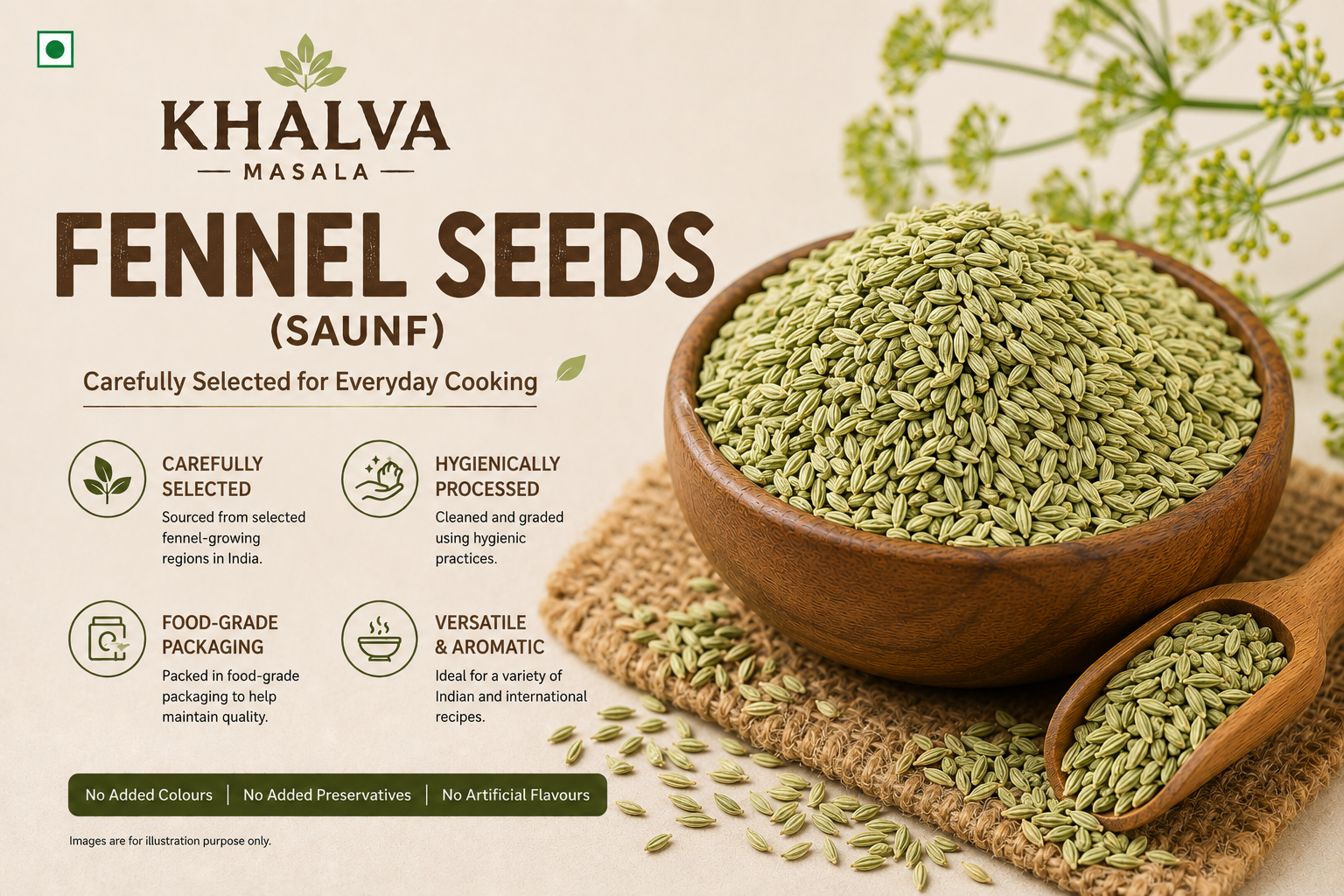
Fennel Seeds (Saunf) are the dried seeds of the Foeniculum vulgare plant, a fragrant herb belonging to the parsley family (Apiaceae). Renowned for their naturally sweet flavour and refreshing aroma, fennel seeds are one of the most popular spices in Indian cuisine and are widely enjoyed around the world.
These small, greenish-yellow seeds have a mild licorice-like taste and a pleasant aroma that enhances both sweet and savoury dishes. Besides being a versatile culinary spice, fennel seeds are traditionally served as a natural mouth freshener after meals and are commonly used in herbal teas, desserts, spice blends, pickles and baked goods.
From home kitchens to professional restaurants, fennel seeds are valued for their delightful flavour, refreshing qualities and exceptional versatility, making them an indispensable ingredient in countless recipes.
History & Origin of Fennel Seeds
Fennel has been cultivated for more than 3,000 years and is believed to have originated in the Mediterranean region. Ancient civilizations such as the Egyptians, Greeks and Romans valued fennel for its pleasant aroma and culinary importance, gradually spreading its cultivation across Europe, Asia and the Middle East.
Through historic trade routes, fennel reached the Indian subcontinent, where it became an essential spice in regional cuisines. Over time, India developed into one of the world’s leading producers and consumers of fennel, with the spice becoming a familiar ingredient in traditional recipes and after-meal mouth fresheners.
Today, Indian fennel seeds are appreciated globally for their superior quality, natural sweetness and rich aroma, making them an important commodity in the international spice market.
Why are Fennel Seeds So Special?
Fennel seeds are unique because they naturally combine a sweet, refreshing taste with an aromatic fragrance that complements a wide variety of foods. Unlike many spices that primarily add heat or pungency, fennel contributes gentle sweetness and a cooling sensation, making it suitable for both savoury dishes and desserts.
The seeds are rich in naturally occurring essential oils, particularly anethole, which gives fennel its characteristic sweet aroma and distinctive flavour. Their versatility allows them to be used whole, roasted, powdered or infused into teas and beverages.
Whether sprinkled over breads, blended into masalas, brewed into herbal teas or enjoyed as a refreshing mouth freshener after meals, fennel seeds continue to be one of the world’s most cherished culinary spices. Their pleasant taste, rich heritage and wide range of culinary applications have earned them a permanent place in kitchens across cultures.
Nutritional Information
Calories
345 kcal
Protein
15.8 g
Carbohydrates
52.3 g
Dietary Fiber
39.8 g
Fat
14.9 g
Calcium
1196 mg
Iron
18.5 mg
Magnesium
385 mg
Potassium
1694 mg
Phosphorus
487 mg
*Approximate nutritional values per 100 grams of fennel seeds. Actual values may vary depending on the variety, cultivation practices, growing conditions and processing methods.
🌿 Natural Aroma & Active Compounds
Fennel seeds are naturally rich in aromatic essential oils, with anethole being the primary compound responsible for their sweet, refreshing flavour and characteristic licorice-like aroma. Other naturally occurring compounds such as fenchone, estragole and various flavonoids further enhance their fragrance and culinary appeal.
In addition to these aromatic compounds, fennel seeds are naturally rich in dietary fibre, plant-based nutrients and essential minerals. Their unique composition makes them one of the most flavourful and versatile spices used in cuisines across the world.
Popular Types of Fennel Seeds
🌿 Indian Green Fennel
The most popular variety, known for its sweet taste, bright green colour and rich aroma.
🌾 Premium Bold Saunf
Large, carefully selected seeds preferred for premium culinary applications and mouth fresheners.
🍬 Sugar-Coated Saunf
Colourful fennel seeds coated with sugar, commonly served as a refreshing after-meal mouth freshener.
🥄 Ground Fennel Powder
Finely ground fennel used in spice blends, baking, sauces and seasoning mixes.
☕ Roasted Fennel Seeds
Lightly roasted seeds with enhanced aroma, ideal for snacks, spice blends and digestive mixes.
🌱 Organic Fennel Seeds
Organically cultivated fennel grown using natural farming practices for premium quality.
Comparison of Popular Fennel Varieties
| Type | Appearance | Flavour | Best Uses |
|---|---|---|---|
| Indian Green Fennel | Light Green | Sweet & Aromatic | Cooking & Mouth Freshener |
| Premium Bold Saunf | Large Green Seeds | Rich & Sweet | Premium Culinary Use |
| Sugar-Coated Saunf | Colourful Coating | Sweet | After-Meal Mouth Freshener |
| Ground Fennel Powder | Fine Powder | Sweet & Mild | Masalas & Baking |
| Roasted Fennel | Golden Green | Nutty & Aromatic | Snacks & Seasonings |
| Organic Fennel | Natural Green | Fresh & Sweet | Everyday Cooking |
Major Fennel Producing States in India
- 🌾 Gujarat (Largest Producer)
- 🌾 Rajasthan
- 🌾 Uttar Pradesh
- 🌾 Madhya Pradesh
- 🌾 Haryana
- 🌾 Punjab
- 🌾 Karnataka
- 🌾 Maharashtra
- 🌾 Andhra Pradesh
- 🌾 Tamil Nadu
Ideal Climate for Growing Fennel
Fennel is primarily grown as a Rabi (winter) crop and thrives in cool, dry climates with plenty of sunshine. It grows best at temperatures between 15°C and 25°C, where moderate weather allows the plants to develop highly aromatic seeds.
The crop prefers well-drained loamy or sandy-loam soil rich in organic matter with a neutral to slightly alkaline pH. Timely irrigation, adequate sunlight and good drainage contribute significantly to seed quality, aroma and yield, while excessive rainfall or waterlogging can adversely affect crop growth.
Gujarat and Rajasthan provide ideal growing conditions for fennel cultivation, producing premium-quality seeds that are widely appreciated in domestic and international markets.
How Fennel is Grown
Land Preparation
The soil is ploughed thoroughly and enriched with organic manure to create a fertile seedbed for healthy plant growth.
Sowing
Selected quality fennel seeds are sown during the winter season with proper spacing for uniform growth.
Crop Care
Regular irrigation, weed management and balanced nutrient application help produce healthy plants and high-quality seeds.
Flowering
The plants produce attractive yellow umbrella-shaped flower clusters that later develop into seed heads.
Harvesting
The crop is harvested when the seed heads mature and change from green to yellowish-brown, indicating full maturity.
Cleaning & Grading
The harvested seeds are dried, cleaned, graded and hygienically packed to preserve their natural aroma, colour and freshness.
🚜 From Farm to Kitchen
Health Benefits of Fennel Seeds (Saunf)
Rich in Natural Plant Compounds
Fennel seeds naturally contain anethole, fenchone, flavonoids and other aromatic compounds that contribute to their distinctive flavour and aroma.
Natural Source of Antioxidants
Fennel contains naturally occurring antioxidant compounds that make it a valuable addition to a balanced diet.
Excellent Source of Dietary Fibre
The seeds are naturally rich in dietary fibre, making them a nutritious ingredient in everyday cooking.
Rich in Essential Minerals
Fennel seeds naturally provide calcium, potassium, magnesium, phosphorus and iron.
Refreshing Natural Flavour
Their sweet and cooling taste makes fennel a popular ingredient in herbal teas, beverages and refreshing recipes.
Enhances Food Naturally
Its pleasant aroma complements curries, breads, desserts, pickles, spice blends and many regional dishes.
Globally Appreciated Spice
Fennel is widely used in Indian, Mediterranean, Middle Eastern and European cuisines.
Versatile Culinary Ingredient
It can be used whole, roasted, powdered or infused into teas and beverages.
Popular Mouth Freshener
Fennel seeds are traditionally enjoyed after meals for their naturally sweet taste and refreshing aroma.
Perfect for Spice Blends
Saunf is an important ingredient in numerous masalas, seasoning blends and pickle recipes.
Ideal for Herbal Infusions
Its naturally aromatic seeds are commonly used to prepare flavourful herbal teas and warm beverages.
Essential Kitchen Spice
From everyday home cooking to professional kitchens, fennel remains one of the world’s most versatile spices.
🌿 Fennel (Saunf) in Ayurveda
Fennel has been valued in Ayurveda and traditional Indian food culture for centuries. It is traditionally regarded as a cooling spice and has long been included in everyday meals because of its pleasant sweetness, refreshing aroma and culinary versatility.
Fennel seeds are commonly enjoyed after meals as a traditional mouth freshener and are frequently combined with spices such as cumin, coriander, cardamom and cinnamon in numerous regional recipes, spice blends and herbal beverages.
❄️ Nature
Traditionally Considered Cooling
🌿 Taste
Sweet, Mild & Aromatic
🍽️ Traditional Use
Daily Culinary Ingredient
🍬 Popular Use
Natural Mouth Freshener
🍵 Common Preparations
Tea, Spice Blends & Desserts
🌿 Best Paired With
Cumin, Coriander, Cardamom & Cinnamon
🏡 Everyday Use
Essential Ingredient in Indian Kitchens
📜 Traditional Importance
Widely Used in Indian Culinary Heritage
🌿 Why Fennel Seeds are One of India’s Favourite Spices
Fennel seeds are cherished for their naturally sweet flavour, refreshing aroma and remarkable versatility. Unlike many spices that add heat or pungency, fennel contributes a gentle sweetness and cooling sensation that complements both savoury and sweet recipes.
Whether used in spice blends, curries, breads, desserts, herbal teas or enjoyed as an after-meal mouth freshener, fennel seeds bring a distinctive aroma that elevates every dish. Their premium quality and delightful taste have also made Indian fennel highly valued in international markets.
With a culinary history spanning thousands of years, fennel continues to be one of the world’s most loved spices. Its refreshing flavour, versatility and enduring popularity ensure that Saunf remains an essential ingredient in kitchens across India and around the globe.
🍛 Culinary Uses of Fennel Seeds (Saunf)
- Whole fennel seeds are widely used in curries, vegetable dishes and traditional Indian spice blends.
- Saunf is an essential ingredient in many regional masalas, including panch phoron and pickle spice mixes.
- Commonly added to breads, biscuits, cakes and cookies for a naturally sweet aroma.
- Used in Indian sweets, desserts and confectionery to enhance flavour.
- Fennel seeds are often brewed into refreshing herbal teas and warm beverages.
- Lightly roasted fennel is enjoyed as a natural after-meal mouth freshener.
- Ground fennel powder is used in marinades, spice rubs and seasoning blends.
- Saunf pairs beautifully with cumin, coriander, cardamom, cinnamon and cloves.
- Frequently used in pickles, chutneys and traditional digestive mixtures.
- Its sweet aroma complements both vegetarian and non-vegetarian dishes.
🏡 Traditional Home Uses
✨ Beauty & Lifestyle Uses
- Fennel extracts are commonly used in various cosmetic and personal care products.
- Its naturally pleasant aroma makes fennel a popular ingredient in herbal preparations.
- Fennel seeds are widely enjoyed as a refreshing mouth freshener after meals.
- The seeds are often included in traditional herbal tea blends.
- Choose professionally formulated products containing fennel extracts whenever possible.
- Avoid applying concentrated essential oils directly to the skin unless properly diluted.
- Store fennel seeds in airtight containers to preserve their natural aroma.
- Always use clean, dry utensils while handling fennel seeds or powder.
🥄 How to Use Fennel Seeds (Saunf)
- Use whole fennel seeds during tempering to release their sweet aroma.
- Lightly roast the seeds before use for a richer flavour.
- Grind fennel into a fine powder for spice blends and marinades.
- Add fennel to breads, biscuits and desserts for a naturally sweet taste.
- Brew fennel seeds in hot water to prepare a refreshing herbal tea.
- Mix fennel with cumin, coriander and cardamom in homemade masalas.
- Enjoy roasted fennel as a traditional after-meal mouth freshener.
- Freshly grind only the amount required to retain maximum aroma.
- Store in an airtight container away from heat, moisture and sunlight.
- Adjust the quantity according to your recipe and personal taste preference.
🥄 Recommended Daily Intake
Fennel seeds are generally consumed in small culinary quantities. Around 1–2 teaspoons (approximately 3–6 grams) per day is commonly used in cooking or enjoyed as an after-meal mouth freshener as part of a balanced diet.
Individual dietary needs vary. If you are pregnant, breastfeeding, taking medication or have an existing medical condition, consult a qualified healthcare professional before consuming concentrated fennel supplements or significantly increasing your intake.
👨🍳 Chef’s Tip
Lightly dry roast fennel seeds over low heat for 1–2 minutes to enhance their naturally sweet aroma without burning them. For richer flavour, gently crush the roasted seeds before adding them to curries, breads or desserts. You can also mix roasted fennel with a pinch of cardamom for a refreshing homemade mouth freshener.
⚠️ Possible Side Effects of Excess Consumption
- Consuming excessive amounts of fennel seeds may cause digestive discomfort in some individuals.
- Some people may experience an allergic reaction to fennel or other plants in the Apiaceae family.
- Large quantities of fennel supplements should only be consumed under professional guidance.
- Highly concentrated fennel essential oil is not intended for direct consumption unless specifically formulated for food use.
- Overconsumption is not recommended as part of a balanced diet.
- If you notice any allergic symptoms after consuming fennel, discontinue use and seek medical advice.
- Always purchase clean, food-grade fennel seeds from trusted brands.
- Moderation is the best way to enjoy the pleasant flavour and aroma of fennel.
🚫 Who Should Be Careful?
- People with a known allergy to fennel, celery, carrots or other members of the Apiaceae family should avoid fennel.
- Individuals following special dietary plans should seek professional advice before consuming concentrated fennel products.
- Pregnant or breastfeeding women should consult a qualified healthcare professional before using fennel supplements.
- People taking prescription medications should seek medical advice before regularly consuming concentrated fennel extracts.
- Children should consume fennel only in normal culinary quantities unless otherwise advised by a healthcare professional.
- Anyone with an existing medical condition should consult a healthcare provider before making significant dietary changes.
📦 Storage Tips
- Store fennel seeds in a clean, airtight container.
- Keep them in a cool, dry place away from direct sunlight and moisture.
- Protect the seeds from humidity to preserve their natural sweetness and aroma.
- Always use a dry, clean spoon while handling fennel seeds.
- Whole fennel seeds remain fresh much longer than ground fennel powder.
- Grind only the amount required for immediate use.
- Close the container tightly after every use.
- Keep away from strong-smelling spices and foods, as fennel can absorb surrounding odours.
- Check the seeds regularly for freshness, colour and aroma.
- Use within the recommended shelf life for the best flavour and quality.
How to Identify Good Quality Fennel Seeds
Premium-quality fennel seeds should be clean, dry and uniform in size with a bright green to yellowish-green colour. Fresh seeds have a naturally sweet aroma and should be free from dust, insects, excess moisture, mould and foreign particles.
🎨 Appearance
Uniform green or yellowish-green seeds with consistent size and minimal broken pieces.
👃 Aroma
Fresh fennel releases a naturally sweet, pleasant and refreshing fragrance.
✨ Cleanliness
Free from dust, stones, insects, mould and unwanted foreign materials.
🌾 Texture
The seeds should feel firm, dry and crisp without any signs of moisture.
🧪 Simple Home Quality Checks
Visual Inspection
Choose seeds that are clean, bright green and uniform in size with no visible impurities.
Aroma Test
Rub a few seeds between your fingers. Fresh fennel should release a sweet, refreshing fragrance.
Texture Check
The seeds should feel hard, dry and crisp—not soft, damp or sticky.
Purity Check
Ensure the seeds are free from dust, insects, stones, mould and other foreign matter.
🛒 Buying Guide
- Buy fennel seeds from trusted brands and reputed spice suppliers.
- Choose bright green, clean and uniform-sized seeds with a naturally sweet aroma.
- Always check the manufacturing and best-before dates.
- Select hygienically packed, food-grade products.
- Whole fennel seeds generally retain freshness and aroma longer than ground powder.
- Avoid packs containing excessive broken seeds, dust or signs of moisture.
- Purchase quantities that match your regular cooking needs to maintain maximum freshness.
- Transfer the seeds to an airtight container immediately after opening the package.
🌍 India’s Position in Global Fennel Production
India is one of the world’s leading producers, consumers and exporters of Fennel Seeds (Saunf). The country’s favourable climate, fertile soils and centuries of farming expertise enable the production of premium-quality fennel with exceptional aroma, sweetness and colour.
Gujarat and Rajasthan are the principal fennel-growing states, together contributing a significant share of India’s total production. Indian fennel is widely appreciated in domestic markets as well as international trade for its superior quality, clean appearance and naturally sweet flavour.
Today, Indian fennel seeds are exported to numerous countries for use in food processing, spice blends, confectionery, herbal teas and traditional cuisines, strengthening India’s reputation as a global leader in the spice industry.
🌎 Major Export Destinations
- 🇺🇸 United States
- 🇨🇦 Canada
- 🇬🇧 United Kingdom
- 🇦🇪 United Arab Emirates
- 🇸🇦 Saudi Arabia
- 🇦🇺 Australia
- 🇩🇪 Germany
- 🇲🇾 Malaysia
- 🇸🇬 Singapore
- 🇳🇵 Nepal
💡 Did You Know?
- Fennel has been cultivated for more than 3,000 years and is one of the world’s oldest aromatic herbs.
- Despite being called “fennel seeds,” they are technically the dried fruits of the fennel plant.
- India is among the world’s largest producers and exporters of fennel seeds.
- Gujarat is India’s leading fennel-producing state, followed by Rajasthan.
- Fennel belongs to the Apiaceae family, which also includes cumin, coriander, dill, celery and parsley.
- The sweet flavour of fennel comes primarily from a naturally occurring aromatic compound called anethole.
- Roasted fennel seeds are traditionally served as a refreshing mouth freshener after meals across India.
- Fennel is widely used in Indian, Mediterranean, Middle Eastern and European cuisines.
- Both the seeds and the tender leaves of the fennel plant are edible and used in cooking.
- Indian fennel is highly valued worldwide for its bright green colour, sweet taste and rich aroma.
Frequently Asked Questions
What are fennel seeds (Saunf)?
Fennel seeds are the dried fruits of the Foeniculum vulgare plant, valued for their naturally sweet flavour, refreshing aroma and wide range of culinary uses.
Why are fennel seeds eaten after meals?
Fennel seeds are traditionally enjoyed after meals because of their sweet taste and refreshing aroma, making them a popular natural mouth freshener.
Can fennel seeds be used in desserts?
Yes. Fennel is widely used in desserts, confectionery, baked goods, sweets and beverages because of its naturally sweet flavour.
Can I use fennel seeds every day?
Yes. Fennel seeds are commonly consumed daily in normal culinary quantities as part of a balanced diet.
What do fennel seeds taste like?
They have a naturally sweet, mildly licorice-like flavour with a pleasant and refreshing aroma.
How should fennel seeds be stored?
Store them in an airtight container in a cool, dry place away from moisture, heat and direct sunlight to preserve freshness.
Which Indian states produce the most fennel?
Gujarat is the largest producer, followed by Rajasthan. Other producing states include Uttar Pradesh, Madhya Pradesh, Haryana and Punjab.
Can fennel seeds be ground into powder?
Yes. Fennel seeds can be ground into a fine powder and used in spice blends, baking, marinades and seasoning mixes.
Which spices pair well with fennel?
Fennel pairs wonderfully with cumin, coriander, cardamom, cinnamon, cloves, black pepper and star anise.
Why is Indian fennel popular worldwide?
Indian fennel is renowned for its premium quality, naturally sweet flavour, bright green colour and rich aroma, making it highly sought after in global spice markets.
📖 Final Thoughts
Fennel Seeds (Saunf) are among the world’s most cherished aromatic spices, admired for their naturally sweet flavour, refreshing fragrance and remarkable versatility. From enhancing curries and baked goods to flavouring herbal teas and serving as a traditional after-meal mouth freshener, fennel has earned a permanent place in kitchens across cultures.
Choosing premium-quality fennel seeds, storing them correctly and using them in the right quantity allows you to enjoy their authentic aroma and flavour in every recipe. With a culinary heritage spanning thousands of years, Saunf continues to delight food lovers around the world and remains an indispensable ingredient in Indian cuisine.