Asafoetida (Hing): The Complete Guide to India’s Most Aromatic Spice
Discover everything about Asafoetida (Hing)—its fascinating history, botanical origin, nutritional profile, types, production process, culinary uses, traditional importance, storage tips, buying guide and much more. This comprehensive guide explains why Hing has remained an indispensable ingredient in Indian kitchens for centuries.
Quick Facts About Asafoetida (Hing)
🌿 Scientific Name
Ferula assa-foetida
🏠 Plant Family
Apiaceae (Parsley Family)
🇮🇳 Hindi Name
Hing (हींग)
🌍 Native Region
Iran, Afghanistan & Central Asia
🎨 Colour
Light Yellow to Brown (Powder) or Amber (Pure Resin)
👃 Aroma
Strong, Pungent & Sulphur-Rich
🌿 Taste
Sharp, Savoury & Umami-like When Cooked
🌱 Plant Part Used
Dried Resin from the Root and Rhizome
🏭 Processing
Collected as Resin, Then Dried and Processed into Powder or Compound Hing
📦 Shelf Life
18–24 Months (When Properly Stored)
⭐ Main Aroma Compounds
Ferulic Acid, Sulphur Compounds & Essential Oils
🍛 Common Uses
Tempering (Tadka), Lentils, Curries, Pickles, Spice Blends & Vegetarian Cooking
What is Asafoetida (Hing)?
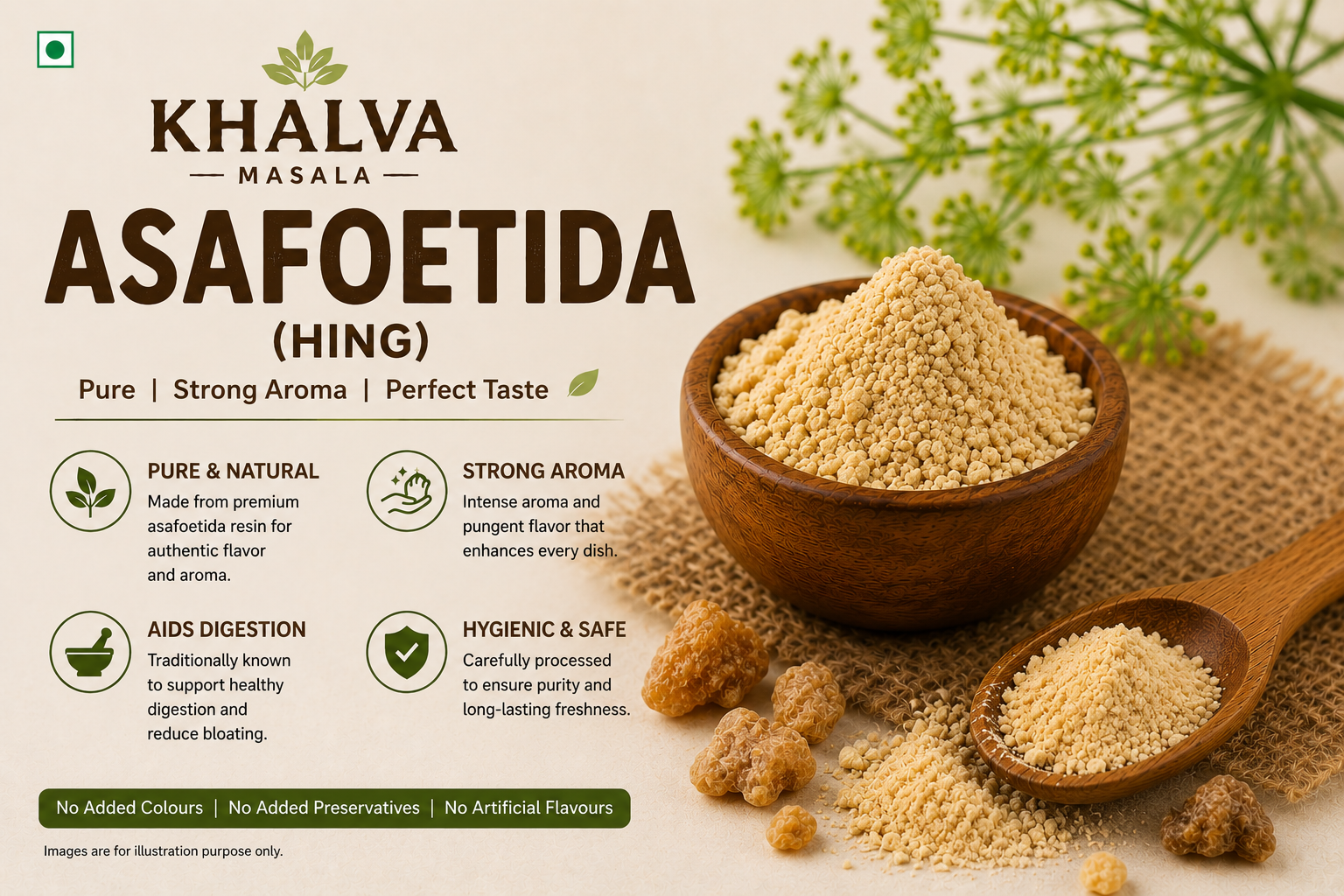
Asafoetida (Hing) is a highly aromatic spice obtained from the dried latex (gum resin) of the roots and rhizomes of plants belonging to the Ferula genus, particularly Ferula assa-foetida. Unlike most spices that come from seeds, fruits or bark, Hing is a natural plant resin that is carefully harvested, dried and processed before reaching the kitchen.
In its raw form, pure asafoetida has a strong, pungent aroma due to naturally occurring sulphur-containing compounds. However, when used in small quantities and cooked in hot oil or ghee, its flavour transforms into a rich, savoury and umami-like taste that enhances a wide variety of dishes.
Hing is an essential ingredient in Indian cuisine, especially in vegetarian cooking. It is commonly used in tempering (tadka), dals, curries, vegetables, pickles and spice blends, where even a small pinch adds remarkable depth and complexity to the final dish.
History & Origin of Asafoetida
Asafoetida has a rich history dating back more than 2,000 years. It is native to the arid regions of present-day Iran, Afghanistan and parts of Central Asia, where Ferula plants naturally thrive in dry mountainous environments.
Ancient traders introduced Hing to the Indian subcontinent through historic trade routes, where it quickly became an important ingredient in regional cuisines and traditional food culture. Over time, Indian cooks mastered the art of using tiny quantities of Hing to enhance the flavour of lentils, vegetables and spice-based dishes.
Although most raw asafoetida resin continues to originate from countries such as Afghanistan and Iran, India has become one of the world’s largest processors, consumers and distributors of compounded Hing, making it a staple in millions of households.
Why is Asafoetida (Hing) So Special?
Hing is unlike any other spice. While its raw aroma is extremely strong and pungent, gentle cooking completely transforms its character, producing a rich savoury flavour that enhances the overall taste of food without dominating it.
Because of its concentrated flavour, only a very small quantity is needed in most recipes. A single pinch added to hot oil or ghee during tempering can elevate dals, curries, legumes, vegetables and spice blends with remarkable depth and aroma.
Another unique feature of Hing is that it is available in two common forms: Pure Hing (natural resin) and Compounded Hing, where the resin is blended with edible ingredients to make it easier to measure and use in everyday cooking.
From traditional Indian kitchens to modern restaurants, Asafoetida continues to be one of the most distinctive culinary ingredients in the world. Its unmatched aroma, unique production process and exceptional flavour-enhancing properties have secured its place as an indispensable spice in Indian cuisine.
Nutritional Information
Calories
297 kcal
Protein
4.0 g
Carbohydrates
67.8 g
Dietary Fiber
4.1 g
Fat
1.1 g
Calcium
690 mg
Iron
39 mg
Phosphorus
50 mg
Potassium
210 mg
Magnesium
80 mg
*Approximate nutritional values per 100 grams of pure asafoetida resin. Actual values may vary depending on the plant source, purity, processing method and whether the product is pure or compounded Hing.
🌿 Natural Aroma & Active Compounds
Asafoetida owes its unmistakable aroma to naturally occurring organosulfur compounds, which are released when the resin is cut or ground. These compounds are responsible for the spice’s powerful fragrance that mellows into a rich savoury flavour during cooking.
The resin also naturally contains ferulic acid, essential oils, resin compounds and small amounts of naturally occurring volatile substances that contribute to its unique culinary character. These aromatic compounds make Hing one of the most concentrated flavouring ingredients used in Indian cuisine.
Popular Types of Asafoetida (Hing)
🌿 Pure Hing (Resin)
Natural dried resin with an extremely strong aroma. Used in very small quantities and often preferred by traditional cooks.
🥄 Compounded Hing Powder
The most common household variety, prepared by blending pure Hing resin with edible ingredients for easier everyday use.
🟡 Hing Granules
Granulated form that offers convenient measuring while retaining excellent aroma and flavour.
⭐ Premium Strong Hing
Higher resin content with a richer aroma, commonly preferred for authentic Indian cooking.
🏡 Everyday Kitchen Hing
Mild compounded Hing designed for regular home cooking and tempering.
📦 Export Quality Hing
Carefully processed and hygienically packed for commercial food manufacturing and international markets.
Pure Hing vs Compounded Hing
| Feature | Pure Hing | Compounded Hing |
|---|---|---|
| Composition | 100% Natural Resin | Resin Blended with Edible Ingredients |
| Aroma | Extremely Strong | Milder & Easier to Handle |
| Quantity Needed | Very Small Pinch | Slightly Larger Quantity |
| Ease of Use | Requires Careful Measuring | Convenient for Everyday Cooking |
| Common Users | Professional Chefs & Traditional Cooks | Home Kitchens |
| Best Uses | Authentic Recipes & Premium Cooking | Daily Tempering, Curries & Dals |
Major Asafoetida Producing Countries
- 🌍 Afghanistan (Largest Producer)
- 🌍 Iran
- 🌍 Uzbekistan
- 🌍 Turkmenistan
- 🌍 Tajikistan
- 🌍 Kazakhstan (Limited Production)
- 🇮🇳 India (Major Processor, Consumer & Emerging Cultivator)
Although India is one of the world’s largest consumers and processors of Hing, most raw asafoetida resin has traditionally been imported from Afghanistan and Iran. In recent years, cultivation efforts have also begun in the Himalayan regions of India to reduce dependence on imports.
Ideal Climate for Growing Asafoetida
Asafoetida plants naturally thrive in cold, dry and semi-arid mountainous regions. They prefer elevations between 1,800 and 3,500 metres, where long winters, cool summers and well-drained sandy soils provide favourable growing conditions.
The plants require abundant sunlight, low humidity and minimal rainfall. Unlike many cultivated spices, Asafoetida grows slowly and generally takes 4 to 5 years before it is mature enough for resin extraction.
In India, experimental cultivation is expanding in the cold desert regions of Ladakh and Himachal Pradesh, where climatic conditions resemble the spice’s native habitat.
How Asafoetida (Hing) is Produced
Plant Cultivation
Ferula plants are grown for several years until their thick roots and rhizomes become fully mature.
Root Exposure
The upper part of the root is carefully exposed by removing the surrounding soil before harvesting begins.
Resin Extraction
Small cuts are made on the root, allowing the milky latex to slowly ooze out and harden upon exposure to air.
Collection
The dried resin is collected repeatedly over several weeks as fresh latex continues to emerge from the root.
Cleaning & Processing
The resin is cleaned, graded and processed into pure resin, granules or compounded Hing powder.
Packaging
The finished product is hygienically packed in airtight containers to preserve its powerful aroma and freshness.
🌿 From Plant to Kitchen
Health Benefits of Asafoetida (Hing)
Rich in Natural Plant Compounds
Asafoetida naturally contains resin compounds, sulphur-containing compounds and essential oils that contribute to its distinctive aroma and culinary value.
Natural Source of Antioxidants
Hing contains naturally occurring antioxidant compounds that make it a valuable addition to a balanced and varied diet.
Powerful Flavour Enhancer
Just a small pinch transforms the taste of dals, curries, legumes and vegetables by adding rich savoury depth.
Highly Concentrated Spice
Unlike most spices, Hing is extremely concentrated, so only a tiny quantity is needed during cooking.
Globally Appreciated Ingredient
Although most popular in Indian cuisine, Asafoetida is also used in Middle Eastern, Persian and Central Asian cooking.
Suitable for Vegetarian Cooking
Its naturally savoury flavour makes Hing an excellent ingredient for enhancing vegetarian and vegan dishes.
Ideal for Tempering
When added to hot oil or ghee, Hing develops a mellow aroma that beautifully complements Indian tempering (tadka).
Authentic Indian Flavour
Many classic Indian recipes derive their signature taste from the subtle use of Asafoetida.
Versatile Culinary Ingredient
Perfect for lentils, beans, curries, pickles, spice blends, chutneys and savoury snacks.
Excellent Pantry Staple
Its long shelf life and concentrated flavour make Hing an economical spice for everyday kitchens.
Chef’s Favourite
Professional chefs value Hing for adding complexity and balance without overpowering other ingredients.
Easy to Store
When stored properly in an airtight container, Hing retains its characteristic aroma for an extended period.
🌿 Asafoetida (Hing) in Ayurveda
Asafoetida has been an important part of Ayurveda and traditional Indian culinary practices for centuries. It is highly valued for its distinctive aroma and is commonly used in small quantities to prepare a wide range of traditional dishes.
In Indian households, Hing is frequently added to hot ghee or oil during tempering before preparing dals, vegetables, legumes and curries. Its rich aroma complements spices such as cumin, mustard seeds, coriander, turmeric and fenugreek, creating the characteristic flavour found in many regional recipes.
🌿 Traditional Nature
Highly Aromatic Culinary Resin
👃 Aroma
Strong Before Cooking, Savoury After Cooking
🍛 Common Use
Tempering (Tadka)
🥣 Popular Recipes
Dals, Curries & Vegetable Dishes
🌱 Culinary Role
Natural Flavour Enhancer
🤝 Best Paired With
Cumin, Mustard, Turmeric & Coriander
🏡 Everyday Use
Essential Ingredient in Indian Kitchens
📜 Traditional Importance
Used in Indian Cooking for Centuries
🌟 Why Asafoetida (Hing) is Essential in Indian Cooking
Few spices have the remarkable ability to transform food as dramatically as Asafoetida. Although its raw aroma is powerful, a tiny pinch added to hot oil or ghee develops into a rich, savoury flavour that enhances the taste of an entire dish.
Hing is especially valued in vegetarian cuisine, where it brings depth and complexity to lentils, beans, vegetables and curries without overpowering their natural flavours. Its unique flavour profile has made it an indispensable ingredient in countless regional recipes throughout India.
From traditional family kitchens to professional restaurants, Asafoetida continues to play a vital role in authentic Indian cooking. Its exceptional aroma, concentrated flavour and centuries-old culinary heritage ensure that Hing remains one of the world’s most distinctive and treasured spices.
🍛 Culinary Uses of Asafoetida (Hing)
- A pinch of Hing is commonly added to hot oil or ghee during tempering (tadka) to enhance aroma and flavour.
- It is an essential ingredient in many Indian dals, lentil soups and bean-based recipes.
- Hing is widely used in vegetable curries, especially dishes made with potatoes, cauliflower, cabbage and okra.
- It adds depth and savoury flavour to sambhar, rasam and other South Indian preparations.
- Frequently included in pickles, chutneys and traditional spice blends.
- Used in Jain cuisine as an alternative flavouring ingredient where onion and garlic are avoided.
- Enhances the taste of kachori, namkeen, farsan and various savoury snacks.
- Pairs exceptionally well with cumin, mustard seeds, coriander, turmeric and fenugreek.
- Used in spice powders for seasoning roasted nuts, pulses and savoury mixtures.
- Only a very small quantity is required, making Hing one of the most economical spices in the kitchen.
🏡 Traditional Home Uses
✨ Lifestyle & Household Uses
- Hing has been valued in traditional Indian households for generations because of its distinctive aroma.
- Its strong fragrance makes it a unique ingredient in many traditional culinary preparations.
- Pure Hing resin should always be handled carefully because of its concentrated aroma.
- Store Hing separately in an airtight container to prevent its aroma from transferring to other spices.
- Always use a clean, dry spoon when measuring Hing.
- Compounded Hing powder is generally more convenient for everyday home cooking.
- Avoid exposing Hing to excessive moisture or direct sunlight.
- Purchase food-grade Hing only from trusted and reputable brands.
🥄 How to Use Asafoetida (Hing)
- Always add Hing to hot oil or ghee for a few seconds before adding other ingredients.
- Use only a pinch, as Hing is highly concentrated.
- Combine with cumin or mustard seeds during tempering for authentic Indian flavour.
- Add to dals, curries, legumes and vegetable dishes while cooking.
- Mix with spice blends to create richer and more balanced seasonings.
- Use compounded Hing for easier measuring in everyday recipes.
- Keep the container tightly closed immediately after use to preserve its aroma.
- Avoid adding excessive quantities, as too much Hing can overpower the dish.
- Store in a cool, dry place away from moisture and direct sunlight.
- Follow recipe recommendations for the best flavour and balance.
🥄 Recommended Daily Intake
Asafoetida is used in very small culinary quantities. In most recipes, only a small pinch (approximately 50–200 mg) is sufficient to flavour an entire dish. Because of its highly concentrated aroma and flavour, larger amounts are generally unnecessary.
If you are pregnant, breastfeeding, taking prescription medication or have an existing medical condition, consult a qualified healthcare professional before consuming concentrated asafoetida supplements or making significant dietary changes.
👨🍳 Chef’s Tip
For the best flavour, add Hing to hot ghee or oil over low heat for just 5–10 seconds before adding cumin, mustard seeds or other spices. This brief tempering softens its pungent aroma and releases its signature savoury character, creating the authentic flavour found in traditional Indian dals, curries and vegetable dishes.
⚠️ Possible Side Effects of Excess Consumption
- Consuming excessive amounts of Hing may cause stomach discomfort or digestive irritation in some individuals.
- People who are allergic to Asafoetida or plants from the Apiaceae family may experience allergic reactions.
- Large quantities of concentrated Hing or Hing supplements should only be consumed under professional guidance.
- Its strong aroma and flavour can easily overpower food if used in excess.
- Some individuals may be sensitive to the sulphur-containing compounds naturally present in Asafoetida.
- If you experience itching, swelling, rashes or breathing difficulties after consuming Hing, discontinue use and seek immediate medical advice.
- Always use food-grade Asafoetida purchased from trusted manufacturers.
- Using Hing in normal culinary quantities is generally preferred over excessive consumption.
🚫 Who Should Be Careful?
- People with a known allergy to Asafoetida should avoid consuming it.
- Individuals with food sensitivities should consult a healthcare professional before using concentrated Hing products.
- Pregnant or breastfeeding women should seek medical advice before taking Hing supplements or consuming large quantities.
- People taking blood-thinning medication or preparing for surgery should consult their healthcare provider before using concentrated Asafoetida products.
- Young children should consume Hing only in normal culinary quantities unless advised otherwise by a healthcare professional.
- Anyone with an existing medical condition or special dietary requirements should seek professional advice before making significant dietary changes.
📦 Storage Tips
- Store Hing in a tightly sealed, airtight container immediately after opening.
- Keep it in a cool, dry place away from direct sunlight, heat and moisture.
- Always use a clean and completely dry spoon to avoid contamination.
- Keep Asafoetida away from other spices because its powerful aroma can transfer easily.
- If possible, store Hing inside an additional sealed container to minimize odour spread.
- Do not expose the product to excessive humidity, which may reduce its quality.
- Always close the lid securely after every use.
- Check the product regularly for freshness, aroma and expiry date.
- Compounded Hing generally retains its quality longer when stored in its original airtight packaging.
- Follow the manufacturer’s storage recommendations for the best flavour and freshness.
How to Identify Good Quality Asafoetida (Hing)
High-quality Asafoetida should have a strong but clean aroma, a uniform texture and be free from excess moisture or impurities. Whether purchasing pure resin or compounded Hing powder, always choose products from trusted manufacturers that follow proper quality and food safety standards.
👃 Aroma
Fresh Hing has a powerful, characteristic aroma that becomes pleasantly savoury during cooking.
🎨 Appearance
The powder should have a uniform colour, while pure resin should appear clean without visible contamination.
✨ Purity
Choose products free from excess dust, foreign particles, mould and unnecessary fillers.
📦 Packaging
Premium Hing is packed in airtight, moisture-resistant containers that preserve freshness and aroma.
🧪 Simple Home Quality Checks
Check the Aroma
Fresh Hing should have a strong, characteristic fragrance that mellows beautifully when cooked.
Inspect the Colour
The powder should be uniform in colour without dark patches, moisture or clumps.
Examine the Texture
Quality Hing should feel dry and free-flowing rather than sticky or damp.
Verify the Label
Check the ingredient list, manufacturing date, expiry date and packaging integrity before purchasing.
🛒 Buying Guide
- Buy Hing from trusted brands or reputable spice manufacturers.
- Choose airtight packaging that protects the product from moisture and air.
- Read the ingredient list to understand whether you are purchasing pure or compounded Hing.
- Always check the manufacturing date and best-before date.
- Select food-grade products that comply with applicable quality standards.
- Avoid packages with broken seals, moisture damage or unusual odours.
- Purchase quantities that match your cooking needs, as only small amounts are required.
- Store the product properly after opening to preserve its powerful aroma and flavour.
🌍 India’s Position in the Global Asafoetida (Hing) Market
India is one of the world’s largest consumers and processors of Asafoetida (Hing). Although the Ferula plant is not traditionally cultivated on a large commercial scale in India, the country imports raw asafoetida resin and processes it into various forms such as compounded Hing powder, granules and premium blends for domestic consumption and export.
Over the past few years, India has also initiated cultivation projects in the cold desert regions of Ladakh and Himachal Pradesh. These efforts aim to establish domestic production by growing Ferula plants in climates similar to their native habitat, reducing dependence on imported raw resin.
Today, Indian food manufacturers produce high-quality compounded Hing that is widely used in households, restaurants and food industries across the world, reinforcing India’s position as a leading hub for Asafoetida processing and distribution.
🌎 Major Import Sources of Raw Asafoetida
- 🇦🇫 Afghanistan (Largest Source)
- 🇮🇷 Iran
- 🇺🇿 Uzbekistan
- 🇹🇲 Turkmenistan
- 🇹🇯 Tajikistan
- 🇰🇿 Kazakhstan (Limited Quantity)
These countries possess the naturally dry, mountainous climate required for the growth of Ferula plants, making them the principal suppliers of raw Asafoetida resin used by processors around the world.
💡 Did You Know?
- Asafoetida is not a seed, bark or root—it is a natural gum resin obtained from the roots of the Ferula plant.
- The Ferula plant generally requires 4–5 years to mature before resin can be harvested.
- Raw Hing has an extremely pungent aroma, but develops a rich, savoury flavour when cooked.
- Only a tiny pinch of Hing is usually sufficient to flavour an entire dish.
- India is among the world’s largest consumers and processors of Asafoetida.
- Most commercial Hing available in Indian markets is compounded Hing, not pure resin.
- Asafoetida is especially popular in vegetarian and Jain cuisine as a flavour-enhancing ingredient.
- The spice belongs to the Apiaceae family, the same botanical family as cumin, fennel, coriander and celery.
- Its distinctive aroma comes primarily from naturally occurring sulphur-containing compounds.
- Properly stored Hing can retain its characteristic aroma for many months because only very small quantities are used during cooking.
Frequently Asked Questions
What is Asafoetida (Hing)?
Asafoetida is a natural gum resin obtained from the roots and rhizomes of Ferula plants. It is widely used as a flavour-enhancing spice in Indian cooking.
Why does Hing smell so strong?
Its powerful aroma comes from naturally occurring sulphur-containing compounds. Once cooked in hot oil or ghee, the aroma becomes mild and pleasantly savoury.
What is the difference between pure Hing and compounded Hing?
Pure Hing is natural resin, whereas compounded Hing is prepared by blending the resin with edible ingredients to make it easier to measure and use in everyday cooking.
Can Hing be used every day?
Yes. Asafoetida is commonly used in normal culinary quantities as part of everyday Indian cooking.
How much Hing should I use?
Usually only a small pinch is enough for an entire recipe because Asafoetida is highly concentrated.
Which dishes commonly use Hing?
Hing is widely used in dals, curries, legumes, vegetables, pickles, spice blends, sambhar, rasam and tempering (tadka).
How should Asafoetida be stored?
Store Hing in an airtight container in a cool, dry place away from moisture, heat and direct sunlight. Keeping it tightly sealed also prevents its aroma from spreading to other foods.
Can Hing replace onion and garlic?
Yes. Hing is frequently used in Jain and certain vegetarian cuisines as a flavour-enhancing alternative in recipes that do not include onion or garlic.
Does India grow Asafoetida?
India has traditionally imported raw Asafoetida resin, but cultivation projects are now underway in Ladakh and Himachal Pradesh to encourage domestic production.
Why is Asafoetida considered an essential Indian spice?
Its unique ability to add deep savoury flavour with just a tiny pinch makes Hing an indispensable ingredient in countless traditional Indian recipes.
📖 Final Thoughts
Asafoetida (Hing) is one of the most distinctive and treasured ingredients in Indian cuisine. Harvested from the resin of the Ferula plant, this unique spice transforms from a pungent raw resin into a rich savoury flavour when cooked, making it an indispensable component of countless traditional recipes.
From tempering lentils and curries to enhancing vegetables, pickles and spice blends, Hing demonstrates how even the smallest ingredient can make a remarkable difference. Selecting high-quality Asafoetida, storing it correctly and using it in the right quantity ensures maximum flavour and freshness in every dish.
With its centuries-old heritage, exceptional culinary versatility and unmistakable aroma, Asafoetida continues to hold a special place in kitchens across India and around the world.