Garlic (Lahsun): The Complete Guide to India’s Essential Kitchen Spice
Discover everything about Garlic (Lahsun), from its fascinating history and nutritional profile to its varieties, culinary uses, farming process, storage tips and buying guide. Known for its rich aroma and bold flavour, garlic has become an indispensable ingredient in Indian and global cuisines.
Quick Facts About Garlic
🧄 Scientific Name
Allium sativum
🌱 Plant Family
Amaryllidaceae
🇮🇳 Hindi Name
Lahsun
🌍 Native Region
Central Asia
⚪ Colour
White to Cream-Coloured Bulbs
👃 Aroma
Strong, Rich & Pungent
🌶️ Taste
Bold, Savoury & Aromatic
🌡 Climate
Cool Growing Season with Dry Harvest Period
📅 Harvest Season
February to April
📦 Shelf Life
4–8 Months (Properly Stored)
🌿 Main Natural Compound
Allicin
🍛 Common Uses
Curries, Pickles, Chutneys, Soups, Marinades & Spice Mixes
What is Garlic (Lahsun)?
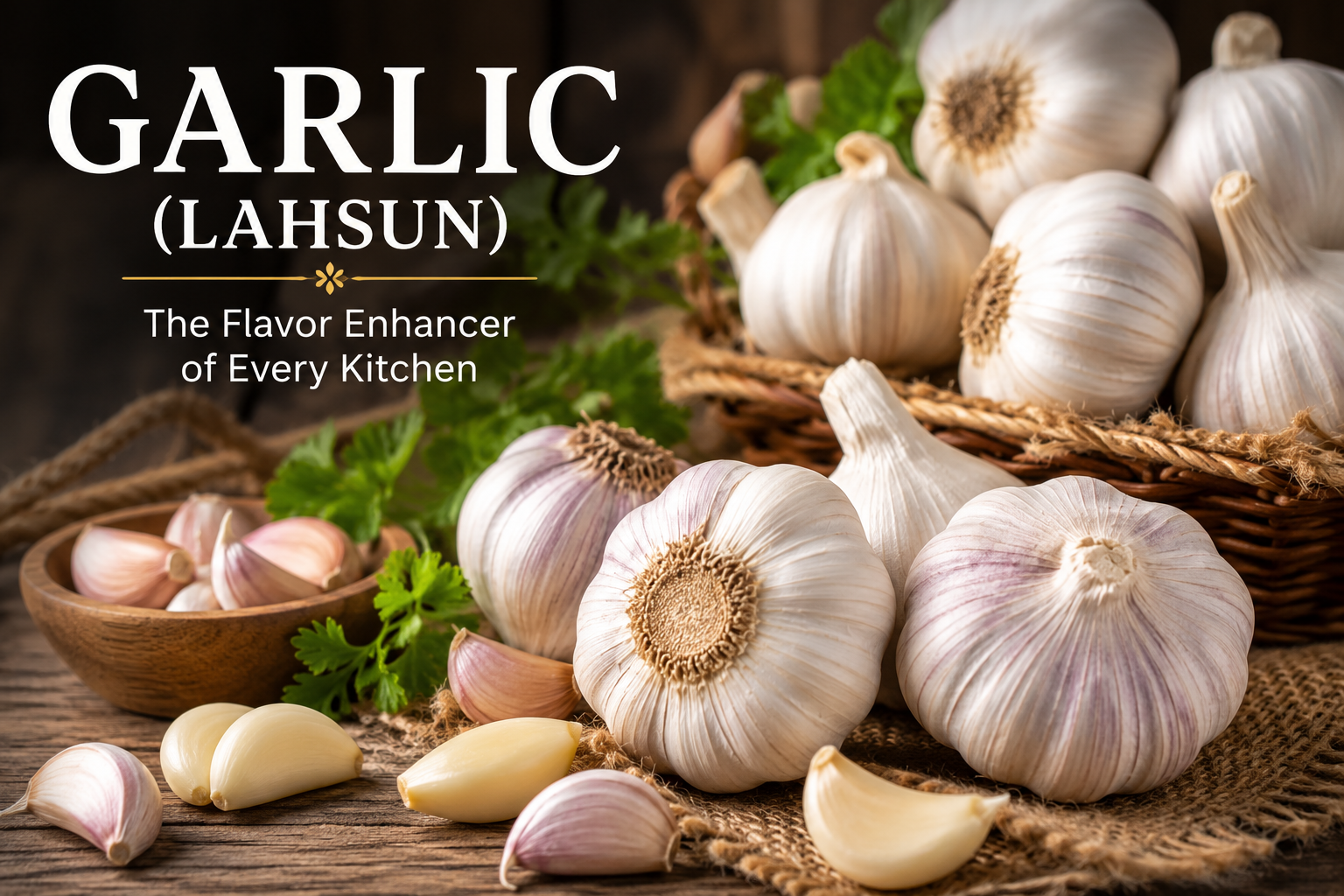
Garlic (Allium sativum) is one of the world’s oldest cultivated culinary plants and a staple ingredient in countless cuisines. It grows as a bulb made up of multiple individual cloves, each enclosed in a thin papery skin. Garlic is prized for its bold aroma, distinctive flavour and remarkable versatility in everyday cooking.
Known as Lahsun in Hindi, garlic is widely used in Indian kitchens to prepare curries, dals, vegetables, chutneys, pickles, soups and marinades. It can be used fresh, roasted, sautéed, minced, crushed or dried, allowing cooks to create a wide range of flavour profiles.
Today, garlic is cultivated across many parts of India and the world. Its ability to enhance both traditional and modern recipes has made it one of the most valued ingredients in home kitchens, restaurants and food industries alike.
History & Origin of Garlic
Garlic is believed to have originated in Central Asia and has been cultivated for thousands of years. Over time, it spread through trade routes to the Middle East, Europe, Africa and Asia, becoming an important ingredient in regional cuisines.
In India, garlic has long been appreciated for its strong flavour and culinary versatility. It became an integral part of traditional cooking, contributing depth and richness to a wide variety of dishes prepared across different regions.
Today, garlic continues to be cultivated worldwide and remains one of the most widely consumed flavouring ingredients. From rustic home kitchens to fine dining restaurants, its unmistakable aroma and taste have secured its place in global culinary traditions.
Why is Garlic One of the World’s Most Popular Culinary Ingredients?
Garlic is celebrated for its ability to transform simple ingredients into richly flavoured dishes. Whether lightly sautéed, roasted until caramelised or finely minced into sauces and marinades, garlic contributes a depth of flavour that few other ingredients can match.
Its versatility allows it to complement vegetables, lentils, grains, breads, meats, seafood and countless spice blends. Garlic is equally at home in traditional Indian curries, Mediterranean recipes, Asian stir-fries and modern international cuisine.
Beyond its culinary adaptability, garlic is appreciated for its long storage life, ease of use and compatibility with numerous herbs and spices. These qualities have made Lahsun an essential ingredient in kitchens across generations and cultures.
Nutrition Facts of Garlic (Per 100g)
| Nutrient | Approximate Amount |
|---|---|
| Energy | 149 kcal |
| Carbohydrates | 33.1 g |
| Protein | 6.4 g |
| Total Fat | 0.5 g |
| Dietary Fibre | 2.1 g |
| Vitamin C | 31.2 mg |
| Vitamin B6 | 1.2 mg |
| Calcium | 181 mg |
| Iron | 1.7 mg |
| Magnesium | 25 mg |
| Phosphorus | 153 mg |
| Potassium | 401 mg |
| Sodium | 17 mg |
| Zinc | 1.2 mg |
| Manganese | 1.7 mg |
Note: Values are approximate and may vary depending on variety, growing conditions and processing methods.
🌿 Natural Aroma & Key Compounds
Garlic is recognised for its bold aroma and distinctive flavour, which develop when the cloves are chopped, crushed or minced. This process releases naturally occurring sulphur-containing compounds that contribute to garlic’s characteristic taste and fragrance.
🧄 Allicin
One of garlic’s best-known naturally occurring sulphur compounds.
🌿 Sulphur Compounds
Contribute to garlic’s distinctive aroma and flavour.
✨ Natural Antioxidants
Garlic naturally contains antioxidant compounds found in many vegetables.
🥗 Essential Nutrients
Provides vitamins, minerals and dietary fibre in small quantities.
Popular Types of Garlic
🧄 Fresh Garlic vs Garlic Powder
| Feature | Fresh Garlic | Garlic Powder |
|---|---|---|
| Form | Whole Cloves | Finely Ground Powder |
| Flavour | Fresh & Strong | Mild & Evenly Distributed |
| Best Used For | Curries, Marinades, Sauces | Seasonings, Snacks & Dry Rubs |
| Shelf Life | Several Months | Up to 24 Months |
| Preparation | Peeling Required | Ready to Use |
🇮🇳 Major Garlic Producing States in India
Madhya Pradesh
India’s leading garlic-producing state.
Rajasthan
Known for large-scale garlic cultivation.
Gujarat
Produces premium-quality garlic for domestic and export markets.
Uttar Pradesh
An important contributor to India’s garlic production.
Punjab
Produces garlic for regional consumption and processing.
Haryana
Supports commercial garlic farming in suitable regions.
🌤 Ideal Growing Conditions
- Prefers cool weather during the growing season.
- Requires well-drained, fertile loamy soil.
- Performs best in areas with moderate winter temperatures.
- Needs adequate sunlight for healthy bulb development.
- Requires balanced irrigation while avoiding waterlogging.
- A dry climate during harvesting helps improve bulb quality and storage life.
- Organic matter in the soil supports healthy plant growth.
- Proper spacing allows bulbs to develop uniformly.
Culinary & Nutritional Highlights of Garlic (Lahsun)
Rich in Natural Sulphur Compounds
Garlic naturally contains sulphur-based compounds that contribute to its distinctive aroma and bold flavour.
Contains Natural Antioxidants
Garlic provides naturally occurring antioxidant compounds commonly found in vegetables and herbs.
Source of Essential Nutrients
Garlic contains small amounts of vitamins, minerals and dietary fibre that contribute to a varied diet.
Enhances Everyday Cooking
Its rich aroma and savoury taste elevate curries, vegetables, soups, sauces and countless other dishes.
Used Worldwide
Garlic is a staple ingredient in Indian, Mediterranean, Asian, Middle Eastern and many international cuisines.
Versatile Ingredient
Suitable for roasting, sautéing, grilling, baking, frying and seasoning a wide variety of recipes.
Available in Multiple Forms
Garlic can be enjoyed fresh, roasted, minced, dried, powdered or as part of seasoning blends.
Complements Many Ingredients
Pairs beautifully with onions, ginger, tomatoes, herbs, spices and vegetables.
Long Storage Life
Whole garlic bulbs remain usable for several months when stored correctly.
Essential Kitchen Staple
Garlic has become one of the most widely used flavouring ingredients in households around the world.
Suitable for Daily Cooking
Used in small culinary quantities to add depth, richness and aroma to everyday meals.
Part of Balanced Meals
Garlic contributes flavour and variety to balanced home-cooked dishes when used as a culinary ingredient.
🧄 Garlic in Traditional Indian Cuisine
Garlic, popularly known as Lahsun, has been an integral part of Indian cooking for generations. Its rich aroma and savoury flavour make it one of the most frequently used ingredients in regional cuisines across the country.
Fresh garlic cloves are commonly crushed, chopped or ground into pastes before being added to curries, dals, vegetables, biryanis, chutneys, pickles and marinades. Roasted garlic is also appreciated for its milder, slightly sweet flavour, while garlic powder is widely used in seasoning blends and convenience foods.
🍛 Everyday Cooking
Widely used in Indian households for preparing a variety of savoury dishes.
🧄 Common Form
Fresh garlic cloves are the most popular choice for home cooking.
🌿 Flavour Profile
Rich, bold and aromatic with a savoury taste.
🍲 Popular Pairing
Often combined with ginger, onion and tomatoes.
🥣 Traditional Uses
Curries, dals, pickles, chutneys and spice pastes.
🌍 Global Appeal
Featured in cuisines across Asia, Europe, the Middle East and the Americas.
👨🍳 Cooking Styles
Used raw, sautéed, roasted, baked and grilled.
🏡 Kitchen Essential
One of the world’s most commonly used culinary ingredients.
🌟 Why Garlic Has Been Valued for Centuries
Garlic has earned a lasting place in kitchens across the world because of its exceptional ability to enhance flavour. Even a small quantity can add richness, aroma and complexity to a wide range of recipes, making it one of the most versatile culinary ingredients available.
In Indian cuisine, garlic forms the foundation of countless dishes, often paired with ginger and onions to create flavourful bases for curries, vegetables and lentils. Around the world, it is equally popular in pasta sauces, breads, soups, stir-fries, roasted vegetables and marinades.
Garlic’s versatility extends beyond fresh cloves. Roasted garlic offers a mellow, slightly sweet taste, while dried garlic flakes and garlic powder provide convenient options for seasoning blends, snacks and processed foods without compromising on flavour.
Its remarkable adaptability, long storage life and unmistakable aroma have made garlic an enduring favourite among home cooks, chefs and food manufacturers. Today, Lahsun continues to inspire culinary traditions while remaining one of the most trusted flavouring ingredients in kitchens worldwide.
Popular Culinary Uses of Garlic (Lahsun)
Curries & Gravies
Fresh garlic is widely used to build rich flavour in Indian curries, gravies and masala-based dishes.
Vegetable Dishes
Enhances stir-fries, sautéed vegetables and traditional sabzis with its bold aroma.
Soups
Adds depth and savoury character to clear soups, creamy soups and broths.
Rice & Biryani
Frequently included in pulao, biryani and fried rice recipes for enhanced flavour.
Salad Dressings
Fresh minced garlic brings a rich, aromatic taste to vinaigrettes and homemade dressings.
Garlic Bread
One of the world’s most popular uses of garlic, delivering a rich buttery flavour.
Marinades
Commonly combined with herbs and spices for marinating vegetables, paneer and other ingredients.
Pickles & Chutneys
Used in traditional Indian pickles and chutneys for its distinctive taste.
🏡 Traditional Household Uses
Garlic has been a familiar ingredient in Indian households for generations. Beyond everyday cooking, it has traditionally been included in seasonal recipes, festive dishes and family favourites because of its distinctive flavour and versatility.
- Used in freshly prepared ginger-garlic paste.
- Added to traditional dals and curries.
- Included in homemade spice blends.
- Used for preparing garlic chutney.
- Popular ingredient in Indian pickles.
- Added to soups and broths.
- Roasted whole for a mild, caramelised flavour.
- Mixed into breads, naan and parathas.
- Used in seasoning oils and infused butter.
- Common ingredient in restaurant-style gravies.
👨🍳 Modern Kitchen Applications
Garlic Paste
Fresh garlic is blended into smooth paste for convenient everyday cooking.
Roasted Garlic
Whole bulbs are roasted until soft to develop a sweeter, milder flavour.
Garlic Powder
Used in seasoning mixes, snacks, baked products and instant recipes.
Garlic Butter
A favourite spread for breads, vegetables and grilled dishes.
Seasoning Blends
Combined with herbs and spices to create flavourful dry rubs and spice mixes.
International Cuisine
Widely used in pasta, pizza, stir-fries, sauces and Mediterranean recipes.
🍽️ How to Use Garlic in Everyday Cooking
- Peel fresh cloves before chopping or crushing.
- Finely mince garlic for sauces and dressings.
- Sauté garlic gently to develop a rich aroma without burning.
- Roast whole bulbs for a softer and sweeter flavour.
- Use garlic powder for quick seasoning in dry recipes.
- Add garlic towards the beginning of cooking for deeper flavour development.
- Combine garlic with ginger for many traditional Indian recipes.
- Pair garlic with herbs like parsley, oregano, rosemary and thyme.
- Store peeled garlic in the refrigerator only for short-term use.
- Always use fresh, firm cloves for the best culinary experience.
🧄 Recommended Culinary Use
Garlic is typically used in small culinary quantities according to individual taste preferences and the recipe being prepared. Fresh garlic, roasted garlic and garlic powder each provide unique flavour profiles, allowing cooks to select the most suitable form for different dishes.
The amount of garlic used may vary depending on regional cooking styles, personal preference and the desired intensity of flavour.
👨🍳 Chef’s Tips for Maximum Flavour
🔥 Avoid Burning
Cook garlic over medium heat to develop aroma without creating bitterness.
🔪 Crush Before Cooking
Crushing or chopping garlic releases its characteristic flavour compounds.
🧈 Roast for Sweetness
Roasting transforms garlic into a mild, creamy and slightly sweet ingredient.
🌿 Pair Wisely
Garlic works beautifully with ginger, onion, tomatoes and aromatic herbs.
⚠️ Possible Side Effects of Excess Consumption
- Garlic is generally safe when consumed in normal culinary quantities, but excessive intake may not be suitable for everyone.
- Eating large amounts of raw garlic may cause digestive discomfort in some individuals.
- People who are sensitive to strong flavours or pungent foods may experience stomach irritation after consuming excessive amounts.
- Garlic supplements or concentrated extracts should only be used according to the manufacturer’s instructions or under professional guidance.
- Some individuals may have an allergy or sensitivity to garlic and should discontinue use if unusual symptoms occur.
- Fresh garlic should always be peeled, washed and prepared hygienically before use.
- Avoid using garlic bulbs that show signs of mould, sprouting, decay or an unpleasant odour.
- Using garlic in moderation as part of a balanced diet is generally the preferred culinary approach.
🚫 Who Should Be Careful?
- Individuals with a known allergy or sensitivity to garlic.
- People following medically prescribed diets should seek advice from their healthcare professional before making significant dietary changes involving garlic.
- Pregnant or breastfeeding women should consult a qualified healthcare professional before using concentrated garlic supplements.
- Individuals taking prescription medications should seek professional advice before using garlic supplements or extracts.
- Children should consume garlic only in age-appropriate culinary quantities.
- Anyone with specific health concerns should follow personalised medical advice regarding dietary choices.
How Garlic is Grown
Clove Selection
Healthy, disease-free garlic cloves are carefully selected to produce strong and uniform plants.
Land Preparation
Well-drained fertile soil enriched with organic matter is prepared before planting.
Planting
Individual garlic cloves are planted at proper spacing to allow healthy bulb development.
Crop Care
Regular irrigation, weed management and balanced nutrition help produce healthy garlic bulbs.
Harvesting
Once the leaves begin to dry naturally, mature garlic bulbs are carefully harvested from the soil.
Curing & Packing
Harvested bulbs are cured, cleaned, graded and packed to help preserve their quality during storage and transport.
🚜 From Farm to Kitchen
🌍 Sustainable Garlic Cultivation
Responsible farming practices help maintain garlic quality while supporting long-term agricultural sustainability. Many growers use efficient irrigation methods, proper crop rotation and balanced soil management to produce healthy garlic crops.
Efficient Irrigation
Proper water management supports healthy bulb development while reducing unnecessary water use.
Crop Rotation
Rotating crops helps maintain soil productivity and supports sustainable farming practices.
Healthy Soil
Organic matter and balanced nutrients contribute to strong garlic plants and quality bulbs.
Careful Handling
Proper curing, grading and packaging help preserve freshness, appearance and culinary quality.
📦 Storage Tips
- Store whole garlic bulbs in a cool, dry and well-ventilated place.
- Keep garlic away from direct sunlight, moisture and excessive heat.
- Avoid storing whole garlic bulbs in sealed plastic bags, as restricted airflow may encourage moisture buildup.
- Use breathable mesh bags, baskets or paper bags for better air circulation.
- Once separated, individual cloves should be used sooner than intact bulbs.
- Peeled garlic cloves can be refrigerated in a sealed container for short-term culinary use.
- Store garlic powder and dried garlic flakes in airtight food-grade containers.
- Always use clean and dry utensils when handling garlic powder.
- Regularly inspect stored garlic and discard bulbs showing mould, excessive sprouting or decay.
- Proper storage helps preserve garlic’s aroma, flavour and overall culinary quality.
How to Identify Good Quality Garlic
Selecting premium-quality garlic ensures better flavour, aroma and cooking performance. Fresh garlic bulbs should be firm, clean and naturally aromatic, with tightly packed cloves and intact outer skin.
🧄 Appearance
Choose bulbs with clean, dry outer skin and tightly packed cloves.
✋ Firmness
Good-quality garlic feels firm and solid without soft or hollow spots.
👃 Aroma
Fresh garlic has a rich, naturally pungent aroma without unpleasant odours.
✨ Freshness
Avoid bulbs with mould, excessive sprouting, moisture or damaged cloves.
🧪 Simple Home Quality Checks
Visual Inspection
Select bulbs with intact skin and no visible mould, insects or decay.
Firmness Test
Gently press the bulb. It should feel firm rather than soft or spongy.
Aroma Test
Fresh garlic should have a pleasant, strong natural aroma when a clove is crushed.
Sprouting Check
Small sprouts are generally usable, but heavily sprouted bulbs may have reduced culinary quality.
🛒 Buying Guide
- Purchase garlic from trusted grocery stores or reputable spice brands.
- Choose firm bulbs with tightly closed cloves.
- Prefer bulbs that feel heavy for their size.
- Avoid garlic showing mould, moisture, bruising or damaged outer skin.
- Select naturally aromatic bulbs with clean, dry papery skin.
- When buying garlic powder, choose well-sealed food-grade packaging.
- Check manufacturing and best-before dates for packaged garlic products.
- Buy quantities appropriate for your cooking needs to maintain freshness.
⚖️ Fresh Garlic vs Garlic Powder
| Feature | Fresh Garlic | Garlic Powder |
|---|---|---|
| Form | Whole Bulbs & Cloves | Fine Powder |
| Flavour | Strong & Fresh | Mild & Evenly Blended |
| Best Uses | Curries, Soups, Marinades, Stir-fries | Seasonings, Snacks, Dry Rubs & Instant Recipes |
| Preparation | Peeling & Chopping Required | Ready to Use |
| Storage | Cool, Dry & Ventilated Place | Airtight Container |
| Shelf Life | Several Months (Whole Bulbs) | Up to 24 Months (Properly Stored) |
👨🍳 Chef’s Buying Tips
🧄 Choose Firm Bulbs
Firm garlic bulbs generally provide better texture and cooking performance.
👃 Check the Aroma
Fresh garlic should have a clean, naturally pungent fragrance.
📦 Buy Properly Packed Products
For garlic powder, select securely sealed packaging to help maintain freshness.
🛍️ Buy According to Usage
Purchase quantities that match your cooking frequency for the best culinary experience.
🌍 India’s Position in Global Garlic Production
India is one of the world’s leading producers of Garlic (Lahsun), with cultivation spread across several agricultural states. Favorable climatic conditions, fertile soils and experienced farming communities contribute to the country’s significant garlic production each year.
Indian garlic is appreciated for its rich aroma, firm cloves and strong flavour, making it a preferred choice for households, restaurants, food manufacturers and spice processors. Fresh garlic, dehydrated garlic products and garlic powder are supplied to both domestic and international markets.
As demand for authentic Indian spices continues to grow worldwide, garlic remains one of the country’s most important commercial spice crops, supporting farmers and contributing to agricultural exports.
🌎 Major Export Destinations
- 🇧🇩 Bangladesh
- 🇲🇾 Malaysia
- 🇦🇪 United Arab Emirates
- 🇸🇬 Singapore
- 🇺🇸 United States
- 🇬🇧 United Kingdom
- 🇨🇦 Canada
- 🇸🇦 Saudi Arabia
- 🇳🇵 Nepal
- 🇶🇦 Qatar
💡 Did You Know?
- Garlic belongs to the Amaryllidaceae plant family, the same family as onions, shallots and leeks.
- A garlic bulb is made up of multiple individual cloves covered by thin papery skin.
- Garlic has been cultivated for thousands of years in different parts of the world.
- India is among the world’s leading garlic-producing countries.
- The characteristic aroma of garlic develops when the cloves are chopped, crushed or minced.
- Roasting garlic creates a milder, sweeter flavour compared to raw garlic.
- Garlic is widely used in Indian, Mediterranean, Chinese, Thai and Middle Eastern cuisines.
- Fresh garlic, dehydrated garlic flakes and garlic powder each serve different culinary purposes.
- Whole garlic bulbs generally have a longer shelf life than peeled cloves.
- Garlic pairs exceptionally well with ginger, onion, tomatoes and many traditional Indian spices.
Frequently Asked Questions
What is Garlic (Lahsun)?
Garlic (Allium sativum) is a bulb-forming culinary plant valued worldwide for its bold aroma, distinctive flavour and versatility in cooking.
Why is garlic so popular in Indian cooking?
Garlic adds depth, aroma and savoury flavour to curries, dals, vegetables, rice dishes, chutneys and many traditional recipes.
How should garlic be stored?
Store whole garlic bulbs in a cool, dry and well-ventilated place away from direct sunlight and excess moisture.
Can garlic powder replace fresh garlic?
Yes, garlic powder can be used in many recipes, although its flavour profile differs from fresh garlic. The quantity should be adjusted according to the recipe.
How can I identify fresh garlic?
Choose firm bulbs with tightly packed cloves, dry outer skin and no signs of mould, excessive sprouting or damage.
Which Indian states produce the most garlic?
Madhya Pradesh, Rajasthan, Gujarat, Uttar Pradesh, Punjab and Haryana are among the major garlic-producing states.
What dishes commonly use garlic?
Garlic is commonly used in curries, soups, stir-fries, rice dishes, sauces, marinades, pickles, breads and seasoning blends.
Can roasted garlic be used in cooking?
Yes. Roasted garlic develops a softer texture and a milder, slightly sweet flavour that works well in spreads, soups and roasted dishes.
What spices pair well with garlic?
Garlic pairs beautifully with ginger, cumin, coriander, turmeric, black pepper, cinnamon, cloves, oregano, rosemary and thyme.
Is garlic used only in Indian cuisine?
No. Garlic is one of the world’s most widely used culinary ingredients and is featured in cuisines across Europe, Asia, the Middle East, Africa and the Americas.
“Great cooking begins with authentic ingredients. Premium garlic transforms everyday recipes into memorable culinary experiences with its unmistakable aroma and timeless flavour.”
📝 Final Summary
Garlic (Lahsun) is one of the world’s most treasured culinary ingredients, celebrated for its bold aroma, rich flavour and remarkable versatility. Whether used fresh, roasted, crushed or powdered, garlic adds depth and character to countless recipes across Indian and international cuisines.
From traditional Indian curries and dals to modern soups, pasta, breads, marinades and seasoning blends, garlic continues to play an essential role in kitchens around the globe. Its adaptability, long shelf life and compatibility with numerous herbs and spices make it an indispensable ingredient for both home cooks and professional chefs.
Choosing premium-quality garlic, storing it correctly and using it appropriately allows you to enjoy its authentic flavour and aroma in every meal. Understanding its cultivation, varieties and culinary applications also helps you appreciate the journey from farm to kitchen.
Whether you’re preparing a simple family dinner or an elaborate festive feast, Garlic (Lahsun) remains a timeless ingredient that enhances flavour, enriches recipes and celebrates the rich heritage of Indian cooking.
🌟 Why Garlic Deserves a Place in Every Kitchen
Authentic Flavour
Adds rich aroma and deep savoury taste to a wide variety of recipes.
Everyday Essential
Used daily in Indian households for curries, dals, vegetables and rice dishes.
Globally Loved
An important ingredient in cuisines across Asia, Europe, the Middle East and beyond.
Highly Versatile
Perfect for roasting, sautéing, grilling, seasoning and preparing spice blends.
Easy to Store
Whole garlic bulbs can maintain quality for months when stored properly.
Rich Indian Heritage
A cherished culinary ingredient that has enhanced Indian recipes for generations.
🌿 Continue Your Spice Journey
Every spice has its own unique story, aroma and culinary purpose. Exploring different spices helps you discover new flavours, improve your cooking skills and gain a deeper appreciation for India’s rich spice heritage.
“Behind every unforgettable meal is the perfect balance of spices. Premium Garlic (Lahsun) brings depth, aroma and timeless flavour that transforms simple ingredients into extraordinary culinary experiences.”
📌 Disclaimer
This article is intended for general educational and culinary information only. The nutritional information provided is approximate and may vary depending on variety, cultivation methods and processing. This content should not be considered medical, nutritional or professional advice.
Garlic should be enjoyed as part of a balanced and varied diet. If you have specific dietary requirements, food allergies or medical concerns, consult a qualified healthcare professional before making significant dietary changes.